
My nephew asked me to help build him a "dinosaur tank" for his room, and my first instinct was to just drop a couple of plastic dinosaur toys into a standard planted setup. It looked fine, but it didn't feel like a dinosaur tank so much as a regular aquarium with toys in it. It took actually thinking about different prehistoric environments — swamps, volcanic terrain, nesting grounds — to build something that told an actual story rather than just referencing dinosaurs in passing.
These three themes each recreate a different piece of the prehistoric world, from lush wetlands to dramatic volcanic rock to a gentler nesting scene. Whether you're decorating for a kid's room or just love the aesthetic yourself, each theme includes a detailed image prompt so you can visualize the finished scene before gathering materials.
What Separates a Genuine Dinosaur Theme From a Few Toys in a Tank
The difference between a convincing dinosaur-themed tank and a standard aquarium with a plastic figure added almost always comes down to environment. A real prehistoric scene needs a landscape that supports its story — swamp plants, volcanic rock, or fossil details — rather than just a dinosaur figure standing alone in an otherwise generic layout. Building the environment first, then placing the dinosaur element within it, is what makes any of these three themes feel genuinely immersive.
1. The Prehistoric Swamp
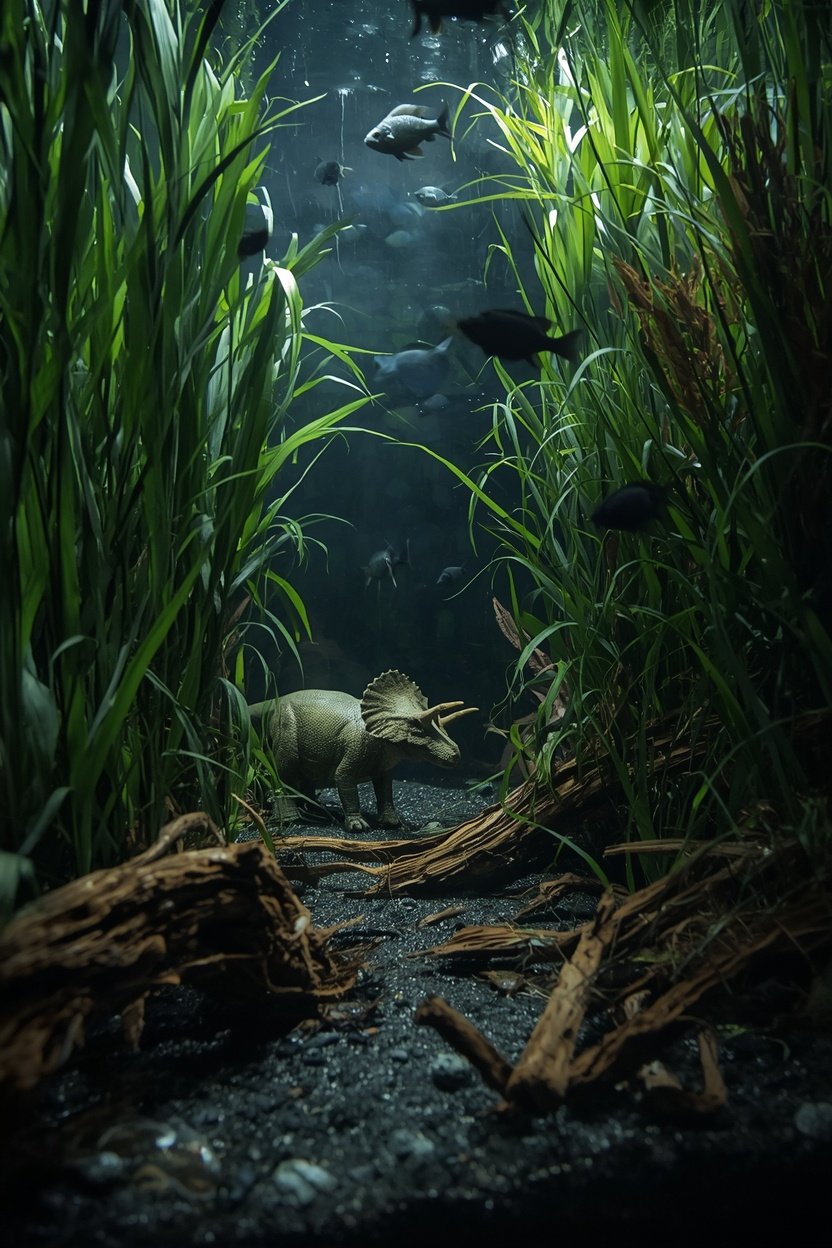
This theme recreates the dense, humid wetlands dinosaurs are most often pictured wading through, built around tall reed-like plants, dark muddy-toned substrate, and broad-leafed greenery that feels ancient rather than manicured. Vallisneria and tall sword plants work particularly well here, mimicking the primitive-looking ferns and cycads that dominated prehistoric landscapes, while their height gives the tank a genuine sense of dense, swampy overgrowth.
Choose a dark brown or near-black substrate to suggest rich, waterlogged mud, and add a few partially submerged, twisted driftwood branches to stand in for fallen ancient trees. A small, weathered dinosaur figurine — a stegosaurus or triceratops silhouette, partially obscured by tall plants rather than placed in open view — completes the scene, rewarding a closer look rather than announcing itself immediately.
This theme works particularly well with darker, more subdued fish coloring, which fits the murky, primeval mood far better than bright, tropical-colored species. The overall effect should feel like a small, living diorama glimpsed through dense undergrowth, not a bright, cheerful tank with a dinosaur toy dropped in.
For younger aquarium enthusiasts or family tanks, this swamp theme also offers a great opportunity for a bit of storytelling — positioning the dinosaur figure as though it's caught mid-stride through the reeds gives the whole tank a narrative quality that a static, centered placement doesn't achieve nearly as well.
2. The Volcanic Jurassic Terrain
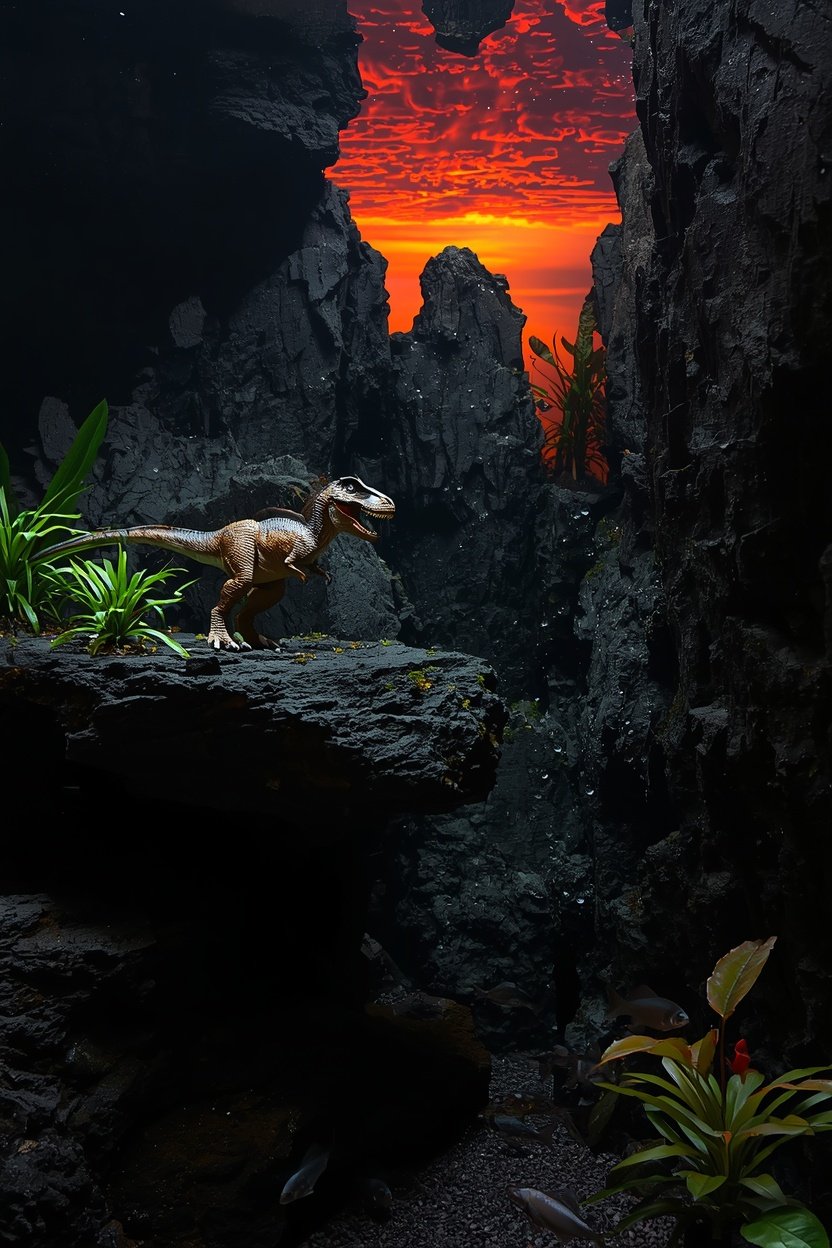
Where the swamp theme leans lush and green, this idea goes the opposite direction, building a stark, dramatic landscape of dark volcanic rock meant to suggest the more hostile, geologically active corners of a prehistoric world. Black lava rock, arranged in jagged, uneven formations, forms the backbone of this layout, paired with a dark red or deep orange accent light to suggest the distant glow of volcanic activity.
Keep planting minimal and sparse in this theme, favoring a few hardy, tough-looking plants like anubias tucked into rock crevices rather than the dense greenery of the swamp theme. The goal is a landscape that feels raw and volcanic rather than fertile, reinforced by the jagged, irregular texture of the lava rock itself, which naturally photographs with dramatic shadow and contrast under the right lighting.
A single larger dinosaur figure, ideally something more predatory like a raptor or a T-Rex silhouette, positioned on a raised rock ledge overlooking the tank, reinforces the sense of a dominant creature surveying a harsh, dramatic territory. This placement, elevated and commanding rather than tucked away, suits this theme's bolder, more intense mood far better than a hidden approach.
Combined, the dark rock, warm accent lighting, and commanding dinosaur placement create one of the more visually dramatic options on this list, well suited to anyone wanting their tank to feel genuinely bold rather than softly whimsical.
3. The Dino Egg Nest and Fossil Bed
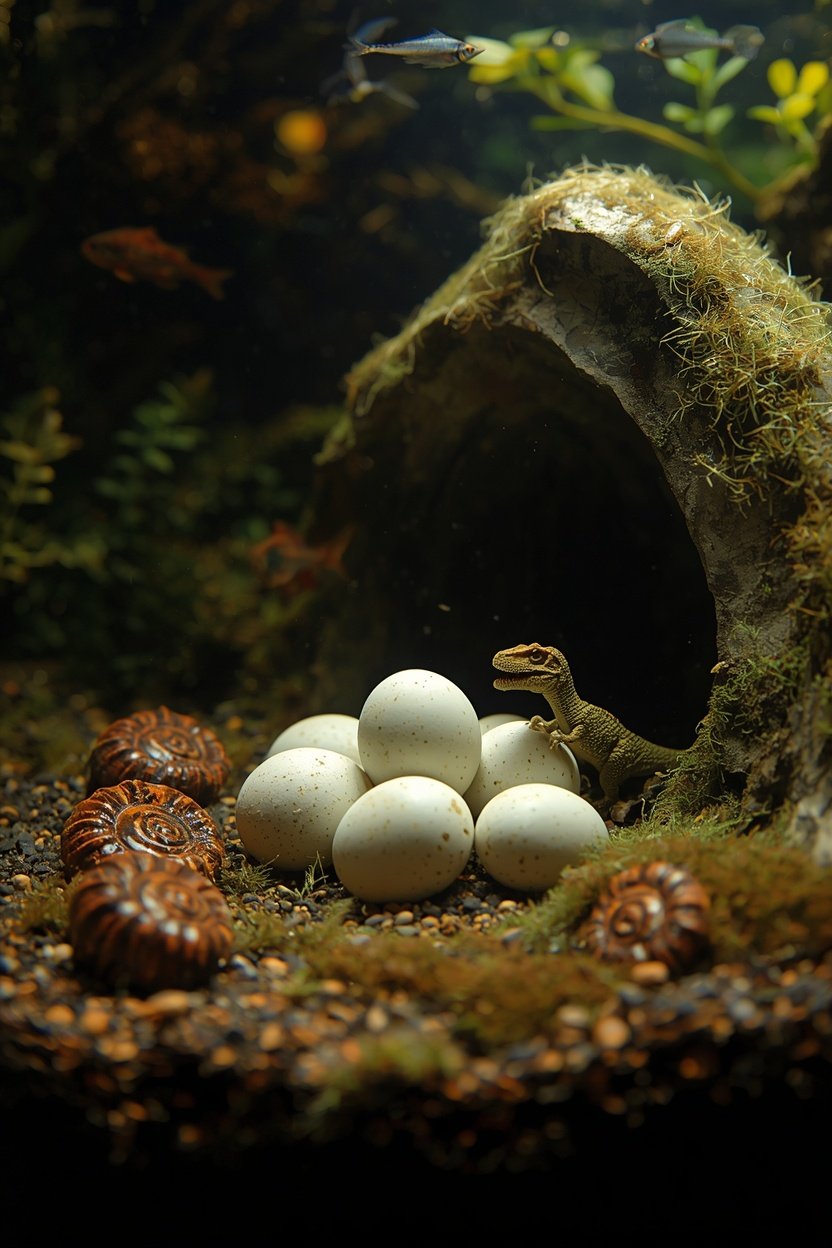
This theme takes a gentler, more curious angle than the other two, centering the tank around a nest of large, smooth, egg-shaped stones tucked into a shallow depression in the substrate, evoking a dinosaur nesting site rather than an active, roaming scene. Round, pale-toned stones work particularly well as stand-in eggs, especially when clustered in a loose group of three to five within a slight substrate hollow.
Surround the nest with fossil-look ornaments — ammonite-style spiral shells or textured "bone" pieces sold specifically for aquarium use — scattered naturally nearby rather than arranged too neatly, as though they've been resting undisturbed for millions of years. A little moss growing over one or two of the fossil pieces reinforces that same sense of ancient stillness the theme depends on.
This theme tends to work particularly well for family tanks or kids' rooms, since the storytelling angle — a hidden nest, ancient fossils, a sense of discovery — invites closer inspection and conversation in a way a more generic dinosaur tank doesn't. It also pairs naturally with a calmer, less dramatic lighting choice than the volcanic theme, keeping the mood curious and gentle rather than intense.
A small hatchling-style dinosaur figure, partially emerging from one egg-shaped stone, adds a playful narrative detail that older kids and adult hobbyists alike tend to find genuinely charming, without tipping the whole tank into overly cartoonish territory.
Tips for Building a Convincing Dinosaur Tank
- Choose aquarium-safe dinosaur figurines only. Confirm any figure is specifically rated safe for aquarium use, since decorative figures made for display cases may not be intended for submersion.
- Let the environment tell most of the story. One well-placed dinosaur figure within a fully realized landscape looks more convincing than several figures scattered through a plain tank.
- Match fish color to each theme's mood. Darker, subdued fish suit the swamp and volcanic themes, while the gentler nest theme can support slightly brighter species.
- Involve kids in the storytelling, not just the shopping. For a children's room tank, letting a child help decide where the "dinosaur" is hiding or nesting makes the finished tank feel more personally theirs.
Final Thoughts
A genuinely convincing dinosaur tank goes well beyond a single plastic figure — it's about building an environment that tells a specific prehistoric story, whether that's a dense ancient swamp, a dramatic volcanic landscape, or a quiet nesting ground. Each of these three themes offers a different mood and level of drama, so there's a version here for both bold, dramatic tastes and gentler, more curious ones. Pick the scene that speaks to you, and let the landscape do most of the storytelling.
Frequently asked questions
Are dinosaur figurines safe for fish tanks?
Only figures specifically labeled safe for aquarium use should go in the tank, since paint and materials on general display figurines may not be rated for prolonged water submersion.
Which dinosaur theme works best for a small tank?
The egg nest and fossil bed theme generally scales down most easily to a small tank, since it relies on a compact cluster of stones and fossils rather than a sprawling landscape.
Can these themes work with live plants and normal fish care?
Yes, all three themes can incorporate live plants and standard fish care practices — the dinosaur elements are purely decorative and don't require any change to your regular aquarium maintenance routine.
