
Walk into any aquarium shop and you will spot them right away: glowing tanks, swaying plants, tiny stone temples, and fish gliding through it all as if they own the place. Here is the good news. Cool fish tanks are not only for experts with big budgets. With a little planning, a complete beginner can build a tank that looks amazing and keeps its fish healthy.
This guide explains what makes a tank look great, the basics you should get right before decorating, and four decor ideas you can copy. Every idea includes a ready-to-use image creation prompt, so you can picture your dream setup before spending a single dollar.
What Makes a Fish Tank "Cool"?
A cool fish tank tells a tiny story. It might be a jungle riverbank, a forgotten temple, or a quiet mountain valley. The best tanks share three things: a clear theme, a healthy balance between open swimming space and hiding spots, and lighting that shows off colors without causing algae trouble.
Notice that none of those points depend on price. One strong idea almost always looks better than a crowded tank packed with random ornaments.
Start With the Basics Before You Decorate
Decorating is the fun part, but the water always comes first. These four habits protect your fish while you build something beautiful.
• Cycle the tank first. A new tank needs several weeks, often four to six, to grow helpful bacteria that turn toxic ammonia into safer compounds. This is called the nitrogen cycle. Adding fish too early is one of the most common beginner mistakes, so use a liquid test kit and wait until ammonia and nitrite both read zero.
• Go bigger if you can. Larger tanks are more forgiving because the water changes slowly. A 20-gallon (about 75-liter) tank is usually easier for a beginner than a tiny bowl.
• Choose aquarium-safe decor only. Rinse everything in plain water, never soap. Skip sharp edges, unsealed painted items, and rocks that might change your water chemistry, such as limestone, unless your fish species enjoy hard water.
• Match fish to the theme. Check each fish's adult size, temperament, and temperature needs before buying. A pretty tank means little if the fish inside are stressed.
Good to know: Fish needs differ from species to species. Always confirm care details with a trusted local aquarium store, an aquatic veterinarian, or an established fishkeeping organization before you buy.
4 Cool Fish Tank Ideas You Can Build
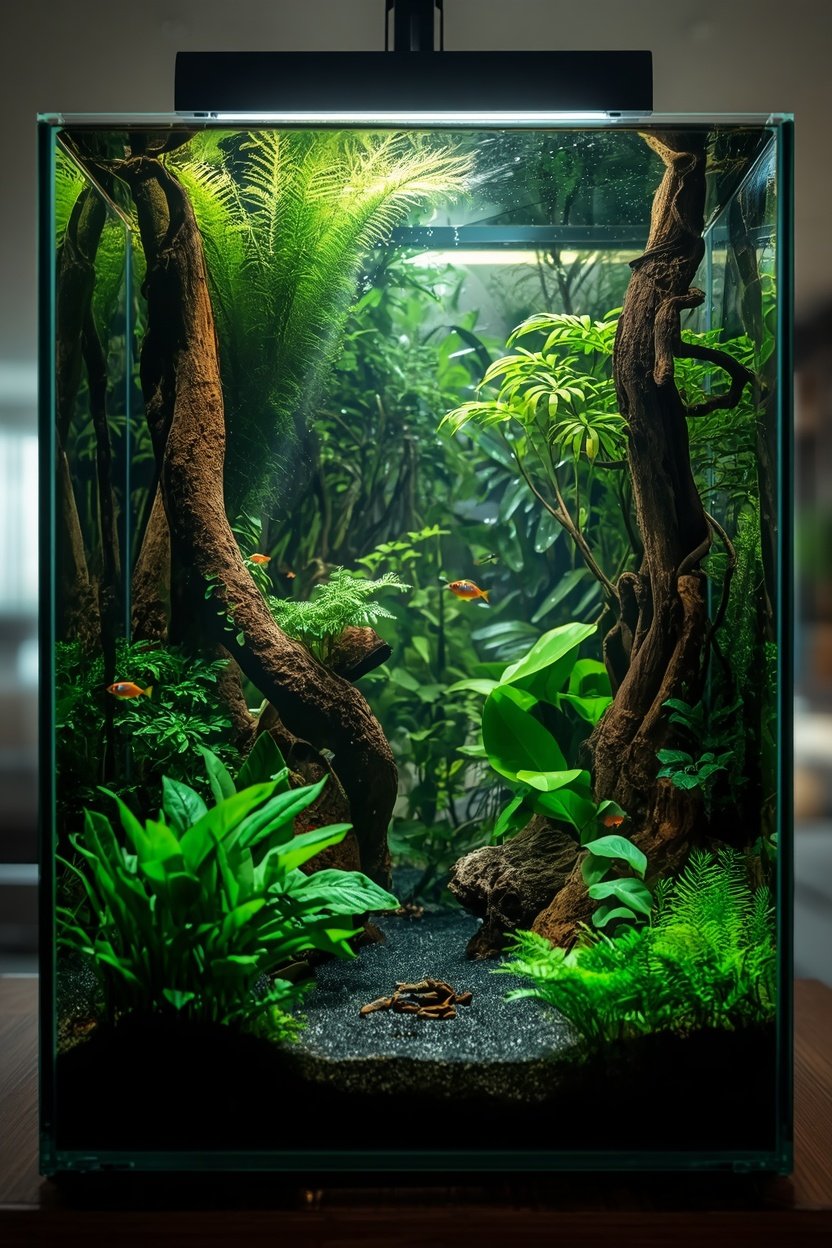
1. The Lush Planted Jungle
Live plants are the simplest way to make a tank feel alive. Hardy beginner plants such as java fern, anubias, and cryptocoryne do not need fancy equipment. Attach java fern and anubias to driftwood instead of burying them, because their thick stems, called rhizomes, can rot under the substrate.
For a natural look, layer your plants. Tall ones go at the back, medium ones in the middle, and low growers at the front. This creates depth, and the plants also soak up some waste nutrients, which helps keep the water cleaner. Small schooling fish like neon tetras or harlequin rasboras love the cover.
2. The Sunken Ruins Tank
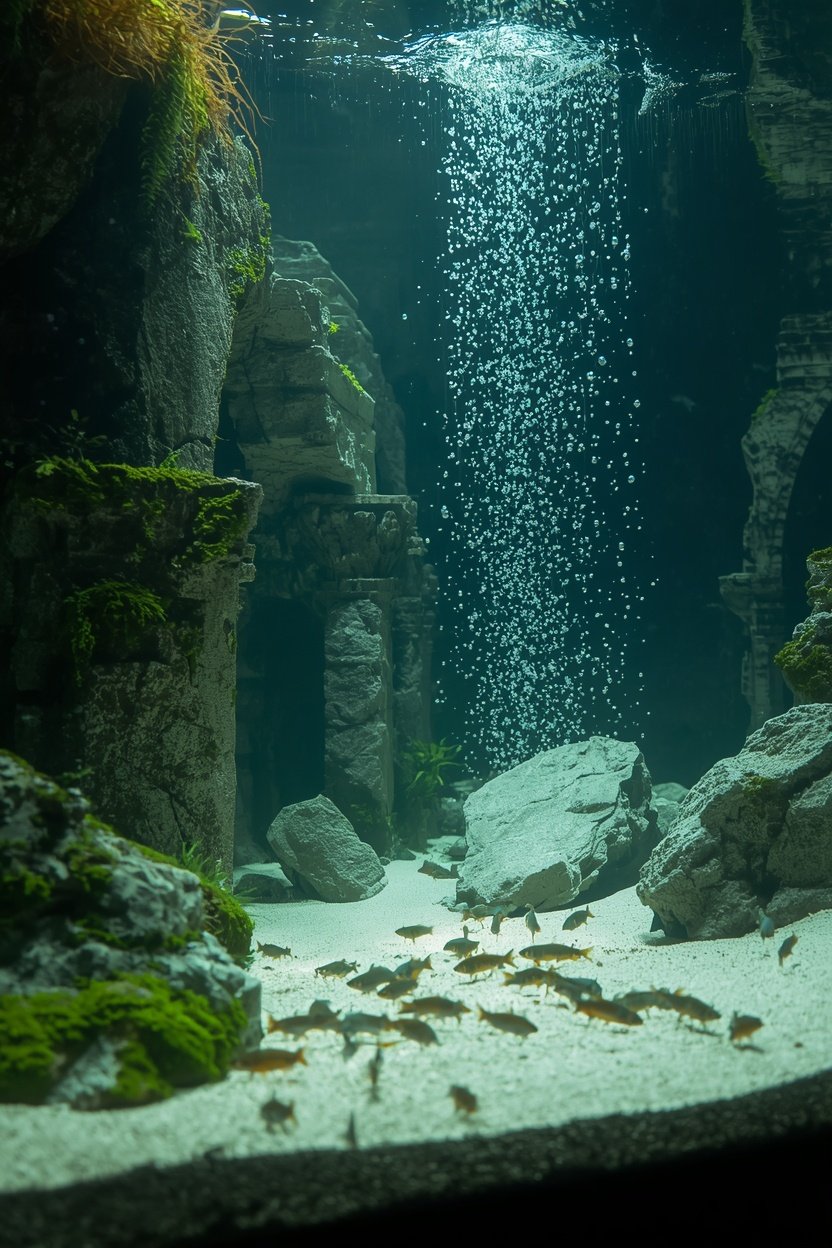
Few ideas grab attention like an ancient temple half-buried on the tank floor. Aquarium-safe resin arches, columns, and broken walls are easy to find. The secret is making them look old instead of brand new. Tilt pieces at slight angles, bury the base in sand, and let a little moss or a few plants creep over the edges.
Leave gaps and small caves, since many fish feel safer with hiding places. Double-check that every archway is wide enough so a fish cannot get stuck. Peaceful bottom dwellers such as corydoras suit this theme well. Keep them in a small group on smooth sand, which protects their sensitive whisker-like barbels.
3. The Minimalist Mountain Valley
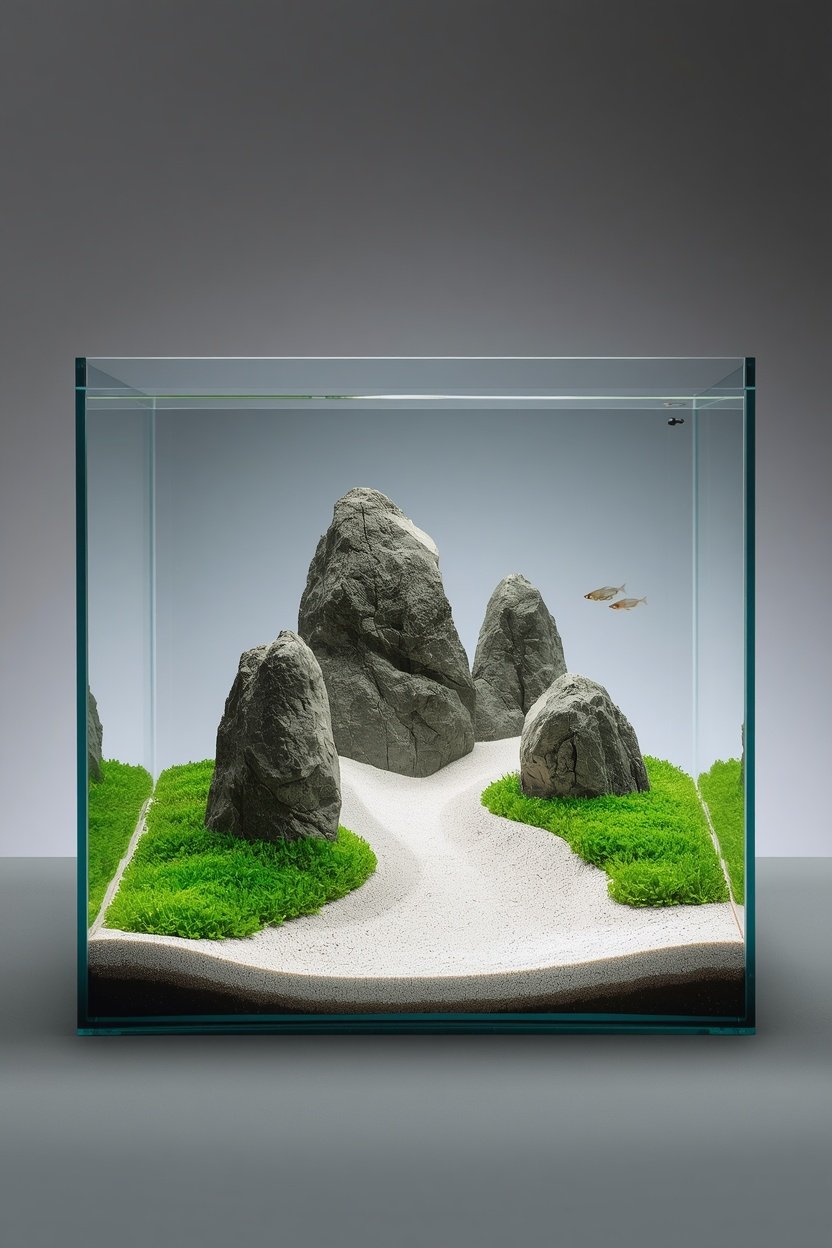
Hardscape simply means the rocks and wood that shape your tank. A rock-focused layout, inspired by Japanese aquascaping, uses a few carefully chosen stones instead of many ornaments. Pick an odd number of rocks, such as three or five, in different sizes. Place the largest one slightly off-center and sink each stone partly into the substrate so it looks like it grew there.
Finish with a low carpet of small plants or leave a strip of open sand as a quiet "river." Dragon stone is a popular choice, but always ask the seller whether a rock affects water hardness. Small rasboras suit this look, and so does a single betta in a heated, filtered tank of at least five gallons.
4. The Moonlight Night Tank
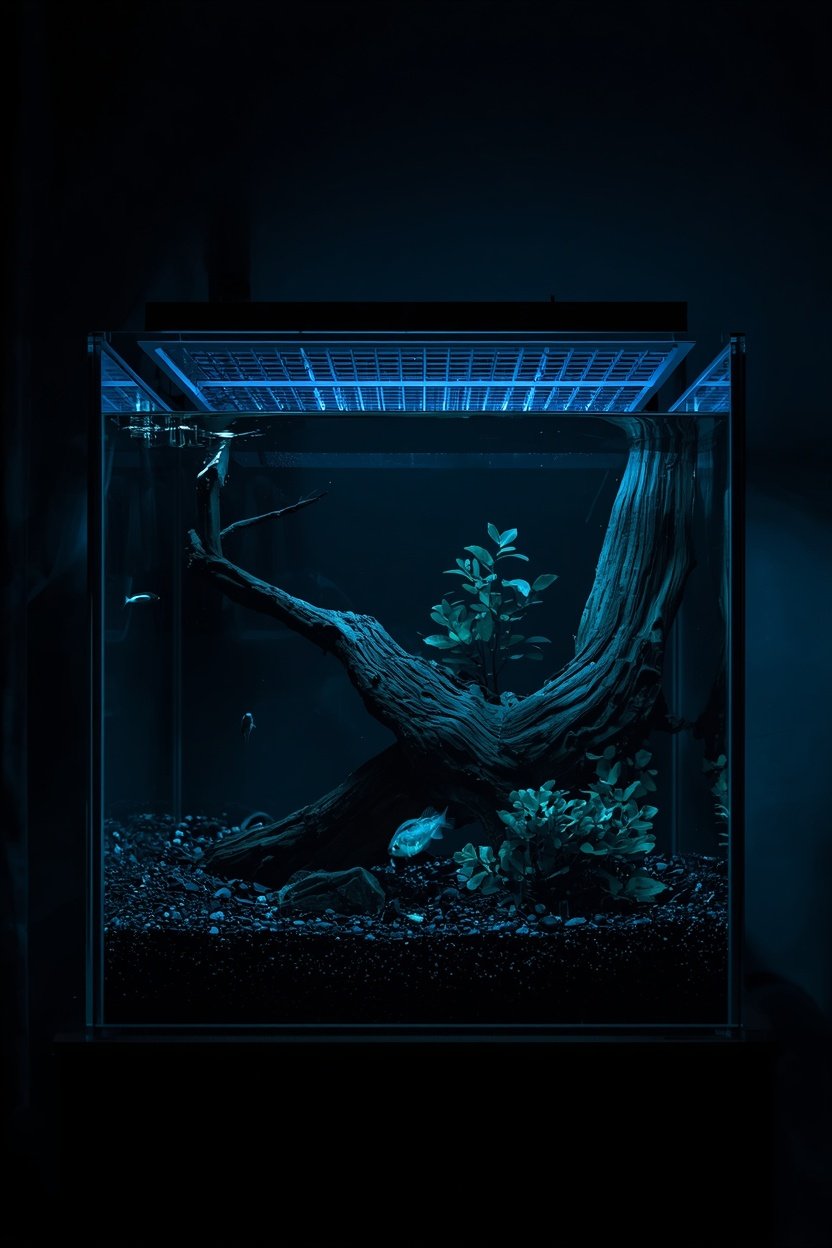
Want a real centerpiece for a dim room? Try a night-time look. Combine a dark substrate, a few aquarium-safe LED-lit or glow-style ornaments, and a dimmable light with a cool blue moonlight mode. Enjoy that blue glow for an hour or two in the evening, then switch everything off so your fish get a proper dark night to rest.
Put the main light on a timer for around eight hours a day, because long hours of bright light feed algae. Choose fish that shimmer naturally, like silver-scaled species, and skip dyed fish, which are often treated unkindly during the coloring process.
Quick Comparison: Which Idea Fits You?
|
Idea |
Budget |
Difficulty |
Best For |
|
Planted Jungle |
Low to medium |
Easy |
Beginners who want a natural look |
|
Sunken Ruins |
Low to medium |
Easy |
Fun, story-driven tanks |
|
Mountain Valley |
Medium |
Medium |
Clean, calm, minimalist style |
|
Moonlight Night |
Medium |
Easy to medium |
Living room centerpieces |
Common Beginner Mistakes to Avoid
• Overcrowding: More fish means more waste. Stock slowly and stay within what your filter and tank size can handle.
• Overdecorating: Fish need open water to swim. Leave at least a third of the tank free of ornaments.
• Skipping the cycle: Patience at the start prevents stress and losses later.
• Too much light: Bright lamps left on all day invite green algae. Use a timer.
