
A jungle fish tank can make an ordinary aquarium feel like a miniature underwater forest. The good news is that you do not need an expensive high-tech setup or expert aquascaping skills to create the look. The strongest beginner designs usually come from a few natural materials, hardy plants, sensible lighting, and enough open space for fish to behave normally.
The key is to treat the theme as a design framework rather than a shopping list. Your fish, tank size, filtration, lighting, water conditions, and maintenance routine come first. Once those foundations are right, decor can turn the aquarium into a convincing little ecosystem.
This guide covers six different jungle-inspired directions, from bright Amazon greenery to dark blackwater roots and a soft mossy creek. Each can be adapted to a beginner aquarium without trying to copy an advanced competition aquascape.
Before You Build: Get the Aquarium Basics Right
An attractive jungle layout cannot compensate for an uncycled aquarium. Cycling establishes biological filtration that processes fish waste. In an established aquarium, beneficial bacteria convert ammonia into nitrite and then nitrate; ammonia and nitrite should not be allowed to accumulate to harmful levels. Live plants can contribute to nutrient uptake, but they do not replace proper biological filtration or responsible stocking.
For a first planted aquarium, keep the equipment and plant list manageable. Hardy plants such as Anubias, Java fern, mosses, and many Cryptocoryne varieties can create a natural look without requiring a highly technical aquascape. Lighting still needs to match the plants you choose, and regular maintenance remains important.
Choose livestock after researching adult size, behavior, water requirements, swimming space, and compatibility. Do not select fish simply because their colors match a theme. A jungle aquarium should be designed around healthy fish first and visual style second.
1. Amazon Rainforest Jungle
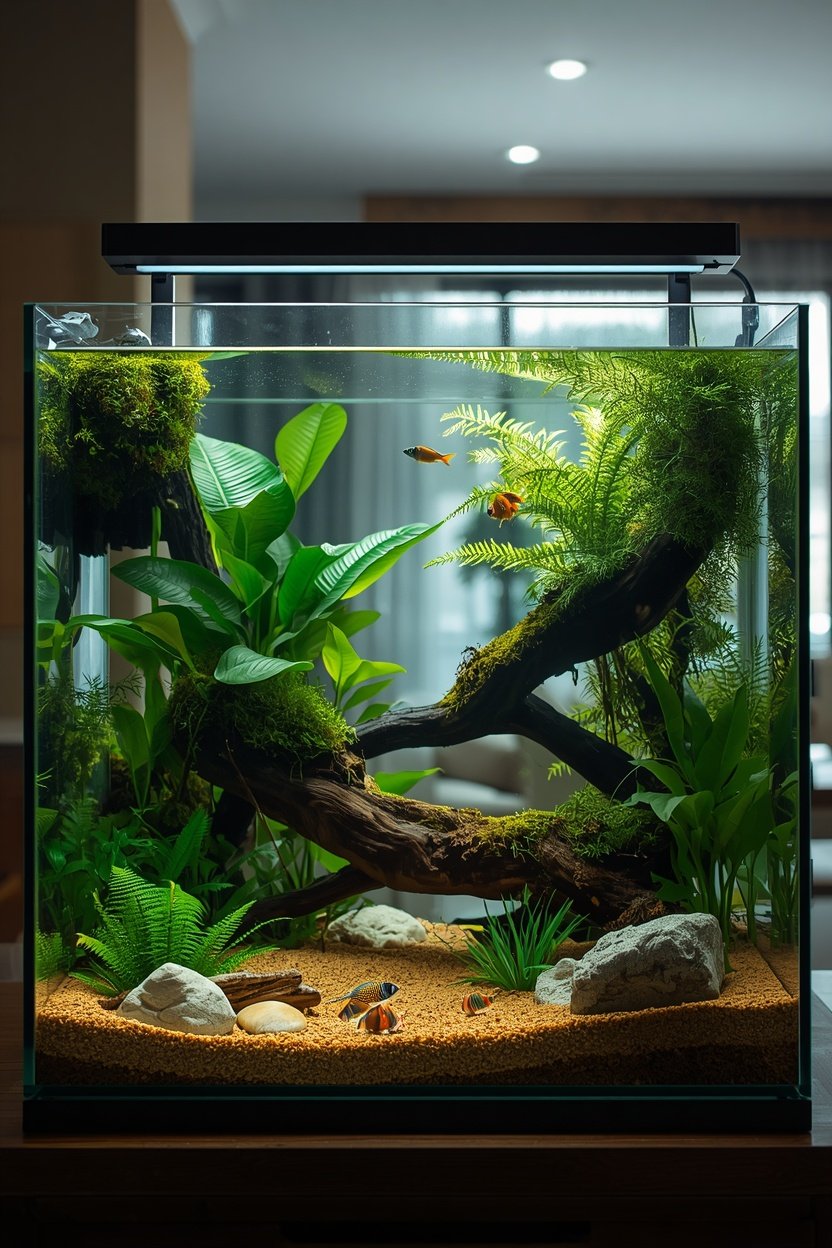
If you want the classic jungle aquarium look, start with an Amazon-inspired layout. The goal is not to fill every inch of the tank with plants. Instead, build layers: taller greenery at the back, broad-leaved plants around the middle, low plants or leaf litter toward the front, and one or two pieces of natural wood tying everything together.
Use natural-looking driftwood with branching shapes to create the feeling of submerged roots. Hardy plants such as Anubias, Java fern, Cryptocoryne, and Java moss can give beginners plenty of texture without requiring an advanced planted-tank setup. Leave some open swimming space in front so the aquarium does not become a solid wall of greenery.
A restrained palette works best: deep green plants, brown wood, muted stone, and natural sand or gravel. If you want fish associated with South American environments, choose them only after checking adult size, water preferences, behavior, and tank requirements. The theme should serve the animals rather than forcing fish into a decorative concept.
For a beginner, this is one of the most forgiving jungle styles because small imperfections can disappear naturally as the plants grow. It also gives you room to learn trimming, planting, and maintenance without needing a perfectly manicured aqua scape.
2. Blackwater Rainforest
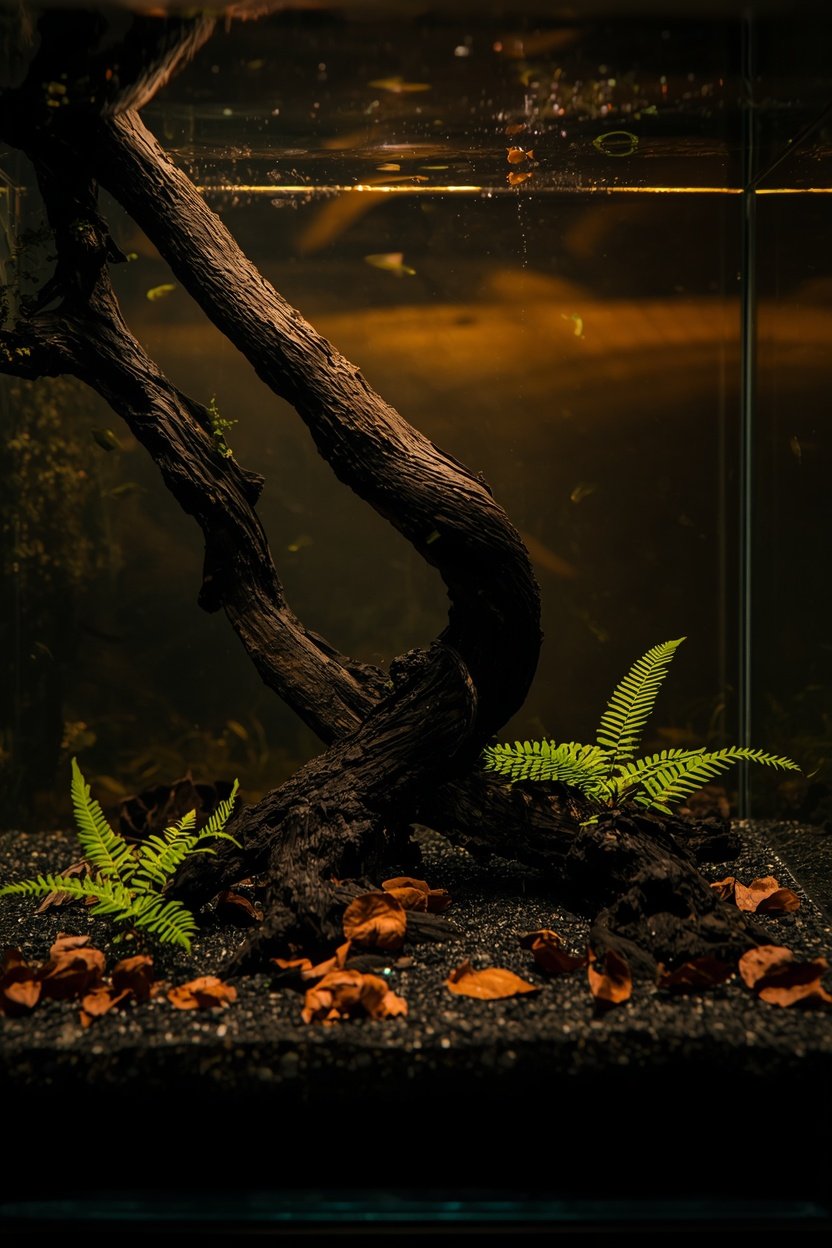
A blackwater rainforest theme creates a quieter, moodier version of the jungle aquarium. Instead of bright green everywhere, the design relies on dark wood, leaf litter, subdued plants, and warm amber-tinted water.
Start with a branching piece of driftwood that looks like exposed tree roots. Add a thin scattering of naturally colored dried leaves across the substrate, leaving clear areas where fish can move and feed. A dark or earthy substrate helps the wood and fish stand out without making the aquarium look artificial.
Blackwater-inspired aquariums can be visually beautiful, but beginners should remember that appearance is not the same thing as water chemistry. Tannins from natural wood and leaves can tint water tea-brown, but you should not deliberately chase a particular pH or hardness value without understanding the requirements of your chosen livestock. Test your water and select inhabitants that suit your actual conditions.
Keep the plant selection simple. Anubias, Java fern, mosses, and other tolerant plants can provide greenery around the wood while preserving the open, shadowy character of the theme. Use gentle lighting rather than an extremely bright fixture.
This style is especially attractive if you want an aquarium that feels like a small piece of rainforest floor rather than a bright display tank.
3. Riverbank Jungle
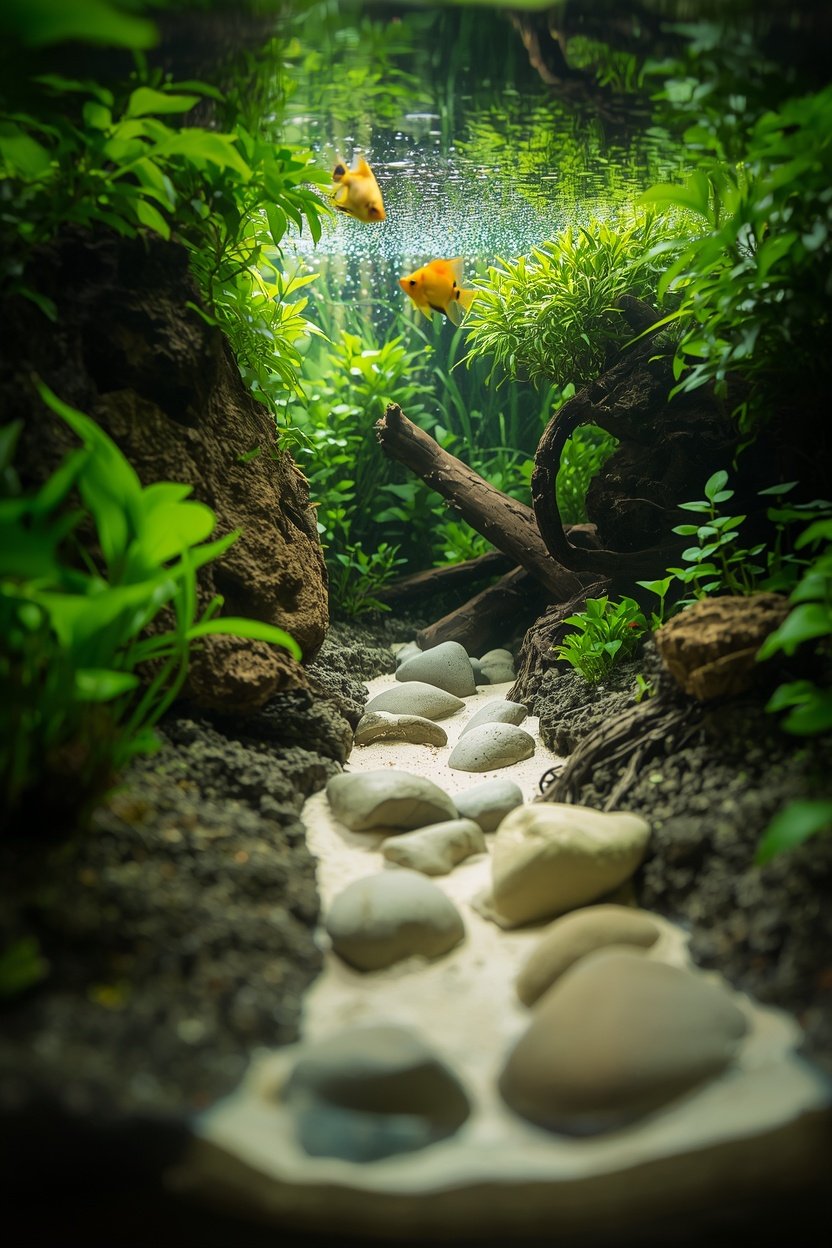
The riverbank jungle theme is a great choice when you like the feeling of a stream running through dense vegetation. Rather than building a heavily planted wall, create a visible river path through the aquarium.
Use smooth rounded stones in several sizes to suggest a natural stream bed. Position larger pieces partly below the substrate and smaller stones around them so the layout feels settled rather than arranged on top. Add a piece of driftwood along one side of the stream, then plant taller greenery behind it.
The most important visual trick is contrast. Dense plants should occupy one side or the rear of the aquarium while the foreground remains more open. A pale sand path can guide the eye from the front glass toward the back, making a modest aquarium feel deeper.
Choose plants based on your lighting and maintenance ability. You do not need a dozen species. A few dependable plants repeated in groups often look more natural than a collection of unrelated varieties.
This theme also gives fish useful visual structure: plants and wood provide cover, while the open stream section provides swimming room. Just remember that the finished layout should never be used to justify overstocking. Fish still need an appropriately sized aquarium, filtration, compatible tank mates, and stable water quality.
For beginners, the riverbank concept is excellent because you can improve it gradually. Start with the hardscape, plant lightly, and allow the aquarium to develop instead of trying to make it look mature on day one.
4. Flooded Forest Roots
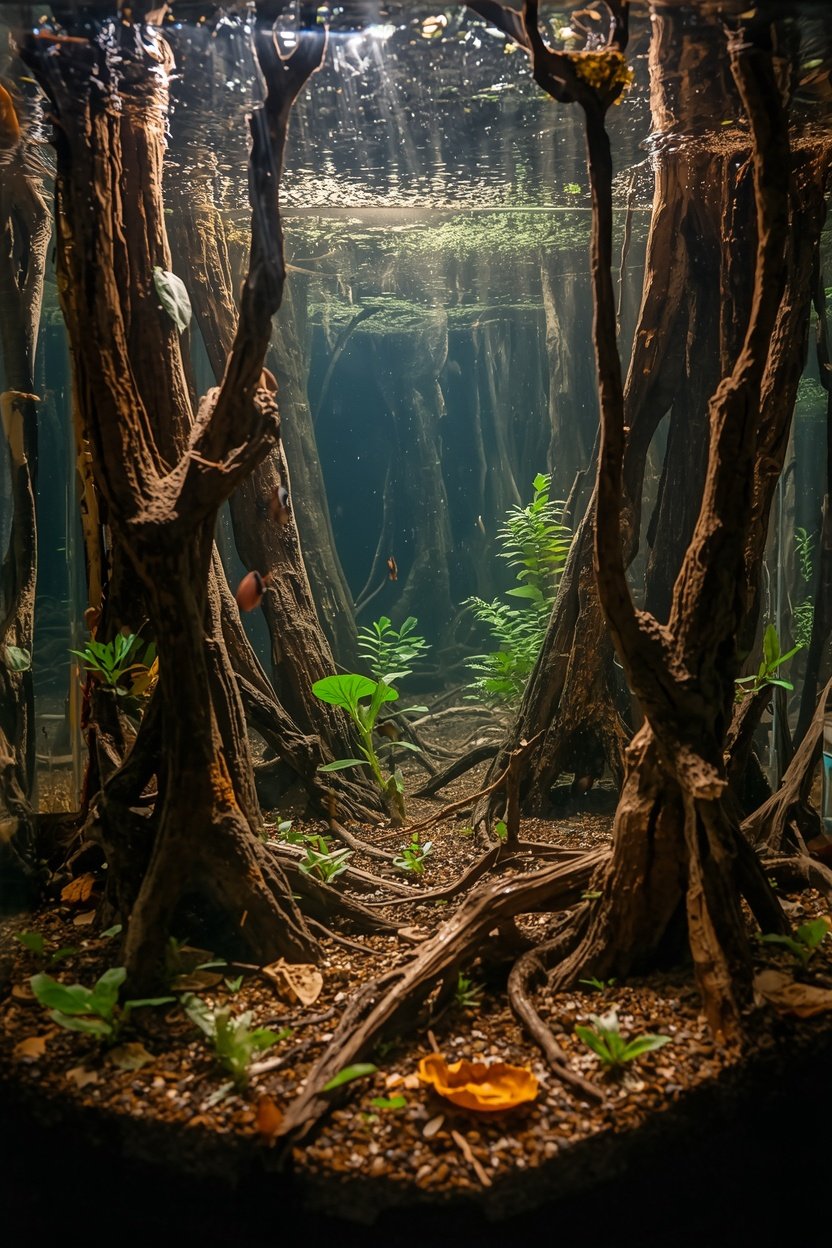
For a more dramatic jungle theme, recreate the feeling of a flooded forest after seasonal water rises. The defining feature is a network of exposed roots descending into the aquarium.
Choose several pieces of slender driftwood rather than one oversized centerpiece. Arrange them vertically and diagonally so they look as though tree roots continue above the waterline. Keep the lower ends partly buried in the substrate, then soften the structure with moss and small plants.
A flooded-forest design benefits from negative space. The roots should create windows through which you can see fish, not form an impenetrable wooden wall. Dark brown wood against green plants creates strong depth even in a relatively simple aquarium.
You can also add a few natural leaf shapes on the bottom for a seasonal, forest-floor impression. Avoid collecting leaves, wood, or stones from unknown outdoor locations unless you know they are safe for aquarium use and free from pesticides or contaminants.
Lighting should be slightly warm and directional. A soft glow from above can create the impression of sunlight filtering through a canopy. Keep the effect subtle; the aquarium should still look like a real ecosystem rather than a themed display.
This layout works particularly well for fish that appreciate cover and shaded areas, but livestock choice should always come first. Research the species' adult size, behavior, water parameters, and compatibility before designing the final community.
5. Mossy Jungle Creek
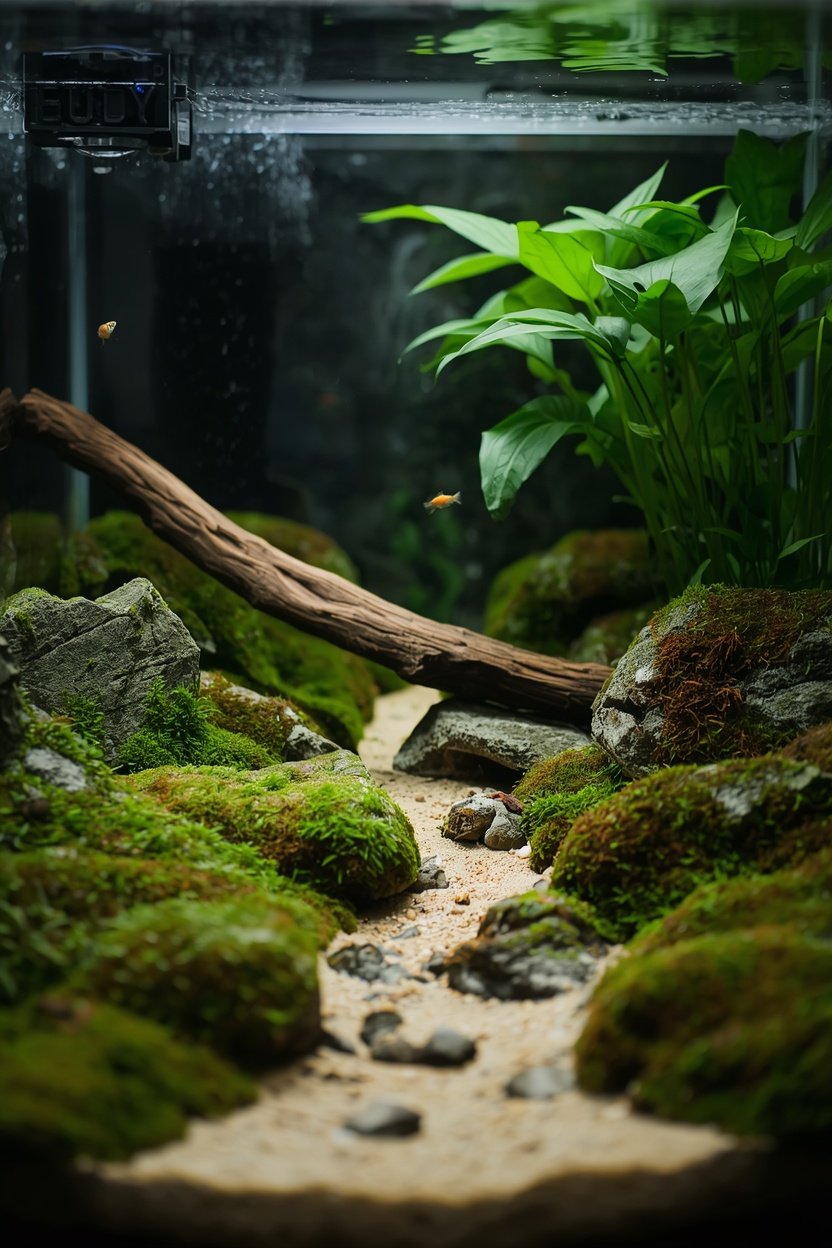
If you prefer a softer, greener jungle tank, build a mossy creek theme. This style combines a small amount of stone, low-growing moss, compact plants, and a narrow open channel.
The hardscape can be very simple. Use a few irregular rocks to form a shallow creek edge and place a small branch of driftwood across or beside the channel. Attach moss to the wood and selected rocks so the structure looks naturally aged.
The secret is restraint. Beginners sometimes buy many different plants because each one looks attractive at the store. The result can be visually noisy. Instead, repeat two or three plant textures. Moss creates fine detail, broad leaves create contrast, and one taller plant group adds height.
A gentle green color palette makes this theme easy to live with. It also photographs beautifully because the moss catches small highlights from the aquarium light.
Do not assume that a heavily planted aquarium is automatically maintenance-free. Plants need appropriate light, nutrients, and regular pruning, and dense growth can make cleaning the glass and reaching equipment more difficult. Keep the front glass and filter intake accessible.
This theme is ideal for beginners who want a natural aquarium without the darker mood of blackwater or the larger hardscape demands of a river-style layout.
6. Tropical Jungle Canopy
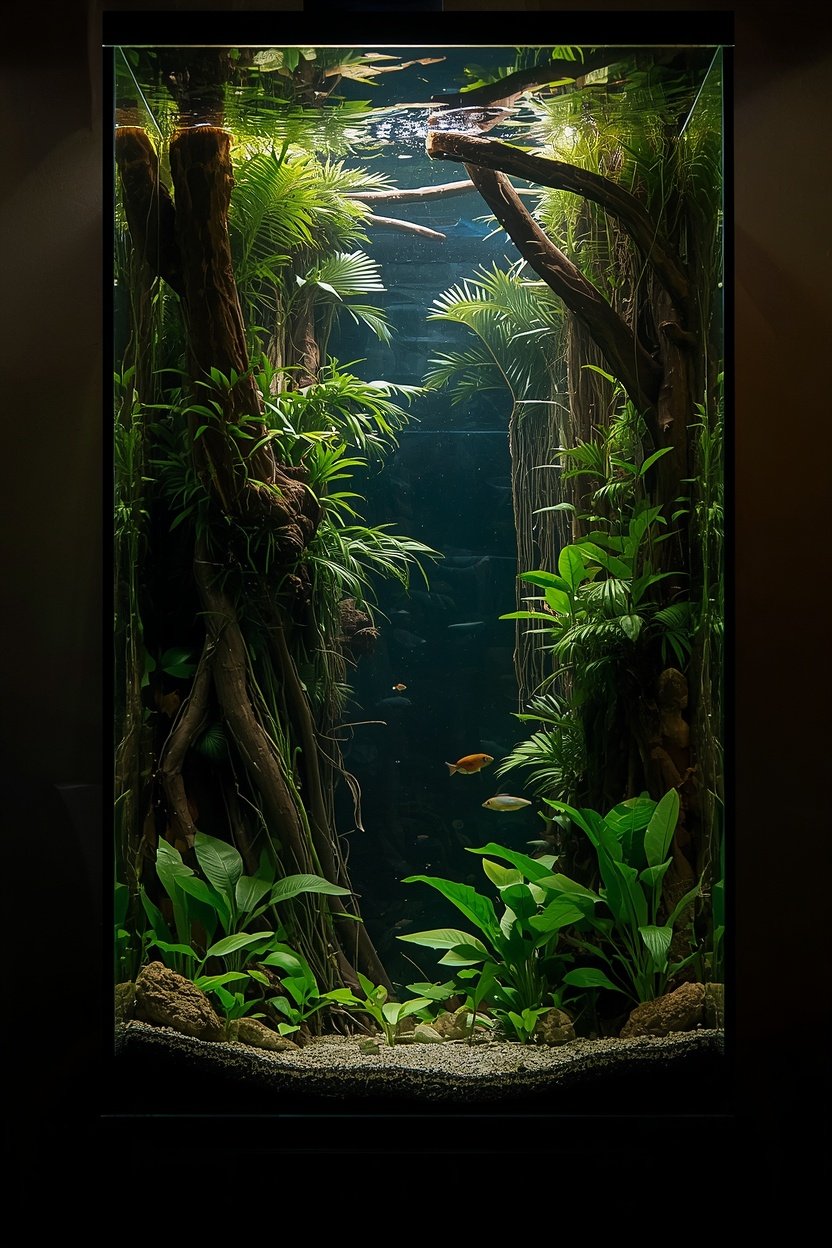
The tropical jungle canopy theme takes the jungle idea upward. Instead of focusing only on what is happening on the substrate, create the impression of vegetation hanging down from above.
Use tall stem plants or broad-leaved plants at the back and sides, then allow selected leaves to overlap toward the center. Driftwood branches can extend upward like submerged tree limbs. Keep the center or front section relatively open so the aquarium still has visual breathing room.
A dark background can make the foliage appear denser, while a warm aquarium light creates a natural sun-dappled effect. The strongest compositions usually have three layers: a darker rear mass, a middle layer of branches and leaves, and an open foreground.
For a beginner, the best version is a low-tech interpretation rather than an attempt to reproduce a competition aquascape. Choose plants known to tolerate your available light, keep the filtration appropriate for the tank, and accept that growth will take time.
Remember that a jungle theme is an aesthetic direction, not a stocking rule. The fish should determine the aquarium's size, water conditions, shelter, swimming space, and maintenance needs. Once those basics are correct, the canopy style can make the tank feel dramatically larger and more immersive.
The result is a peaceful under-the-trees effect that can work in both modern and traditional interiors.
How to Make Any Jungle Theme Look Natural
Use uneven plant heights. Nature rarely grows in perfectly level rows, so combine low, medium, and tall forms. Repeat a few species rather than scattering many unrelated plants throughout the tank.
Create a focal area and leave breathing room. A completely packed aquarium can look smaller and makes maintenance harder. One open swimming area, a visible path, or a clear view through the roots gives the eye somewhere to rest.
Think about maintenance while you build. Keep the front glass accessible, avoid burying equipment where it cannot be serviced, and leave enough room around the filter intake and heater.
Let the aquarium mature. Jungle layouts often look better after plants settle in and fill the spaces around wood and stone. Resist constantly rearranging the tank; make small adjustments as growth reveals what needs more or less space.
Final Thoughts
The best jungle fish tank is not necessarily the one with the most plants, the largest piece of driftwood, or the most exotic fish. It is the one where the design, equipment, livestock, and maintenance routine work together.
For the easiest starting point, try the Amazon Rainforest Jungle or Mossy Jungle Creek. If you prefer a darker, more atmospheric display, the Blackwater Rainforest or Flooded Forest Roots can create that mood. Riverbank Jungle is ideal if you like visible sand and stone pathways, while Tropical Jungle Canopy creates a dramatic layered effect.
Start simple, cycle the aquarium properly, choose hardy plants, and give the layout time to develop. A beginner-friendly jungle tank should become more beautiful as it grows—not more difficult to keep alive.
