
I used to think of aquarium design purely in terms of what goes inside the glass — the rocks, the plants, the fish. It wasn't until I started researching large-scale built-in installations, the kind found in hotel lobbies and ambitious home renovations, that I realized there's an entirely different discipline at work in those projects: aquarium architecture, where the tank itself becomes part of a building's actual structure and design language, not just an object placed inside a finished room.
This guide introduces four core principles behind that discipline, from the structural engineering large installations demand to the emerging idea of aquariums as functional, biophilic building systems. Each principle includes a detailed image prompt so you can visualize the concept in practice.
Where Decorating Ends and Architecture Begins
The line between aquarium decorating and aquarium architecture isn't about size alone — it's about whether the water feature is designed as part of the building's own structure and systems, or simply placed within a room that would function identically without it. A recessed wall tank, a room-dividing installation, or a humidity-contributing lobby feature are all architectural in a way a standalone tank on a stand simply isn't, regardless of how large that standalone tank might be.
1. Structural Integration: Building Around Load and Weight
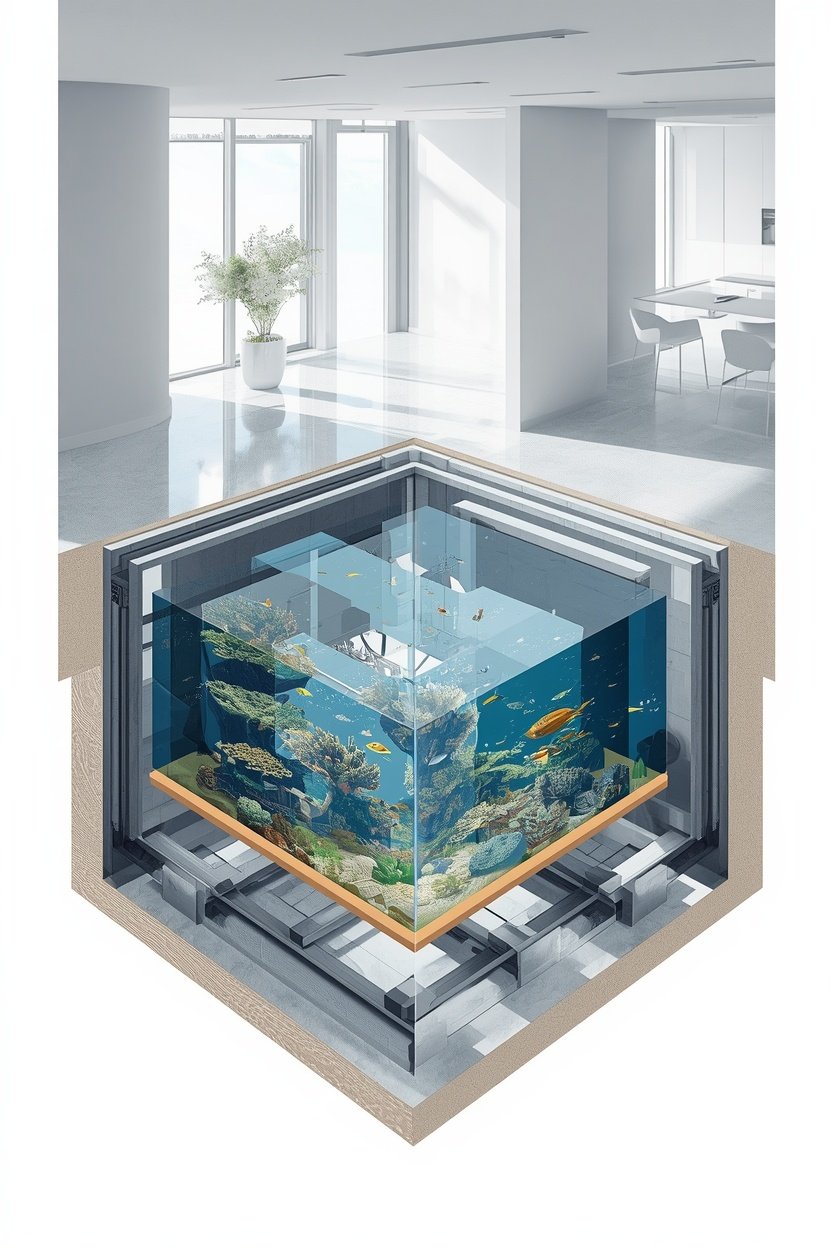
The first and most fundamental principle of aquarium architecture is respecting just how heavy water actually is. A single gallon weighs roughly 8.3 pounds, meaning even a modest 55-gallon tank exceeds 450 pounds once filled, glass and stand included, and large architectural installations can weigh several tons. Any built-in or structurally integrated aquarium has to begin with an honest assessment of floor load capacity, ideally confirmed by a structural engineer rather than estimated by eye.
This is where aquarium architecture diverges most clearly from standard aquarium decorating: a recessed wall tank or a floor-level structural aquarium isn't just a design choice, it's a load-bearing decision that affects the building itself. Reinforced flooring, dedicated support beams, or a ground-level placement bypassing upper floors entirely are all common engineering solutions depending on a building's existing structure and the scale of the planned installation.
Getting this foundational step right is what separates a genuinely architectural aquarium feature from an oversized decorating mistake, and it's the reason ambitious built-in tank projects typically involve a contractor or structural engineer from the earliest planning stages, not as an afterthought once the design is already finalized.
2. Room-Defining Water Features: Aquariums as Spatial Boundaries
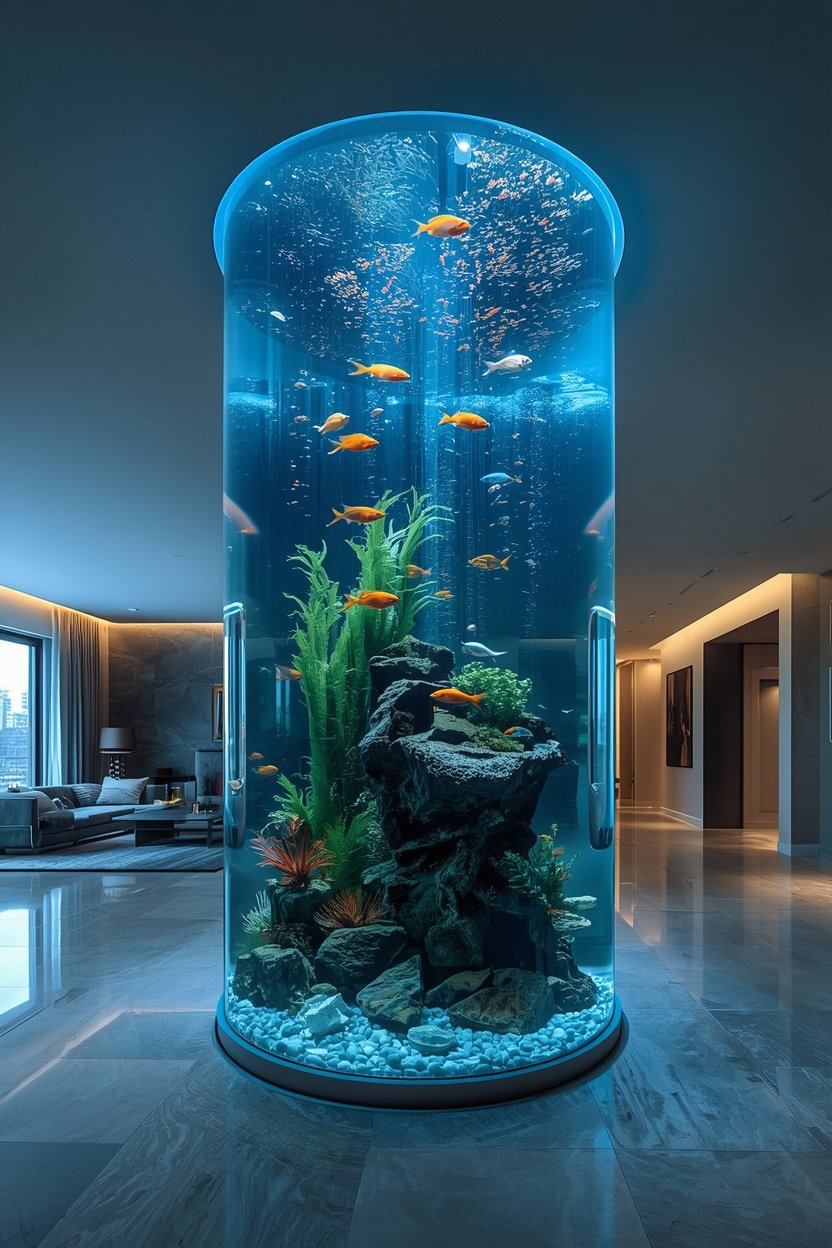
Beyond simply decorating a room, an aquarium can function architecturally as a spatial divider, defining the boundary between two areas while still allowing light, movement, and visual connection to pass between them. A dual-sided tank built into an opening between a living room and a hallway, or a full-height cylindrical aquarium anchoring an open-plan layout, uses water as a genuine architectural material rather than a piece of furniture placed within an already-defined room.
This approach requires thinking about the aquarium from multiple vantage points simultaneously, since a room-dividing installation is viewed and experienced from at least two distinct angles rather than a single front-facing perspective. Equipment access, lighting, and aquascaping all need to account for this dual visibility, which is considerably more complex than designing a tank meant to be seen from one side only.
When executed successfully, a room-defining aquarium does something few other design elements can: it creates a boundary that's simultaneously solid and completely permeable to light and view, offering a spatial experience unique to water as a building material.
3. Water as Architectural Focal Point: Scale and Drama
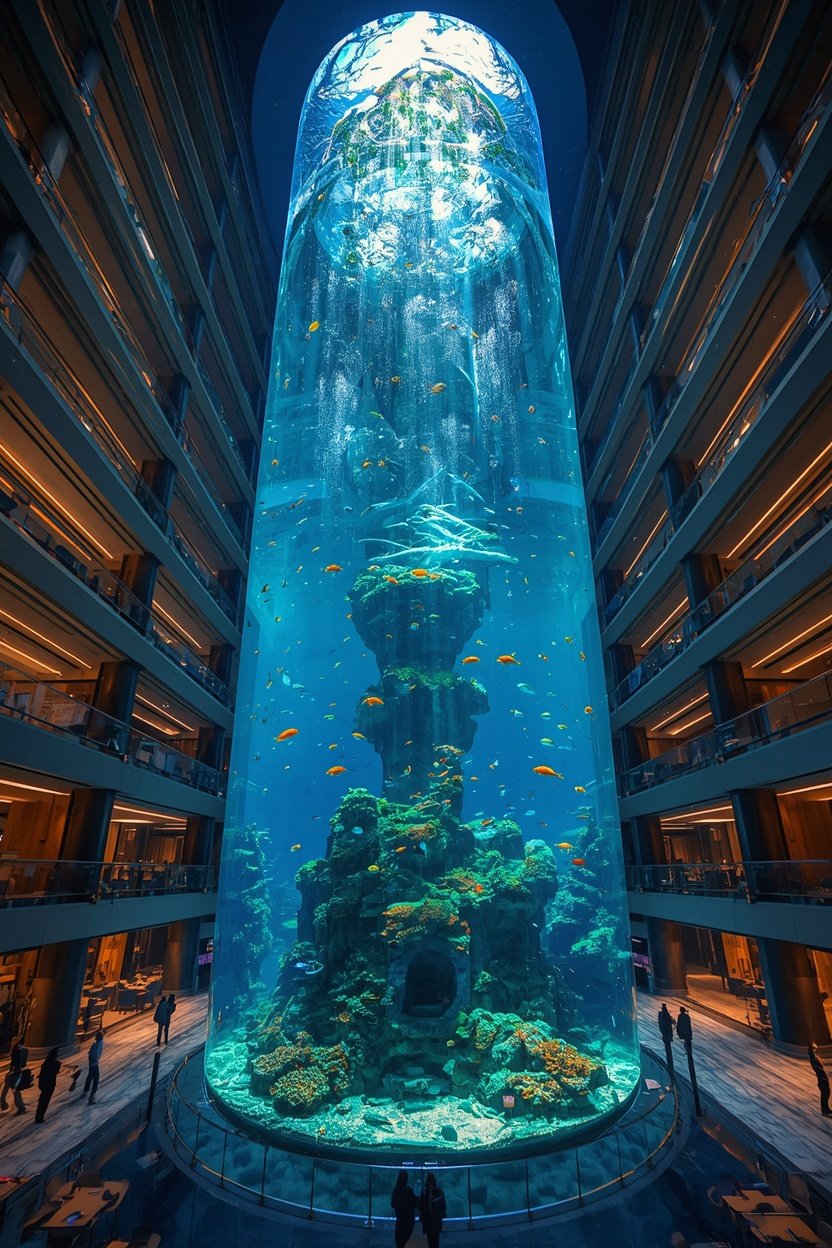
Some of the most recognizable examples of aquarium architecture exist at a genuinely monumental scale — hotel lobbies with floor-to-ceiling reef displays, office atriums built around a central water column, or public spaces where an aquarium serves as the defining architectural gesture of the entire room. At this scale, the aquarium stops being an accessory to the architecture and becomes the architecture's central organizing idea.
Designing at this scale introduces considerations far beyond typical home aquascaping: viewing angles from multiple floors, structural columns integrated directly into the tank's design, specialized life support systems capable of supporting the sheer biological load such a large system demands, and often a dedicated behind-the-scenes service area invisible to visitors but essential to the tank's daily operation.
While few homeowners will ever build at this scale, the underlying principle scales down productively: treating an aquarium as a genuine focal point the surrounding architecture is designed around, rather than an object placed into an already-finished room, produces a noticeably more considered, cohesive result even in a modest residential installation.
4. Biophilic Design: Aquariums as Functional Building Systems
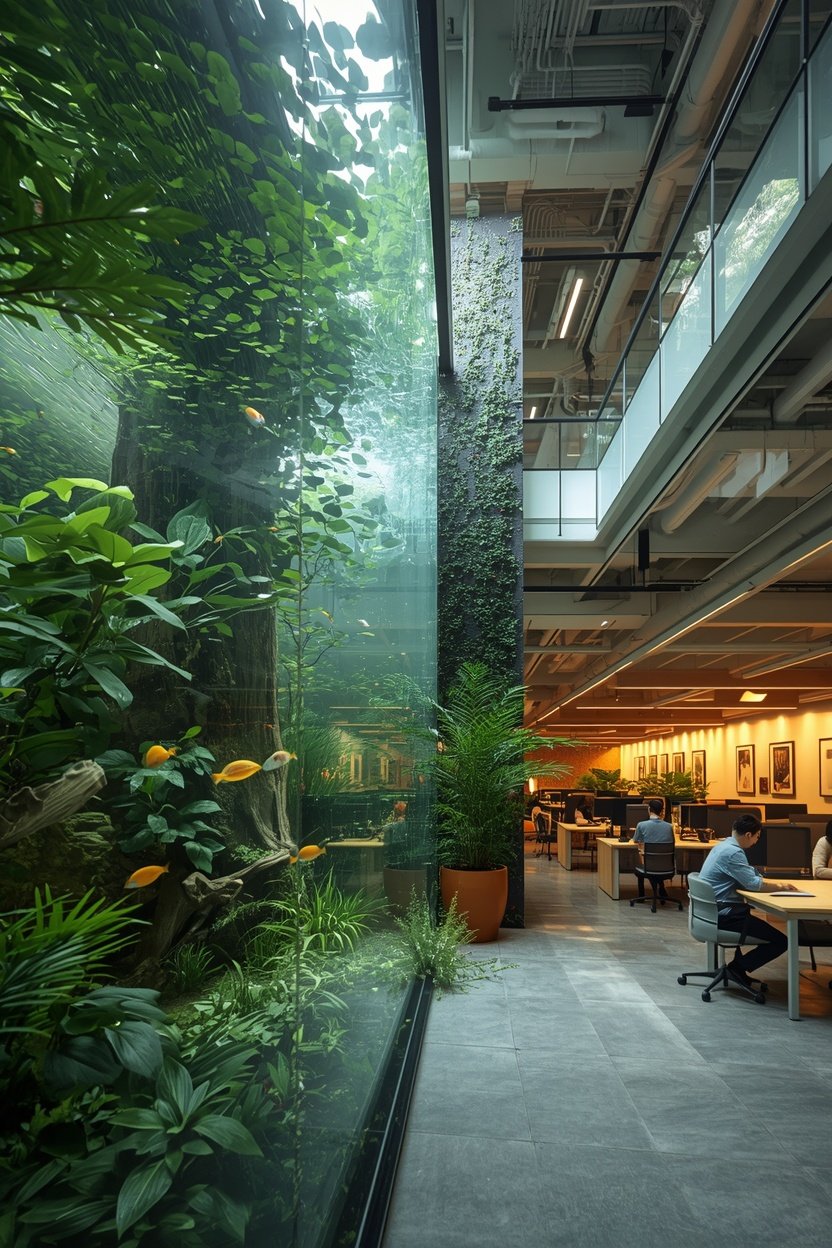
The newest direction in aquarium architecture treats water features not just as visual elements but as functional contributors to a building's broader environmental design, following principles from the biophilic design movement that emphasizes genuine, functional connections to nature rather than purely decorative ones. A large architectural aquarium can contribute measurable humidity regulation, a degree of ambient temperature moderation, and documented psychological benefits tied to visible, moving water, benefits increasingly recognized in workplace and healthcare architecture specifically.
This functional framing changes how an aquarium gets planned from the outset, often involving collaboration with HVAC and environmental design consultants rather than treating the water feature as a purely aesthetic afterthought once the building's core systems are already finalized. A biophilic aquarium installation is planned as part of the building's actual environmental performance, not layered on top of it.
For a smaller residential project, this principle still applies in miniature: a home aquarium adds genuine humidity and ambient sound to a room, and designing around those real functional effects, not just the visual ones, produces an installation with benefits extending well beyond how it looks.
Getting Started With Architectural Thinking at Home
- Consult professionals early, not late. Structural engineers and contractors should be involved from the planning stage for any built-in or load-bearing aquarium project, not brought in after a design is finalized.
- Think in terms of building systems, not just decor. Consider how a large tank affects humidity, ambient sound, and even temperature in the surrounding space, not just how it looks.
- Plan for service access from the start. Even a beautifully integrated architectural aquarium needs a realistic, planned way to perform maintenance without disrupting the surrounding design.
- Scale ambition to your actual space and budget. The principles of aquarium architecture apply at any scale — a home project can borrow the same thinking without attempting a hotel-lobby-sized build.
Final Thoughts
Aquarium architecture reframes water not as decoration but as a genuine building material, one capable of defining spaces, contributing to a room's environmental performance, and serving as the organizing idea behind an entire design. Whether you're planning an ambitious built-in feature or simply thinking more intentionally about how a home aquarium interacts with its surrounding room, these four principles offer a genuinely different lens than typical aquascaping advice, one worth understanding even if you never build at monumental scale yourself.
Frequently asked questions
Do I need a structural engineer for any built-in aquarium?
For small, lightweight tanks on standard furniture, no, but any tank integrated into a wall, floor, or load-bearing structure should be reviewed by a qualified professional to confirm the building can safely support the added weight.
Can biophilic design principles apply to a small home aquarium?
Yes, even a modest tank contributes measurable humidity and ambient sound to a room, and thinking about those functional effects alongside the visual ones is a simple way to apply biophilic principles at a residential scale.
What's the difference between aquascaping and aquarium architecture?
Aquascaping generally refers to designing what's inside the tank itself, while aquarium architecture concerns how the tank relates to and integrates with the surrounding building's structure, spatial layout, and systems.
