
Walking into an aquarium store for the first time feels a bit like entering a candy shop. Glowing castles, twisted driftwood, bright plants and tiny ceramic caves all compete for your attention, and it is tempting to grab whatever looks prettiest. But a fish tank is a living home, not a display shelf. The best decorations do two jobs at once: they please your eye and they help your fish feel safe.
This beginner-friendly guide shares four easy aquarium decoration ideas, the safety checks worth making before you buy, and simple setup steps you can follow at home. By the end, you will know how to turn an empty glass box into a calm, healthy underwater world.
What to Check Before Buying Any Aquarium Decoration
Style comes second. Fish cannot tell you when something bothers them, so a few quick checks at the shop counter can save you plenty of worry later.
• Look for an aquarium-safe label. Craft items, toys and garden ornaments often carry paints or metal parts that can leach into the water.
• Run your fingers over every surface. Sharp edges can tear delicate fins, especially on bettas and long-finned goldfish.
• Measure the openings. Holes and archways should be wider than your largest fish, so nobody gets stuck.
• Think about water chemistry. Limestone and some shells slowly raise hardness and pH. That suits a few species and harms many others, so ask the staff or check your fish's needs.
• Rinse everything in plain water. Never use soap, detergent or bleach.
|
Expert tip: Aim to keep roughly one third of the tank open for swimming. Overcrowding the space with ornaments is one of the most common mistakes new aquarists make. |
Idea 1: A Driftwood and Live Plant Corner
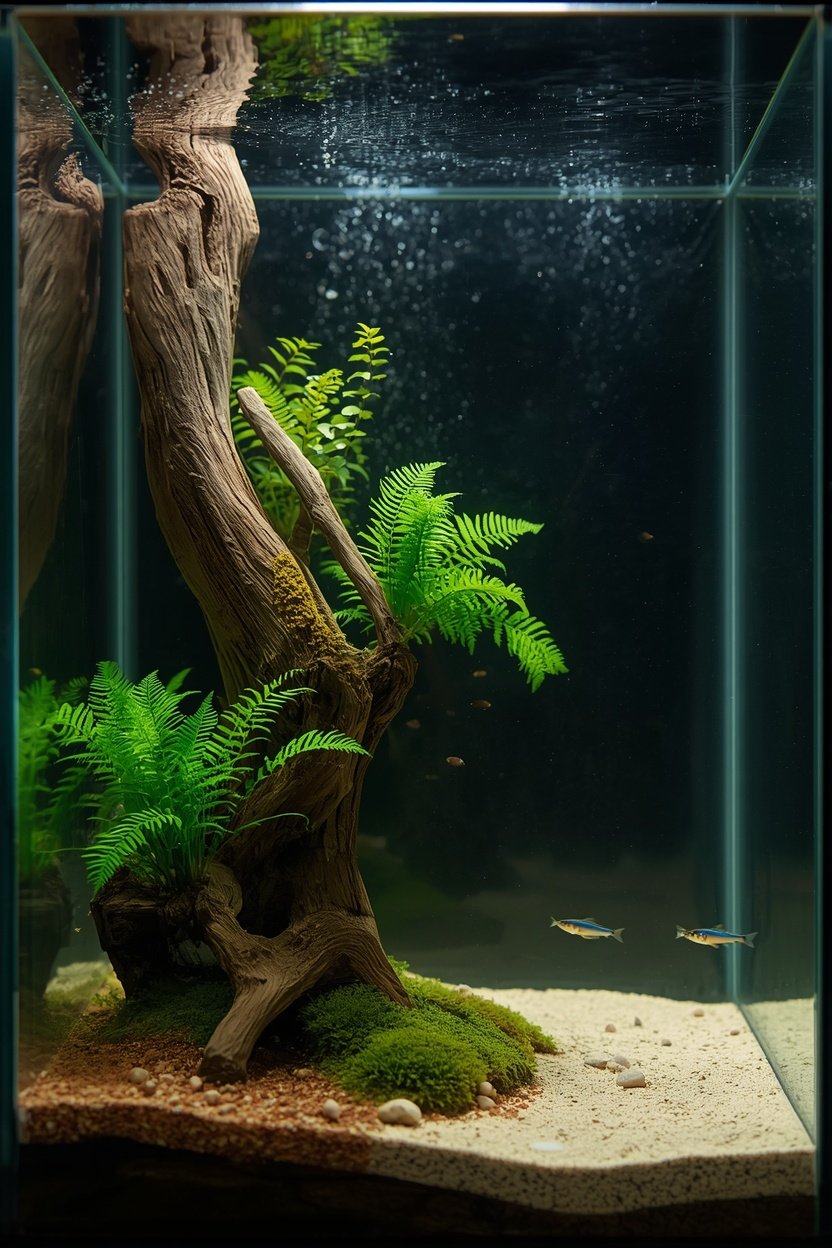
Driftwood brings a gentle, forest-floor look to a tank, and it doubles as a hiding place and a resting spot. Pair it with hardy plants such as Java fern or anubias, which you tie onto the wood instead of burying in gravel. Both tolerate modest lighting and forgive a beginner's missteps, which makes them popular first plants.
One thing to know: many pieces of driftwood release tannins, natural plant compounds that stain the water a light tea color. This is harmless for most freshwater fish and even resembles the blackwater streams that bettas and many tetras come from. If you prefer clear water, soak the wood in a bucket for a few days and refresh the water until it runs lighter.
Quick setup steps
1. Soak the wood until it sinks on its own.
2. Tie the plants to the wood with cotton thread, or dab on a little aquarium-safe gel glue.
3. Place the wood slightly off-center with the tallest branch toward the back, so the eye has a natural focal point.
4. Fill the tank slowly by pouring water onto a plate, which keeps your arrangement from shifting.
Best for: bettas, tetras, rasboras and small community tanks.
Idea 2: A Cozy Rock Cave Hideout
Shy fish need somewhere to retreat, and a cave gives them exactly that. Corydoras, loaches and many cichlids behave more confidently when they can slip into a shelter. Stones such as slate and dragon stone are popular because they are usually chemically inert, meaning they do not change your water's hardness or pH. Ask the team at your aquarium store to confirm before buying, since rock names vary between suppliers.
Stability matters more than looks here. Place your largest rocks directly on the glass bottom or on a protective mat, then add gravel around them. Fish that dig can undermine rocks resting on top of the substrate, and a tumbling stack can crack glass or injure fish. For taller structures, bond the pieces with aquarium-safe silicone and let it cure fully before adding water.
Quick setup steps
1. Scrub each stone with a stiff brush under running water. No soap.
2. Build the cave with an entrance wider than your biggest fish.
3. Press gently on each rock to test that nothing wobbles.
4. Bury the base lightly with substrate for a natural finish.
Best for: corydoras, loaches and dwarf cichlids.

Idea 3: A Sunken Castle or Ruins Theme
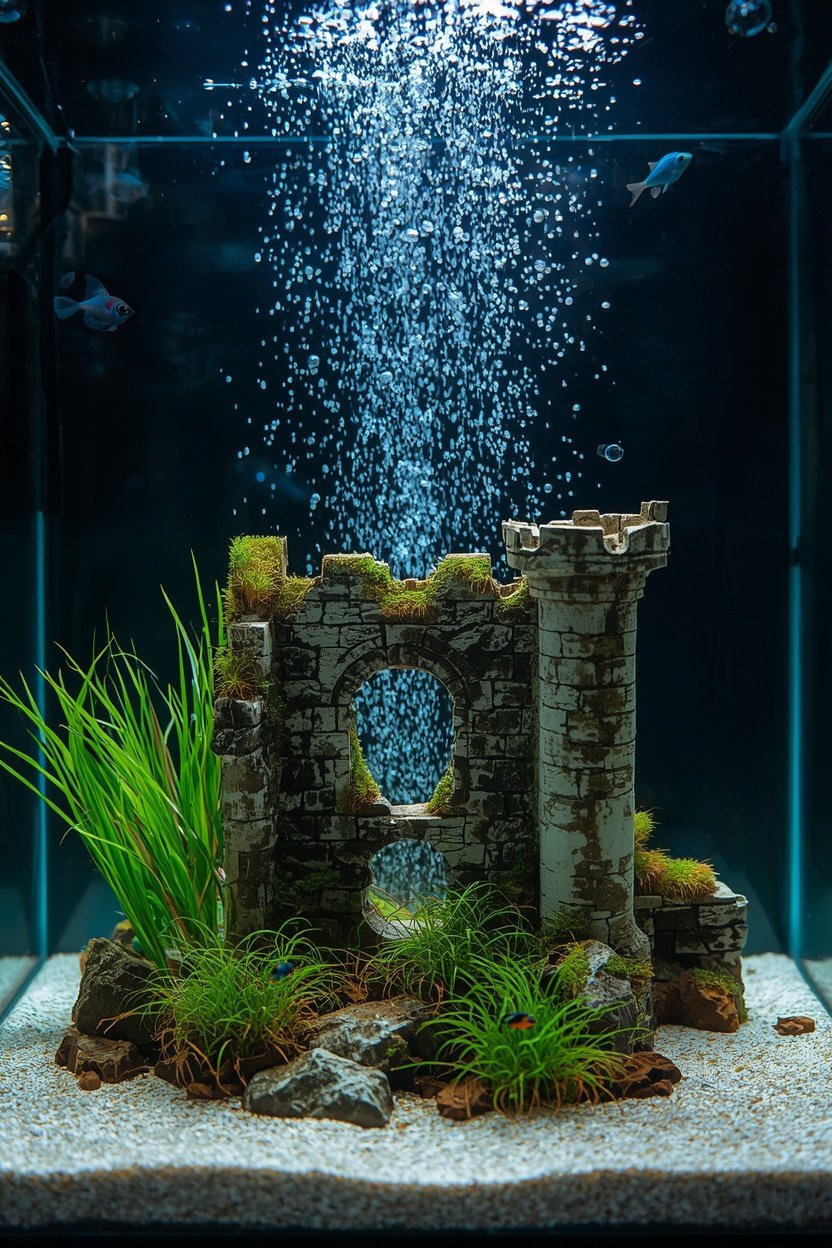
Castles and ruins are classics for a reason: they create instant personality and give the tank a clear centerpiece. Modern resin and ceramic ornaments are far more detailed than the plastic towers of the past, as long as you choose pieces labeled aquarium-safe. Skip painted garden statues and toys, because their coatings were never tested for life underwater.
The trick is restraint. Choose one main ornament and let plants soften its edges. Hair grass or small stem plants growing at its base make the ruins look ancient and overgrown. For extra movement, hide an air stone behind the castle; the rising bubbles add sparkle and improve surface oxygen exchange. Check every window and archway first. If a fish can swim in but cannot turn around, the opening is too tight.
Best for: community tanks and a family's first aquarium.
Idea 4: A Sandy Riverbed with Smooth Pebbles
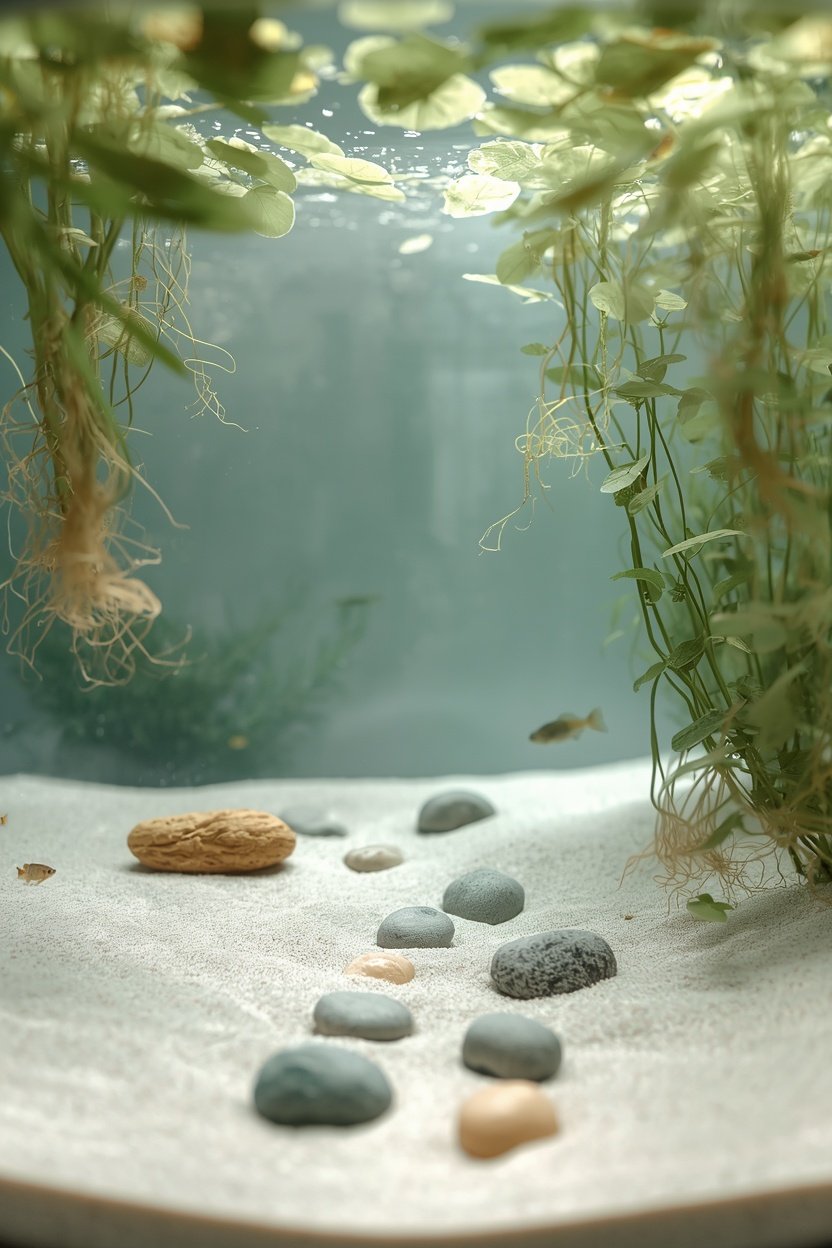
If you want a calm, minimalist look, copy a slow river. Fine sand, a scatter of rounded pebbles and a few floating plants make a tank feel open and peaceful. Sand is gentle on the sensitive whisker-like barbels of bottom feeders such as corydoras, which can wear down on sharp gravel.
Floating plants like frogbit or salvinia add shade that many shy fish appreciate, and they absorb nutrients that would otherwise feed algae. Keep the pebbles smooth and larger than your fish's mouths so nothing gets swallowed. One caution: crushed shells and coral sand slowly raise water hardness, so skip them unless you keep fish that enjoy hard, alkaline water.
Best for: corydoras, guppies and anyone who loves a clean, minimalist style.
Quick Comparison: Which Idea Fits You?
|
Decor Idea |
Skill Level |
Upkeep |
Great For |
|
Driftwood and plants |
Beginner |
Low to medium |
Bettas, tetras, small groups |
|
Rock cave hideout |
Beginner |
Low |
Shy bottom dwellers and cichlids |
|
Sunken castle ruins |
Very easy |
Low |
Community tanks and families |
|
Sandy riverbed |
Easy |
Medium |
Corydoras, guppies, minimalists |
Easy Care Tips to Keep Your Decor Looking Fresh
- Brush algae off decorations with a soft, tank-only brush during your regular water change.
- Never clean decor with soap, bleach or household sprays. Rinse it in plain dechlorinated water instead.
- Swap decorations gradually, because helpful bacteria live on their surfaces and changing everything at once can unsettle the tank.
- Retire any piece that cracks, rusts or flakes.
Frequently asked questions
Do fish really need decorations?
Most do. Hiding places lower stress, and stressed fish are more prone to illness. Even a simple cave or a cluster of plants makes a real difference.
Can I use decorations that do not come from an aquarium store?
Sometimes. Plain ceramic, glass or untreated natural items can work if they are free of paint, glue and metal parts. When in doubt, ask store staff or choose a product labeled aquarium-safe.
How many decorations are enough?
A good rule is to fill about two thirds of the space with decor and plants and leave the rest open for swimming. Smaller tanks need fewer pieces.
