
Imagine a small garden growing underwater, glowing softly on your desk or living room shelf. That is an aquarium garden. It blends healthy live plants, natural stones, and driftwood into one calm scene, and it gives your fish a home that feels like a real stream bank. If you have never set up a tank before, do not worry. This beginner-friendly guide explains the basics in plain words, shares four decor ideas you can copy, and walks you through your first setup step by step.
What Is an Aquarium Garden?
An aquarium garden, often called a planted tank or an aquascape, is a fish tank where the plants are the stars. Instead of plastic castles and bright gravel, you arrange living plants, rocks, and wood the way a landscape designer arranges a garden bed. Hobbyists have practiced this art for decades, and styles range from very simple stone layouts to lush, jungle-like scenes. The goal is always balance: healthy plants, happy fish, and clear water. Popular styles include the Japanese-inspired Nature Aquarium approach, the colorful Dutch style, and a relaxed natural jungle look. This guide covers all three, plus a compact desktop option.
Why Beginners Love Aquarium Gardens
Live plants do more than look pretty. They absorb ammonia and nitrate, which are waste compounds produced by fish, and they compete with algae for nutrients. They also give fish places to hide, which helps shy species feel safe. Please remember that plants support your filter; they never replace it. Many new keepers also find that watching a tank slowly grow is relaxing, and the slow pace teaches patience, which is the most useful skill in this hobby. A planted tank also suits almost any budget, because many hardy plants are inexpensive and multiply on their own over time.
What You Need Before You Start
Good gear keeps your first attempt simple. Choose a tank between 10 and 20 gallons (roughly 40 to 75 liters). Very small tanks change water conditions quickly, so a slightly larger tank is more forgiving for beginners.
|
Item |
Why it matters |
Beginner choice |
|
Filter |
Removes debris and hosts helpful bacteria |
Sponge or hang-on-back filter |
|
Light |
Plants need it to grow |
Full-spectrum LED on a 6 to 8 hour timer |
|
Substrate |
Roots anchor and feed here |
Aqua soil, or sand with root tabs |
|
Water conditioner |
Removes chlorine from tap water |
Any aquarium dechlorinator |
|
Test kit |
Tracks ammonia, nitrite, nitrate |
Liquid test kit |
|
Heater |
Keeps tropical fish stable |
Adjustable heater, if your species need it |
Four Aquarium Garden Decor Ideas
Idea 1: The Stone Garden (Iwagumi Style)
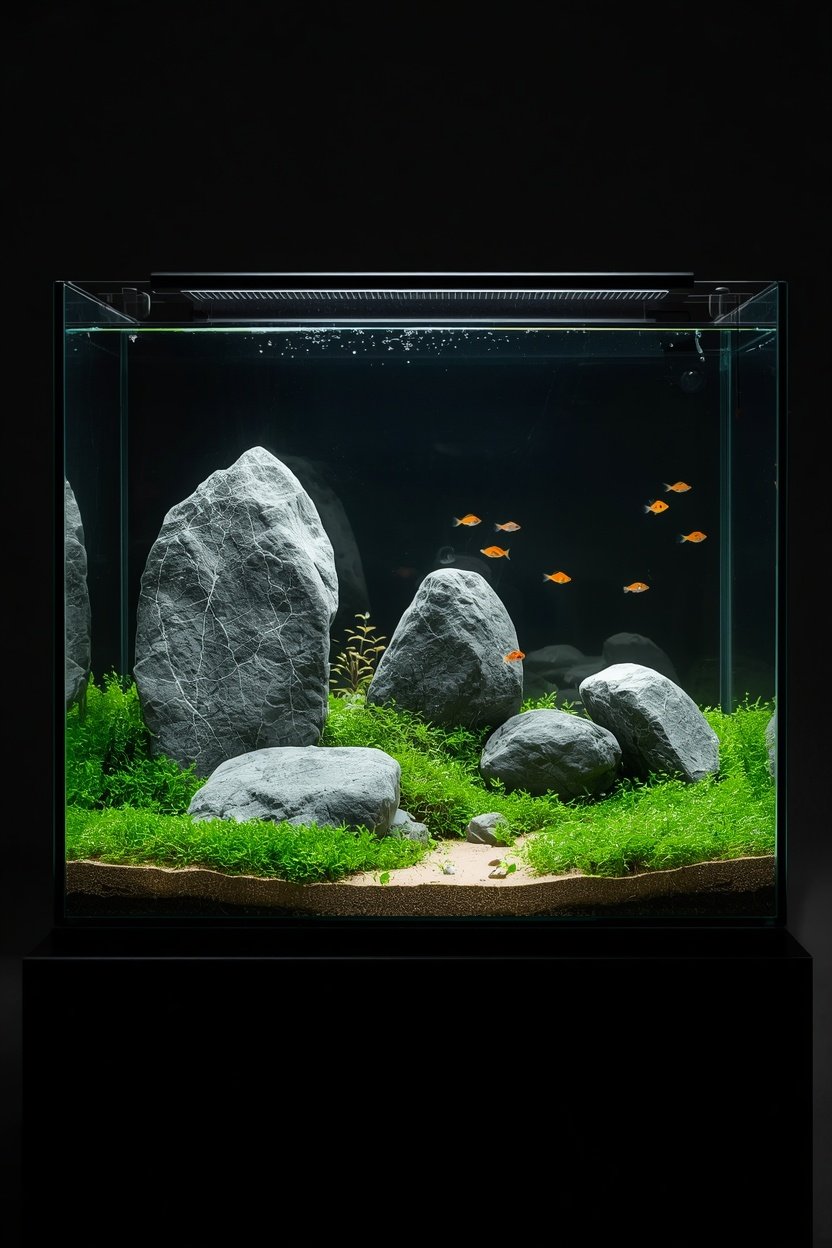
Inspired by Japanese rock gardens, this style uses three to five stones of different sizes and a low green carpet. Place one large "lead stone" slightly off center, then add smaller stones nearby so the group looks like it grew together. Leave the middle of the tank open, because empty space is part of the design. Dwarf sagittaria or Monte Carlo make gentle carpets. This layout is minimalist and calming, but carpet plants need stronger light, so it suits patient beginners.
Idea 2: The Driftwood Tree
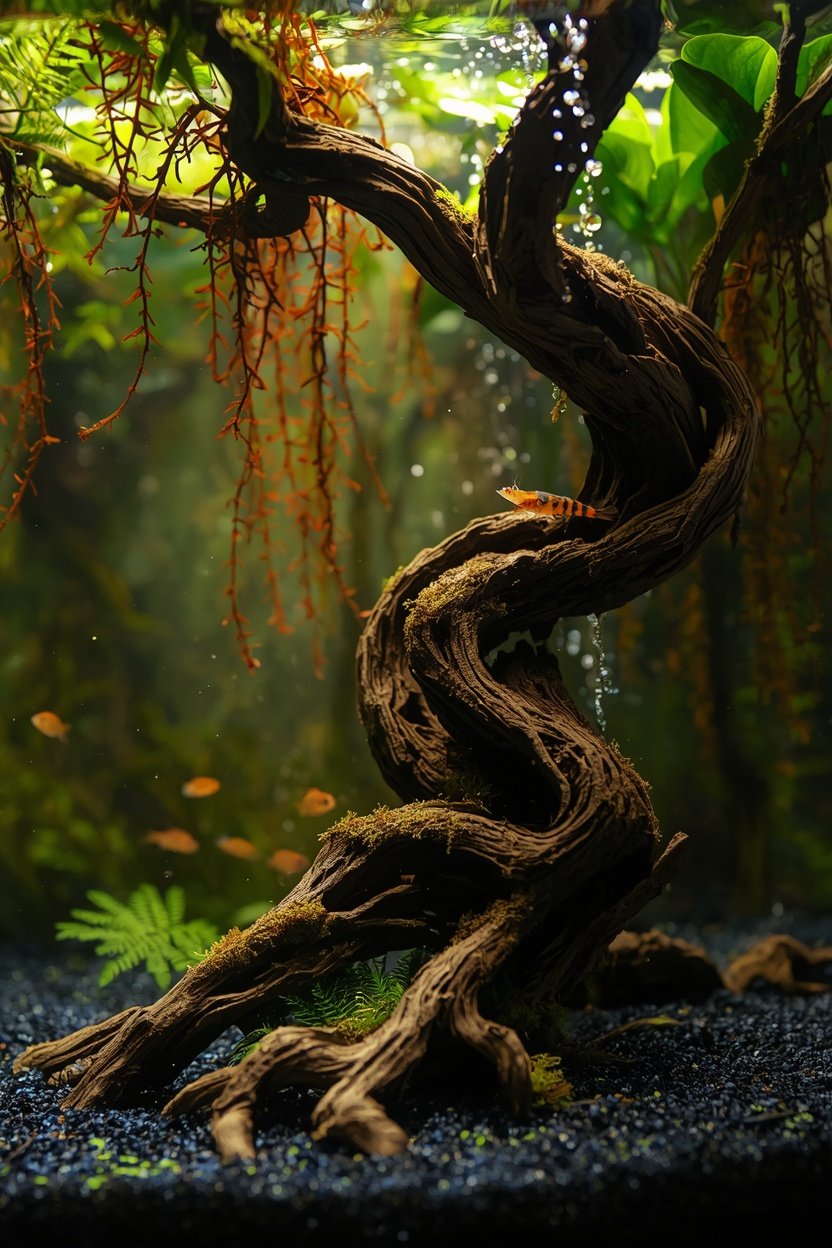
Pick a branching piece of driftwood and treat it like a tree trunk. Soak it in a bucket until it sinks, since fresh wood floats. Then tie Java fern and Anubias to the branches with cotton thread or a dab of aquarium-safe glue, and add Java moss to soften the edges. None of these plants need soil, and they tolerate lower light, which makes this the most forgiving idea on the list. One tip: never bury the thick stem (the rhizome) of Java fern or Anubias, or it may rot.
Idea 3: The Dutch-Style Flower Bed
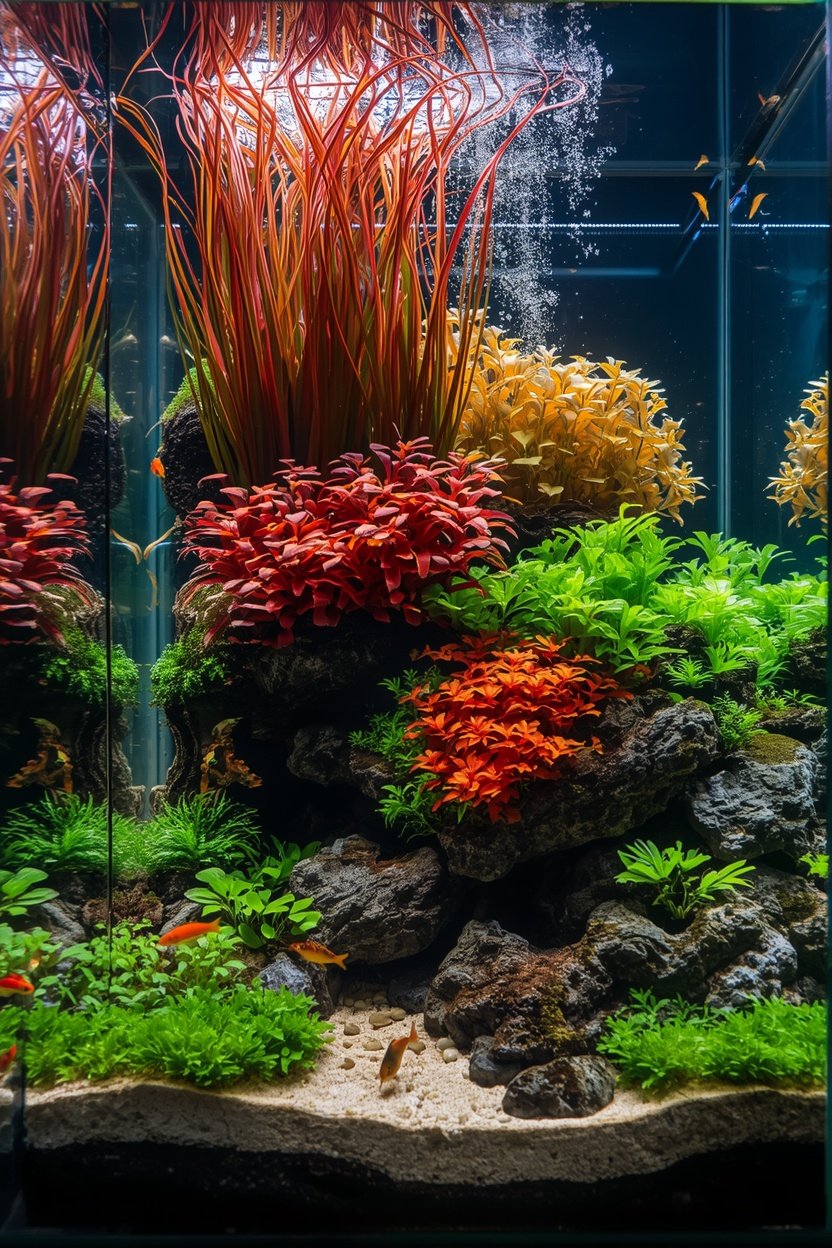
Dutch-style tanks look like colorful flower beds. Instead of stones and wood, you arrange plants in neat groups by height, color, and leaf shape. Place tall stem plants and Vallisneria at the back, medium red or orange stems such as Ludwigia or Rotala in the middle, and short Cryptocoryne in front. The result is vibrant and full of movement. It does need regular trimming, so expect a little weekly gardening time.
Idea 4: The Zen Sand River (Small Tank)
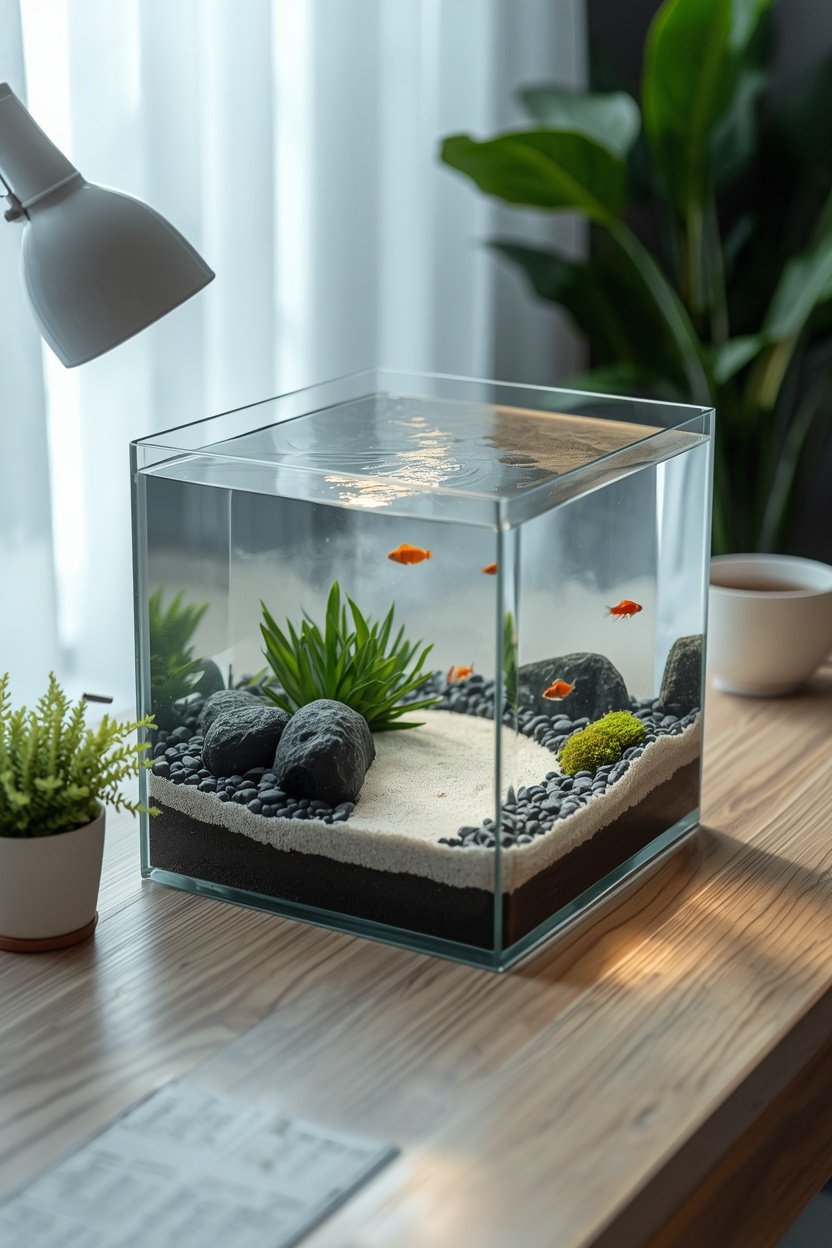
This idea works beautifully in a 5 to 10 gallon tank. Pour pale sand in a winding path from front to back, like a stream flowing through a garden. Line the edges with dark pebbles, then add a small cluster of Anubias petite and a compact Cryptocoryne on one side. Finish with a few small, peaceful fish. It is quick to set up and looks elegant on a desk, but small tanks need extra-careful water testing.
Step-by-Step Setup Guide
- Follow these steps in order. Rushing the early stages is the most common reason new tanks struggle.
- Rinse your stones, wood, and substrate with plain water (no soap ever).
- Add the substrate and slope it higher toward the back for depth.
- Place stones and driftwood first, because they are hard to move later.
- Plant from the back to the front using long tweezers.
- Fill the tank slowly by pouring water onto a plate so you do not disturb the layout, then add conditioner.
- Switch on the filter and light, and let the tank "cycle" for four to six weeks. This period grows the bacteria that keep water safe.
- Add fish only when ammonia and nitrite read zero, starting with just a few.
Best Beginner Plants and Fish
Start with tough plants: Java fern, Anubias, Cryptocoryne, Vallisneria, Amazon sword, and Java moss. They forgive small mistakes. For fish, small peaceful species such as ember tetras, harlequin rasboras, corydoras, and guppies are popular choices, along with cherry shrimp. Always check that every species you choose gets along and matches your water temperature. Your local aquarium shop can help you confirm this. Also buy only plants labeled as fully aquatic, because some plants sold as tank decor are really land plants that will rot underwater.
Common Beginner Mistakes to Avoid
- Too much light: leaving lights on for 10 hours or more usually invites algae. Use a timer.
- Too many fish too early: a new tank cannot handle heavy waste yet.
- Skipping the cycle: this is the leading cause of early fish losses.
- Overplanting: crowded plants block light and water flow.
- Using garden soil: it clouds water and can release unwanted substances.
Simple Weekly Care
Once the tank is stable, a simple weekly routine is enough. Change 20 to 30 percent of the water with conditioned water, trim any dead leaves, wipe the glass, and test the water. When cleaning the filter sponge, rinse it in a bucket of old tank water, not tap water, so you keep the helpful bacteria alive. Keep a small notebook with test results and dates. Spotting patterns early helps you fix problems before your fish feel stressed.
Frequently asked questions
How long does an aquarium garden take to set up?
The build takes an afternoon, but the cycling stage adds four to six weeks before fish go in.
Do I need CO2 for a beginner planted tank?
No. Hardy plants like Anubias and Java fern grow well without added CO2.
How many fish can I keep?
Start with fewer than you think you need. Add a few at a time and test the water after each addition.
