
When I set up my very first tropical tank, I genuinely didn't realize a heater was necessary at all — my living room felt warm enough, so I assumed the fish would be fine. Within a couple of weeks, my tank's temperature had swung noticeably between a cool morning and a warmer afternoon, and my fish started showing the kind of lethargy and stress that, looking back, was entirely preventable with a piece of equipment I'd skipped to save a little money.
This guide covers everything I wish I'd understood before that first tank: why most tropical fish genuinely need a heater, how to size one correctly for your specific tank, the different types available, and how to install one safely. Each section includes a detailed image to help visualize the concept before you shop for your own equipment.
Signs Your Tank's Temperature Isn't Stable
Before assuming your tank is fine without a heater, watch for a few telltale signs of temperature instability: fish clustering near the surface or bottom unusually often, reduced appetite, sluggish movement, or a thermometer reading that noticeably shifts between morning and evening. Catching these signs early, before they progress into more serious illness, is far easier with a reliable heater and a separate thermometer already in place.
1. Why Your Aquarium Needs a Heater (and Which Fish Actually Need One)
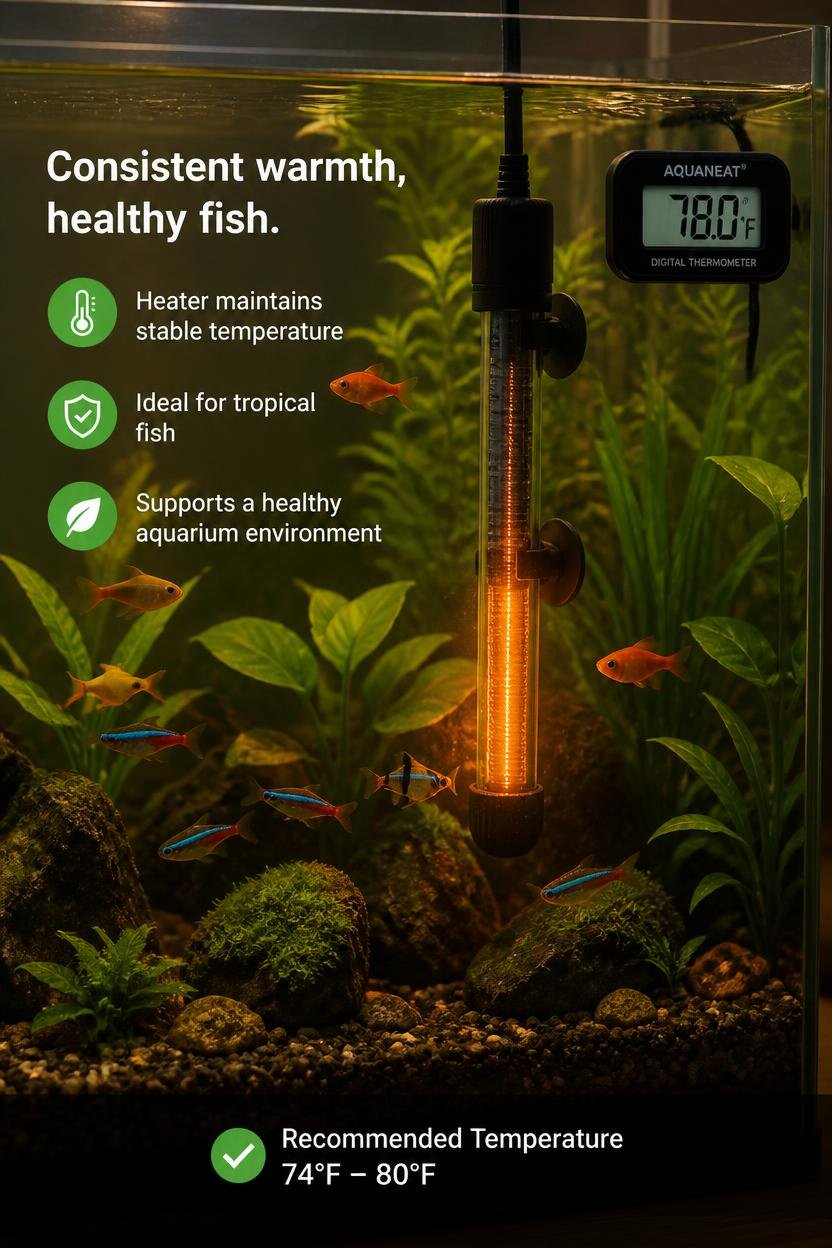
Most popular freshwater aquarium fish — tetras, bettas, guppies, mollies, and the majority of community species — originate from tropical regions where water temperature stays warm and relatively stable year-round, typically between 75 and 80°F. A room's ambient temperature, especially in colder months or in a house with air conditioning, rarely stays within that range on its own, which means an unheated tank can swing well outside what these fish actually need to stay healthy.
Temperature instability stresses fish in ways that aren't always immediately obvious. Fluctuating temperatures suppress immune function, slow digestion, and can trigger disease outbreaks in an otherwise healthy-looking tank, which is exactly why a heater is considered essential equipment for most tropical freshwater setups rather than an optional accessory.
A small number of species, generally called coldwater fish, like goldfish and white cloud mountain minnows, are adapted to cooler, more variable temperatures and don't require a heater in most home environments. Before deciding whether your tank needs one, it's worth confirming your specific fish species' actual temperature needs rather than assuming based on tank size or fish price alone.
2. How to Choose the Right Wattage for Your Tank Size
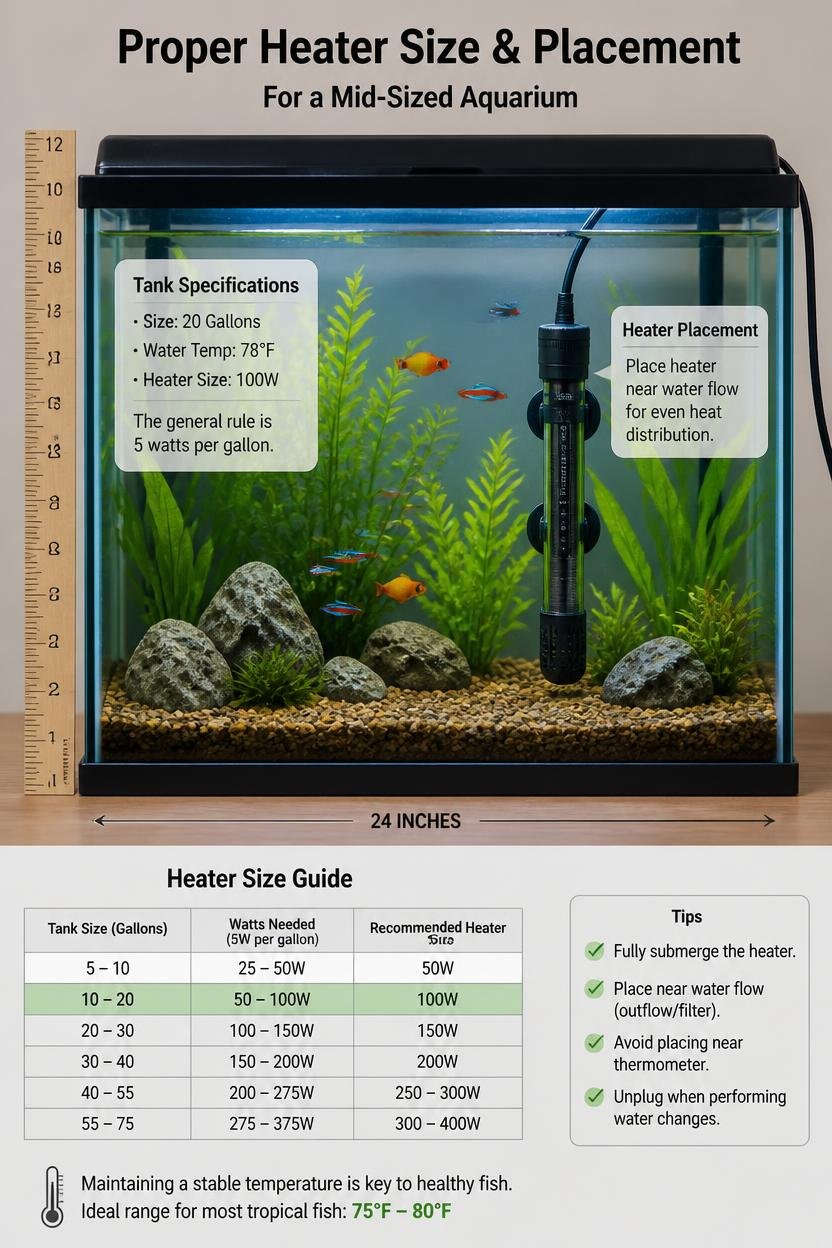
Aquarium heaters are rated in watts, and choosing the correct wattage for your specific tank volume is the single most important decision in the entire selection process. A heater that's too weak struggles to maintain a stable temperature, especially in a colder room, while an oversized heater can occasionally cause more dramatic temperature swings if its thermostat isn't finely calibrated, working harder than necessary for the actual volume of water involved.
A commonly used guideline is roughly 3 to 5 watts per gallon of water, meaning a 10-gallon tank generally needs a heater in the 30 to 50 watt range, while a 55-gallon tank might call for 165 to 275 watts. Colder rooms, larger temperature differences between your target range and typical room temperature, and open-top tanks that lose heat faster through evaporation all push your actual requirement toward the higher end of that range.
Many manufacturers list a recommended tank size range directly on heater packaging, which offers a useful starting point, though cross-checking that recommendation against the general watts-per-gallon guideline helps confirm you're not relying on an overly optimistic manufacturer estimate for a larger tank than the heater can genuinely support.
3. Understanding the Main Types of Aquarium Heaters
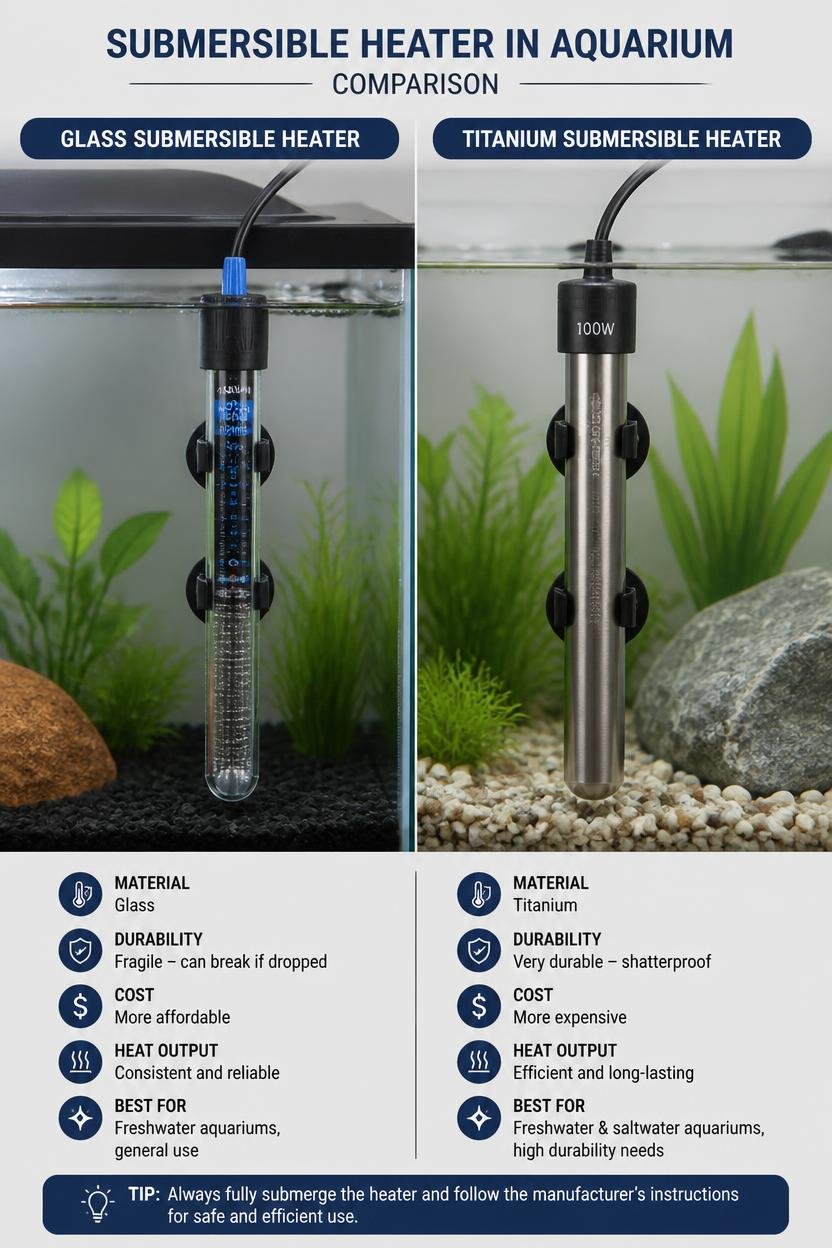
Submersible heaters, fully underwater and typically mounted with suction cups near the filter outflow for even heat distribution, are by far the most common type for home aquariums, offering a good balance of affordability, reliability, and ease of installation for beginners. Their fully submerged design also means the heating element stays consistently in contact with water, which tends to produce more even temperature regulation than partially submerged alternatives.
In-line heaters, installed within external canister filter tubing rather than inside the tank itself, keep all heating equipment completely out of view, which appeals to hobbyists prioritizing a clean, unobstructed aquascape. These typically cost more and require an existing canister filter setup, making them a less common choice for simpler beginner tanks.
Substrate heating cables, buried beneath the gravel or sand, are a specialized option primarily used in heavily planted tanks to create gentle water movement through the substrate, supporting root health, rather than serving as a tank's primary heat source. For most beginners setting up a first tropical freshwater tank, a standard submersible heater remains the simplest, most cost-effective, and most widely supported option.
4. Safe Installation and Placement Tips
Proper placement significantly affects how evenly a heater distributes warmth throughout the tank. Positioning a submersible heater near the filter's water outflow helps circulate heated water throughout the entire tank rather than creating a warmer pocket near the heater itself and cooler spots elsewhere, which matters especially in larger or irregularly shaped tanks.
Always fully submerge a heater according to its specific marked waterline before switching it on, since operating most heaters partially exposed to air can cause the glass or housing to crack from uneven heat distribution. Many modern heaters include a visible fill line directly on the unit, making this easy to confirm at a glance during setup.
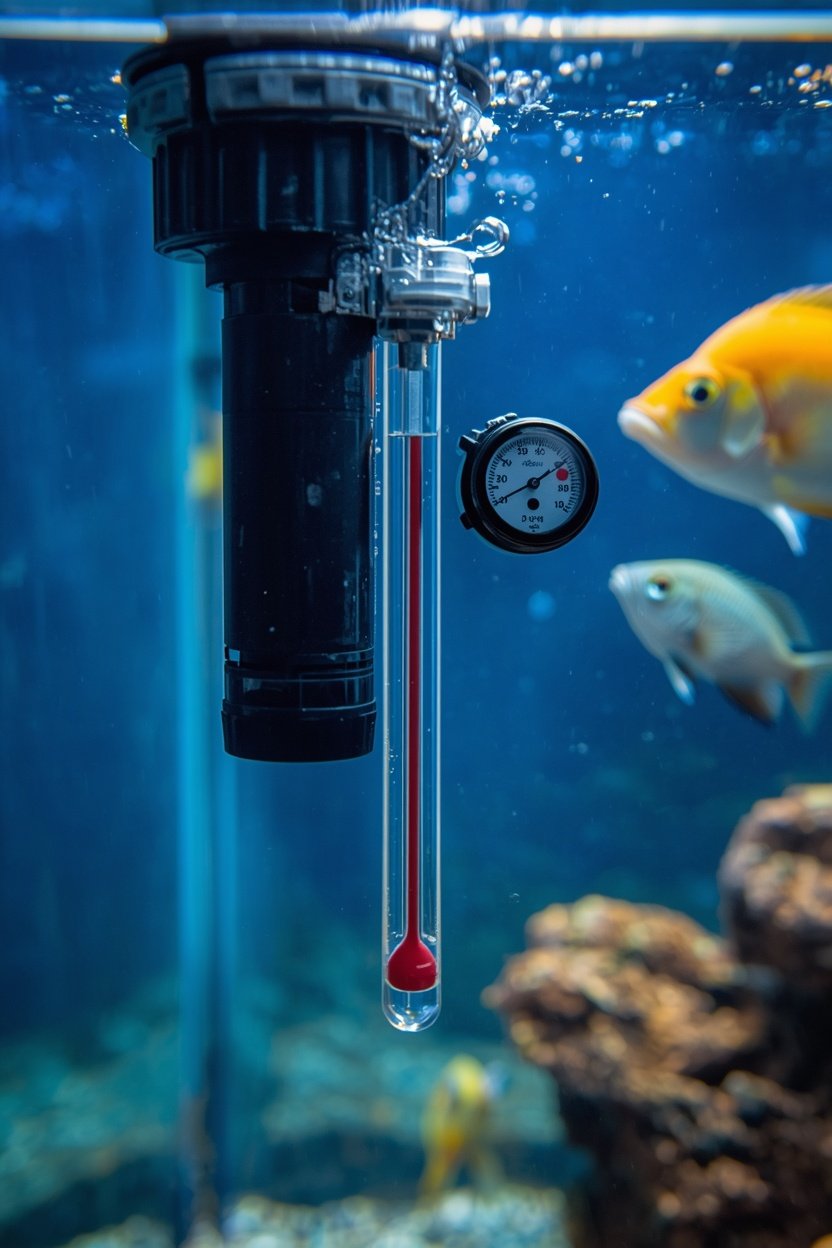
After installation, allow a new heater roughly 24 hours to stabilize at its set temperature before adding fish, and verify its accuracy with a separate aquarium thermometer rather than trusting the heater's built-in display alone, since even quality heaters can occasionally drift from their set temperature over time. This simple verification step catches a malfunctioning heater before it becomes a genuine problem for your fish.
Quick Heater Shopping Checklist
● Confirm wattage matches your actual tank volume. Use the 3-to-5-watts-per-gallon guideline as a baseline, adjusting upward for colder rooms or open-top tanks.
● Choose an adjustable thermostat model. A fixed-temperature heater offers far less flexibility than one you can manually set and adjust as needed.
● Look for a built-in safety shutoff feature. Many modern heaters automatically shut off if removed from water, reducing fire and damage risk.
● Buy a separate thermometer regardless of heater quality. Never rely solely on a heater's internal display to confirm actual tank temperature.
Final Thoughts
A reliable, correctly sized heater is one of the most important pieces of equipment in a tropical freshwater aquarium, even though it's rarely the most exciting purchase on a beginner's shopping list. Understanding why your specific fish need stable warmth, choosing the right wattage, selecting a heater type that suits your setup, and installing it safely together prevent one of the most common, entirely avoidable sources of stress and illness in a first aquarium.
Frequently asked questions
Do all aquariums need a heater?
No — coldwater species like goldfish and white cloud mountain minnows generally don't require one, but most popular tropical freshwater fish do need a heater to maintain stable, species-appropriate temperatures.
How long does it take a heater to warm up a tank?
This varies by tank size and heater wattage, but most properly sized heaters bring a tank to its set temperature within several hours to a day, and it's best to let this stabilize fully before adding fish.
Can a heater overheat my tank?
A malfunctioning or incorrectly calibrated heater can occasionally overheat a tank, which is exactly why pairing any heater with a separate, independent thermometer for regular verification is such an important safety habit.
