
When I set up my first aquarium, I assumed a good filter meant I could mostly leave the tank alone once the fish were settled in. Within a few weeks, cloudy water and a layer of algae on the glass taught me otherwise. Maintenance, it turns out, isn't an occasional chore you do when something looks wrong — it's a small set of consistent habits that prevent problems from showing up in the first place.
This guide breaks aquarium maintenance down into the four core tasks every tank genuinely needs, explained in plain language for anyone just starting out. Each task includes a detailed image prompt so you can visualize exactly how it's done, along with practical tips to help the whole routine feel manageable rather than overwhelming.
Why Consistent Maintenance Matters More Than Occasional Deep Cleans
A tank that looks fine on the surface can still be quietly accumulating waste, nutrients, and debris that only become a visible problem once they've built up significantly. Regular, smaller maintenance tasks prevent that buildup from ever reaching a crisis point, which is both easier on you as the caretaker and considerably less stressful for the fish living in water that stays consistently stable rather than swinging between neglect and sudden, drastic cleaning.
1. Weekly Partial Water Changes
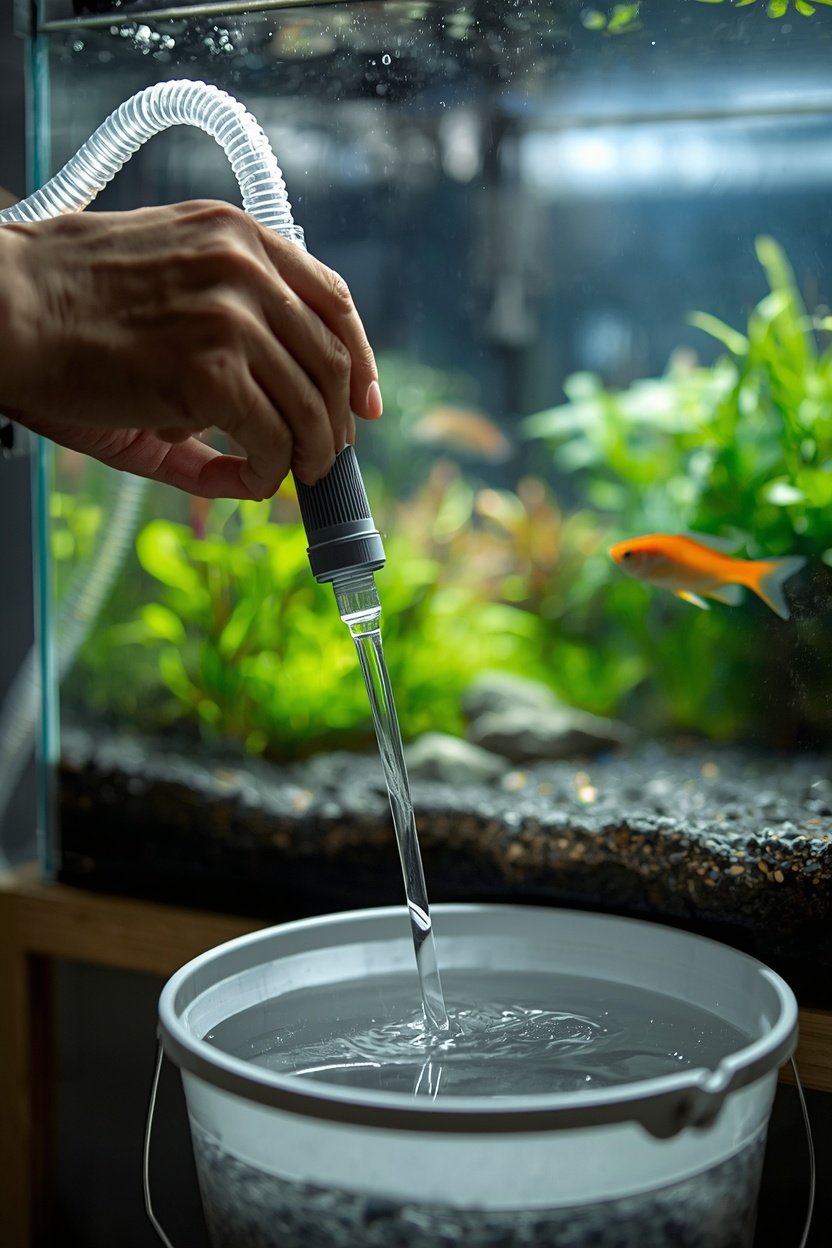
A partial water change, replacing roughly 10 to 25 percent of the tank's water on a weekly or biweekly basis, is the single most important maintenance task in the entire hobby. Even a well-filtered tank slowly accumulates nitrates and other dissolved waste products that filtration alone can't remove, and regular water changes are the most reliable way to keep those levels in a safe range for fish.
Use a gravel vacuum during this process to siphon out water while simultaneously lifting debris from the substrate, combining two tasks into one efficient step. Always treat new tap water with a dechlorinator before adding it to the tank, and try to match the new water's temperature reasonably closely to avoid stressing fish with a sudden shift.
Consistency matters more than perfection here — a smaller, more frequent water change routine generally keeps water quality more stable than infrequent, large ones, which can cause more dramatic swings in parameters that are harder on fish over time.
2. Substrate Vacuuming and Debris Removal
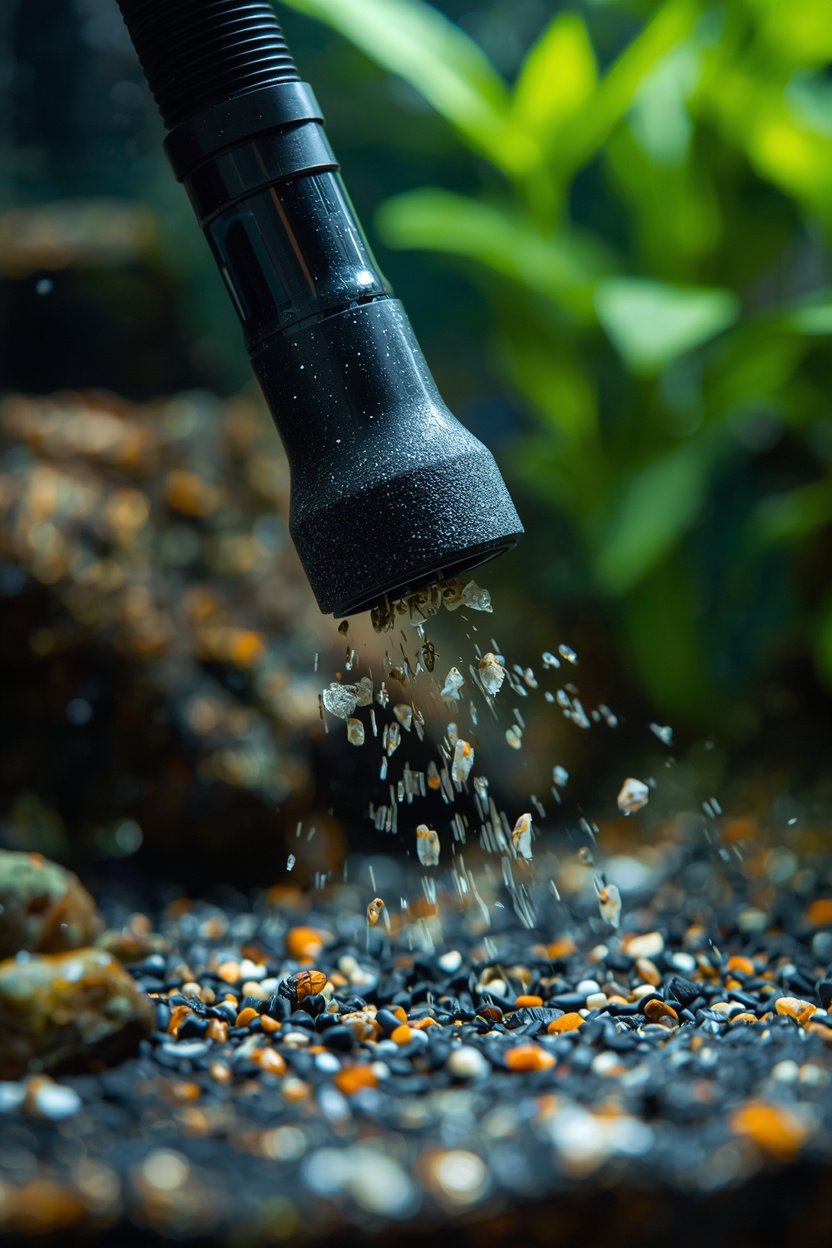
Uneaten food, fish waste, and decaying plant matter settle into the substrate over time, and if left unchecked, this buildup can contribute to poor water quality and elevated ammonia levels even in an otherwise well-maintained tank. Running a gravel vacuum across the substrate surface during each water change lifts this debris out of the tank before it has a chance to break down and affect water chemistry.
Focus particularly on low-flow areas and corners, where debris tends to accumulate more heavily than in spots with stronger water movement. For planted tanks, vacuum carefully around root systems rather than digging deeply, since aggressive vacuuming can disturb plant roots and release trapped nutrients all at once.
This task pairs naturally with your regular water change routine, since the same vacuum used to remove water can simultaneously clean the substrate, making it one of the most time-efficient maintenance habits to build into a weekly schedule.
3. Filter Cleaning and Media Rotation
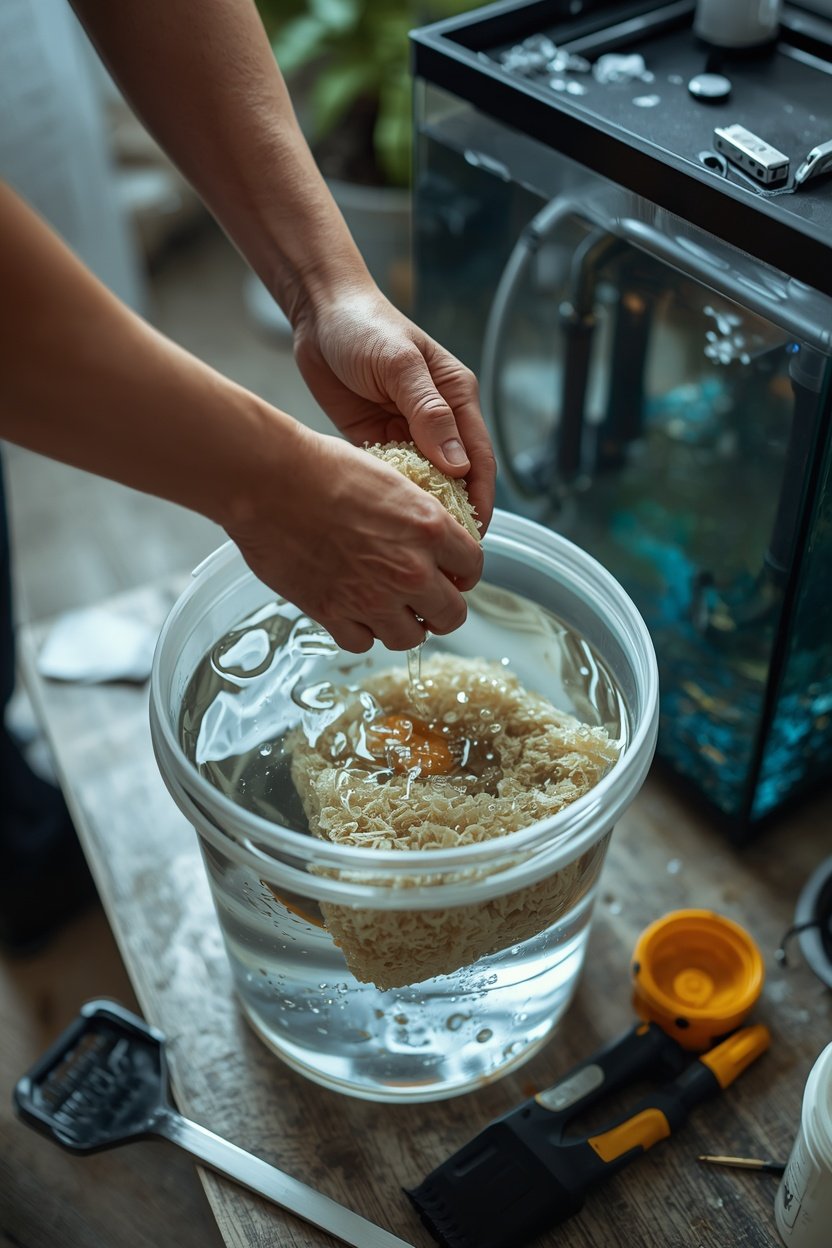
A filter's mechanical media traps debris effectively, but that same trapped debris eventually clogs the media and reduces water flow if it's never cleaned, while the biological media hosts beneficial bacteria that should never be fully replaced or scrubbed clean all at once. Rinsing mechanical filter media, like sponges or filter floss, in removed tank water rather than tap water preserves the beneficial bacteria colony while still clearing out trapped debris.
Avoid cleaning all filter media on the same day, since doing so can temporarily reduce your tank's biological filtration capacity right when it's needed most. Staggering media cleaning, doing one section this week and another in a few weeks, keeps enough established bacteria active at all times to maintain stable water quality.
Check your filter's flow rate periodically as a simple indicator of when cleaning is needed, since a noticeably weaker flow compared to when the filter was new usually signals that mechanical media has become clogged and is due for a rinse.
4. Algae Control and Glass Cleaning
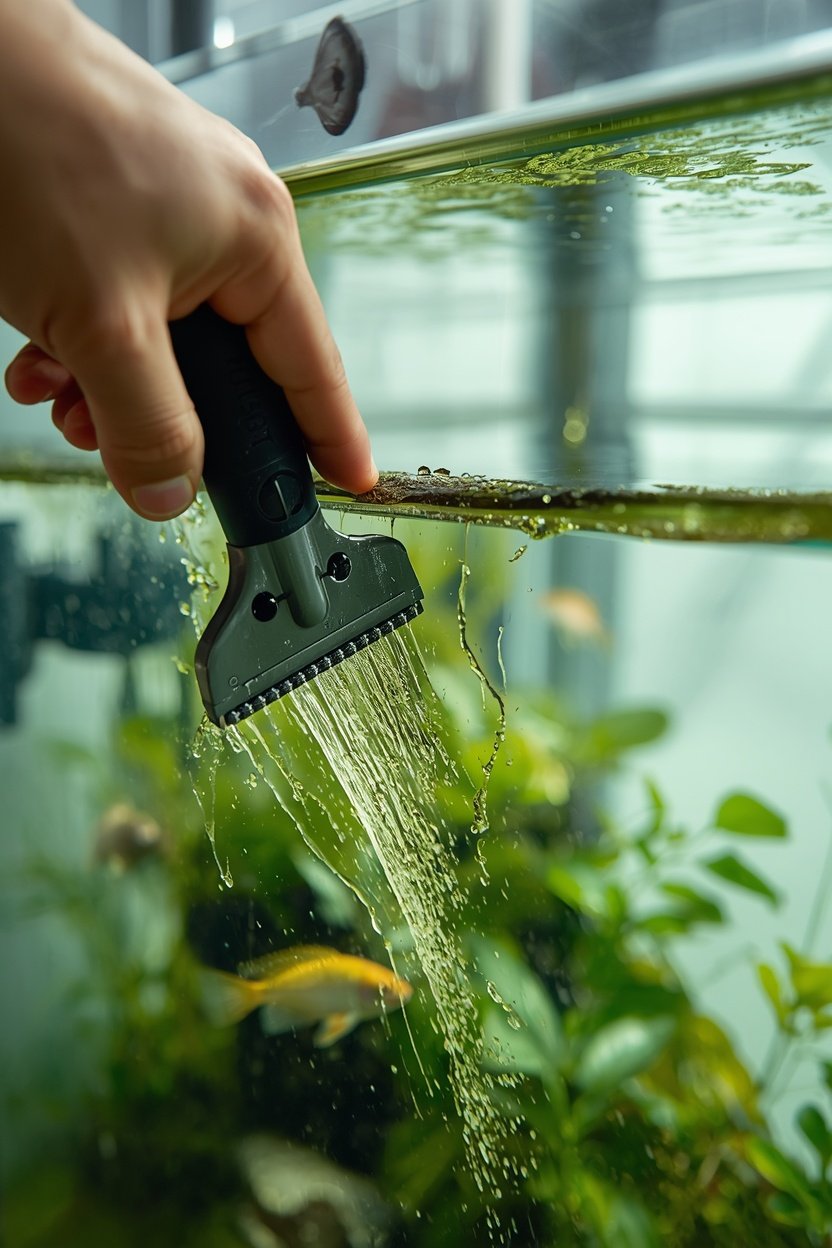
Some algae growth is normal and even beneficial in a healthy tank, but excessive algae on the glass, decor, or substrate can quickly make a well-aquascaped tank look neglected and can signal an imbalance in lighting or nutrient levels worth addressing. A simple algae scraper or magnetic cleaner, used during each water change, keeps the viewing glass clear without requiring any harsh chemicals inside the tank.
If algae growth seems excessive despite regular cleaning, consider whether your lighting duration is longer than necessary, since extended light exposure is one of the most common contributors to algae overgrowth in home aquariums. Reducing lighting to a consistent eight-to-ten-hour daily schedule often noticeably reduces algae growth without affecting fish or plant health.
Algae-eating species like certain snails or shrimp can also help manage ongoing growth between cleanings, though they work best as a supplement to regular manual cleaning rather than a complete replacement for it.
Building a Simple Weekly Maintenance Routine
- Pick a consistent day each week. Doing maintenance on the same day builds a habit and prevents tasks from being forgotten or delayed for too long.
- Test water parameters periodically. A basic test kit helps you understand whether your current maintenance schedule is actually keeping pace with your tank's specific needs.
- Keep a simple log. Noting water change dates, filter cleaning, and any parameter readings helps you spot patterns and catch issues early.
- Don't do everything at once. Spreading tasks like filter cleaning and substrate vacuuming across different weeks avoids overwhelming the tank's biological balance all at once.
Final Thoughts
Aquarium maintenance doesn't need to be complicated or time-consuming once it's broken into a few consistent habits. Regular partial water changes, substrate vacuuming, careful filter cleaning, and simple algae control together keep a tank healthy and clear with just a small amount of weekly effort. Build these four tasks into a routine early, and you'll spend far less time troubleshooting problems down the line and far more time simply enjoying your aquarium.
Frequently asked questions
How often should I do a water change?
Most tanks benefit from a 10 to 25 percent water change weekly or every two weeks, though heavily stocked tanks may need more frequent changes to keep nitrate levels in a safe range.
Is it bad to clean my filter too often?
Yes, overly frequent or overly thorough filter cleaning can disrupt the beneficial bacteria colony your tank relies on for biological filtration, which is why rinsing media in removed tank water and staggering cleaning schedules matters.
Why does my tank get algae even with regular cleaning?
Excess algae is often linked to too many hours of lighting or elevated nutrient levels, so reviewing your light schedule and feeding habits alongside your cleaning routine usually helps address the underlying cause rather than just the visible symptom.
