
When I started keeping fish, I assumed feeding was the easy part: sprinkle in some flakes and walk away. My first tank quickly taught me otherwise. The water turned cloudy, a few fish looked dull, and my shrimp barely touched the food I gave them. It took some trial and error, and a lot of reading, to learn that a balanced diet means variety, the right portions, and food matched to what each animal actually eats.
This guide walks through four beginner-friendly habits that cover most of what a balanced aquarium diet needs. Each idea includes a detailed image prompt, so you can create matching visuals for your own blog, Pinterest pins, or tank journal. Keep in mind that the ideal menu changes by species, so always check what your specific fish or shrimp need.
What "Balanced" Actually Means in an Aquarium
A balanced diet gives your animals the right mix of protein, fats, carbohydrates, fiber, vitamins, and minerals over time, not necessarily in every single meal. In practice, that means a quality staple food, some plant matter, occasional protein, and natural grazing opportunities, all in modest amounts. Overfeeding is the most common beginner mistake, and it harms water quality far more often than underfeeding harms fish.
1. Build Your Base Around a Quality Staple Food
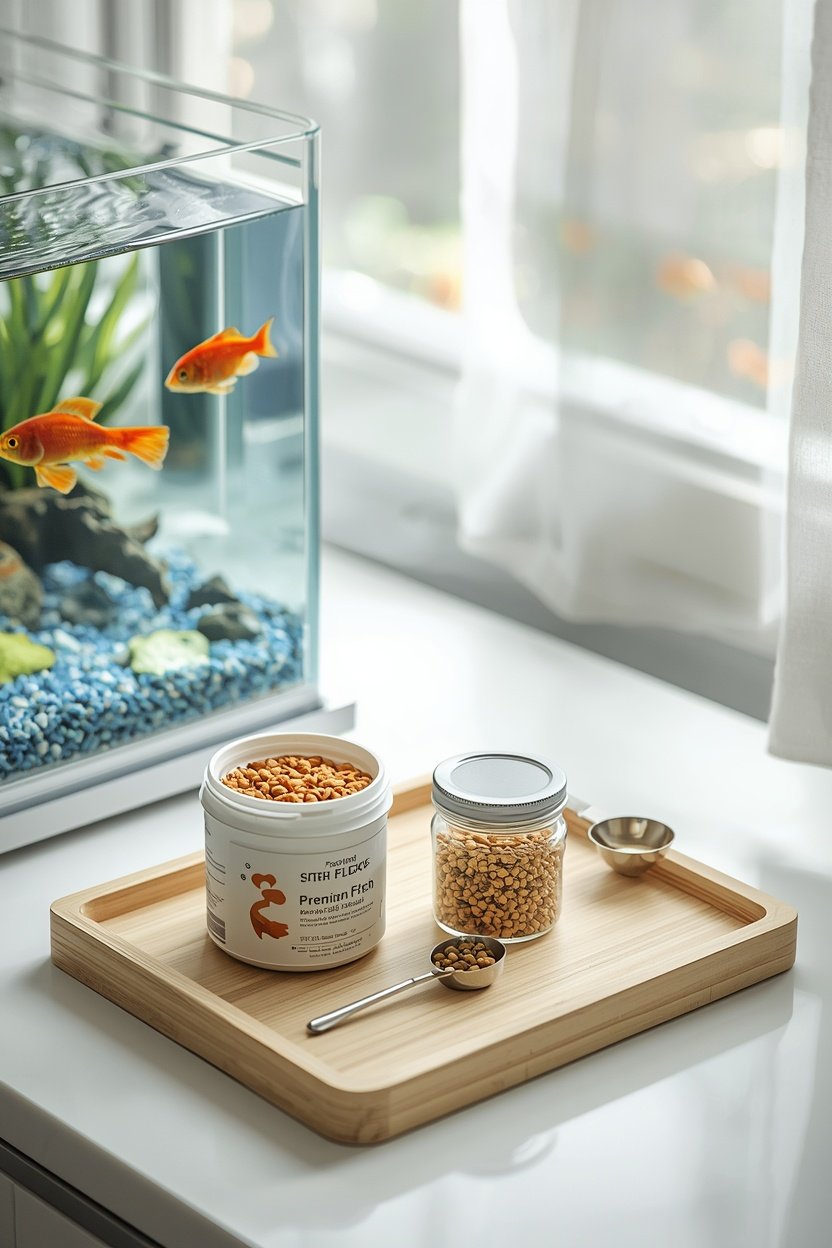
Every balanced aquarium diet starts with one dependable staple: a good flake, micro-pellet, or granule made for the kind of fish or shrimp you keep. Think of it as the "main meal" that supplies protein, fats, carbohydrates, vitamins, and minerals in a single, measured form. Because the staple carries so much of the nutritional load, it is the one food worth spending a little extra on.
Read the ingredient list before buying. Whole fish, shrimp, or algae near the top of the list usually signals better nutrition than a label that leads with generic fillers. Match the food to your animals too: many bettas and other insect-eaters do best on protein-rich pellets, while plant-grazers like mollies, plecos, and most freshwater shrimp appreciate algae-based formulas.
Buy small containers and replace them every few months. Vitamins in opened fish food fade with time, so a fresh, modest tub beats a giant bargain jar that sits half-used on a shelf.
2. Add Fresh Vegetables for Fiber and Vitamins
Many popular aquarium animals, including mollies, goldfish, plecos, and nearly all ornamental shrimp, naturally graze on plant matter and algae. Blanched vegetables are an easy, inexpensive way to give them that fiber and a wider range of vitamins than a dry staple can provide alone.
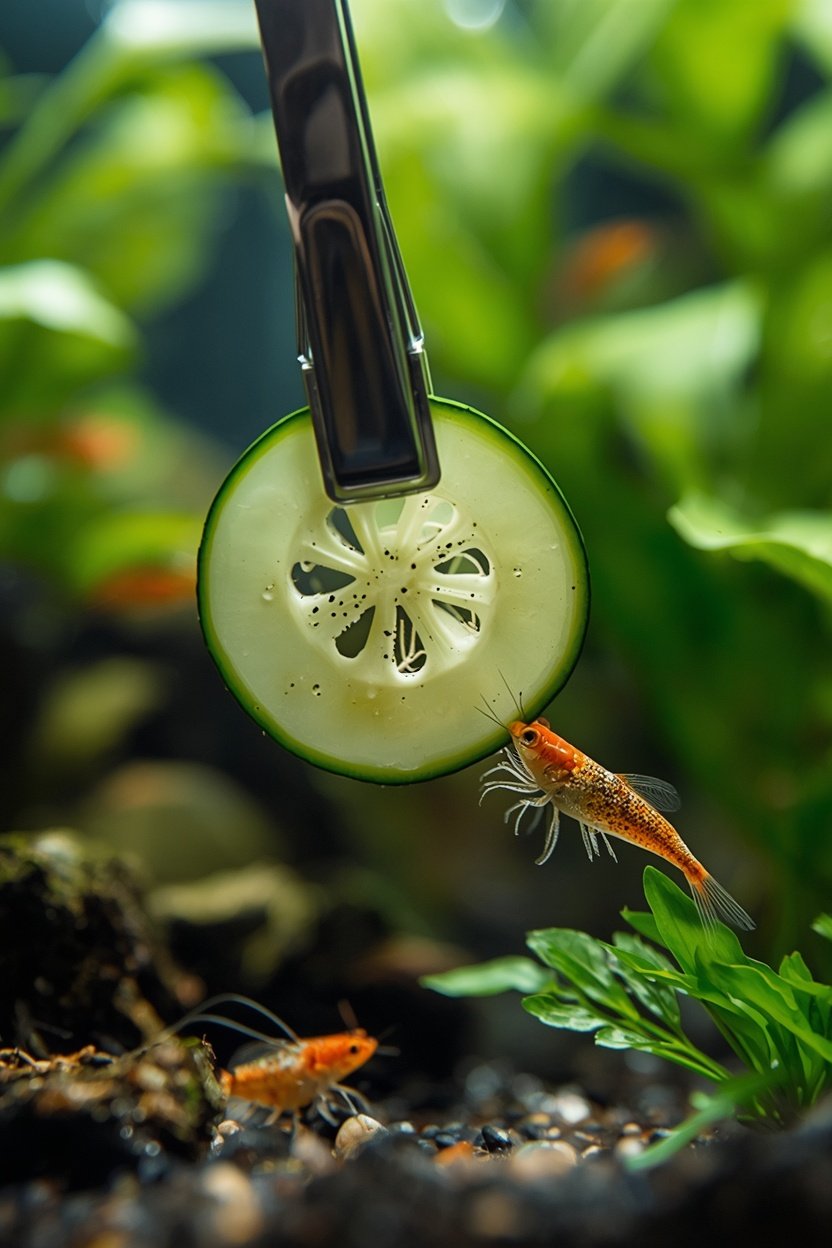
Zucchini, cucumber, and shelled peas are friendly starting points, along with softened spinach or kale in small amounts. To blanch, drop a slice in boiling water for a minute or two, cool it, and cut it into pieces small enough for your animals to handle. Weigh a thin slice down with a stainless steel clip or aquarium-safe vegetable holder and pull it out after several hours so it doesn't foul the water.
For shrimp, leafy greens like spinach and kale are also a gentle source of minerals that support healthy molting. Offer only a small piece at a time, since shrimp eat surprisingly little and leftovers decay quickly in a small tank.
3. Offer Protein Treats a Couple of Times a Week
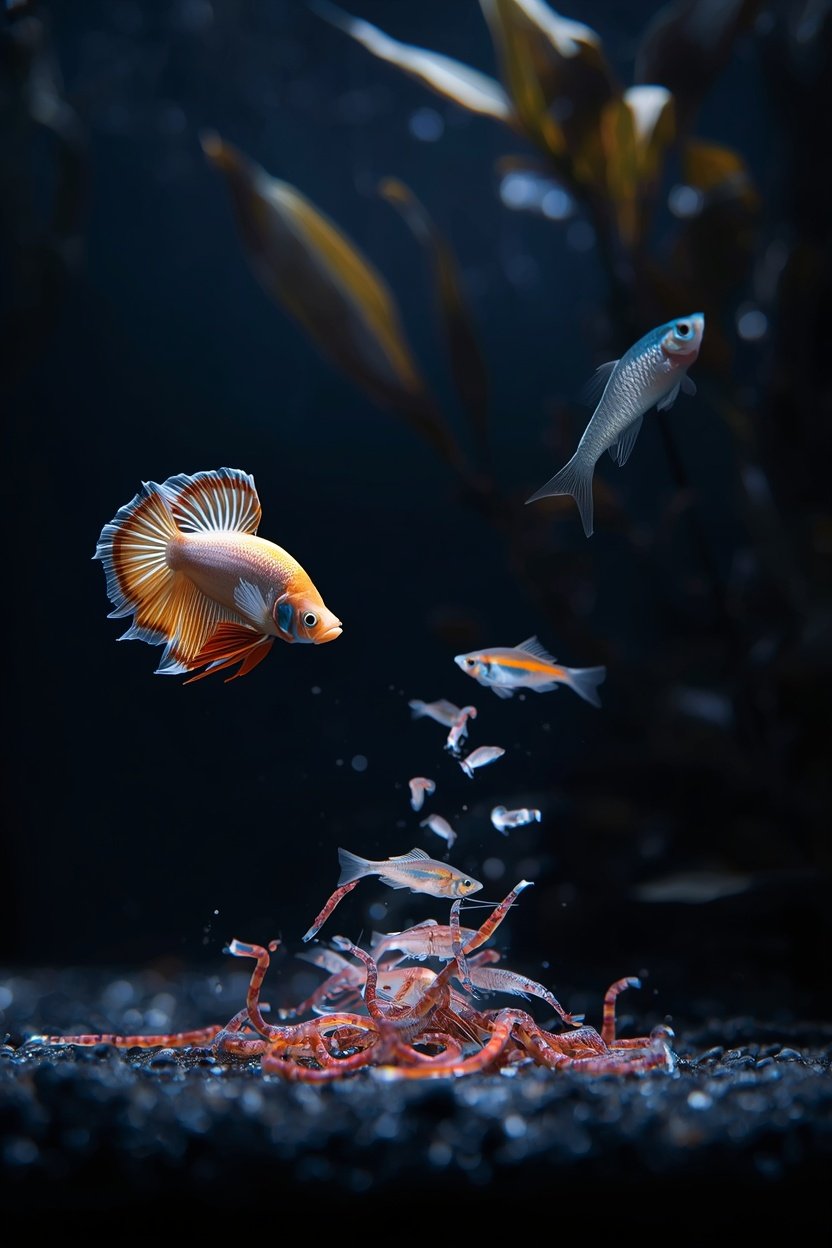
Foods like frozen bloodworms, daphnia, brine shrimp, and mysis add variety and mimic the small live prey many fish would hunt in the wild. Carnivores and omnivores, such as bettas, tetras, and cichlids, often show brighter color and livelier behavior when treated to these foods occasionally.
The key word is occasionally. Rich foods can lead to bloating and dirty water if fed too often, so one or two protein treat days per week is plenty for most tanks. Thaw frozen cubes in a little tank water first, then feed only what your fish finish within a couple of minutes.
Shrimp benefit from protein too, especially during breeding, but they need far less than fish. A tiny amount of shrimp-formulated pellet a few times a week is usually enough, and nothing should be left sitting overnight.
4. Let Natural Grazing Surfaces Do Part of the Work
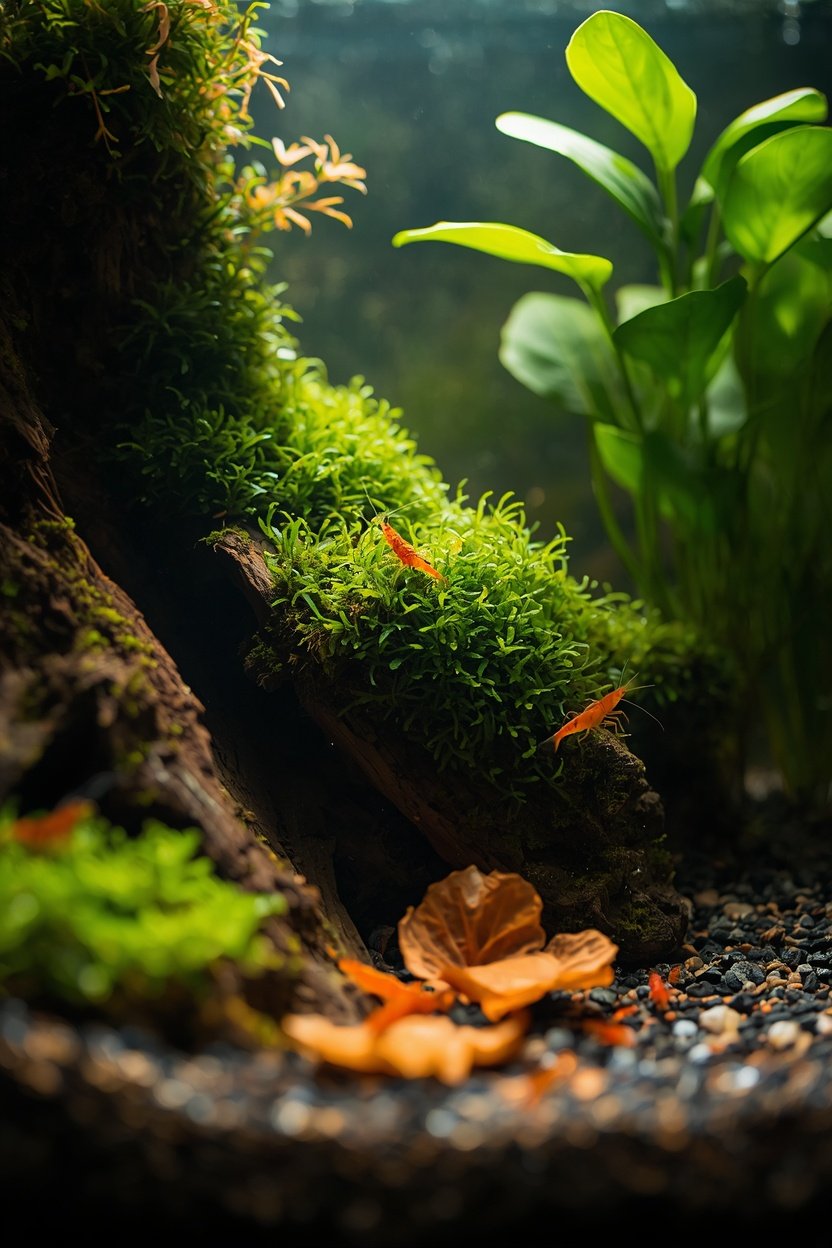
A healthy, established tank quietly feeds its residents around the clock. Biofilm, the thin film of microorganisms that builds up on rocks, wood, and plant leaves, is a favorite snack for shrimp and many small fish. Java moss, driftwood, and dried botanical leaves such as Indian almond leaves give that biofilm plenty of surface to grow on.
This natural grazing is especially valuable for young shrimp and fry, which nibble constantly and can't compete with larger animals at feeding time. A tank with well-established moss and hardscape often needs less supplemental food overall, which also helps keep water cleaner.
Don't scrub every surface spotless. A little algae and biofilm on decor is a sign of a working ecosystem, and for grazers it is part of a balanced diet, not a cleaning failure.
Portion and Schedule Tips for Beginners
● Feed small amounts. A common guideline for fish is only what they can finish in about two to three minutes. Shrimp need even less.
● Skip a day each week. Many healthy adult fish benefit from a fasting day, which gives their digestive system a break and keeps the tank cleaner.
● Remove leftovers. Uneaten food breaks down into ammonia, so scoop or siphon out anything left after a few hours.
● Watch, don't guess. Rounded bellies, stringy waste, or cloudy water usually mean you are feeding too much. Thin bodies or constant hunger behavior can mean too little.
● Check for copper. Shrimp are very sensitive to copper, so choose foods and supplements labeled shrimp-safe.
Final Thoughts
A balanced aquarium diet doesn't need to be complicated. Start with a good staple food, add blanched vegetables, offer protein treats sparingly, and let your tank's natural surfaces supply a steady trickle of grazing food. Pay attention to how your fish and shrimp actually behave, adjust portions slowly, and you will likely see brighter color, more activity, and cleaner water within a few weeks.
Frequently asked questions
How often should I feed my aquarium fish?
Most adult fish do well with one or two small feedings per day, while juveniles and fry may need more frequent, smaller meals. Adjust based on species and how quickly they finish their food.
Can I feed shrimp the same food as my fish?
Sometimes, but not always. Shrimp need small particles and a copper-free formula, so a shrimp-specific food or algae-based pellet is usually the safer choice.
What should I do if I overfeed?
Remove uneaten food right away, do a partial water change, and reduce portions at the next feeding. One overfed meal is rarely a disaster if you clean up promptly.
Is it okay to leave for a weekend without feeding?
Healthy adult fish and shrimp generally handle a few days without food, especially in a mature tank with natural grazing surfaces. For longer trips, ask a trusted helper to feed small measured portions rather than dumping in extra food beforehand.
