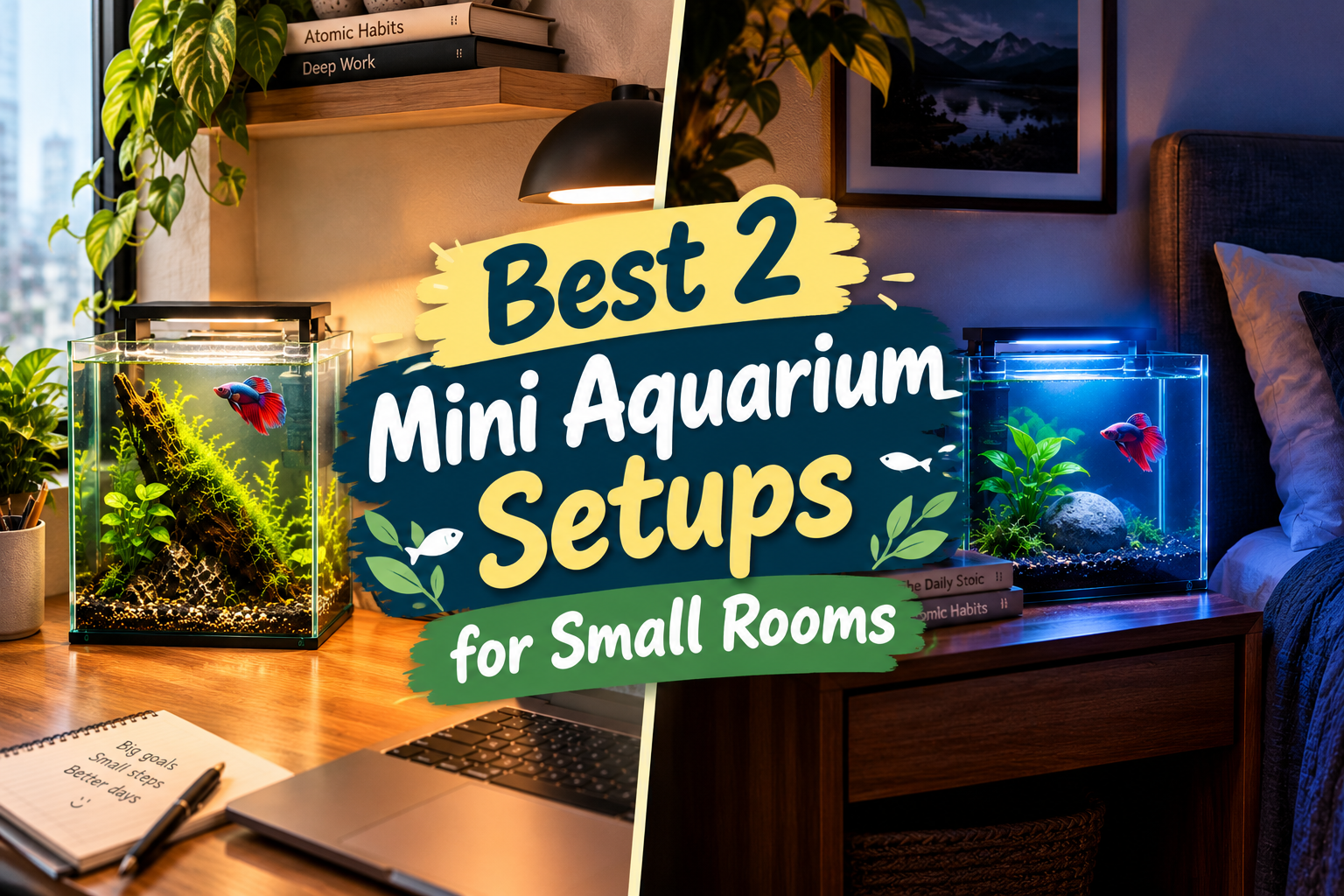
When I moved into a studio apartment a few years back, I assumed my aquarium hobby would have to go on hold. There was no living room to speak of, no spare shelf, and definitely no room for a full-size tank and stand. What I eventually realized is that a small room doesn't need a small version of a big setup it needs a setup actually designed around how that room gets used, whether that's working at a desk all day or winding down at night.
This guide covers two complete mini aquarium setups, not just decor tips, built specifically for the two spaces most small rooms revolve around: the desk and the bed. Each one accounts for equipment noise, lighting, and placement in a way that generic aquarium advice usually skips over. Both ideas include a detailed image prompt so you can picture the finished setup before buying anything.
Why Room Function Should Shape Your Setup
A tank that works beautifully in a living room can be genuinely disruptive in a small bedroom or a shared workspace, mainly because of two factors most people don't think about until it's too late: noise and light timing. A setup built for a desk needs to support focus during the day, while a setup built for a nightstand needs to support winding down at night and the equipment choices for each are meaningfully different, not just the decor.
1. The Desk-Corner Mini Aquarium Setup
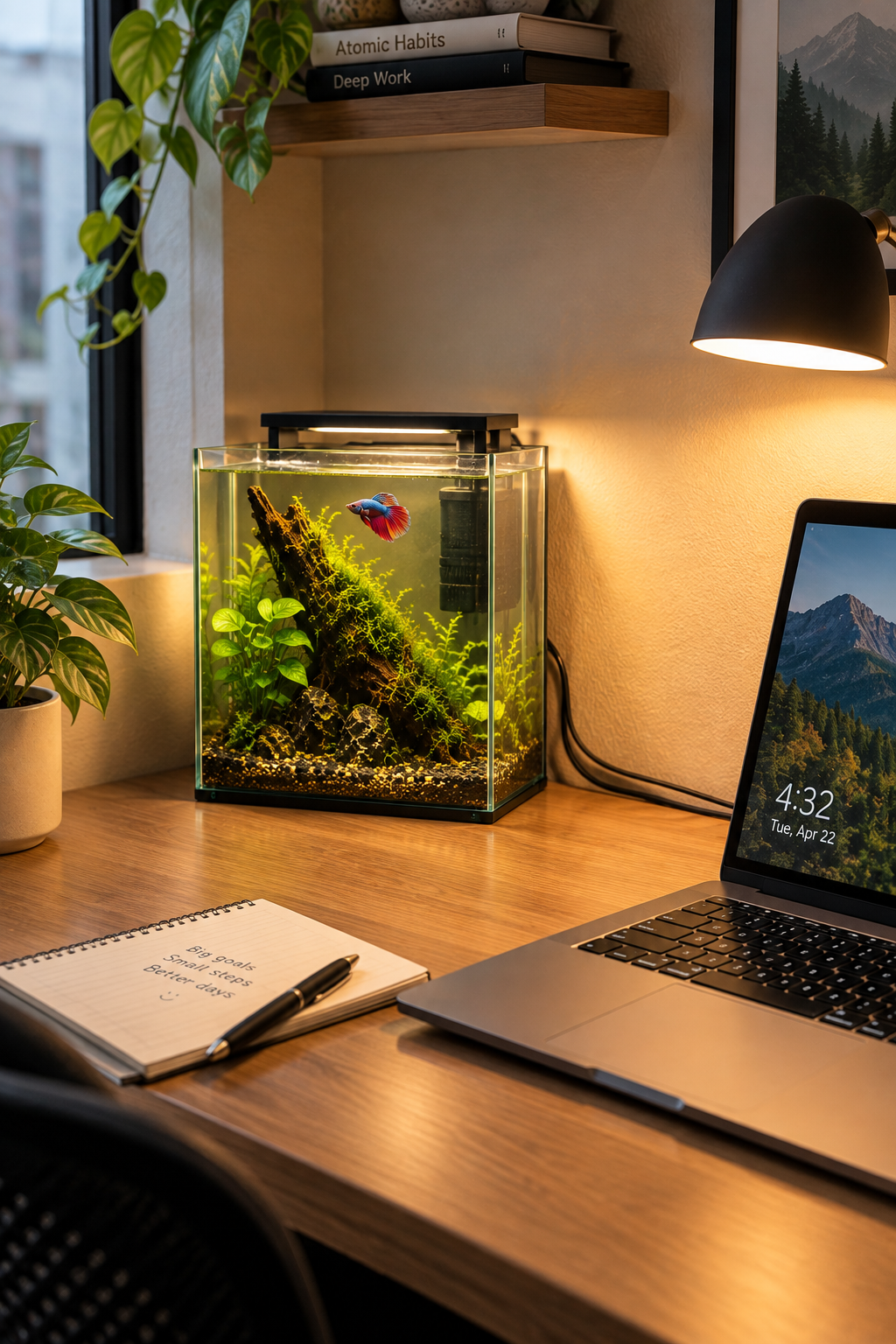
For anyone working or studying from a small room, a mini aquarium tucked into the corner of a desk turns an ordinary workspace into something noticeably calmer. This setup is built around a 3-to-5-gallon tank positioned within easy eye line of your chair, so it becomes a natural place to rest your focus during a break without requiring you to look away from your work area entirely.
The equipment choices matter more here than in most setups, since a desk tank shares space with electronics, cables, and whatever else lives on your work surface. Choose a quiet internal filter rather than a hang-on-back model, since the gentle hum of an external filter can become genuinely distracting during focused work or video calls. Route the power cord and any tubing along the back edge of the desk with a cable clip, keeping the surface in front of the tank completely clear.
Decor-wise, keep this setup simple and low-maintenance: a single piece of driftwood, a small patch of easy moss, and one or two hardy fish like a betta or a few small shrimp. The goal isn't an elaborate aquascape competing for your attention it's a small, living detail that adds calm to the room without adding another thing you have to manage during a busy week.
Lighting is worth a little extra thought too. A small clip-on LED light angled slightly away from your screen avoids glare during video calls, while still giving the tank enough light to keep any plants healthy. Many desk aquarium owners also add a simple timer, so the light automatically turns off in the evening rather than needing to be remembered every night.
2. The Bedside Nightstand Mini Aquarium Setup
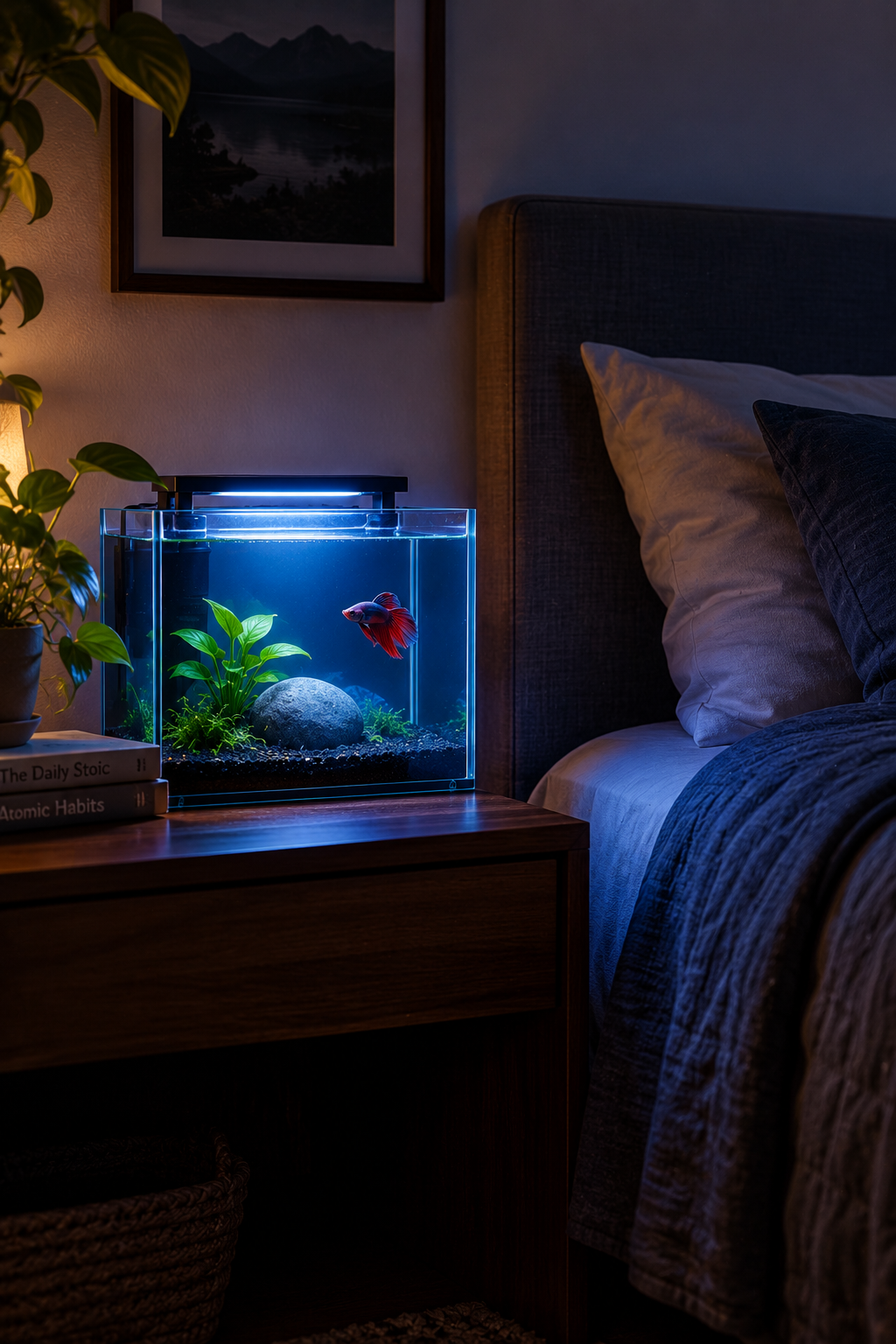
A mini aquarium on a bedside nightstand serves a different purpose entirely from a desk setup: instead of supporting focus during the day, it's designed to create a calming glow in the last hour before sleep. This works especially well in small bedrooms, where a nightstand tank can replace a traditional lamp as the room's main source of soft evening light.
For this setup, prioritize a tank with a dimmable light or a dedicated "moonlight" blue LED setting, since bright white lighting right before bed can work against the calming effect you're going for. A 2-to-4-gallon tank fits most standard nightstands comfortably, and a betta fish is a particularly popular choice here, since bettas don't require the water movement that would make bubbling or splash noise disruptive to sleep.
Noise matters even more in this setup than at a desk, since you'll be lying just a foot or two away from the equipment for hours each night. A sponge filter, which operates far more quietly than most internal or hang-on-back filters, is usually the best choice for a bedroom tank, even though it's a slightly less common option than standard filters sold with starter kits.
Finish the setup with a simple, low ornament count a small piece of driftwood or a single smooth stone is usually enough so the tank's glow, rather than a busy layout, becomes the calming visual focus as you wind down. Many people find that watching a single fish drift slowly through dim blue light is genuinely more relaxing than scrolling a phone in the same final minutes before sleep.
Setup Tips That Apply to Both
Spaces
- Prioritize quiet equipment. In a small room, you're always close to the tank, so a sponge filter or quiet internal filter is worth seeking out over louder standard options.
- Use a timer for lighting. Automating your light schedule keeps both setups low-maintenance and ensures the tank supports your room's rhythm without daily adjustment.
- Choose fish suited to a calm, low-flow tank. Bettas and small shrimp are comfortable in gentle-filtration setups, unlike species that need strong water movement.
- Keep decor minimal by design, not by accident. A sparse layout in a small room setup should feel intentional and calming, not like an unfinished tank.
Final Thoughts
A small room can absolutely support a genuinely enjoyable aquarium, as long as the setup is built around how that space actually gets used. A desk-corner tank supports focus during the day, while a nightstand tank creates a calming glow at night and both prove that limited square footage is a design constraint, not a dealbreaker. Choose the setup that matches your room's daily rhythm, keep the equipment quiet and the decor simple, and you'll have a mini aquarium that fits your space instead of fighting it.
Frequently asked questions
Is it safe to keep an aquarium right next to a bed?
Yes, as long as the tank is on a stable, level surface and the equipment is rated for indoor bedroom use the main consideration is choosing quiet equipment so it doesn't disrupt sleep.
Will a desk aquarium distract me while working?
Most people find a small, calm tank more soothing than distracting, especially with quiet equipment and simple decor, though it's worth positioning the tank slightly to the side rather than directly in your main line of sight if you're prone to distraction.
What's the smallest tank size recommended for these setups?
A 2-to-3 gallon tank is generally the smallest practical size for a single betta or small shrimp colony, since smaller volumes are harder to keep stable for a beginner.
