
When I got into the aquarium hobby, the sheer number of decisions felt overwhelming before I'd even bought a single fish: tank size, fish species, plants, decor, filtration. Looking back, the single most useful thing I could have done first was simply choosing which type of freshwater tank actually matched what I wanted from the hobby, since that one decision shapes almost everything else that follows.
This guide breaks down the four most popular freshwater tank setups for beginners, each with a genuinely different focus and appeal. There's no single "best" option here — the right choice depends entirely on what you're hoping to get out of the hobby. Each setup includes a detailed image prompt so you can visualize the finished result before deciding which direction to take.
How to Choose the Right Setup for You
Before picking a specific fish or piece of decor, it helps to think about what draws you to the hobby in the first place: variety and behavior, the process of growing plants, a connection to one specific fish, or simply the easiest possible entry point. Matching your setup type to that underlying motivation tends to produce a much more satisfying first tank than choosing based on a single eye-catching product or fish you saw in a store.
1. The Community Tank
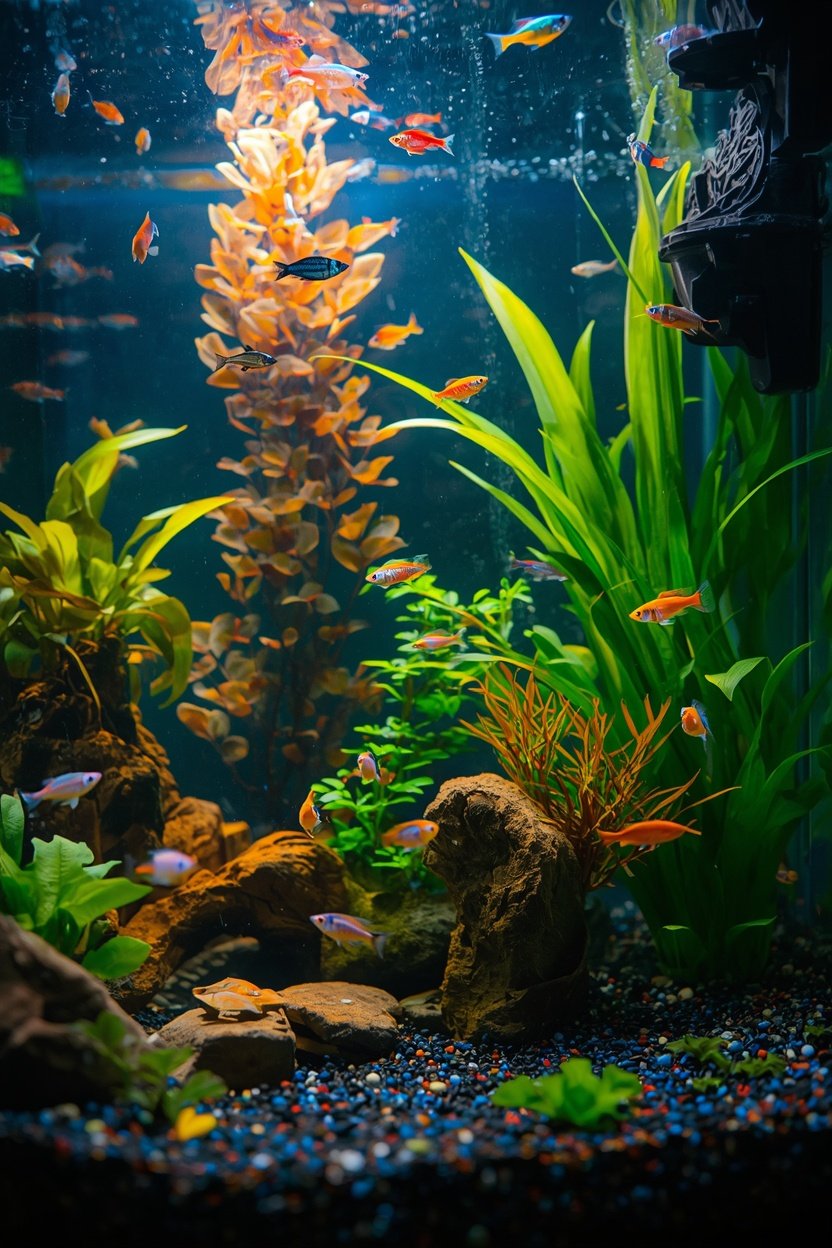
A community tank houses several peaceful, compatible fish species together, and it's the setup most people picture first when they imagine a freshwater aquarium. A well-planned community tank might combine a school of tetras, a few corydoras catfish, and a small group of peaceful livebearers, each occupying a different part of the tank — top, middle, and bottom — for a display that feels genuinely alive and varied.
The main appeal here is variety: different colors, different swimming behaviors, and different personalities all sharing one space. The tradeoff is that a community tank requires more research into compatibility than a single-species setup, since not every attractive fish gets along peacefully with every other attractive fish.
This setup suits beginners who want a lively, ever-changing tank to watch and are willing to spend some time researching stocking compatibility before buying anything, rather than picking fish purely based on looks at the store.
2. The Planted Tank
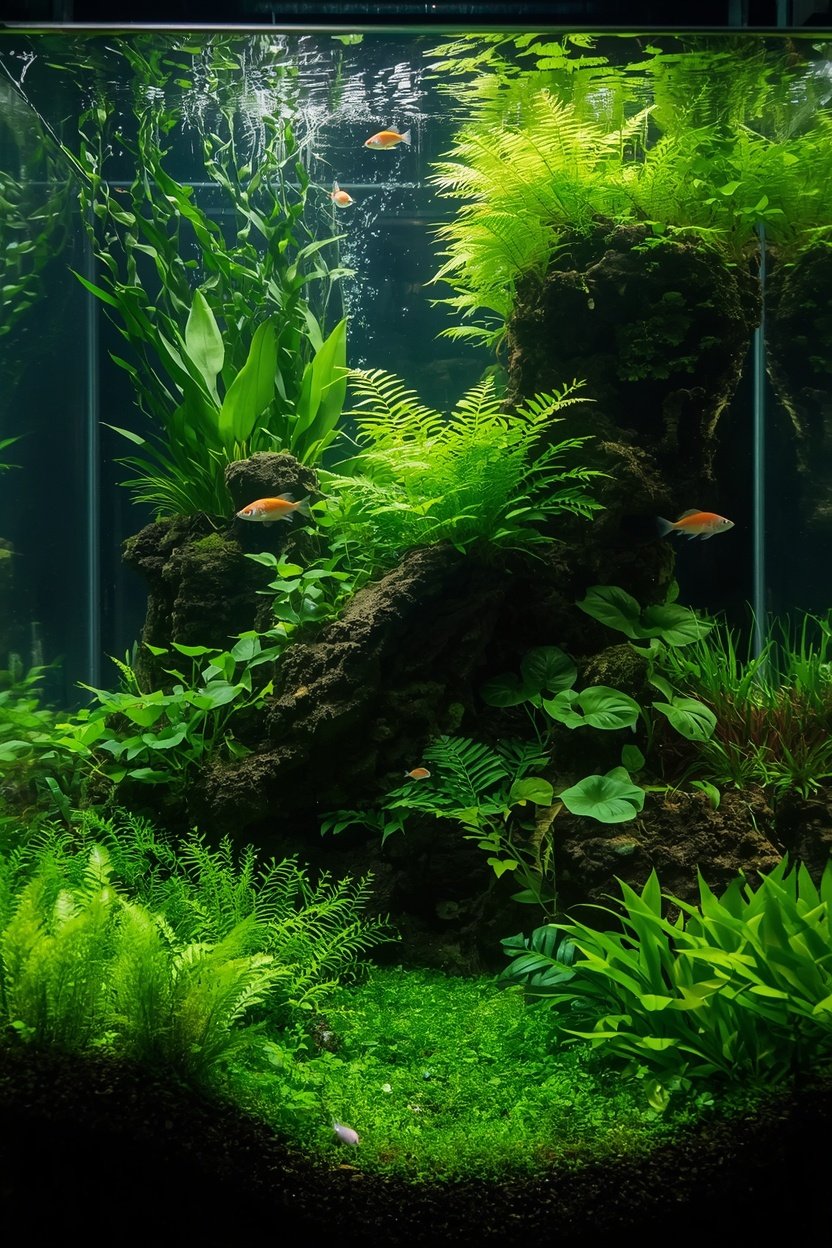
A planted tank puts live aquatic plants at the center of the design, with fish playing a supporting role rather than being the main event. This setup ranges from a simple beginner layout with hardy plants like java fern and anubias, to an elaborate, competition-style aquascape with dozens of carefully arranged species.
Live plants offer real functional benefits beyond aesthetics, helping absorb excess nutrients and reducing algae growth when the tank is properly balanced. The tradeoff is a bit more attention to lighting and, in more advanced setups, nutrient dosing and carbon dioxide supplementation, though a beginner-friendly planted tank can absolutely be built with low-light, low-maintenance species alone.
This setup suits anyone who enjoys gardening or finds the growth and development of living plants as rewarding as watching fish, and who's willing to invest a bit more time in lighting and plant care research upfront.
3. The Single-Species Showcase Tank
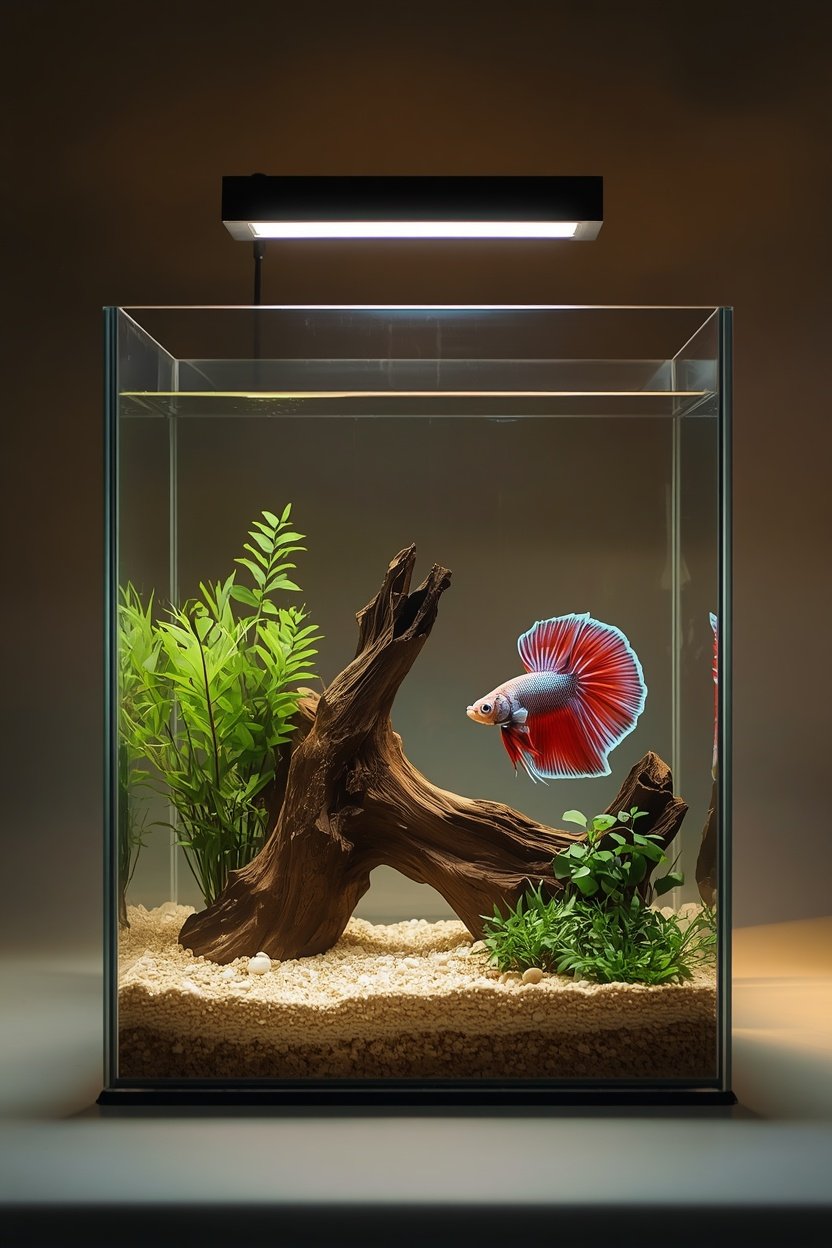
Rather than a mixed community, a single-species showcase tank centers entirely around one fish, or one small group of the same species, letting its specific colors, behavior, and personality become the tank's whole story. A betta fish in a thoughtfully aquascaped tank, or a small colony of the same shrimp species, are both classic examples of this approach.
This setup simplifies compatibility research enormously, since there's no need to cross-reference multiple species' temperaments and water needs against each other. It also tends to suit smaller tank sizes particularly well, making it a strong option for anyone working with limited space.
This setup suits beginners who want a genuinely simple starting point, or anyone drawn to a specific fish's individual personality rather than the variety a community tank offers. It's often the easiest entry point into the hobby precisely because there's only one set of needs to plan around.
4. The Low-Tech Nano Tank
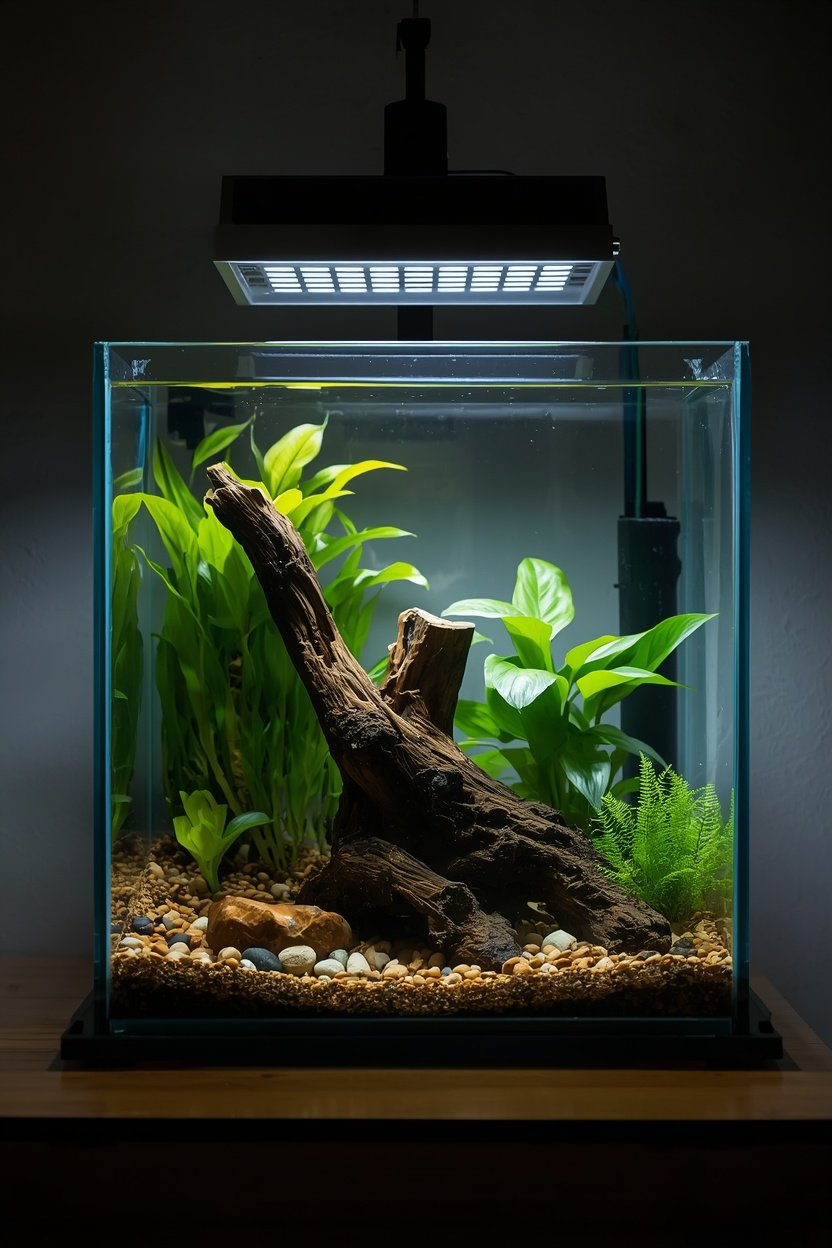
A low-tech nano tank keeps everything small and simple: a tank under 10 gallons, hardy plants that don't require intense lighting or supplemental carbon dioxide, and a small number of easy-care fish or shrimp suited to the compact volume. This setup trades scale and variety for simplicity and a genuinely manageable weekly maintenance routine.
Because everything is scaled down, a low-tech nano tank is also considerably cheaper to set up and maintain than a larger community or heavily planted tank, making it an accessible starting point for anyone unsure whether the hobby is right for them long-term, or working with genuinely limited space or budget.
This setup suits beginners who want the lowest possible barrier to entry, apartment dwellers with limited space, or anyone who wants a second, smaller tank to complement a larger existing setup without taking on significant extra maintenance.
Tips for Choosing and Setting Up Your First Tank
● Start smaller than you think you need. A modest, well-managed tank is more rewarding than an ambitious one that becomes overwhelming to maintain.
● Cycle your tank before adding fish. Regardless of setup type, allowing beneficial bacteria to establish first prevents the most common beginner mistakes.
● Research before buying, not after. Confirming species compatibility, adult size, and care needs before your first shopping trip saves both money and stress.
● Let your first tank teach you what you actually enjoy. Many hobbyists switch setup types after their first tank, once they've discovered what genuinely holds their interest.
Final Thoughts
There's no universally "best" freshwater tank setup — only the one that best matches what you're hoping to experience from the hobby. A community tank offers variety, a planted tank offers a living garden to tend, a single-species showcase offers simplicity and focus, and a low-tech nano tank offers the easiest possible starting point. Consider what draws you to the idea of an aquarium in the first place, and let that guide which of these four paths you take for your first build.
Frequently asked questions
Which freshwater tank setup is easiest for a complete beginner?
A low-tech nano tank or a single-species showcase tank are generally the most approachable starting points, since both involve simpler compatibility and care planning than a mixed community tank.
Can I combine elements of these different setup types?
Yes, many established hobbyists blend approaches over time, such as a heavily planted community tank, though starting with one clear focus tends to be easier while you're still learning the basics.
How do I know which setup matches my personality?
Consider what genuinely excites you most when you picture an aquarium: watching varied fish behavior points toward a community tank, enjoying plant growth points toward a planted tank, and wanting simplicity points toward a nano or single-species setup.
