
Few questions come up more often among new aquarium keepers than whether a betta fish can safely share a tank with shrimp. It is an understandable pairing to want bettas are colorful and full of personality, while shrimp add movement, natural algae control, and a fascinating look at invertebrate behavior. The honest answer, though, is that compatibility is never guaranteed. It depends heavily on the individual betta's temperament, the tank setup, and the shrimp species chosen.
This guide breaks down what actually determines whether a betta and shrimp can coexist peacefully, which shrimp give you the best odds, how to set up a tank that improves the chances of success, and the warning signs that tell you it is time to separate them. The goal is to help you make an informed decision rather than a hopeful gamble with your shrimp's safety.
Why Betta and Shrimp Tanks Are So Popular
A combination tank appeals to a lot of beginners because it looks like the best of both worlds: a striking centerpiece fish paired with a busy, self-cleaning shrimp colony. Shrimp graze on algae and leftover food, which helps keep a planted tank tidy, while the betta provides the color and character most people want from their first aquarium. On paper, it sounds like a natural pairing and sometimes it genuinely works. The complication is that bettas are, by nature, solitary predators with a strong instinct to investigate and sometimes eat anything small that moves.
The Short Answer: It Depends on the Betta
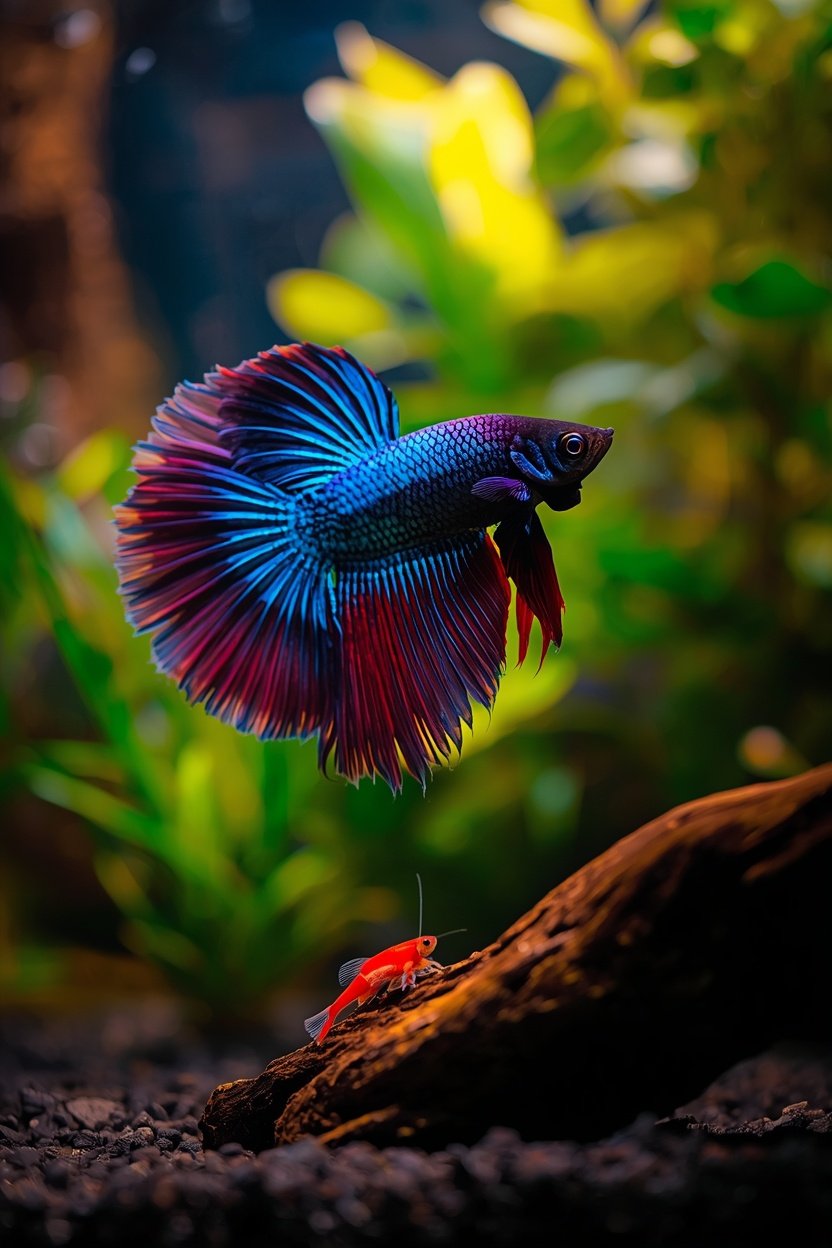
Every betta has its own personality. Some will completely ignore a tank full of shrimp for their entire lives, treating them as part of the scenery. Others will hunt every single shrimp down within a week, no matter how well the tank is set up. Because this behavior cannot be predicted in advance, most experienced keepers treat betta-and-shrimp tanks as an experiment with a built-in exit plan rather than a guaranteed success.
Factors that tend to improve the odds include a calm, less aggressive betta, a spacious and heavily planted tank, and shrimp that are large and fast enough to avoid being an easy target. Factors that tend to work against you include a young or naturally predatory betta, a bare or overly open tank, and small, slow-moving shrimp.
Choosing Shrimp That Give You the Best Odds
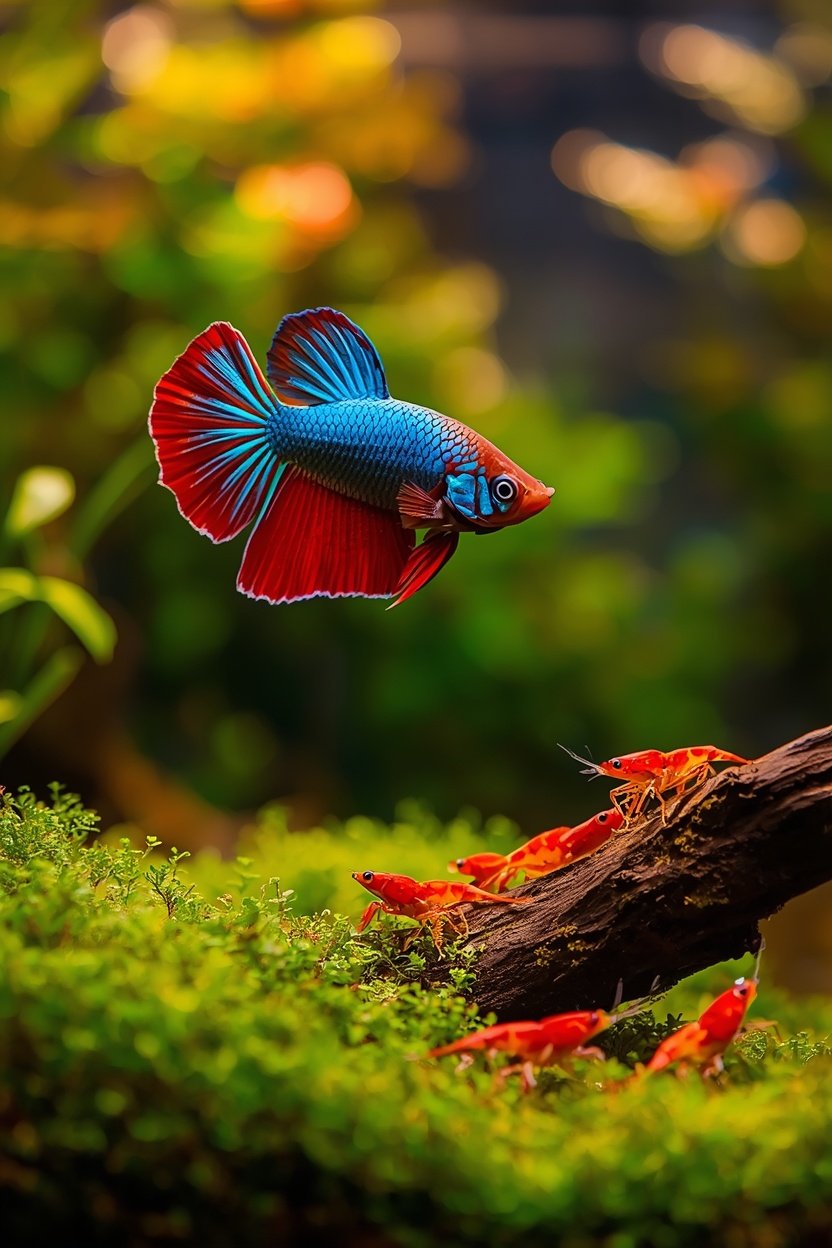
Size matters more than almost any other factor. Adult Neocaridina shrimp, commonly sold as Cherry Shrimp, Blue Dream Shrimp, or Yellow Shrimp, are large enough and fast enough that many bettas lose interest in chasing them after an initial investigation. Baby shrimp and tiny dwarf species are far more vulnerable and are usually eaten regardless of the betta's general temperament, since they are simply too small and slow to escape.
Avoid pairing a betta with Caridina species like Crystal Red Shrimp; not only are they smaller and more delicate, they also require narrow water parameters that make an already risky pairing even harder to manage.
|
Shrimp Type |
Compatibility Risk |
Why |
|
Adult Cherry Shrimp (Neocaridina) |
Moderate |
Large and fast enough to often be ignored |
|
Baby / Juvenile Shrimp |
Very High |
Too small and slow to evade a hunting betta |
|
Amano Shrimp |
Lower–Moderate |
Larger size makes them less appealing prey |
|
Crystal Red / Caridina Shrimp |
High |
Small size plus delicate water needs compound risk |
Tank Size and Setup Requirements
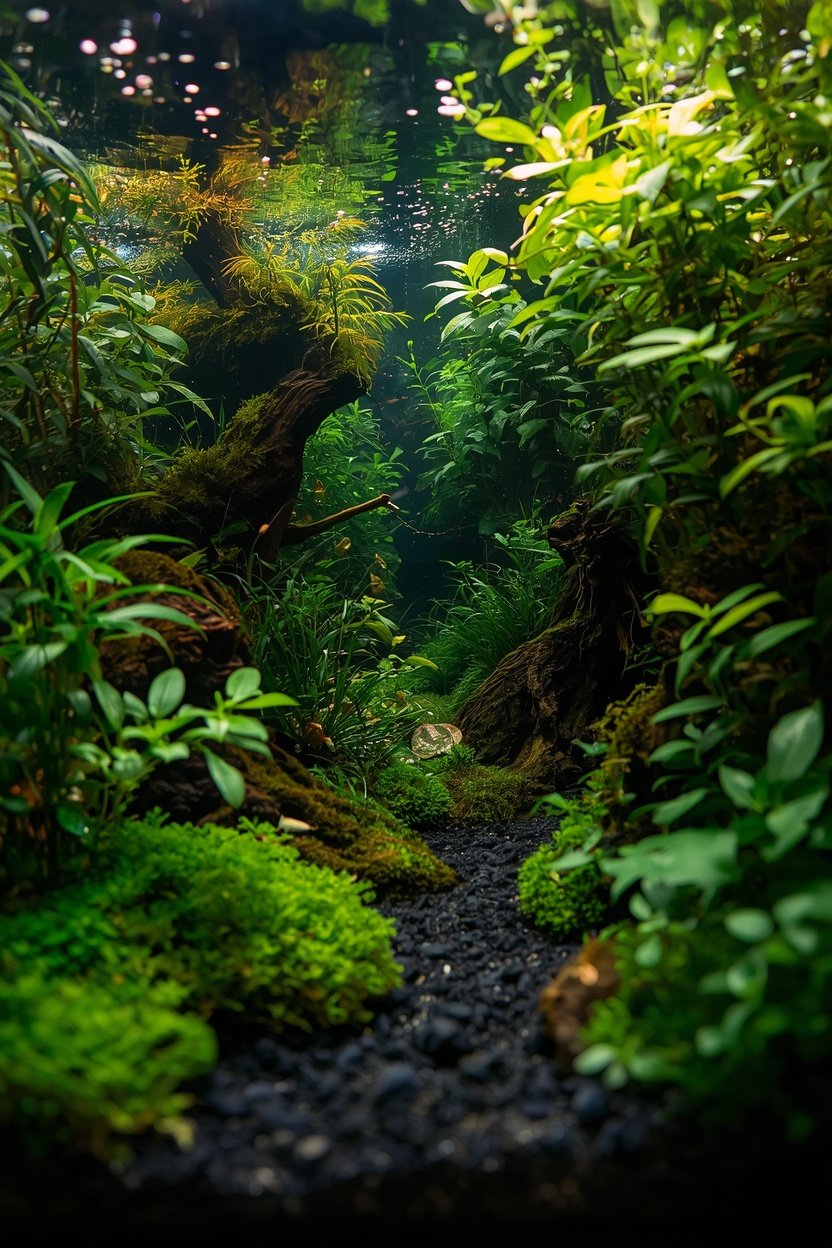
A cramped tank leaves shrimp nowhere to escape and gives a curious betta an easy hunting ground. A larger, densely planted tank changes the dynamic considerably by giving shrimp places to disappear from view entirely.
|
Setup Element |
Recommendation |
Why It Helps |
|
Tank Size |
10 gallons minimum |
More space dilutes the betta's attention and territory |
|
Plant Density |
Heavily planted, moss and floating plants |
Gives shrimp cover to hide and graze unseen |
|
Décor |
Driftwood, rock caves, leaf litter |
Creates multiple hiding zones at different tank levels |
|
Substrate |
Fine, dark substrate |
Helps shrimp visually blend in and feel secure |
|
Water Parameters |
Stable, matched to both species' needs |
Reduces stress, which lowers aggressive behavior |
How to Introduce Shrimp to a Betta Tank Safely
- Set up the tank fully first, letting plants establish for a few weeks so shrimp have mature hiding spots from day one.
- Add shrimp before the betta if possible, letting them settle in and claim hiding spots before a predator is introduced.
- Introduce a larger group of shrimp rather than just one or two, since a bigger starting colony better tolerates occasional losses.
- Feed the betta well and on a consistent schedule; a well-fed betta is less driven to hunt constantly.
- Observe closely for the first week, watching specifically for the betta flaring at or chasing shrimp repeatedly.
Signs Your Betta and Shrimp Are Not Getting Along
Some investigation is normal at first, but ongoing aggression is a clear signal that the pairing is not working. Watch for these behaviors closely during the first two to three weeks after introduction.
|
WATCH FOR Warning Signs to Watch For
|
|
TIP Tips to Improve Compatibility Odds
|
When to Separate Them
If your shrimp population keeps declining despite a well-planted tank, plentiful hiding spots, and a consistent feeding routine, it is time to accept that this particular betta is not a good match for cohabitation. Moving the betta to its own tank and keeping the shrimp in a dedicated, predator-free colony is a far better long-term outcome than continuing to lose shrimp indefinitely. There is no shame in separating them; it simply means this individual betta's temperament was not suited to a shared tank.
Frequently asked questions
Will a betta eventually stop hunting shrimp over time?
Sometimes, once a betta learns that adult shrimp are too fast to catch, it loses interest and settles into ignoring them. This is not guaranteed, and it can take several weeks to become clear either way.
Are ghost shrimp safe with bettas?
Ghost shrimp are inexpensive and readily available, but they are similar in size and speed to cherry shrimp, so the same risks and precautions apply.
Can I keep shrimp fry safe in a betta tank?
Generally, no. Shrimp fry are almost always eaten in a shared tank, so if breeding is your goal, a separate species-only tank is a much safer choice.
