
Betta Fish Care for Beginners: The Complete Guide to a Happy, Healthy Betta
Few fish have as much personality as a betta. Flowing fins, bold colors, and a funny habit of following your finger across the glass make them a favorite for first-time fishkeepers. There is a catch, though. Bettas are often sold in tiny cups, so many beginners assume these fish need almost no space or effort. They do not. This guide explains betta fish care in plain language, from tank size and water temperature to feeding, decor, and spotting trouble early, so your fish can enjoy a full three to five years, and sometimes longer.
Meet Your Betta: Know the Fish Before You Buy
Bettas (Betta splendens) come from the shallow rice paddies, slow streams, and floodplains of Southeast Asia. Warm, gentle, still water is their natural home, and that tells us a lot about what they need in an aquarium. They also have a special breathing organ called the labyrinth, which lets them gulp air at the surface. When your betta swims up for a quick sip of air, that is perfectly normal. It does mean the water surface must stay open and the air above it should not be icy cold.
Male bettas are famous for fighting other males, which explains the nickname "Siamese fighting fish." Keep only one male per tank. Females are calmer, but they can still squabble, so group setups are best saved for when you have more experience.
Choosing the Right Tank Size
Forget the myth that a betta is happy in a bowl or a vase. Wild bettas live in puddles and paddies that look small, yet the water is wide, plentiful, and constantly refreshed. In a tiny container, waste builds up fast and the temperature swings wildly. For a beginner, a tank of at least 5 gallons (about 19 liters) is the practical minimum. A 10-gallon tank is even better, because a larger body of water stays stable and forgives small mistakes.
Choose a tank with a snug lid. Bettas are surprisingly good jumpers, and a gap of just a few centimeters can be enough for an escape. Leave a little air space between the water line and the lid so your fish can breathe comfortably.
Your Equipment Checklist
• Heater and thermometer: bettas are tropical, so an adjustable heater is essential in most homes.
• Gentle filter: a sponge filter or a filter with adjustable flow works best, since strong currents tire out long-finned bettas.
• LED light with a timer: eight to ten hours a day keeps plants healthy and gives your fish a steady day and night rhythm.
• Water conditioner: it neutralizes chlorine and chloramine found in tap water.
• Liquid test kit: it checks ammonia, nitrite, nitrate, and pH, and it is more dependable than paper strips.
Water Temperature and Water Quality
Stable, clean water is the foundation of betta fish care. Keep the tank within the ranges below and test weekly, especially during the first couple of months.
|
Water Parameter |
Ideal Range |
|
Temperature |
78–80°F (25–27°C) |
|
pH |
6.5 to 7.5 |
|
Ammonia |
0 ppm |
|
Nitrite |
0 ppm |
|
Nitrate |
Below 20 ppm |
Before your fish moves in, cycle the tank. Cycling is the process of growing helpful bacteria in your filter that turn toxic ammonia into much less harmful nitrate. It usually takes four to six weeks. Skipping it is one of the most common reasons new fish get sick during their first weeks at home.
What and How Much to Feed
Bettas are carnivores. A quality betta pellet that lists fish or shrimp as the first ingredient should be the base of their diet. Offer two to three pellets once or twice a day, only as much as your fish finishes in about two minutes. A betta's stomach is roughly the size of its eye, so overfeeding is easy and leads to bloating and cloudy water. Once or twice a week, treat your fish to frozen or freeze-dried bloodworms, brine shrimp, or daphnia. Many keepers also skip one feeding day weekly to support digestion. Always scoop out uneaten food after a few minutes.
Four Beginner-Friendly Decor Ideas
Decor is about more than looks. Hiding spots lower stress, and live plants help absorb nitrates. One safety rule: glide a soft cloth or a piece of pantyhose over every item before adding it. If the fabric snags, leave that item out, because rough edges can tear delicate fins.
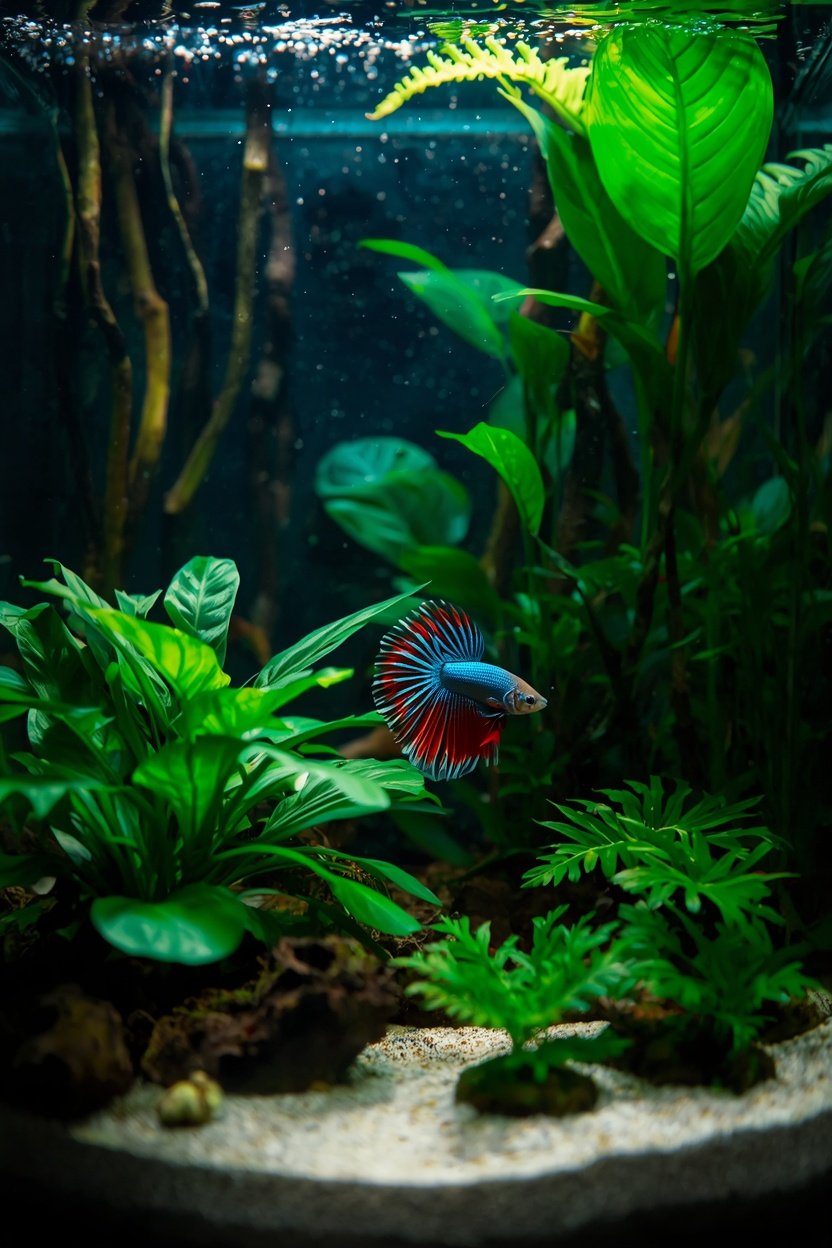
Idea 1: The Planted Jungle Corner
Anubias, java fern, and cryptocoryne are hardy, low-light plants that suit beginners. Attach them to rocks or wood instead of burying their roots, then place taller stems at the back and shorter leaves at the front for a layered look. Silk plants are a fine alternative, while hard plastic ones are best avoided.
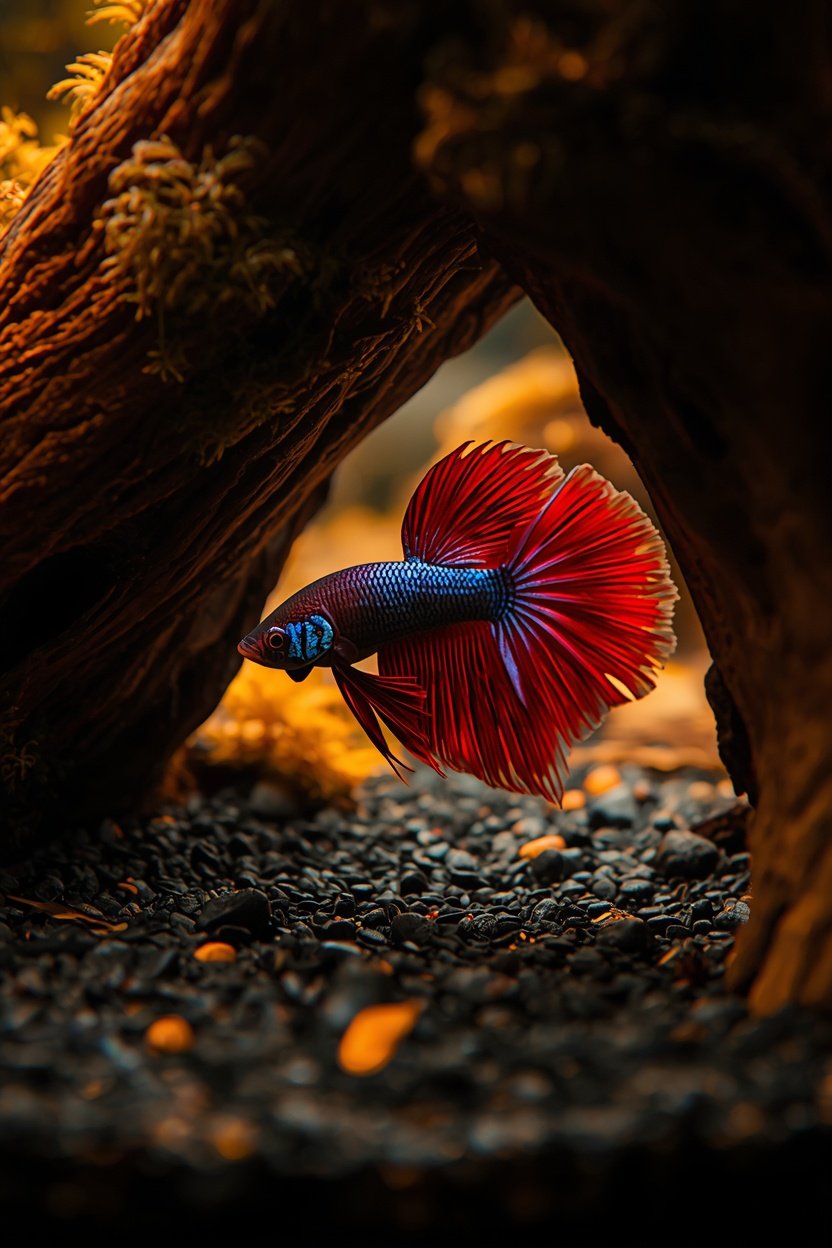
Idea 2: The Driftwood Cave Hideaway
A smooth piece of aquarium-safe driftwood with a natural arch gives your betta a cozy place to rest and explore. Soak or boil new wood first to release extra tannins and help it sink. Tannins may tint the water a light amber, which is generally harmless and resembles the blackwater streams bettas come from.
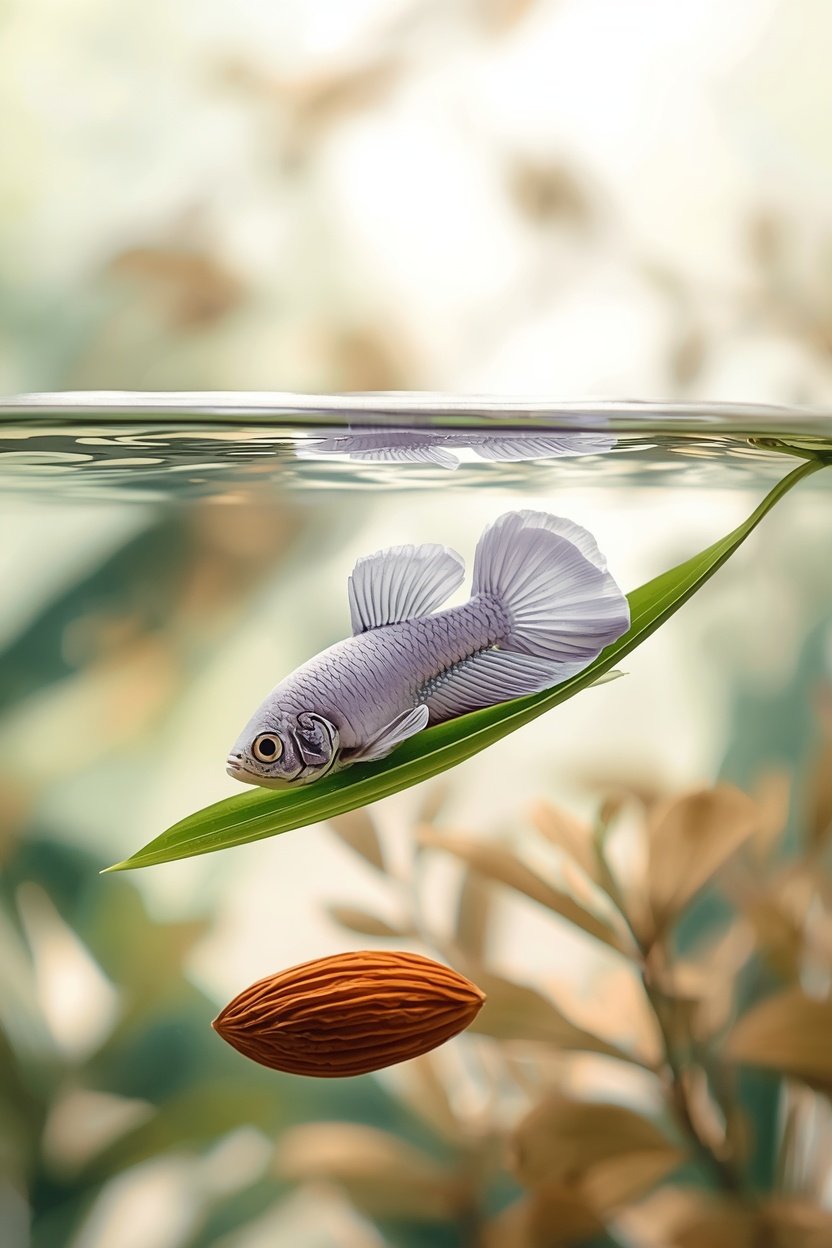
Idea 3: The Floating Leaf Hammock and Almond Leaves
Bettas love resting near the surface. A betta hammock (a leaf-shaped perch held by a suction cup) or a floating Indian almond leaf lets them relax close to the air. Pick a hammock with smooth edges and place it so open water remains at the surface for easy breathing.
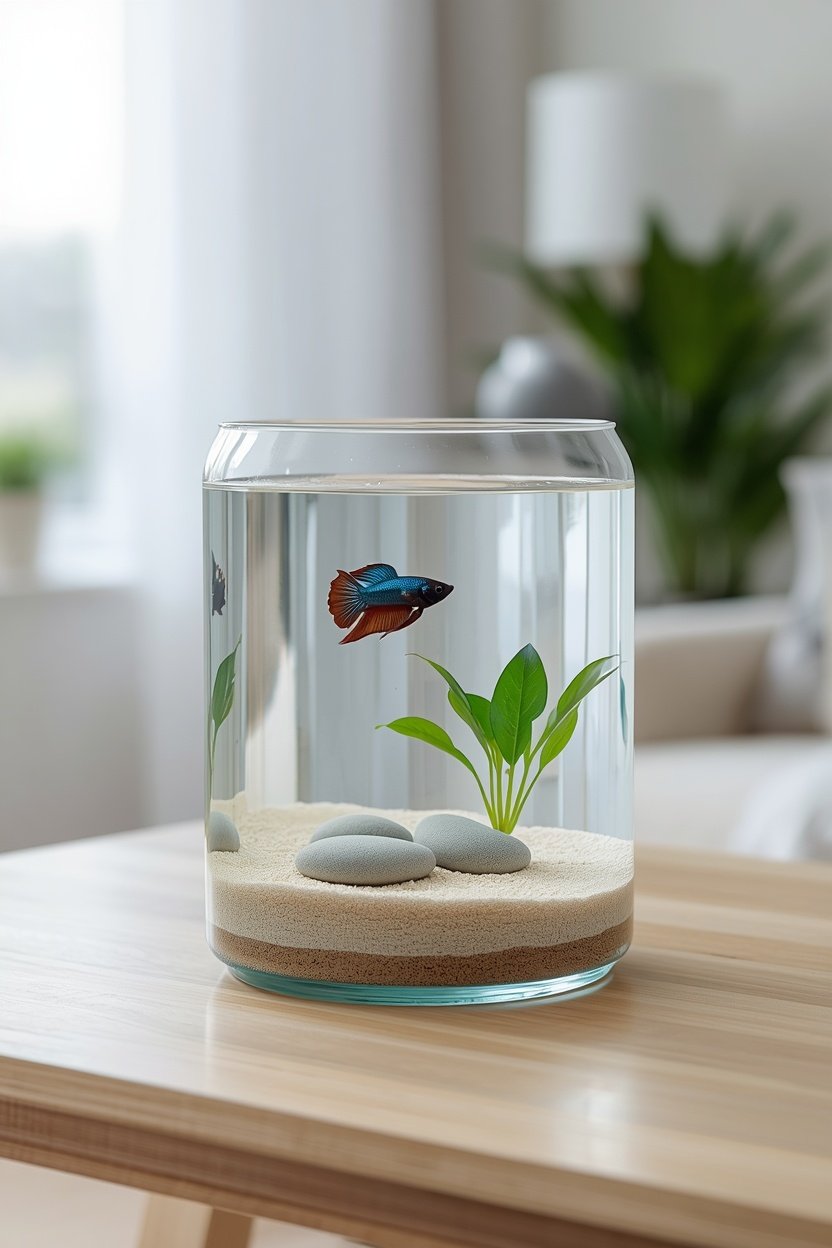
Idea 4: The Minimalist Zen Sand and Stone Layout
Soft sand, a few smooth river stones, and one statement plant create a calm, clean look that is also easy to maintain. Rounded stones will not snag fins, and the open floor space makes light siphoning during water changes quick and simple.
Your Simple Care Routine
• Daily: feed your betta, check the thermometer, and glance at fins, color, and behavior.
• Weekly: change 25 to 30 percent of the water using conditioned water at a similar temperature, lightly vacuum the substrate, and test the water.
• Monthly: swish the filter sponge in a bucket of old tank water (never tap water, which can kill helpful bacteria), wipe away algae, and make sure the heater works properly.
Spotting Common Health Problems Early
Catching problems early makes treatment far easier. Watch for changes in appetite, color, and swimming habits, and compare them with the guide below.
|
What You See |
Possible Cause |
First Step |
|
White salt-like dots |
Ich (a parasite) |
Raise the temperature gently to about 82°F (28°C) and use a fish-safe treatment as directed on the label. |
|
Ragged, shrinking fins |
Fin rot |
Do extra water changes and keep the tank very clean. Treat if it keeps spreading. |
|
Swollen belly |
Overfeeding or constipation |
Skip a meal and feed smaller portions afterward. |
|
Hiding, clamped fins, little movement |
Cold or poor-quality water |
Check the temperature and test for ammonia and nitrite right away. |
|
Please note This guide is for general education and does not replace advice from an exotic-pet or aquatic veterinarian. If your fish gets worse, ask a qualified professional. |
Can Bettas Live With Other Fish?
Sometimes, but it takes planning. In a tank of 10 gallons or more, peaceful companions such as a small group of pygmy corydoras or nerite snails can work well. Avoid fin-nippers like tiger barbs, and avoid flashy, long-tailed fish that a betta may mistake for a rival. Always keep a backup tank or divider ready in case your betta refuses to share.
