
I kept my first betta in a small, unheated bowl, exactly the way pet stores displayed them and exactly the way I'd seen in countless photos online. He survived, but looking back, he wasn't thriving — he was sluggish most days, his color never looked as vivid as the bettas I later kept in a proper tank, and I now understand he was almost certainly dealing with constant temperature swings and poor water quality that a bowl simply can't prevent.
If you're here because you already have a small bowl, or you're considering one, this guide is for you — but it's going to be more honest than most "betta bowl decor" articles you'll find. Bettas are genuinely capable of a lot more vitality and personality than a bowl allows, and the kindest thing I can do is explain why, then help you make the best of wherever you're starting from.
|
⚠️ Welfare Note Modern fishkeeping guidance is clear on this: bettas need a heated, filtered tank of at least 5 gallons to live a genuinely healthy, comfortable life. A small, unheated, unfiltered bowl is not a suitable permanent home, even though it's still commonly sold and pictured that way. This guide explains why, and how to do better for your fish — whether that's today or as a near-term upgrade. |
Why Bowl Size Actually Matters for a Betta's Health
Bettas are tropical fish that evolved in warm, stable rice paddies and slow-moving streams in Southeast Asia, not the cool, fluctuating conditions a small, open bowl on a countertop or shelf actually provides. Without a heater, water temperature swings with the room around it, and bettas kept in consistently cool or fluctuating water become lethargic, more prone to illness, and show duller color — exactly what I saw in my own first bowl-kept fish.
Filtration matters just as much as temperature. In a small, unfiltered volume of water, waste builds up quickly, and even frequent water changes struggle to keep ammonia and other toxins at consistently safe levels. A filtered tank processes waste continuously, which is simply something a bowl, however large, can't replicate on its own.
None of this means a betta in a bowl will necessarily die quickly — many survive for a while, which is part of why bowls remain so common. But surviving and genuinely thriving are different things, and the difference shows up in energy, color, and overall quality of life.
If You're Starting With a Bowl Right Now
If a bowl is what you have today, there are real steps you can take to reduce the harm while you plan an upgrade, rather than making your betta wait in the worst possible version of a bowl setup.
● Choose the largest bowl available, at minimum 1 to 2 gallons. Every additional bit of water volume dilutes waste buildup and slows temperature swings, even without a heater or filter.
● Do small water changes far more often than a filtered tank would need. Twice-weekly partial water changes are a reasonable starting point for an unfiltered bowl, testing water quality if you're able to.
● Keep the bowl away from drafts, direct sun, and heating or cooling vents. Stable ambient room temperature, even without a heater, is considerably better than a spot with wide daily swings.
● Treat this as a temporary setup, not a final home. Set a real timeline for upgrading to a heated, filtered tank of at least 5 gallons, even if that upgrade happens gradually.
Making a Small Bowl as Comfortable as Possible in the Meantime
While you work toward a proper tank, a few thoughtful additions can genuinely improve your betta's day-to-day experience, even in a small, imperfect space.
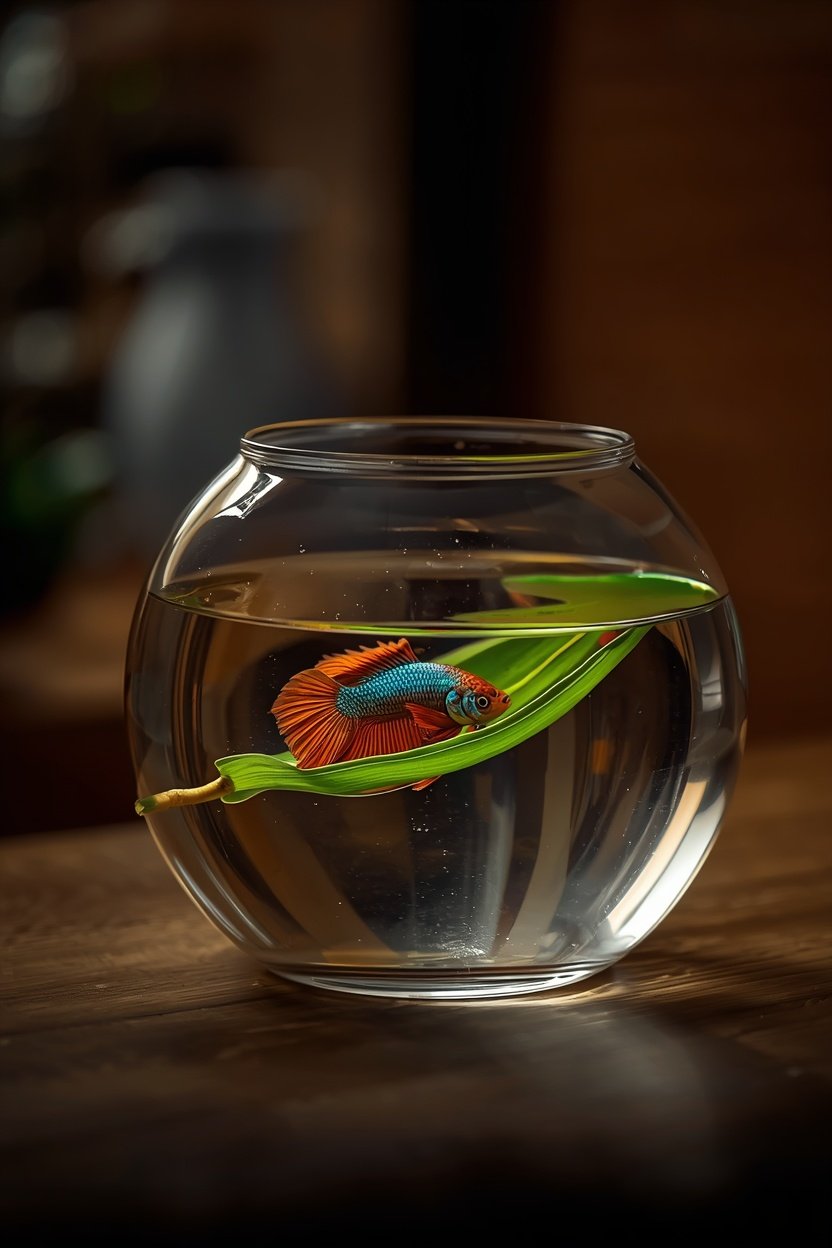
Add a Soft Resting Leaf Near the Surface
Bettas are labyrinth fish that breathe air at the surface and often appreciate a broad, soft leaf to rest on rather than treading water constantly. A silicone betta hammock, suction-cupped just below the surface, gives your fish a comfortable place to pause throughout the day, even in a small bowl.
Use Smooth, Minimal Decor Only
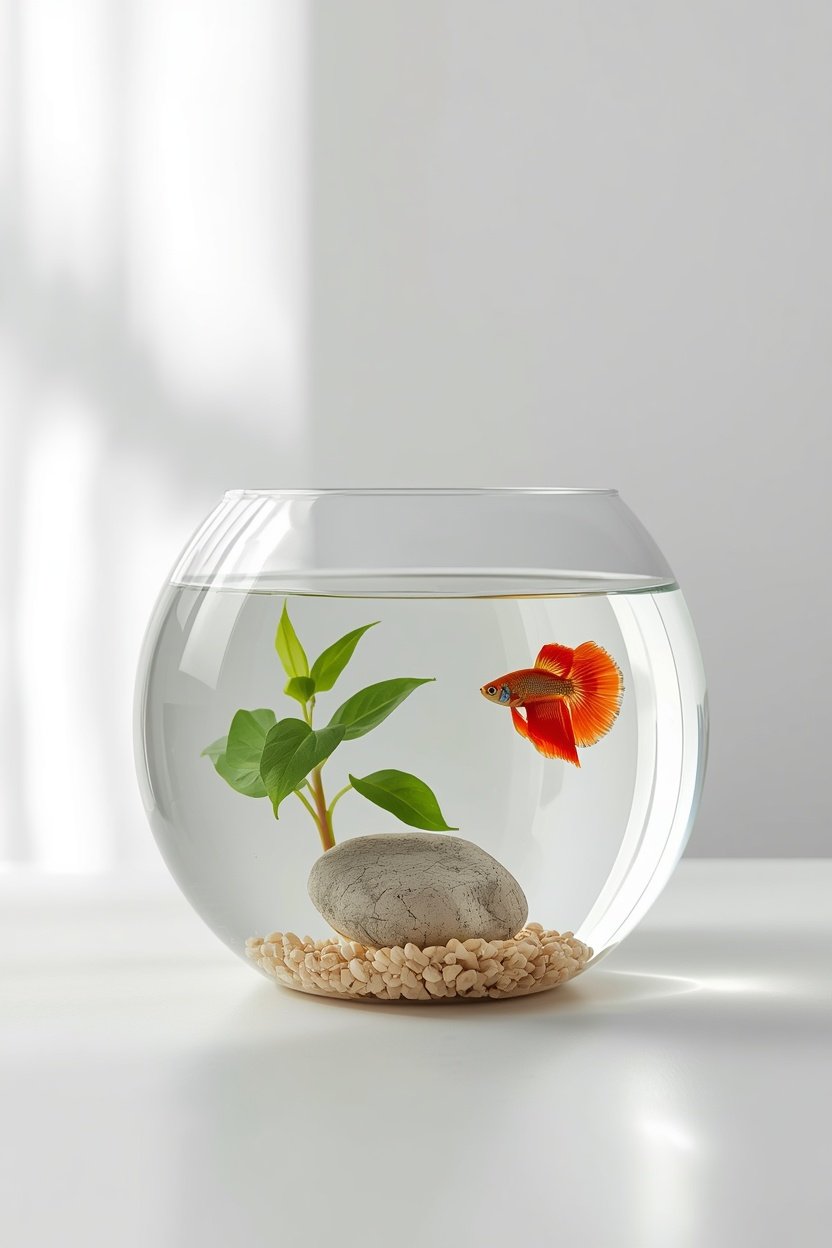
In a small space, every object the betta might brush against matters more, since there's less room to avoid anything with rough or sharp edges. A single smooth stone or a soft silk plant, checked carefully by hand for snags, is enough — resist the instinct to fill a small bowl with multiple ornaments, which only crowds an already-limited space.
Plan and Budget for the Upgrade
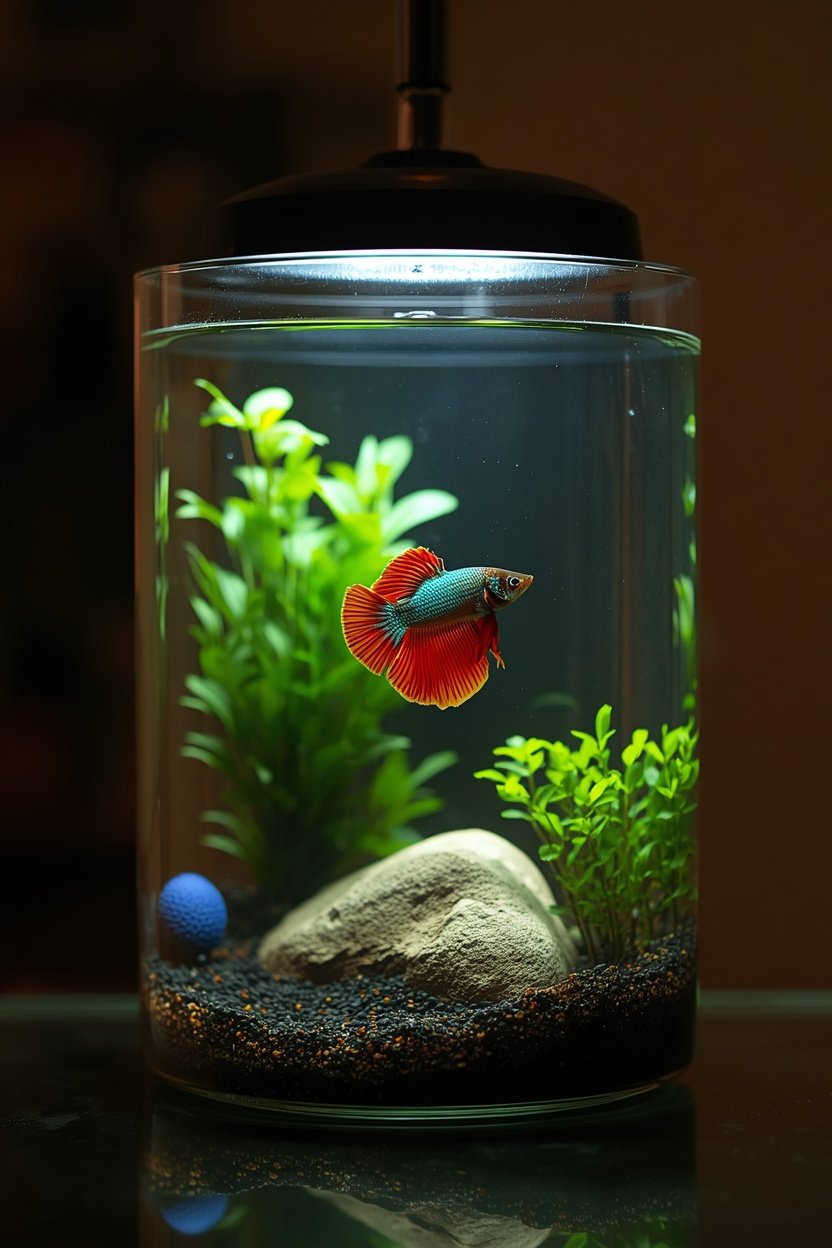
A 5-to-10 gallon tank with a small heater and a gentle filter is a modest, genuinely achievable upgrade for most households, often costing less than people expect once purchased as a simple starter kit. Treating this as the real goal, rather than treating the bowl as a permanent solution, is the single most impactful decision you can make for your betta's long-term wellbeing.
Signs It's Time to Upgrade
● Lethargy or reduced activity. A betta spending most of its time resting at the bottom or surface, rather than exploring, often signals stress from temperature or water quality issues.
● Duller color than when you first brought your fish home. Stress and poor water conditions frequently show up first as a noticeable dulling of a betta's natural color.
● Clamped fins. Fins held tightly against the body rather than flowing naturally can indicate stress, illness, or uncomfortable water conditions.
● Frequent illness despite regular water changes. If health issues keep recurring, the underlying setup, not just maintenance frequency, is often the real cause.
Final Thoughts
Bettas are genuinely resilient, expressive fish, and they deserve a setup that lets that personality actually come through rather than one that leaves them just barely getting by. If a small bowl is where you're starting, the steps in this guide can meaningfully reduce the stress on your fish in the short term — but the real goal worth working toward is a heated, filtered tank of at least 5 gallons, where a betta can genuinely thrive rather than simply survive.
