
Every betta owner eventually realizes there isn't just one "right" way to set up a tank for this species — it depends heavily on your available space, your experience level, and what you actually want from the hobby. My own betta setups have ranged from a bare-bones 5-gallon starter tank to a much more involved planted jungle build, and each version taught me something different about what actually works for these fish.
This guide walks through four distinct, complete setup approaches rather than individual decor pieces, so you can choose the configuration that genuinely matches your goals. Each idea includes a detailed image prompt so you can visualize the finished setup before gathering equipment.
Choosing the Right Setup for Your Situation
The right betta setup depends less on personal aesthetic preference and more on practical factors: your available space, your comfort level with plant care, whether you want a solo fish or a multi-species community, and how much ongoing maintenance you're realistically prepared to commit to. Being honest about these factors upfront leads to a far more successful long-term setup than choosing based on looks alone.
1. The Simple 5-Gallon Starter Setup
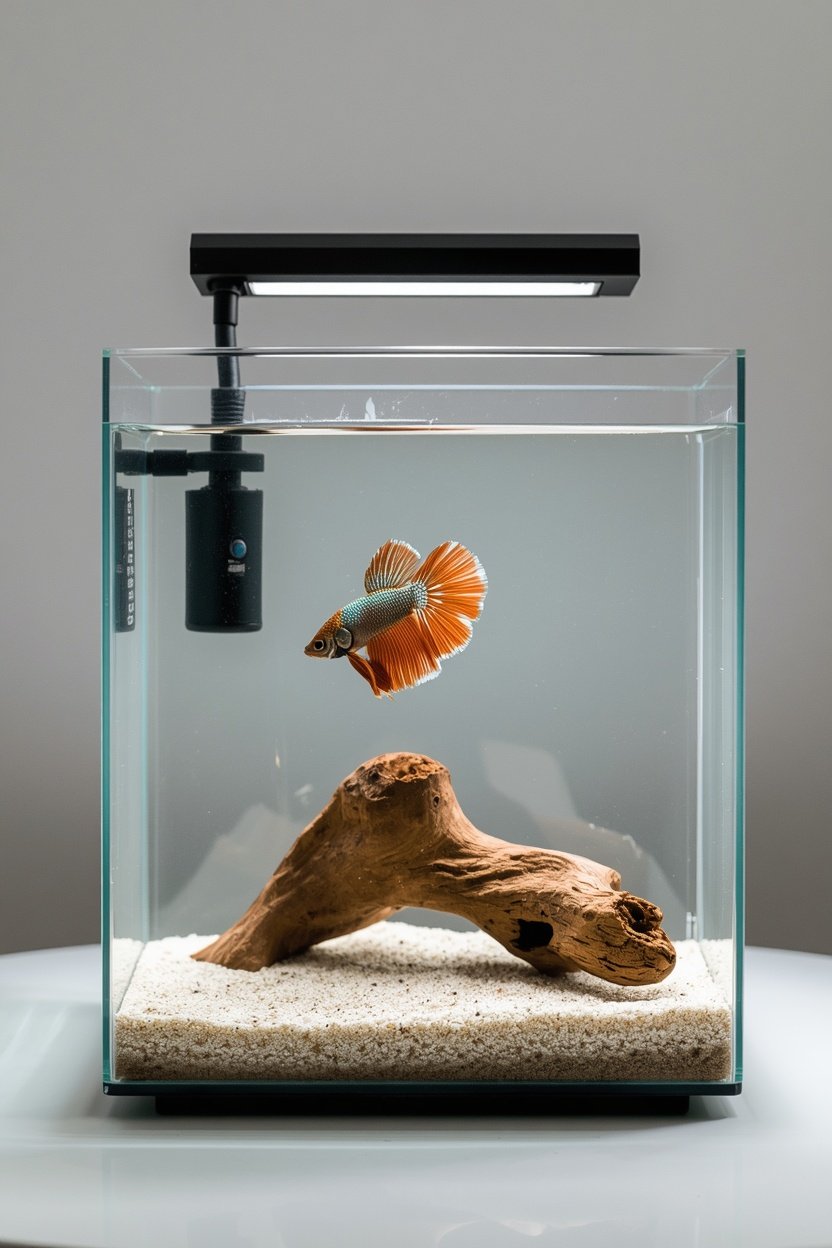
For a first betta tank, a 5-gallon setup hits the sweet spot between manageable maintenance and genuinely adequate space, which matters more than many beginner guides emphasize. This setup keeps equipment minimal and intentional: a small internal or sponge filter for gentle water movement, an adjustable heater to maintain a stable temperature, and just enough decor to provide shelter without overwhelming the space.
Center the layout around one piece of smooth driftwood or a single decorative cave, paired with a simple sand or fine gravel substrate in a neutral tone. This restraint isn't just about ease of setup — a sparser layout in a small tank actually gives a betta more genuine swimming room than a heavily decorated one, which matters given how much time bettas spend gliding through open water.
This setup works particularly well for anyone testing the waters with their first fish, since it's affordable, straightforward to maintain, and forgiving enough for a beginner still learning the basics of water changes and cycling, without sacrificing the fish's actual wellbeing for the sake of simplicity.
2. The Low-Tech Planted Jungle Setup
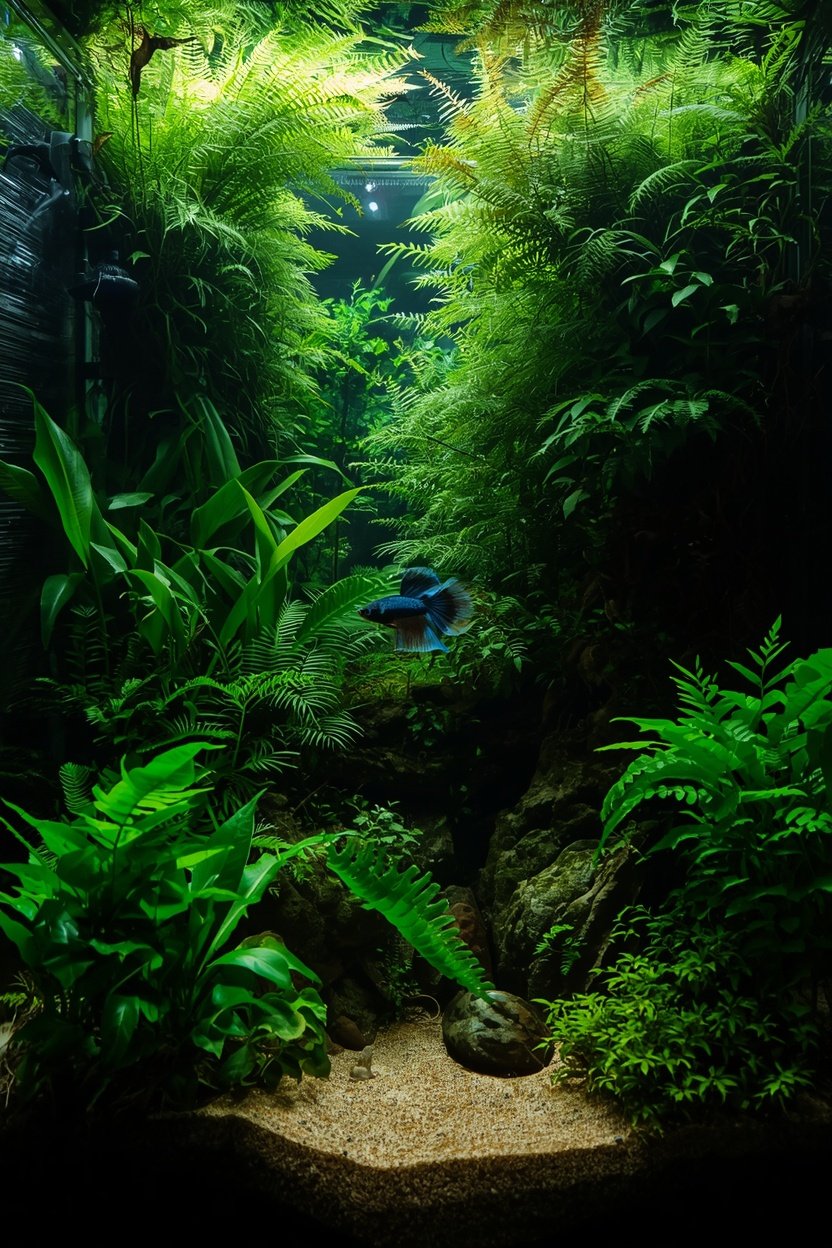
For hobbyists wanting a lusher, more immersive look without the complexity of high-tech CO2 injection, a low-tech planted setup built around hardy, low-light plants delivers real visual density while staying genuinely manageable. Java fern, anubias, and java moss all thrive under standard aquarium lighting without supplemental CO2, filling the tank with the kind of dense greenery that echoes a betta's natural rice paddy habitat.
This setup benefits from a nutrient-rich planted substrate beneath a thin cap of sand or fine gravel, giving root-feeding plants like Amazon sword a genuine growth advantage over a purely inert substrate. Floating plants like frogbit, left to spread across part of the surface, complete the jungle effect while also diffusing light and giving a betta natural cover near the surface it instinctively favors.
Because this setup relies on hardy, forgiving plant species rather than demanding ones, it's genuinely achievable for a beginner willing to put in slightly more upfront planning than the minimalist starter setup, while still avoiding the cost and complexity of a full high-tech planted tank.
3. The Peaceful Community Tank Setup
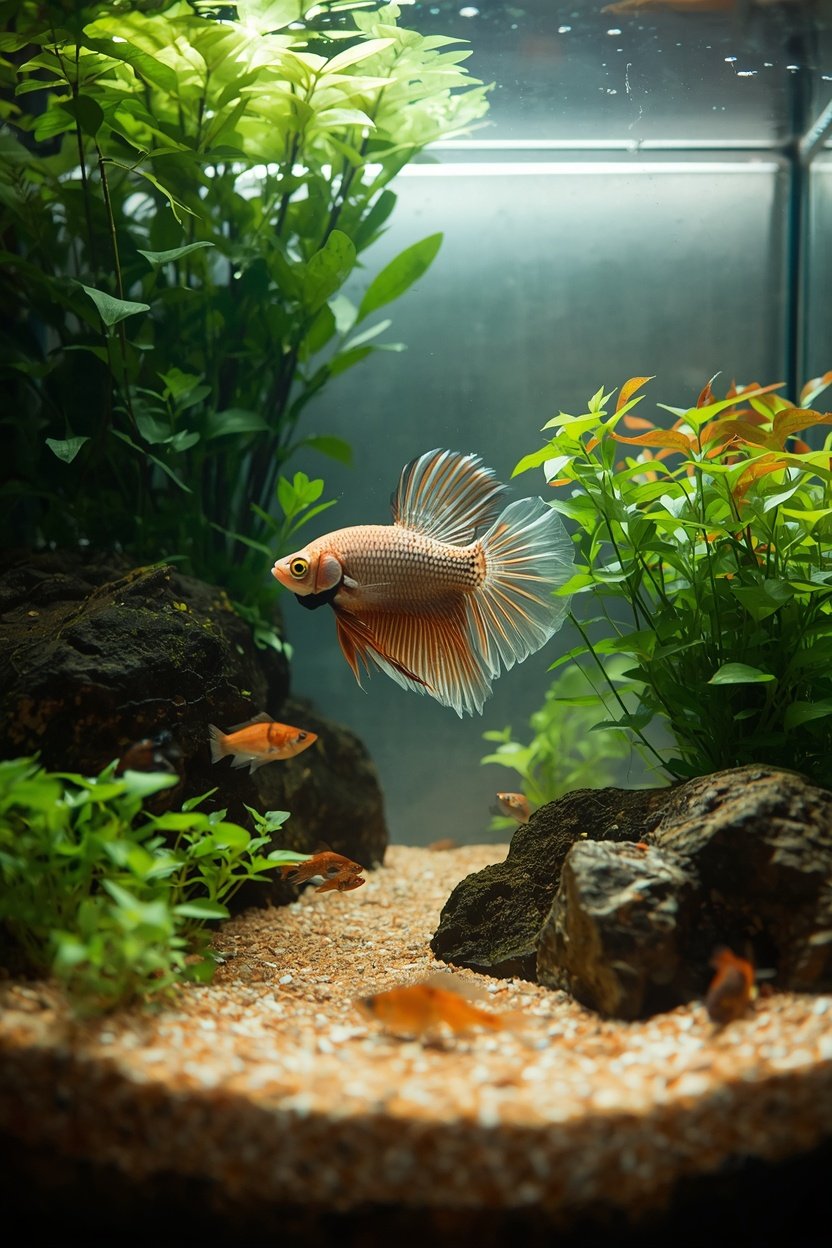
While bettas are famously kept alone, a larger tank — generally 10 gallons or more — can support a carefully chosen peaceful community setup, provided every tankmate is selected specifically for compatibility with betta temperament. Small, calm schooling fish like ember tetras, along with bottom-dwelling species like corydoras catfish, generally coexist well with a betta that has enough space and enough visual cover to avoid feeling territorially crowded.
This setup calls for a genuinely more developed layout than a solo betta tank, with distinct zones — open swimming space for the betta, a densely planted area schooling fish can retreat into, and a soft substrate corydoras can forage through comfortably. Providing this structural variety reduces stress across every species sharing the tank, rather than forcing different fish with different needs into one uniform layout.
This is not the right setup for every betta, since individual temperament varies considerably, and some bettas simply won't tolerate tankmates regardless of how carefully the tank is planned. Anyone attempting this setup should be prepared to separate fish if aggression becomes a genuine ongoing problem rather than an occasional, resolved dispute.
4. The Divided Duo Tank Setup
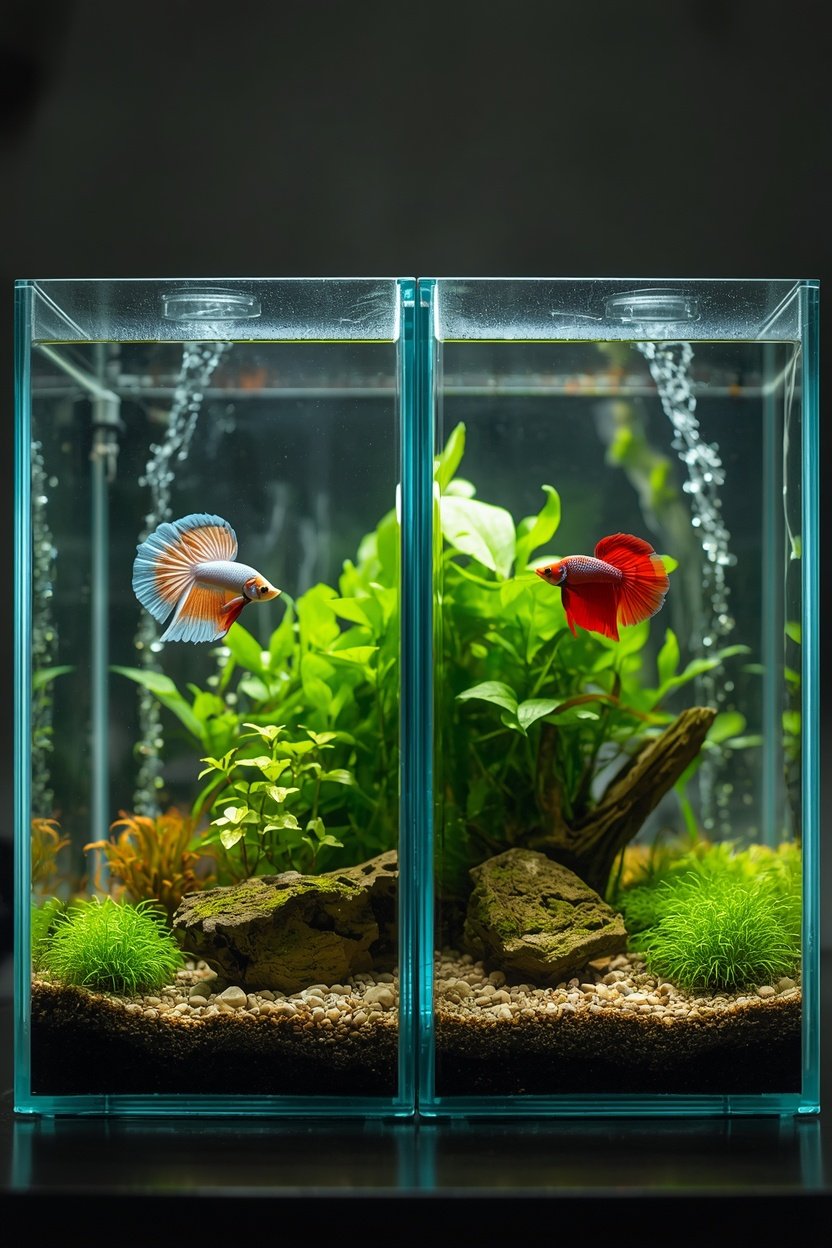
For anyone wanting to keep two bettas without the risks of a true shared tank, a securely divided tank — using a clear acrylic or mesh divider to create two fully separate compartments within a single aquarium — offers a genuinely safe alternative. Each side receives its own filtration flow, heater coverage, and decor, effectively functioning as two independent tanks sharing one piece of furniture and one overall footprint.
This setup works particularly well when floor or shelf space is limited but you still want the visual and personal appeal of keeping more than one betta. A clear, well-secured divider lets each fish see the other without any risk of physical contact, which some keepers find bettas tolerate reasonably well, though individual reactions vary and should be monitored closely.
Style each side with its own small aquascape — perhaps echoing similar plant choices for a cohesive overall look, or giving each betta a distinctly different environment suited to its own personality. Either way, this setup delivers real efficiency for keeping multiple bettas without compromising on the solitary space each one fundamentally needs.
Universal Tips for Any Betta Setup
● Never skip the heater, regardless of setup style. Bettas are tropical fish that need consistently warm water, generally between 76 and 80°F, no matter which configuration you choose.
● Cycle the tank before adding any fish. Every setup style benefits from a properly established nitrogen cycle before a betta or any tankmates are introduced.
● Match tank size to your chosen setup's ambitions. A community or divided setup generally needs more total volume than a simple solo starter tank to remain healthy long-term.
● Observe your specific fish's temperament. Individual bettas vary considerably, so any setup involving other fish or a divider should be monitored closely rather than assumed safe by default.
Final Thoughts
There's no single correct betta setup — a simple starter tank, a lush planted jungle, a peaceful community build, or a divided duo configuration can all support a genuinely thriving fish, as long as the setup matches your actual space, experience, and goals honestly. Choose the version that fits your real situation rather than the one that simply looks best in photos, and you'll end up with a tank you can maintain successfully for years.
Frequently asked questions
What's the minimum tank size for a healthy betta?
Most experienced keepers recommend at least 5 gallons as a genuine minimum, since smaller volumes are considerably harder to keep stable and don't provide adequate swimming space for a betta's natural activity level.
Can two bettas ever share the same undivided tank?
Male bettas should never share an undivided tank due to territorial aggression, and even female bettas kept together in a "sorority" setup require careful planning, a larger tank, and close monitoring, since aggression can still occur.
How do I know which setup style is right for me?
Consider your available space, how much time you can dedicate to plant care or multi-species monitoring, and whether you want a low-maintenance solo fish or a more involved, larger-scale project, then choose the setup that honestly matches those answers.
