
Most betta tank advice focuses on individual decor pieces — a plant here, a hammock there — but the bigger question I kept coming back to was how the whole layout should actually be structured around how a betta lives and behaves. A betta spends most of its time near the surface, evolved in a very specific shallow habitat, and can sometimes be kept in genuinely different social setups depending on the keeper's goals, all of which call for a different overall approach rather than just different individual pieces.
These four ideas represent distinct layout philosophies rather than a list of decor add-ons, from an authentic biotope to a display built purely to show off a single striking fish. Each idea includes a detailed image prompt so you can visualize the finished setup before making changes to your own tank.
Why Layout Philosophy Matters as Much as Individual Decor
Choosing a coherent overall approach — biotope accuracy, vertical surface-focused design, showcase display, or social sorority management — shapes every subsequent decor decision far more than any single ornament choice does. Starting with a clear layout philosophy tends to produce a more cohesive, intentional tank than picking individual pieces without an underlying plan guiding how they fit together.
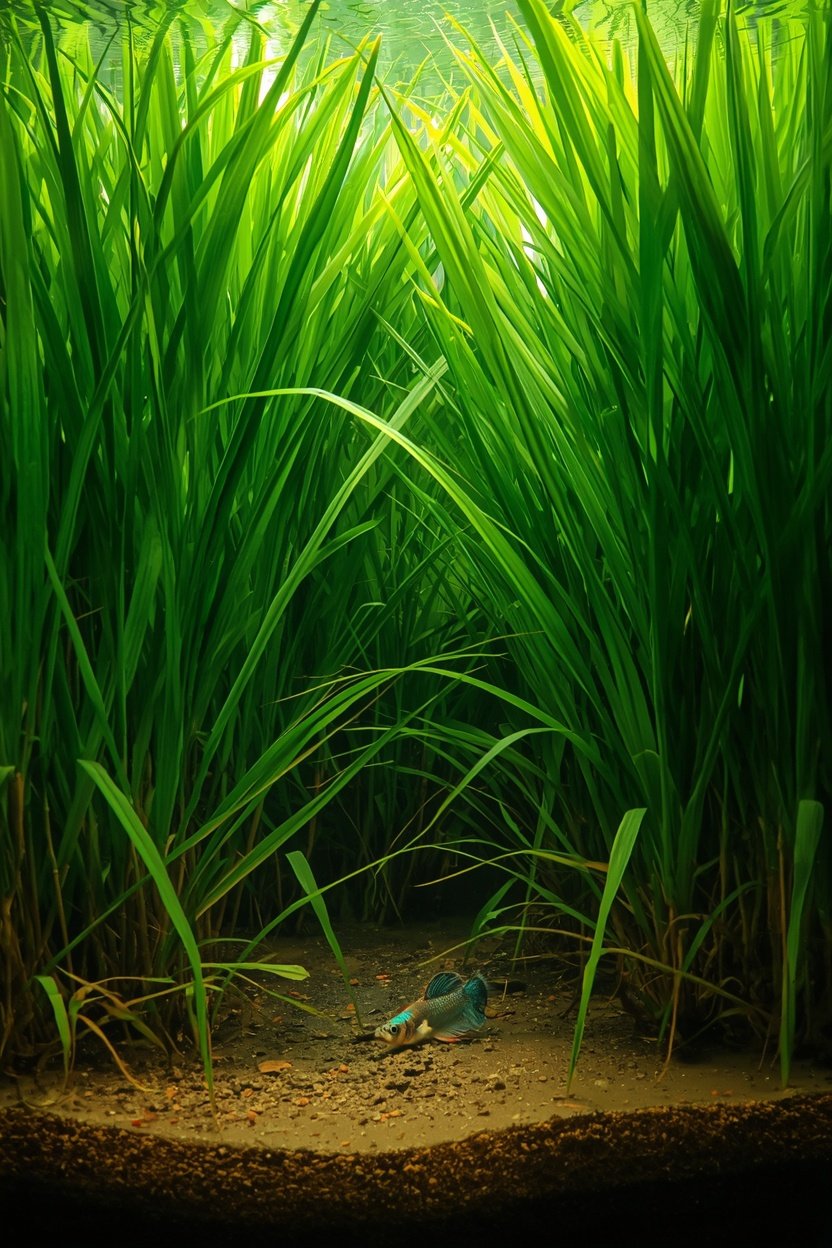
1. A Rice Paddy Biotope-Inspired Layout
Wild bettas originate from the shallow rice paddies, ditches, and slow-moving streams of Southeast Asia, and recreating that specific habitat produces one of the most authentic, genuinely species-appropriate betta tanks possible. This layout favors shallow, densely planted water with plenty of stem plants breaking the surface, mimicking the rice stalks bettas naturally weave through and rest against in the wild.
Use tall stem plants like water sprite or ambulia planted densely enough to break up open water, paired with a muddy-toned substrate rather than bright gravel. Keep the water level slightly lower than a standard tank fill, echoing the shallow depth of an actual rice paddy, which also happens to make it easier for a betta to reach the surface for the atmospheric air its labyrinth organ depends on.
This layout rewards a bit of research into betta natural history, and the payoff is a tank that feels genuinely connected to the species' real origins rather than a generic planted setup with a betta simply added to it.
2. A Vertical Jungle Layout for a Surface Dweller
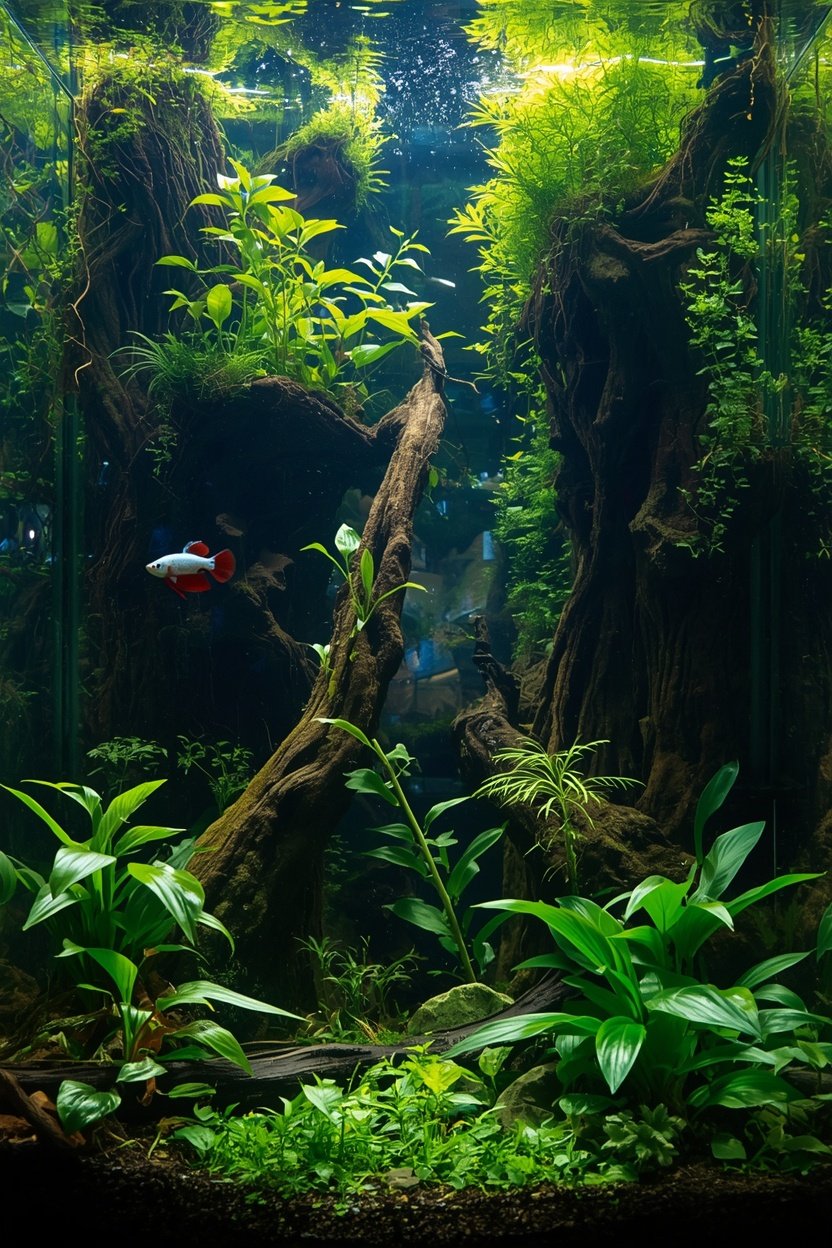
Because bettas spend much of their time near the water's surface rather than at the substrate, a layout built with real vertical height — tall plants and driftwood reaching most of the way up the tank — suits their natural behavior better than a flat, ground-focused aquascape. This approach treats the upper two-thirds of the water column as the primary living space, rather than an afterthought above a substrate-level design.
Tall Amazon sword or vallisneria, allowed to reach close to the surface, gives a betta plenty of covered swimming routes at the height it actually spends most of its time. A single tall piece of driftwood, positioned to break the surface slightly, adds both visual height and a resting point near the top of the tank.
This layout is a genuinely different design philosophy from most aquascaping advice, which typically builds up from the substrate — here, the goal is building a tank that's considerate of a fish that lives mostly near the top.
3. A Rimless Showcase Display
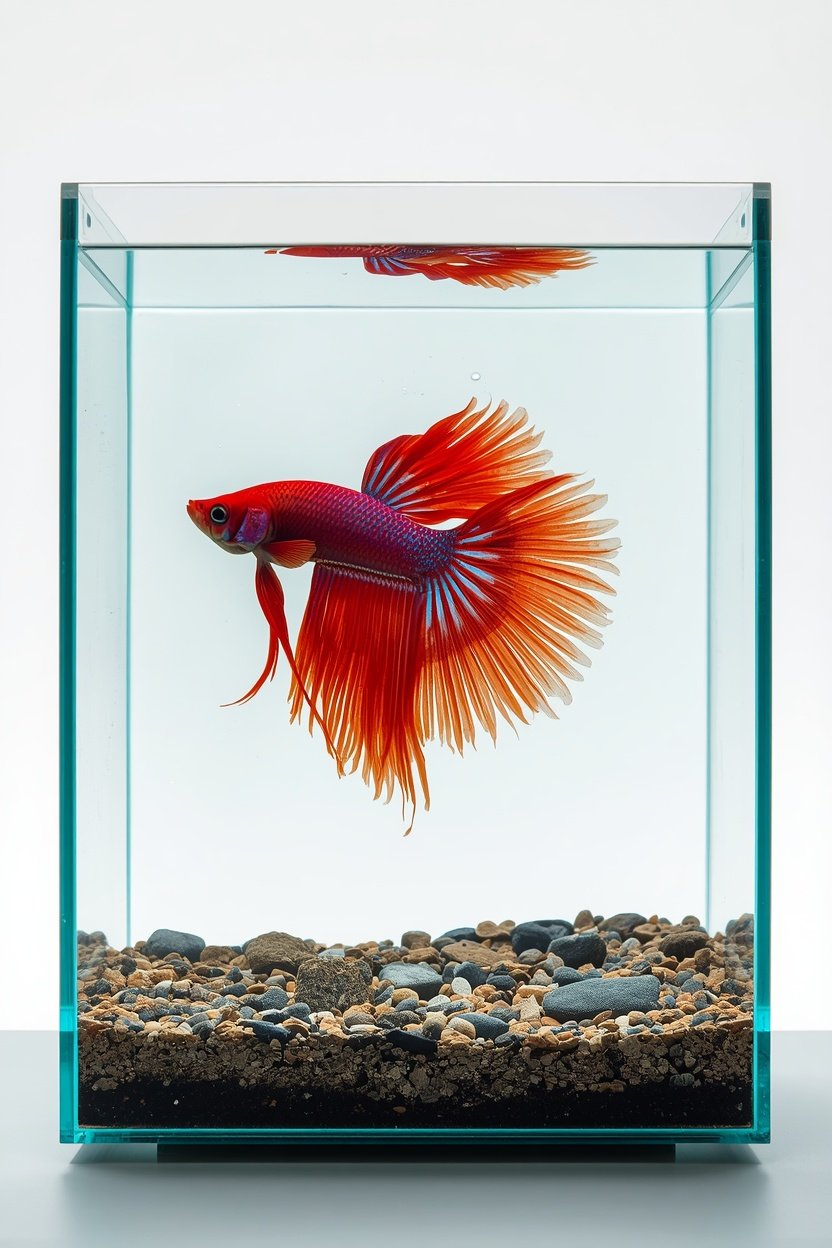
For bettas with especially striking colors or elaborate fin types, a rimless tank with minimal internal decor turns the fish itself into the entire display, similar in spirit to a showcase guppy tank but built around a single striking specimen rather than a school. Clear, seamless glass and restrained hardscape let every angle of the betta's movement and color be seen without visual interruption.
Keep hardscape to a single small accent piece, positioned off to one side, and rely on even, bright lighting rather than dramatic shadow to show the fish's coloring as accurately as possible. This style suits a betta being kept partly for its visual impact, whether for personal enjoyment or photography, more than a naturalistic biotope approach would.
This showcase style works particularly well for a betta with a long-finned variety like a halfmoon or crowntail, where the fin's full shape and movement genuinely deserve unobstructed viewing space to be appreciated properly.
4. A Divided Sorority Tank with Visual Barriers
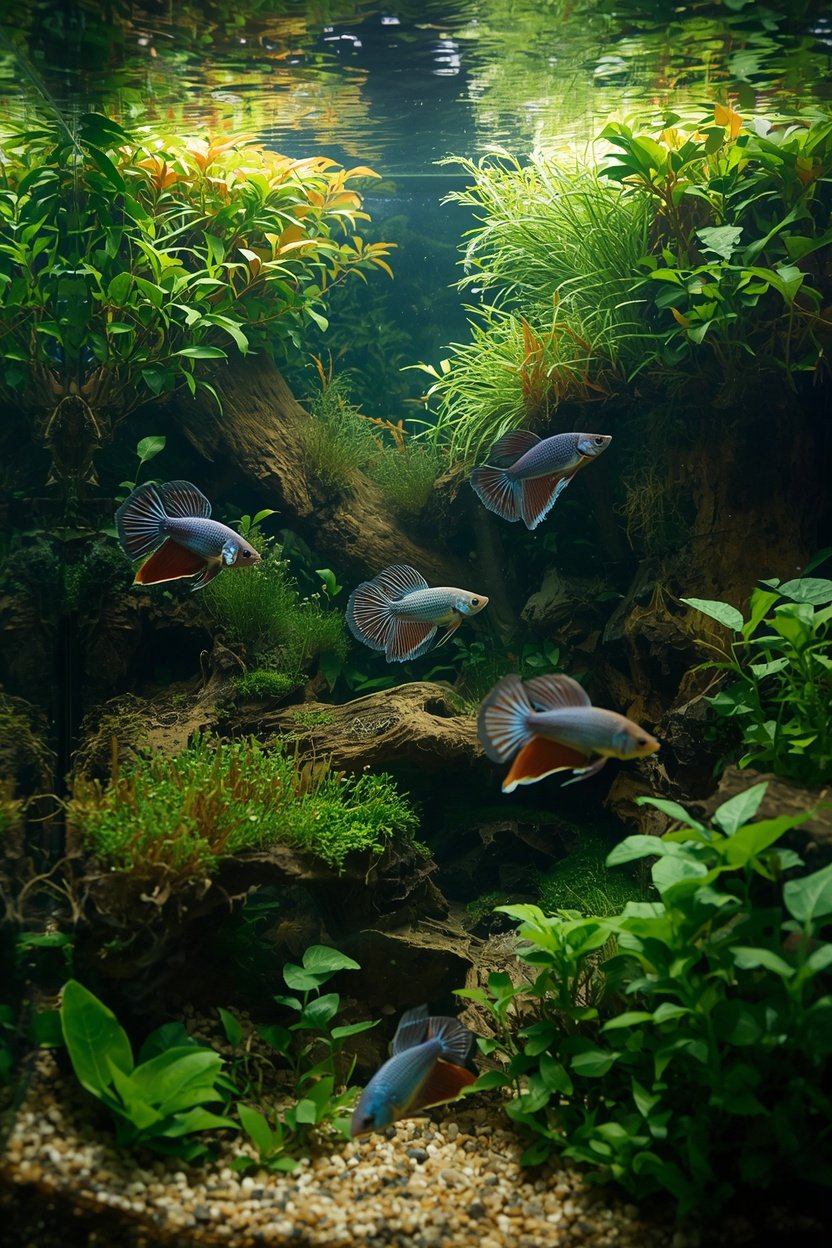
While male bettas must be kept alone, a well-planned sorority of five or more female bettas in a single larger tank is a legitimate, if more advanced, approach some keepers pursue, and it depends heavily on decor built specifically to manage the social dynamics involved. Dense planting broken into multiple visual zones, similar to the rock-wall territory-breaking technique used for cichlids, helps distribute a sorority's shifting hierarchy across the tank rather than forcing constant, full visibility between every fish.
Use plant clusters and driftwood positioned to create several loosely separated zones rather than one open layout, giving lower-ranking females genuine places to retreat during the sorority's ongoing, generally low-level squabbling over pecking order. This is a fundamentally different design goal than a single-betta showcase tank, prioritizing conflict management over visual clarity.
This layout is genuinely more advanced and carries real risk if not researched thoroughly, since sororities can occasionally fail regardless of how well the tank is decorated, but for experienced keepers willing to monitor closely, it's one of the more behaviorally interesting betta-keeping approaches available.
Tips for Choosing the Right Betta Layout
- Match the layout to your specific betta's personality. Some bettas are more active explorers while others prefer to rest near one spot, and either temperament can guide your layout choice.
- Research thoroughly before attempting a sorority. This is the most advanced idea on this list and requires significant space, careful fish selection, and close ongoing monitoring.
- Prioritize surface access in every layout. Regardless of which style you choose, make sure your betta has clear, unobstructed access to the water's surface at all times.
- Let a showcase tank's simplicity work in your favor. Fewer decor decisions means more of your attention can go toward choosing the single best accent piece rather than balancing several.
Final Thoughts
A great betta tank starts with a clear sense of what the whole layout is trying to achieve, whether that's biotope accuracy, respecting the fish's surface-dwelling nature, showcasing a single stunning specimen, or carefully managing a sorority's social dynamics. Choose the philosophy that matches your goals and your specific fish, and the individual decor decisions that follow become considerably easier and more cohesive.
Frequently asked questions
Can male bettas ever be kept together?
No, male bettas are highly territorial toward each other and should always be kept individually, regardless of tank size or decor, since the aggression is instinctive rather than related to environmental stress.
What tank size is needed for a sorority of female bettas?
Most experienced keepers recommend at least 20 gallons for a sorority of five or more females, with substantial planting and visual barriers, since crowding significantly increases the risk of the group's social dynamics breaking down.
Does a rice paddy biotope layout require special equipment?
No special equipment is required beyond standard betta care basics, though a gentle filter is worth prioritizing, since bettas generally prefer the calm, low-current water found in their natural shallow habitat.
