
Store-bought betta accessories add up fast, and after pricing out a fully decorated tank early in my own betta-keeping days, I started looking for ways to build the same features myself. What I found is that some of the most useful betta tank additions — caves, resting hammocks, backgrounds — are genuinely simple to make at home, often for a fraction of the retail price and with materials you may already have on hand.
These four DIY projects range from a five-minute background swap to a slower-growing moss wall, so there's something here whether you have an afternoon or just fifteen spare minutes. Each idea includes a detailed image prompt so you can visualize the finished project before gathering materials.
Why DIY Works So Well for Betta Tanks
Betta tanks tend to be small, which means each project on this list requires only a modest amount of material to complete, keeping costs low even for someone new to crafting. Betta-specific needs — fin safety, calm resting spots, color contrast — also happen to be genuinely simple to address with basic materials, making this species a particularly rewarding one to decorate for on a DIY budget.
1. DIY Terracotta Cave From a Plant Pot
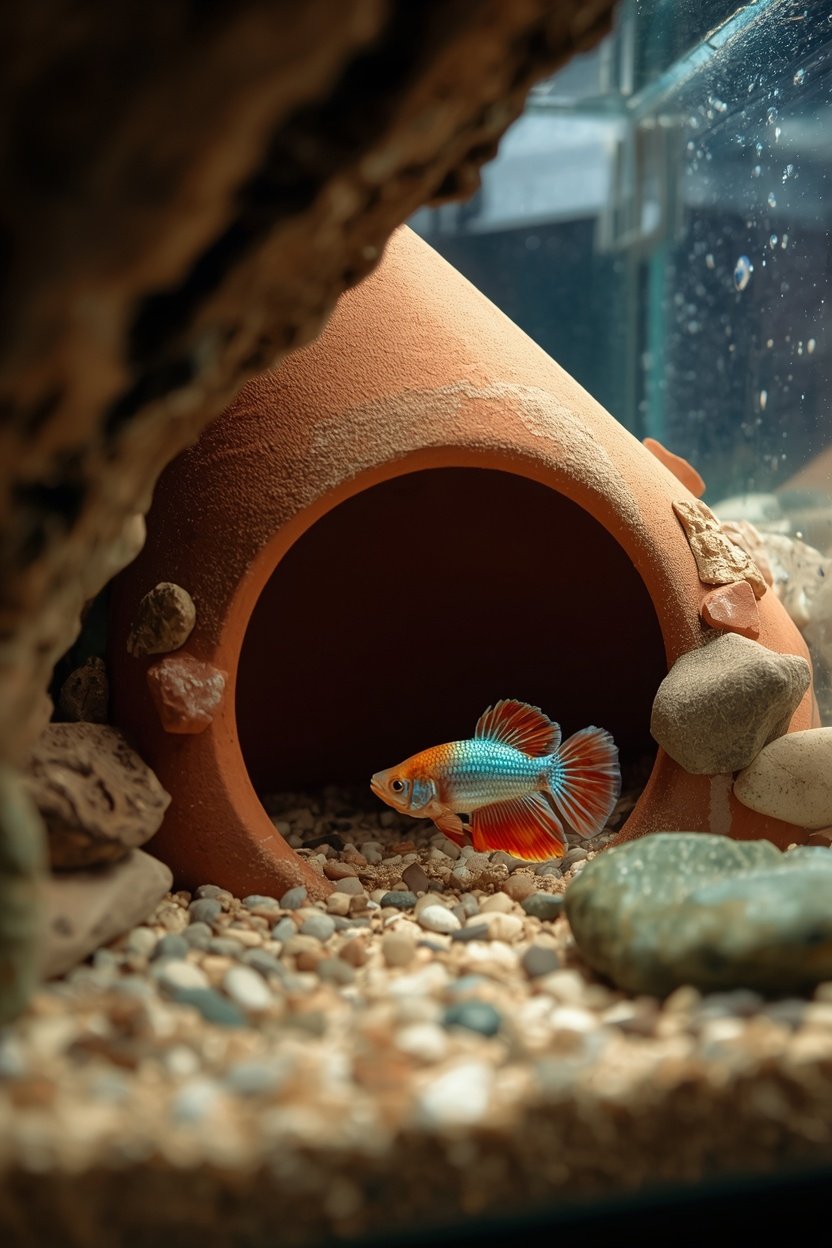
A small, unglazed terracotta plant pot, laid on its side, makes one of the easiest DIY betta caves you can build, and terracotta is naturally porous and aquarium-safe once properly prepared. Choose a pot with an opening wide enough for your betta to comfortably turn around inside without brushing its fins against the entrance repeatedly.
Before adding it to the tank, boil the pot for about fifteen minutes to remove any dust or residue from manufacturing, then let it cool completely. Sand down the entrance edge lightly with fine sandpaper if it feels at all rough or sharp, since even a small snag can damage a betta's delicate fins over time.
For a slightly more decorative version, glue a few smooth aquarium-safe stones around the pot's exterior using aquarium-safe silicone, creating a more natural, blended look than a plain terracotta surface alone. This project costs just a few dollars and can be finished in an afternoon, including drying time for the adhesive.
2. DIY Silk Leaf Hammock
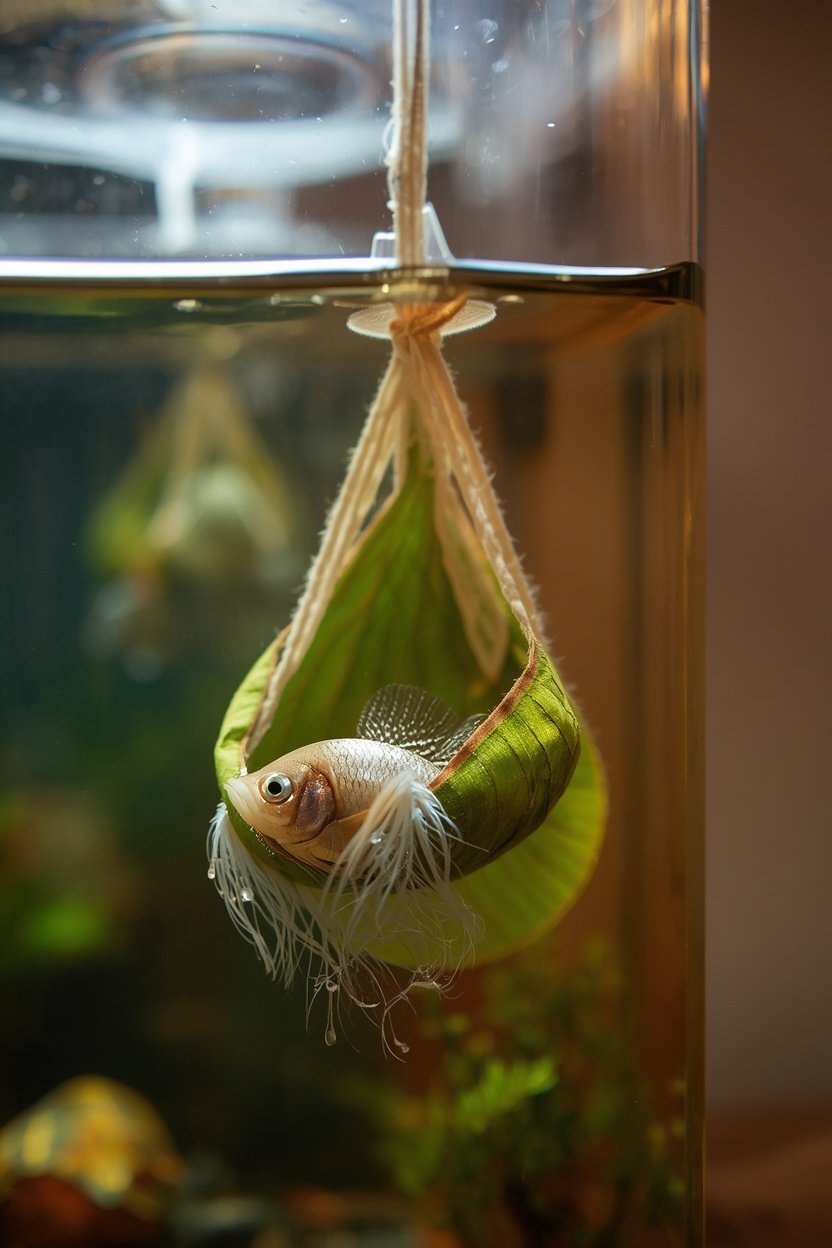
Store-bought betta hammocks work well, but a homemade version costs a fraction of the price and takes only a few minutes to assemble. Cut a broad, rounded leaf shape from soft aquarium-safe silk plant material, then attach it to a small suction cup using aquarium-safe silicone or a short length of fishing line threaded through a small hole punched near the leaf's base.
Position the finished hammock just below the water's surface in a calm corner of the tank, away from any filter outflow, mimicking the broad resting leaves bettas naturally favor in the wild. Test the silk material's edges carefully with your fingers before installing it, confirming there's nothing rough or fibrous that could snag delicate fins.
This project is a great starter DIY for anyone new to aquarium crafting, since the materials are inexpensive and widely available, and a mistake simply means cutting a new leaf shape rather than wasting anything costly.
3. DIY Painted Background Using Poster Board
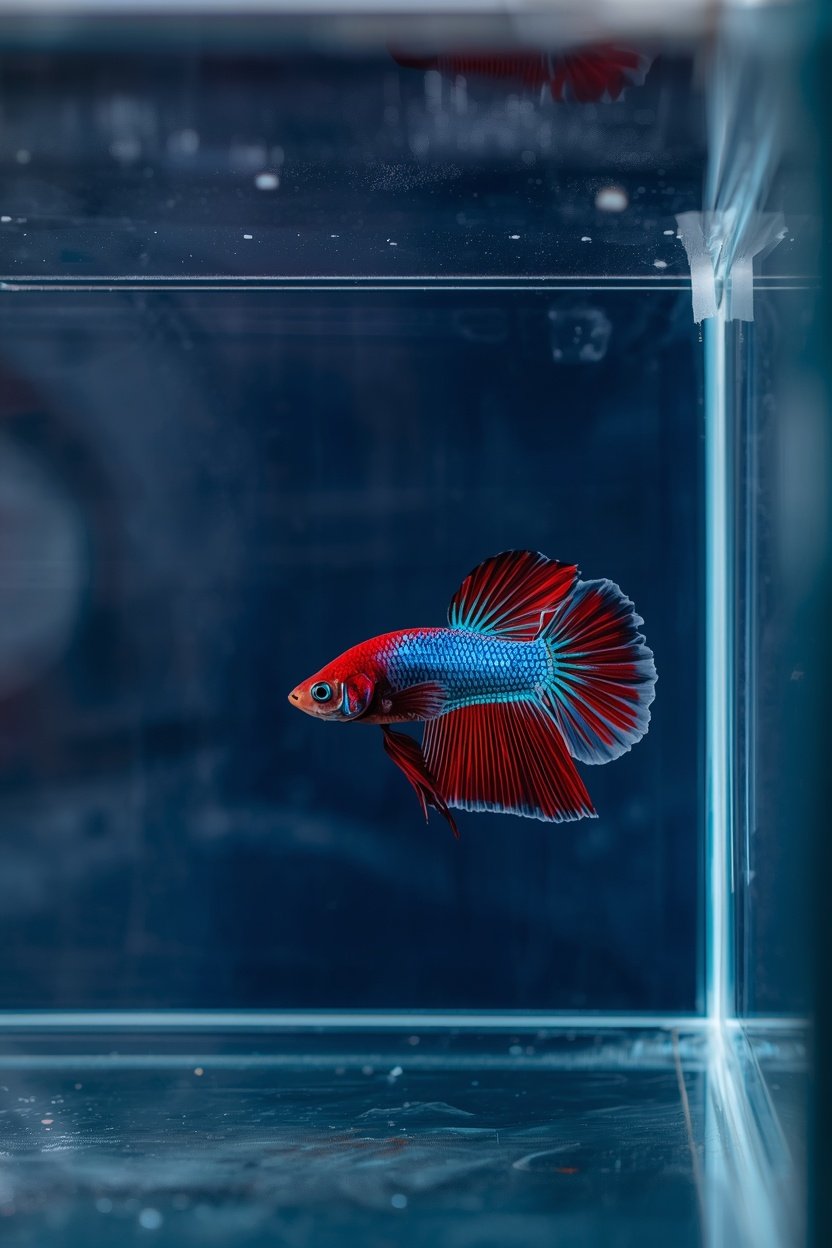
A budget-friendly background can be made in minutes using a sheet of dark poster board or card stock cut to fit the tank's back panel, taped securely to the outside of the glass. For a slightly more polished look, apply a coat of aquarium-safe acrylic paint in a deep navy or black directly to a sheet of acrylic or plexiglass, then attach it the same way.
This simple swap instantly improves color contrast for a betta's fins and body, since dark backgrounds make bright colors read far more vividly than a plain, see-through tank showing the wall or clutter behind it. It's one of the fastest, cheapest upgrades on this entire list, often taking less than fifteen minutes from start to finish.
If using paper or poster board rather than a sealed acrylic sheet, keep it strictly on the outside of the tank rather than submerged, and replace it if it ever becomes damp or discolored from prolonged humidity exposure near an open-top tank.
4. DIY Moss Wall on Craft Mesh
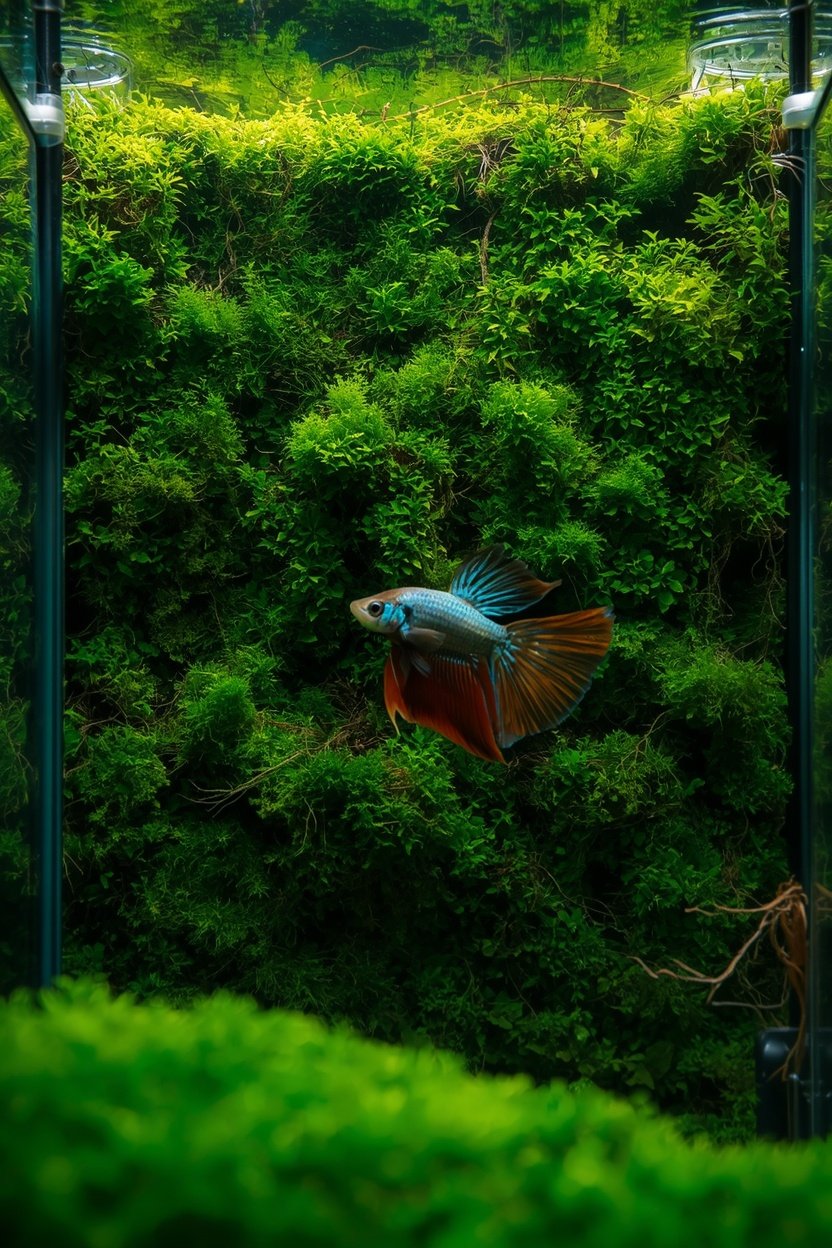
A lush moss wall backdrop can be built at home using a sheet of plastic craft mesh, cut to fit the tank's back interior wall, with java moss tied on in small clumps using thin cotton thread or fishing line. Over several weeks, the moss grows and spreads across the mesh, eventually creating a dense, natural green wall that also gives a betta plenty of texture to explore.
Secure the mesh panel to the back glass using aquarium-safe suction cups, positioned so it sits flush against the glass without leaving gaps a betta could get stuck behind. Distribute your moss clumps evenly across the mesh at the start, roughly an inch or two apart, since they'll fill in the gaps naturally as growth progresses.
This project takes more patience than the others on this list, since the finished, fully-grown look doesn't appear immediately, but it's also one of the most rewarding, turning a plain back wall into a genuinely living, textured feature over time for a very small initial cost.
Safety Tips for DIY Betta Projects
● Use only aquarium-safe adhesives and paints. Standard craft glue and paint can leach harmful substances into water — always confirm a product is rated safe for aquarium use.
● Test everything outside the tank first. Run your fingers along every edge and seam before adding a DIY project to water where your betta will actually swim.
● Rinse and prep materials thoroughly. Boiling, rinsing, or soaking new materials removes dust, residue, and any manufacturing chemicals before they reach your tank.
● Introduce new additions gradually. Add one DIY project at a time and monitor your betta's behavior and water parameters before adding the next.
Final Thoughts
A genuinely well-decorated betta tank doesn't require an expensive shopping trip — a terracotta cave, a handmade leaf hammock, a simple painted background, and a slow-growing moss wall together prove that some of the most effective betta tank upgrades are also some of the cheapest to make yourself. Start with whichever project matches your available time and materials, and build from there.
Frequently asked questions
Is it safe to use household items in a betta tank?
Only items specifically confirmed as aquarium-safe should go in the tank — many household materials, adhesives, and paints contain substances that can be harmful to fish even in small amounts.
How long does a DIY moss wall take to fully fill in?
Most moss species take four to eight weeks under good lighting conditions to grow into a dense, fully established wall, so patience is an important part of this particular project.
Can I reuse materials from these DIY projects in a different tank later?
Yes, most of these projects — the terracotta cave, background, and moss-covered mesh in particular — can be removed and relocated to a different tank if your setup changes down the line.
