
My very first betta lived in a small bowl on my desk for almost a year, because that's what the pet store display made it look like bettas were supposed to have. It wasn't until I actually researched proper betta care that I realized how many of the "normal" beginner setups — the bowl, the room-temperature water, the skipped filter — were working against my fish rather than for it.
This guide focuses on the four foundational decisions that matter most for a first-time betta owner, well before you get to styling or decor. Each idea includes a detailed image prompt so you can visualize a properly set up beginner tank before starting your own.
Why Beginner Betta Setups Need to Start With Fundamentals
Bettas have earned an undeserved reputation as a fish that thrives in minimal setups, largely because they can survive — for a while — in conditions that aren't actually good for them. A genuinely healthy beginner betta tank starts with the right tank size, temperature, and filtration, since these fundamentals affect long-term health far more than any decor choice made afterward.
1. Skip the Bowl — Start With at Least a 5-Gallon Tank
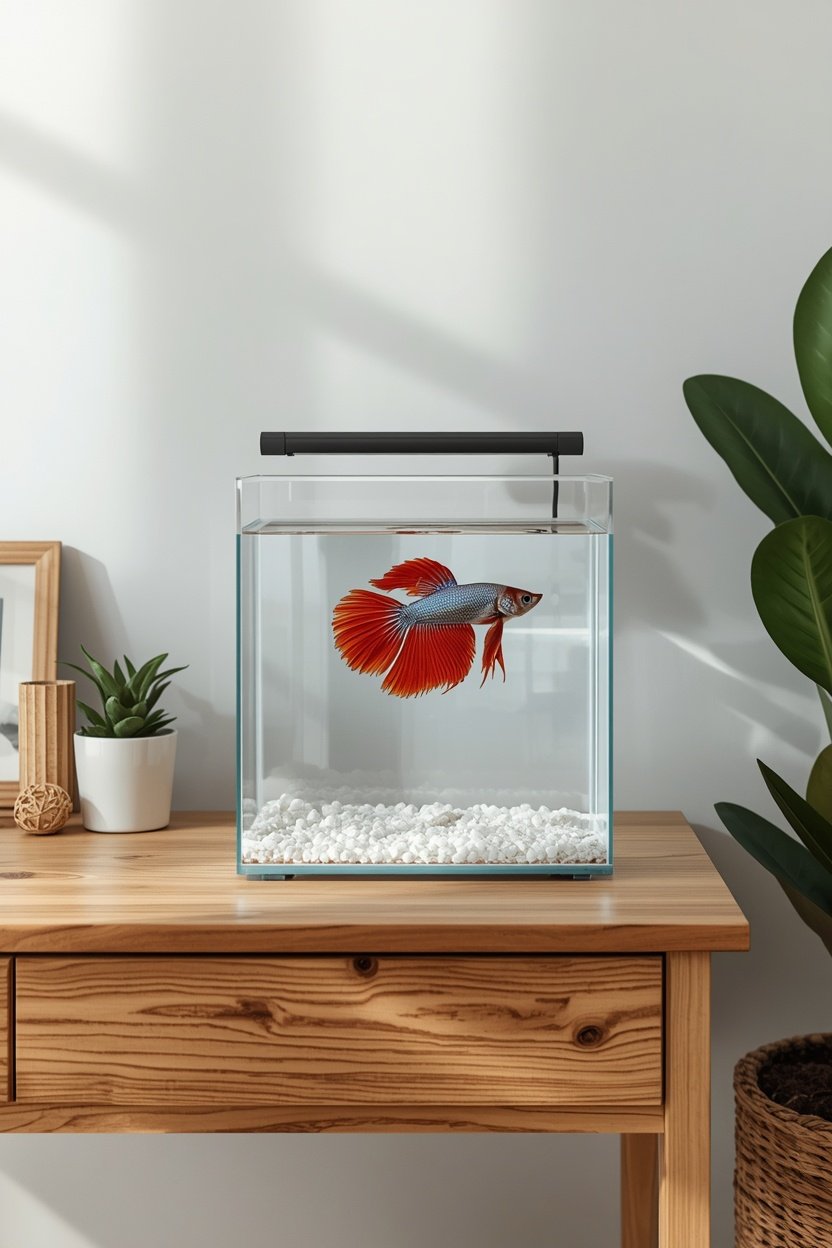
Bettas are still widely sold in tiny cups and displayed in even tinier bowls, which leads many first-time owners to assume a small bowl is all they actually need. In reality, bettas do considerably better in at least a 5-gallon tank, which allows for stable water temperature, proper filtration, and genuine swimming space that a bowl simply can't provide.
A larger volume of water is also more forgiving of the small mistakes every beginner makes early on, since ammonia and temperature swings happen far more slowly and mildly in 5 gallons than in a half-gallon bowl. This single decision — tank size — has more impact on your betta's actual health than almost any decor choice you'll make afterward.
If space is a genuine concern, a 5-gallon tank is still compact enough to fit on most desks or shelves, meaning you don't need a large aquarium to give your betta a genuinely appropriate home, just a properly sized one.
2. Add a Heater, Even Though Bettas Seem Hardy
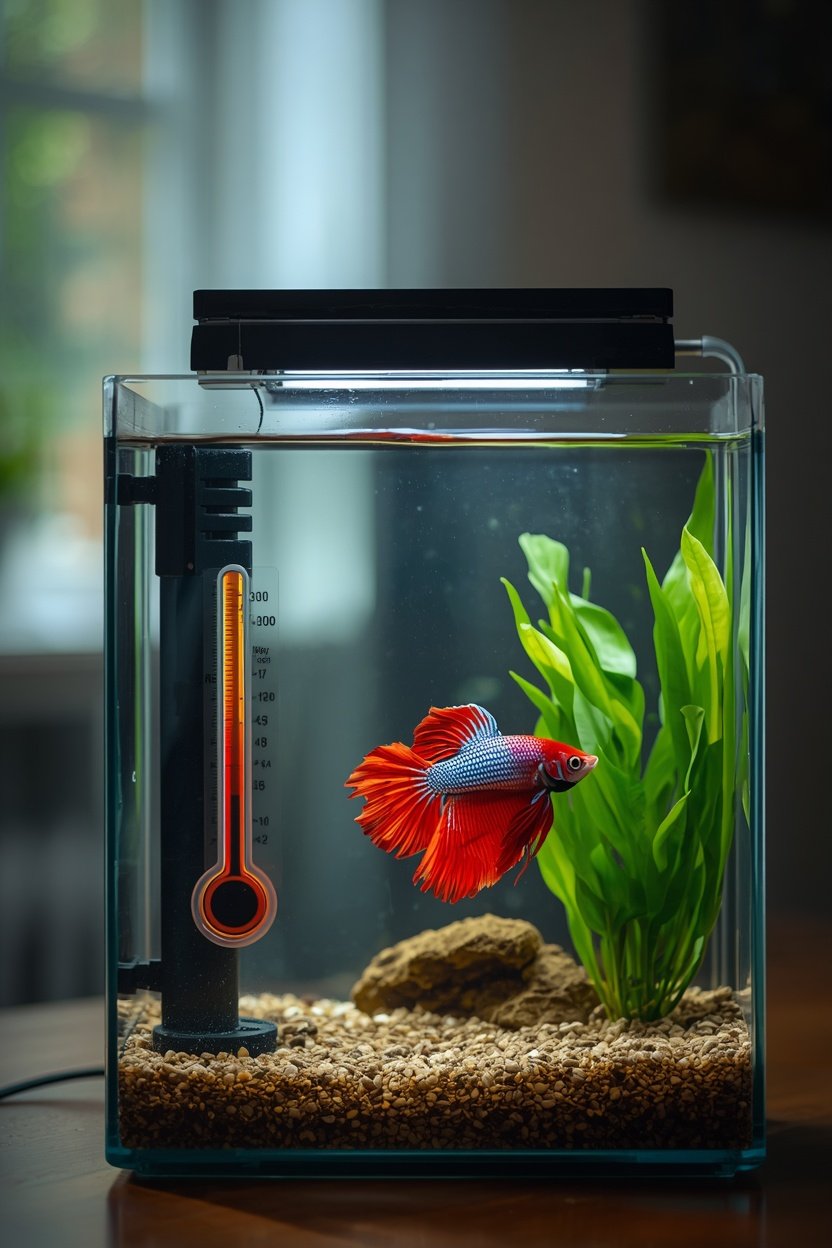
Bettas are tropical fish that need consistently warm water, generally between 76 and 82 degrees Fahrenheit, and most homes simply don't stay within that range naturally, especially overnight or during cooler months. A reliable, adjustable heater is one of the most overlooked pieces of beginner equipment, often skipped because bettas have a reputation for being tough — a reputation that really refers to tolerance of beginner mistakes, not an actual preference for cold water.
Fluctuating or consistently cool water stresses bettas over time, weakening their immune system and making them considerably more susceptible to illness, even if they don't show obvious symptoms right away. A simple submersible heater with an adjustable thermostat, sized appropriately for your tank's volume, solves this problem completely and is one of the best investments a beginner can make.
Pair the heater with an inexpensive aquarium thermometer so you can actually confirm the water is staying in the right range, rather than guessing based on how the room feels.
3. Choose a Gentle Filter Beginners Often Skip
Filtration is another piece of equipment beginners sometimes skip for a betta specifically, assuming their low bioload means a filter isn't really necessary. While bettas do produce less waste than many fish, skipping filtration still means water quality depends entirely on frequent, complete manual water changes, which is both more work and less stable than a filtered setup.
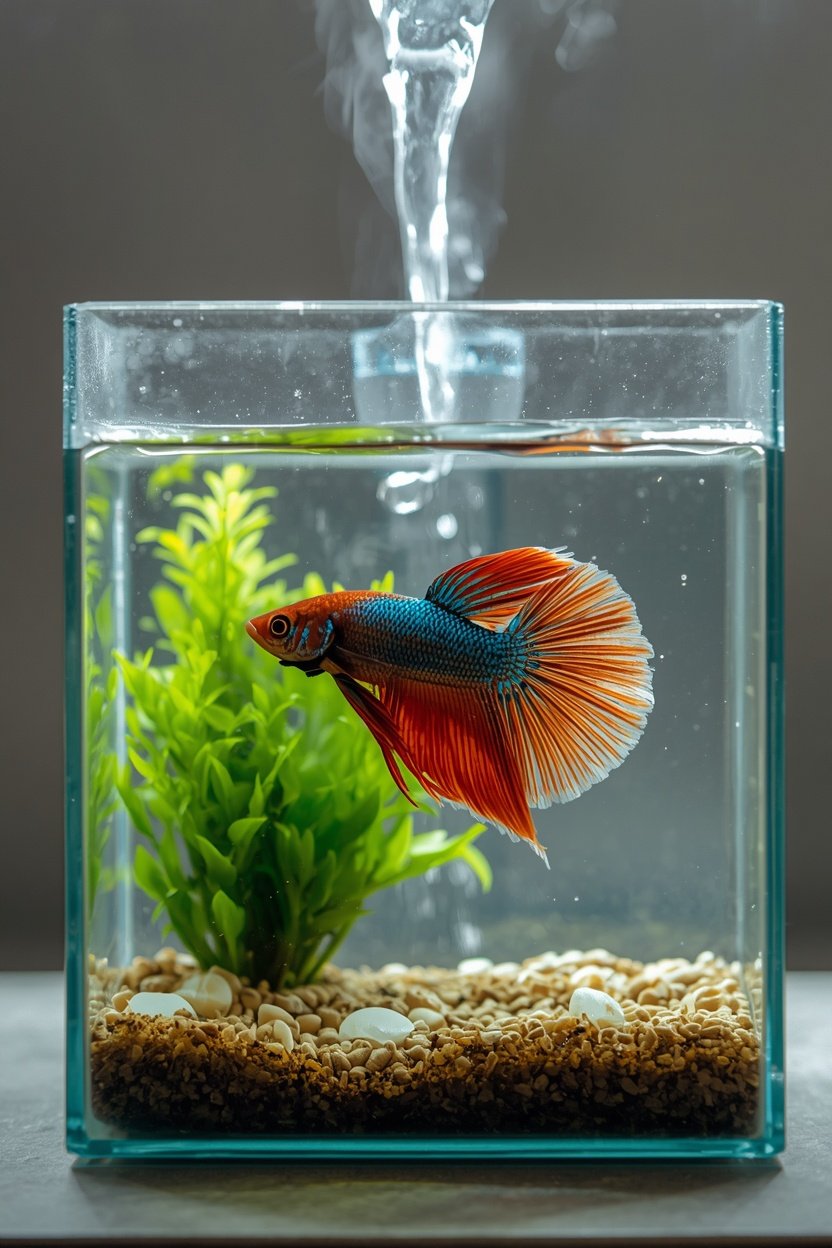
The key for beginners is choosing a genuinely gentle filter, since bettas have long, delicate fins and can struggle against strong current. A sponge filter or a small internal filter with adjustable flow, positioned to create minimal surface disturbance, provides real biological filtration without stressing your betta or pushing it around the tank.
If your filter creates more current than expected once running, a simple baffle — even something as basic as a piece of plastic or a section of tubing directing the outflow — can soften the flow considerably, making an otherwise too-strong filter genuinely betta-appropriate.
4. Start With One Easy Live Plant Instead of a Fully Planted Tank
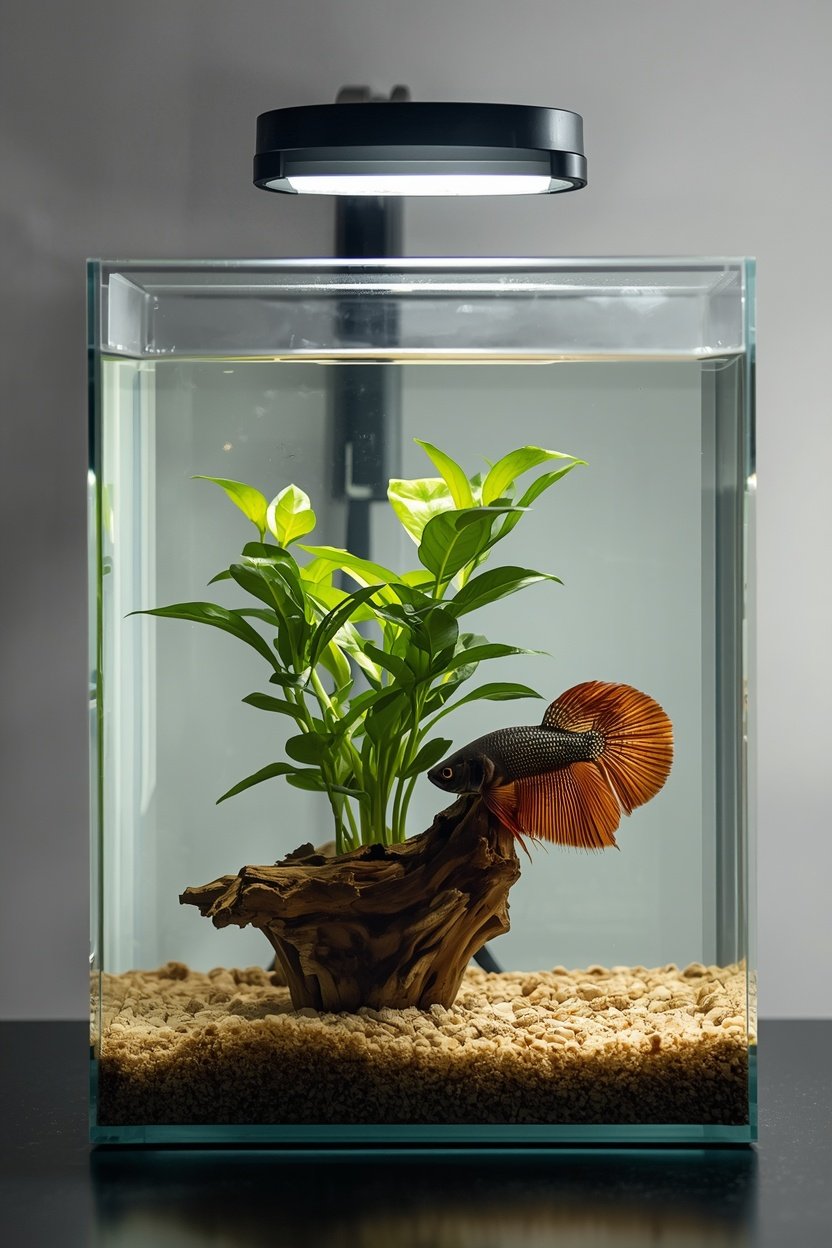
A beginner doesn't need to build an elaborate planted aquascape right away, but starting with just one hardy, low-maintenance live plant — anubias or java fern are both excellent beginner choices — offers real benefits without demanding much know-how. A single easy plant helps absorb some excess nutrients, gives your betta a bit of natural cover, and eases you gently into live plant care without the pressure of managing a fully planted tank from day one.
Both anubias and java fern can be tied to a small piece of driftwood rather than planted in substrate, which sidesteps any concern about root care or substrate nutrients that more demanding plants require. This makes them genuinely low-effort while still adding real, living texture to a beginner's first tank.
As your confidence grows, you can always add more plants later, but starting with just one manageable species lets you learn the basics of live plant care — lighting needs, occasional trimming, general health signs — without feeling overwhelmed on top of everything else involved in a first aquarium.
Additional Tips for First-Time Betta Owners
● Cycle your tank before adding your betta. Running the tank with filtration for a couple of weeks first helps establish the beneficial bacteria that keep water safe.
● Test your water regularly at first. A basic liquid test kit helps you understand your tank's normal parameters and catch any issues early.
● Research before adding tankmates. Not every beginner betta tank needs to be a solo setup, but compatibility research matters more than it might seem.
● Be patient with your own learning curve. Every aquarium hobbyist makes early mistakes — a properly set up tank forgives them far more easily than a bowl ever could.
Final Thoughts
A genuinely healthy first betta tank comes down to getting the fundamentals right before worrying about decor: an appropriately sized tank, a heater, gentle filtration, and maybe one easy live plant to start. Get these four decisions right, and your betta has a real chance to thrive rather than simply survive, giving you a much stronger foundation to build more elaborate decor and styling on top of later.
Frequently asked questions
Can a betta really not live in a bowl long-term?
A betta can survive in a bowl for some time, but unstable temperature, poor water quality, and limited space make it a genuinely stressful, shortened life compared to a properly filtered, heated tank of at least 5 gallons.
Do I need a filter if I do frequent water changes instead?
While very frequent, thorough manual water changes can substitute for filtration to some degree, a gentle filter makes water quality considerably more stable and is generally far less labor-intensive for a beginner to maintain consistently.
How do I know if my filter's current is too strong for my betta
If your betta struggles to swim normally, spends most of its time hiding, or gets pushed around by the water flow, the current is likely too strong and worth reducing with a flow adjustment or a simple baffle.
