
A betta looks like a born solo star, so it is fair to wonder whether he ever enjoys company. The honest answer is: sometimes. Every betta has his own temperament. Some tolerate neighbors for years, while others treat every moving shape as a challenge. This guide walks you through the safest companions, the fish to leave at the shop, and a few decor ideas that make sharing easier. Everything is explained in plain steps, so it works even if this is your very first aquarium.
Can Bettas Really Live With Other Fish?
The fish sold as bettas are Betta splendens, a species that comes from slow, shallow, plant-filled waters in Southeast Asia. Males were bred for generations to be feisty and flashy, which is why one male will attack another and will often go after any fish that resembles him. The trouble is not that bettas dislike everyone. They react to bright colors, flowing fins and fast chasing.
Females are usually calmer, yet they can still squabble. A group of females, known as a sorority, is an advanced project and not a good first attempt. Whatever his gender, treat tank mates as an experiment rather than a promise, and arrange a backup home before you buy anyone.
Set the Stage Before You Add Anyone
Most tank mate stories succeed or fail because of the setup, not the fish. Check these points first:
- Tank size: Aim for at least 10 gallons (38 litres). Extra space lets everyone keep their distance. A 5-gallon tank can suit a betta alone, but it is tight for company.
- Cycled water: Ammonia and nitrite should read zero. Use a liquid test kit instead of guessing by eye.
- Steady warmth: Keep the water at 78 to 80°F (25.5 to 27°C) with a reliable heater, and a pH between 6.5 and 7.5.
- Gentle filtration: Long fins struggle against strong flow, so choose a sponge filter or soften the outlet.
- Plenty of cover: Live or silk plants, caves and broad leaves break up sight lines and lower stress.
- A secure lid: Bettas and some tank mates jump. Leave a small air gap under the lid because bettas breathe from the surface.
Best Betta Tank Mates for Beginners
The species below share a few helpful traits: they are small, peaceful, plain in color and happy in warm water.
Small Corydoras Catfish
Little corys, such as pygmy or habrosus corydoras, scoot along the bottom while your betta prefers the upper tank, so they seldom cross paths. Keep at least six together and choose sand or very smooth gravel to protect their sensitive whiskers.
Kuhli Loaches
These shy, eel-like fish spend the day tucked into wood and leaf litter. Keep a group of four to six, offer soft sand, and cover the tank well because they are talented escape artists.
Harlequin Rasboras
Calm, copper-orange schooling fish that fill the middle of the tank without chasing anyone. Keep six or more in a tank of 10 gallons or larger. Their orange tint can occasionally annoy a particular betta, so watch the first few days closely.
Ember Tetras
Tiny, gentle and easy to feed. A group of eight or more feels safest, and a bigger shoal makes each fish less nervous. Choose a tank of at least 10 gallons.
Nerite Snails
The most dependable cleanup crew. They graze algae, ignore the betta, and cannot breed in freshwater, so you will not face a snail explosion. They wander, so use a lid.
Amano Shrimp
Larger and bolder than cherry shrimp, Amano shrimp tidy up leftovers and soft algae. Even so, some bettas hunt shrimp. Add plenty of moss and hiding places, and treat this as the riskiest pairing on the list.
|
Tank mate |
Minimum tank |
Group size |
Where they live |
Beginner rating |
|
Small corydoras |
10 gallons |
6 or more |
Bottom |
Easy |
|
Kuhli loach |
10 gallons |
4 to 6 |
Bottom and hiding spots |
Moderate |
|
Harlequin rasbora |
10 gallons |
6 or more |
Middle |
Easy |
|
Ember tetra |
10 gallons |
8 or more |
Middle |
Easy |
|
Nerite snail |
5 gallons |
1 to 2 |
Glass, wood, rocks |
Very easy |
|
Amano shrimp |
10 gallons |
3 to 5 |
Plants and bottom |
Moderate |
Fish to Avoid With Bettas
Leave these out of your cart, even when a shop assistant says they will be fine:
• Other male bettas: They fight, often to the death.
• Fancy guppies and other long-tailed, colorful fish: Your betta may mistake them for rivals.
• Fin nippers such as tiger barbs: They shred long fins and leave the betta stressed and open to infection.
• Goldfish: They prefer cooler water, produce lots of waste and grow large.
• Cichlids, angelfish and large gouramis: Too territorial or too big. Gouramis are close relatives and compete for the surface.
• Cherry shrimp: Babies and adults are frequently eaten as snacks.
How to Introduce Tank Mates Step by Step
1. Quarantine newcomers in a separate tub or tank for two to four weeks to catch illness early.
2. Rearrange the decor so your betta does not see the new arrivals as intruders on his turf.
3. Feed the betta first, then float the bag for 15 to 20 minutes to match the temperature, and move the fish with a net.
4. Add the whole group at once so his attention is spread out rather than aimed at one fish.
5. Watch closely: stay nearby for two hours, then check several times a day for the first week.
6. Keep a plan B such as a spare tank or a tank divider within reach.
Warning Signs It Is Not Working
A few seconds of flaring is normal. Trouble looks like constant chasing, torn fins, a betta hiding with clamped fins, refusing food, or tank mates cowering in a corner. If you spot injuries, separate the fish right away instead of waiting for things to settle.
Decor Ideas That Help Tank Mates Get Along
Good decor is more than pretty. It creates hiding spots and visual barriers, which keeps everyone calmer. Before adding any item, drag a soft stocking across it. If the fabric snags, it can tear a betta's delicate fins.
Idea 1: The Planted Jungle With Floating Cover
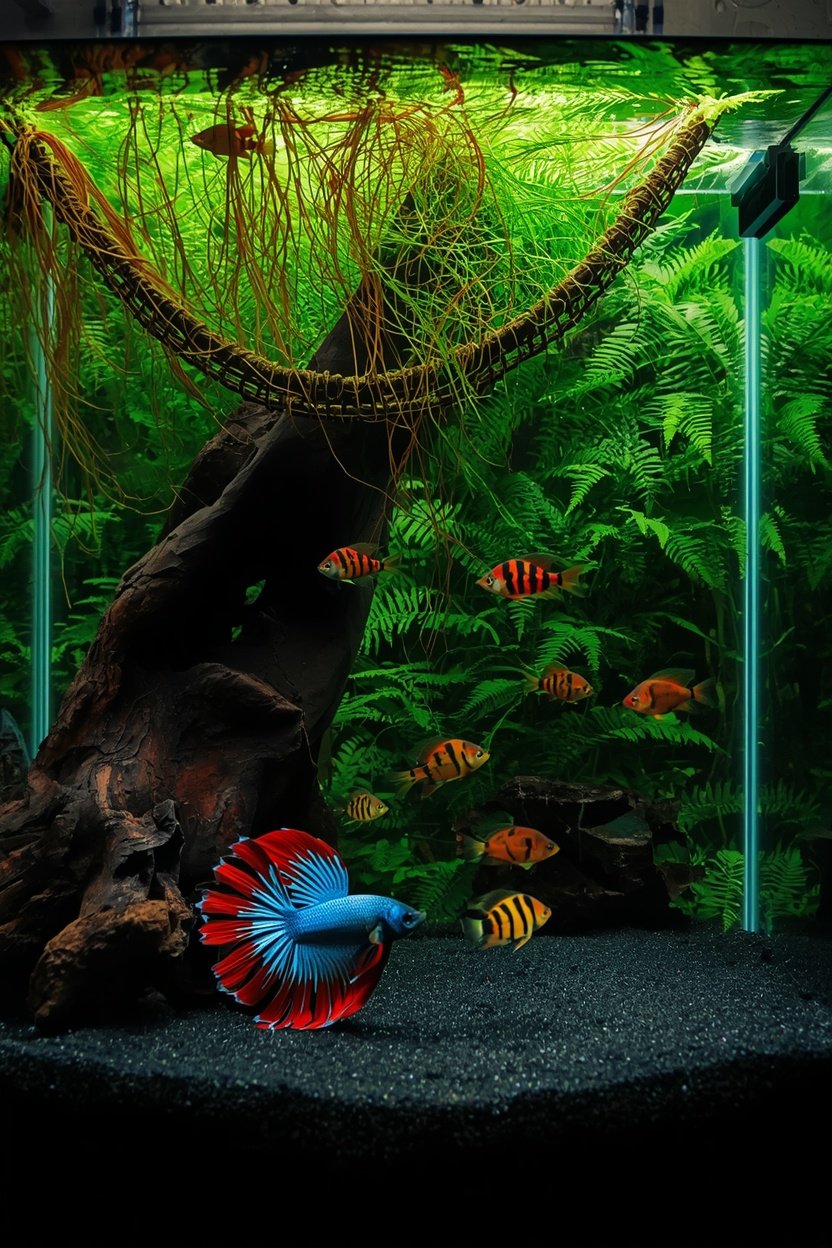
Best for: Harlequin rasboras and ember tetras. Dense live plants such as Java fern, Anubias and cryptocoryne create a green wall, while floating frogbit softens the light and gives your betta a shady ceiling to rest under. A dried Indian almond leaf fixed near the surface works as a cozy hammock. Because the fish can always break eye contact, arguments rarely start.
Idea 2: The Driftwood Cave Hideaway
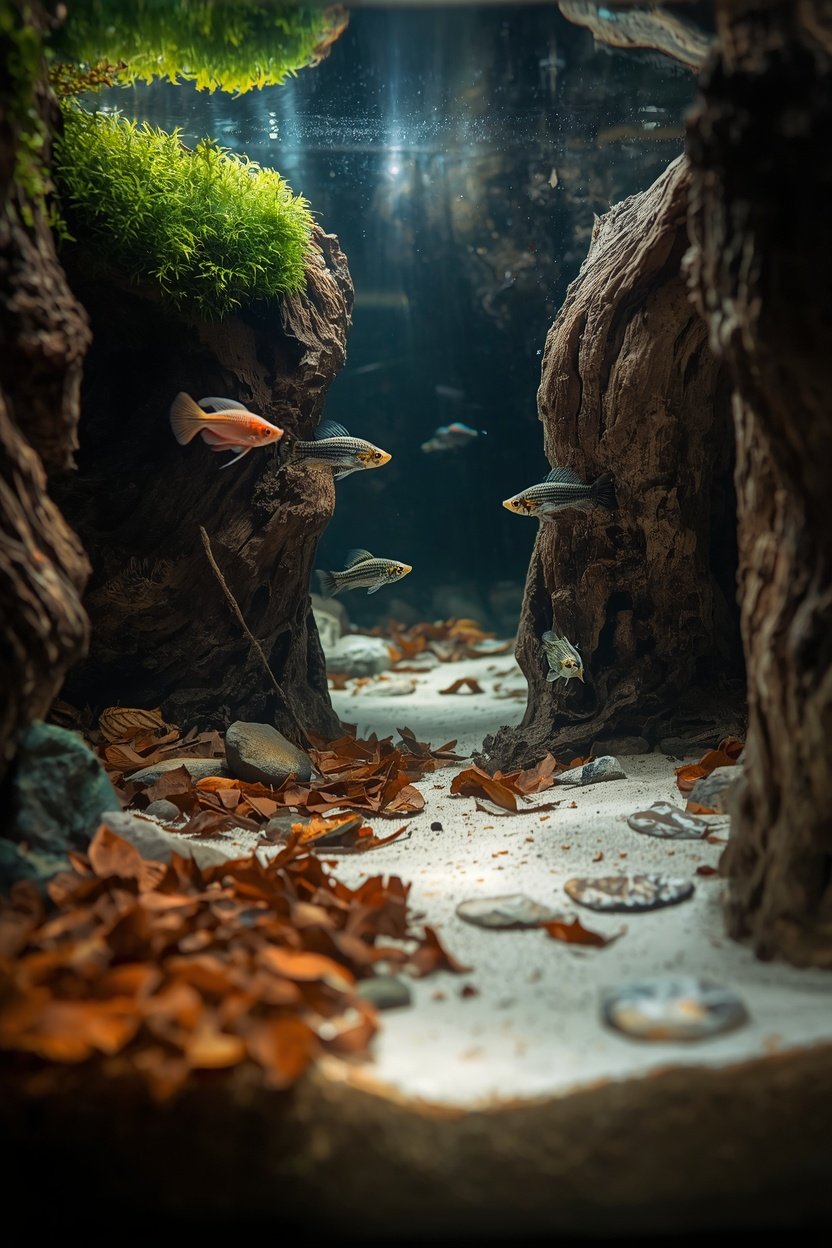
Best for: Kuhli loaches. Arched driftwood and scattered leaf litter turn the lower half of the tank into a shady woodland stream. Kuhli loaches love squeezing into narrow gaps, and your betta gets a calm upper zone to himself. Sand the wood smooth first, then run a stocking over every edge to make sure nothing can snag a fin.
Idea 3: The Soft Sand River Bed
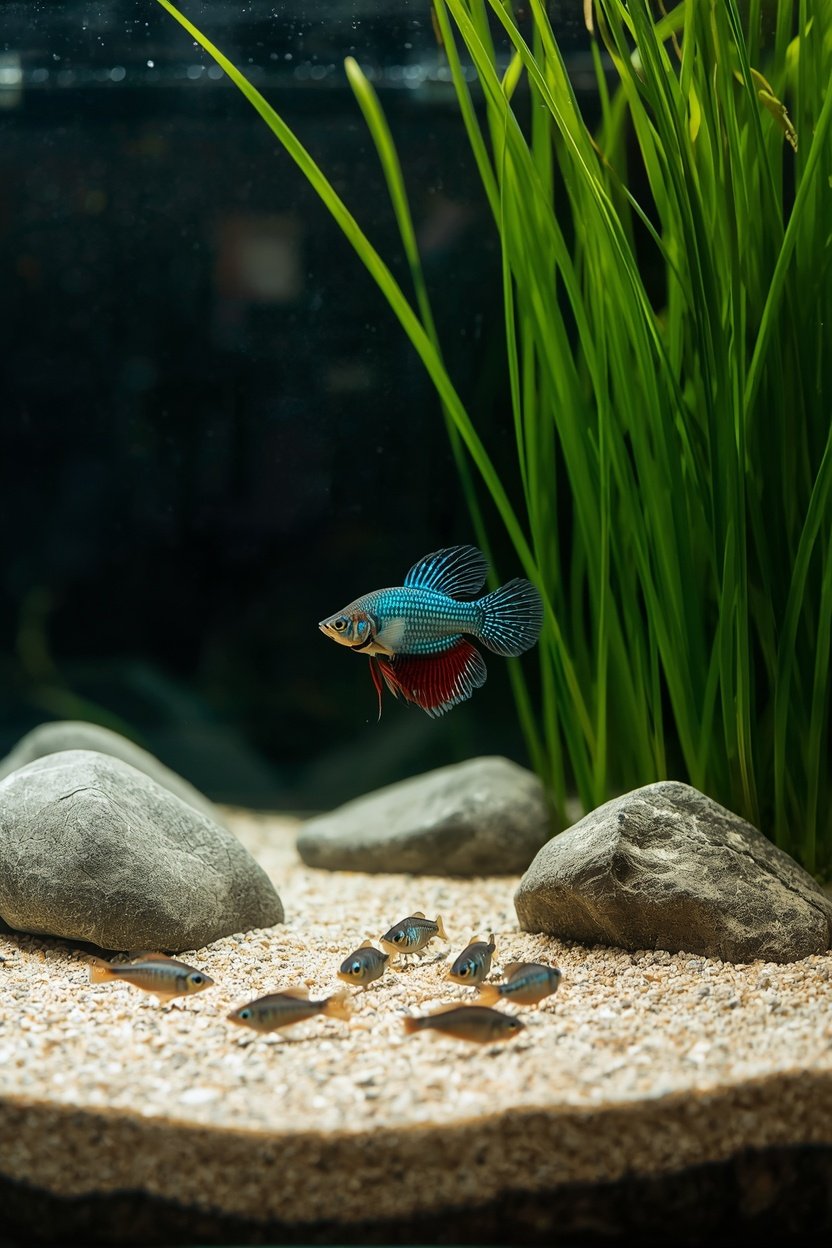
Best for: Small corydoras. A gently sloping bed of fine sand, a few rounded stones and tall grass-like plants imitate a calm riverbank. Corydoras can dig and sift without hurting their delicate whiskers, and tall plants such as vallisneria give the betta a green screen to swim behind. Rinse the sand well before it goes in.
Idea 4: The Mossy Stone Nano Scape
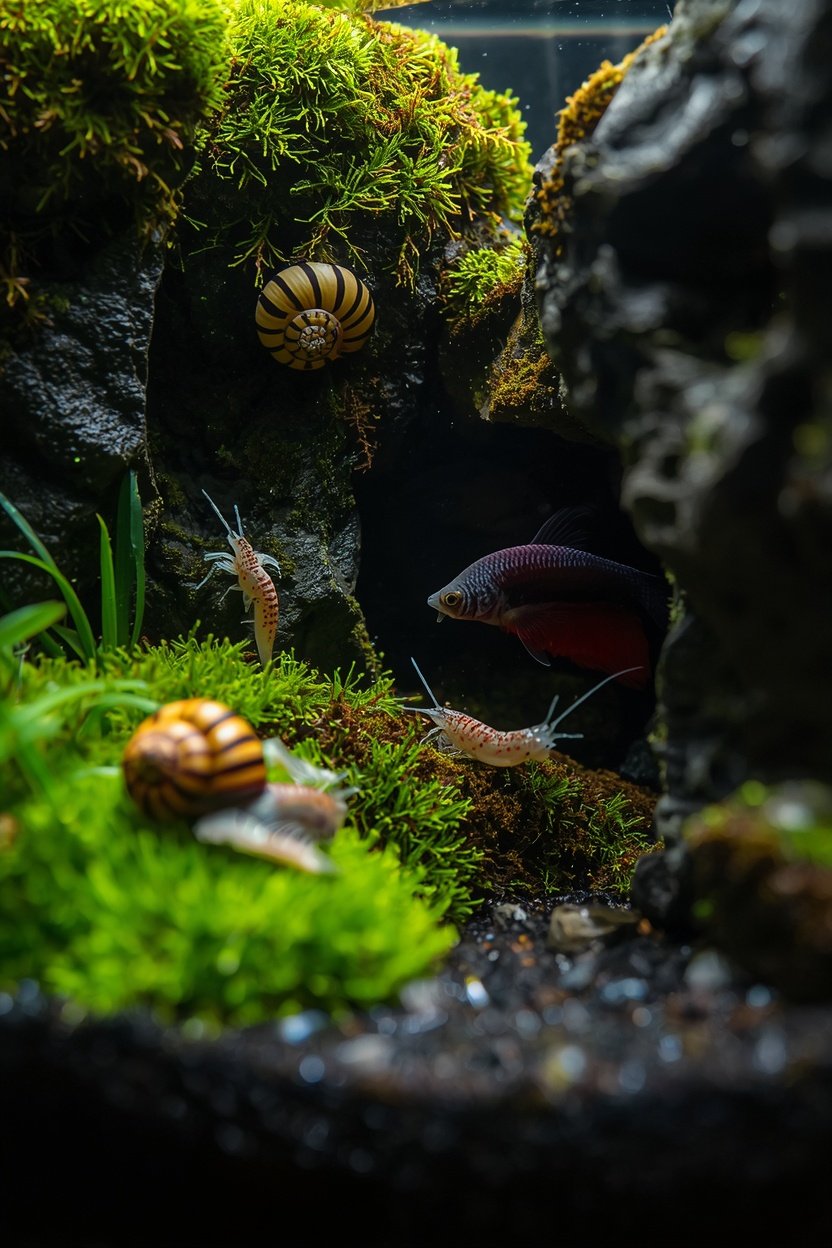
Best for: Nerite snails and Amano shrimp. Moss-covered rocks and cushions of Java moss give grazers plenty of surfaces to nibble and shrimp a maze of hiding places. Add a small natural cave for the betta and keep the layout open at the top so he can reach the surface for air. A compact layout like this suits a 10-gallon tank.
Final Thoughts
Betta tank mates can turn a quiet single-fish tank into a lively little community, but success depends on tank size, cover and patience. Begin with a bottom-dwelling group or a nerite snail, test your water every week, and watch each fish's behavior. Because every betta is an individual, check with an aquatic veterinarian or an experienced local fish store if you are unsure.
