
For years I kept neon tetras in a fairly standard planted tank — bright light, green carpet, clear water — and they were healthy, but their colors always felt a little muted compared to photos I'd seen of wild-caught specimens. It wasn't until I started researching their actual native habitat, the shaded, tannin-stained streams of the Amazon basin, that I understood why: I'd been keeping them in an environment that looked nice to me but didn't match anything they'd actually evolved for.
A biotope tank takes a different approach entirely, aiming to recreate a specific real-world habitat as accurately as possible rather than simply decorating with whatever looks good. These four ideas focus specifically on the Amazon blackwater environment neon tetras call home, and each one includes a detailed image prompt so you can visualize the finished, authentic look before gathering materials.
What Makes a Tank a True Biotope, Not Just Biotope-Inspired
A biotope-inspired tank borrows loosely from a natural habitat's general look, while a true biotope aims for genuine regional accuracy — substrate, hardscape, lighting, and even plant species all sourced or chosen to match a specific real location as closely as possible. For neon tetras, that means blackwater conditions, leaf litter, root structures, and Amazon-native plants working together, rather than a generic "jungle-style" tank with tetras simply added to it.
1. Recreate the Amazon Leaf-Litter Floor
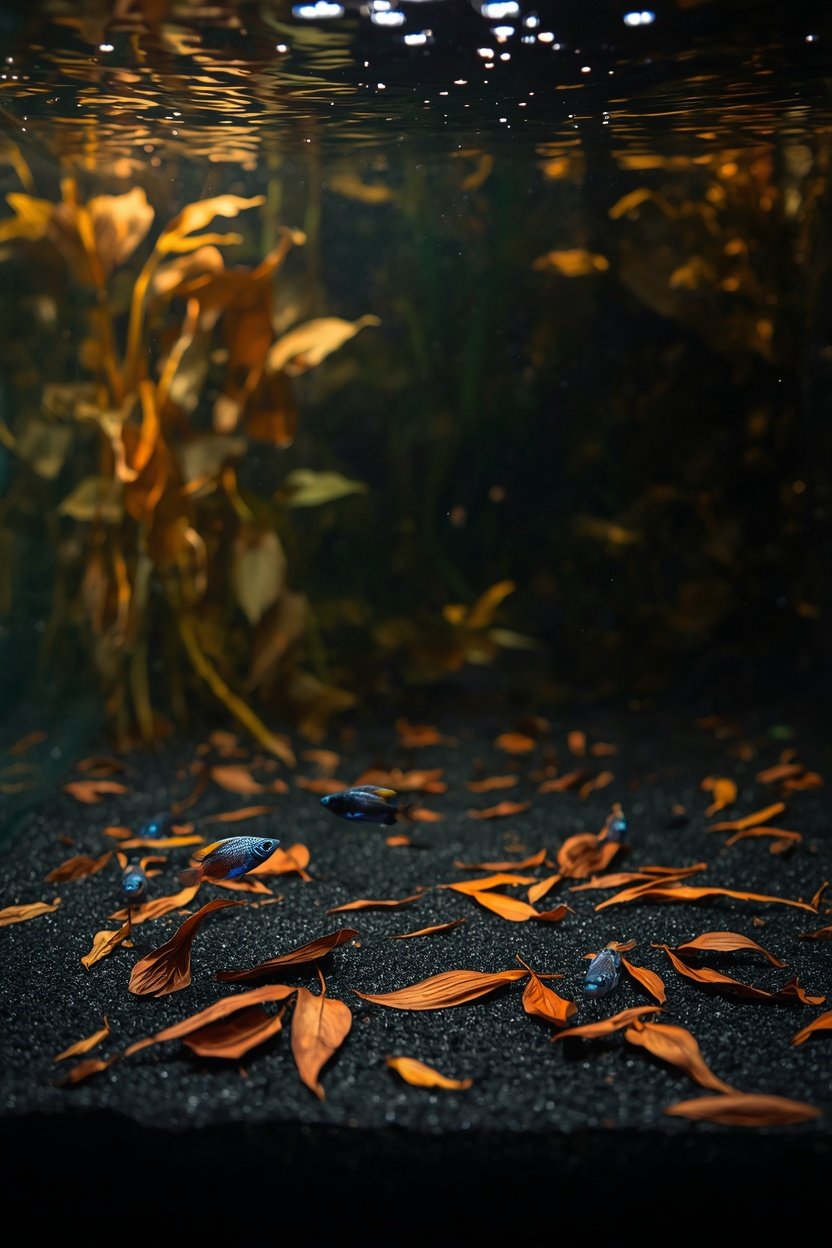
Neon tetras come from the slow, shaded blackwater tributaries of the Amazon basin, particularly around the Rio Negro, where the streambed is covered in a thick layer of fallen leaves rather than bare sand or gravel. Recreating this leaf-litter floor is one of the most authentic, biotope-accurate decisions you can make, and it's surprisingly simple: scatter dried, aquarium-safe leaves like catappa or oak across a dark sand substrate rather than leaving the floor bare.
As these leaves slowly break down over several weeks, they release tannins that naturally tint the water a soft amber-brown, the same tea-colored water neon tetras evolved alongside in the wild. This isn't just a visual detail — many hobbyists report that neon tetras display more relaxed, natural behavior and often show deeper, more saturated color against this darker, more authentic backdrop compared to a bright, bare-bottomed tank.
Replace leaves gradually every few weeks as they fully decompose, rather than removing all of them at once, which helps maintain a consistent tannin level and a steady, established look rather than a jarring shift back to clear water each time you refresh the substrate.
2. Add Submerged Root Tangles for Natural Cover
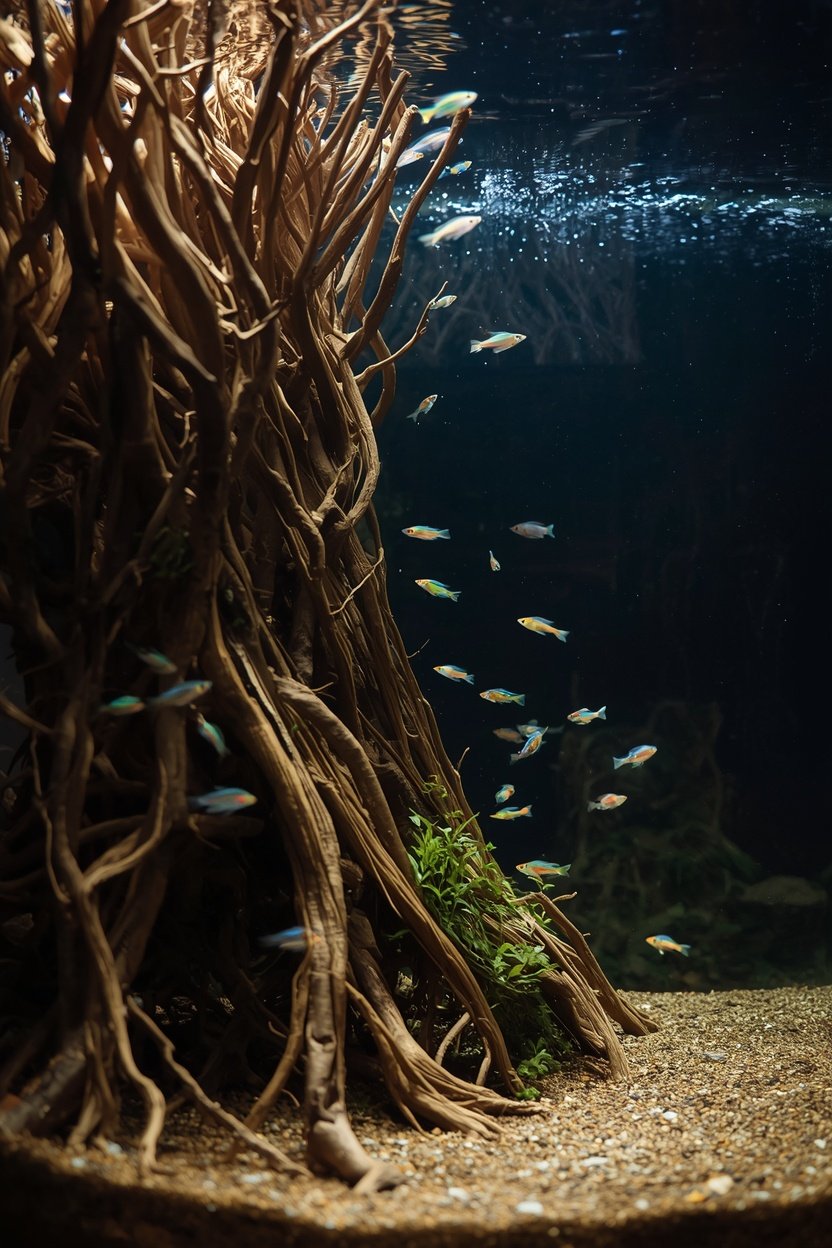
In their native streams, neon tetras shelter among dense tangles of submerged tree roots that extend down into the water from the overhanging forest bank, providing both physical cover and a complex structure to swim through. A single piece of driftwood doesn't quite capture this same effect — the biotope-accurate version uses multiple thin, root-like branches clustered together, mimicking an actual root mass rather than one isolated log.
Look for spider wood or fine root-style driftwood pieces, and rather than positioning a single dramatic centerpiece, cluster two or three pieces together along one side of the tank, angled downward as though they're genuinely extending from a bank above the waterline. This clustered, tangled arrangement gives neon tetras a naturalistic structure to weave through, which closely matches their wild shoaling behavior around real root systems.
Leaving the opposite side of the tank relatively open preserves swimming space while still giving the school a genuine sense of habitat structure to interact with, rather than empty water on one side and an isolated ornament on the other.
3. Use Diffused, Filtered Canopy Light
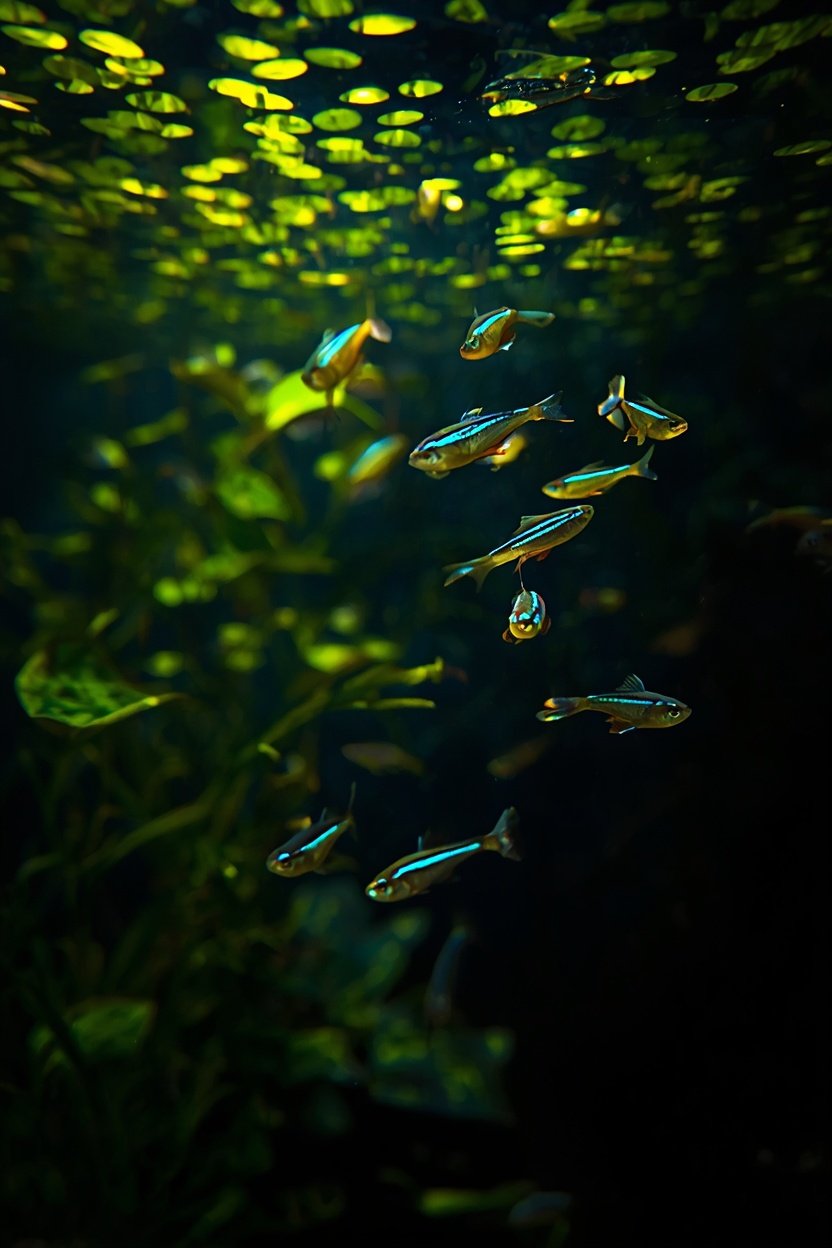
The forest streams neon tetras call home receive very little direct sunlight, since a dense rainforest canopy overhead filters most of it into a soft, dappled glow long before it ever reaches the water's surface. A bright, evenly lit aquarium is a poor match for this natural lighting condition, and adjusting your tank's light to mimic that filtered forest effect is one of the most overlooked details in building a genuinely accurate biotope.
Floating plants like frogbit or water lettuce, scattered across a portion of the surface, naturally break up direct light the same way a forest canopy does, casting soft, moving shadows down into the tank below. Combining this with a slightly dimmer overall light setting than a standard planted tank creates a much closer match to the dim, filtered conditions neon tetras actually evolved under.
This dimmer, filtered lighting also tends to make the fish's natural iridescent blue stripe stand out more dramatically, since that coloring evolved specifically to remain visible to other tetras in low-light, tannin-stained water — meaning the biotope-accurate lighting choice and the most visually striking choice happen to be exactly the same thing.
4. Group Plant with Amazon-Native Species Only
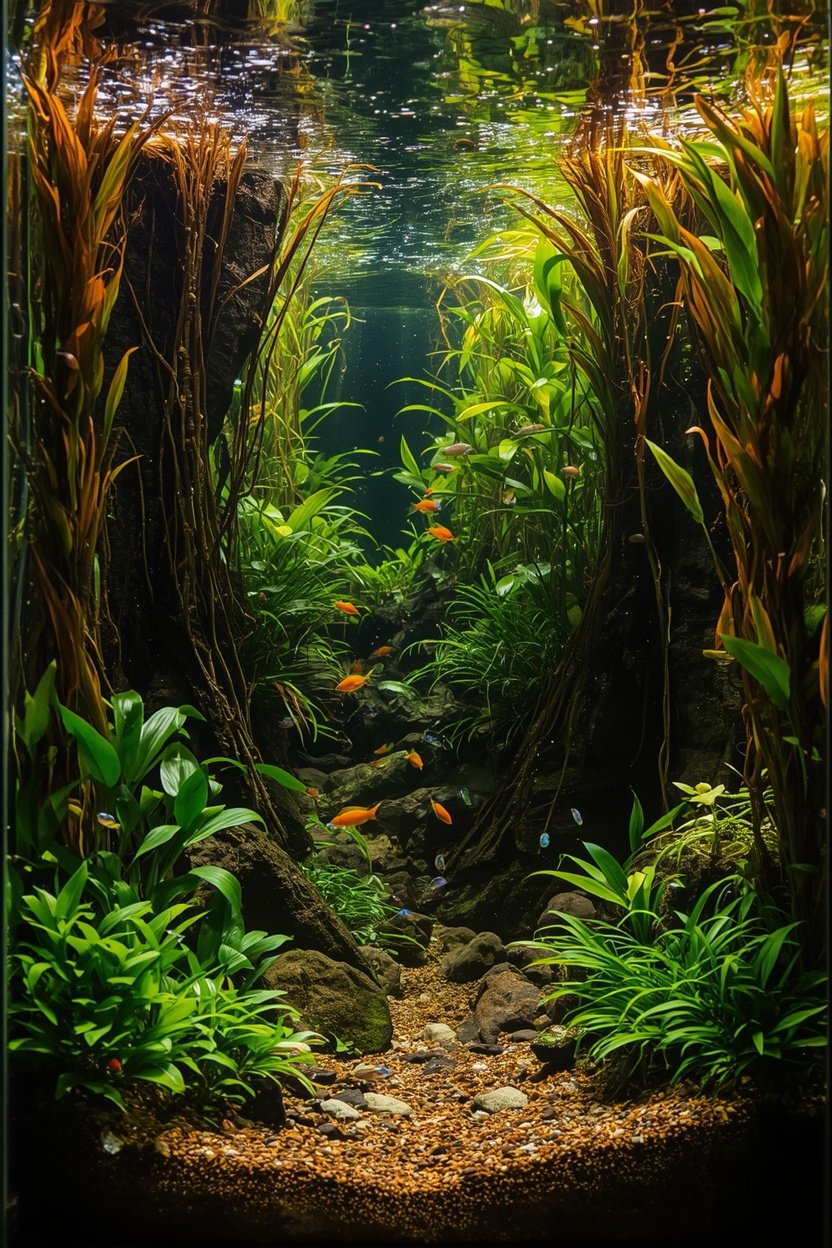
A genuine biotope tank goes a step further than simply choosing plants that look natural — it means selecting species that actually originate from the same Amazon basin region as neon tetras themselves, rather than a generic mix of easy aquarium plants from unrelated parts of the world. Cabomba, myriophyllum, and certain amazon frogbit varieties are all naturally found within the same range, making them accurate choices for a serious biotope build.
Grouping these plants in loose, naturalistic clusters along the tank's edges and back corners, rather than in the neat, evenly spaced rows common to other aquascaping styles, better reflects how vegetation actually grows along a real streambank — dense in places, sparse in others, shaped by current and light rather than deliberate design.
This idea rewards a bit of research before shopping, since not every commonly available aquarium plant is regionally accurate, but the payoff for hobbyists who care about authenticity is a tank that isn't just inspired by the Amazon — it's a genuinely accurate small-scale representation of the actual ecosystem neon tetras call home.
Tips for Building an Accurate Biotope
- Research before buying any plant or fish. Confirm a species' native range before adding it if strict biotope accuracy matters to you, since many common aquarium plants aren't Amazon-native.
- Introduce tannins gradually. Adding leaf litter slowly over a few weeks avoids a sudden, dramatic water color shift that could stress an already-established tank.
- Keep the school large enough. Neon tetras are shoaling fish and display their most natural behavior in groups of six or more, which also suits the biotope's naturalistic intent.
- Monitor water parameters during the transition. Tannins can slightly lower pH over time, so test regularly as you introduce leaf litter and adjust as needed for your specific tetra population.
Final Thoughts
A biotope-style neon tetra tank asks a little more research and patience than a standard planted setup, but the reward is a genuinely accurate window into the actual ecosystem these fish evolved in, not just an attractive approximation. Leaf litter, root tangles, filtered light, and native plants together create a tank that feels less like a decorated display and more like a small, living piece of the Amazon itself, colors and all.
Frequently asked questions
Will tannin-stained water harm my neon tetras?
No, tannin-stained blackwater is the natural condition neon tetras evolved in, and most hobbyists find their fish thrive and display richer coloration in these conditions compared to standard clear water.
Do I need special equipment to maintain a biotope tank?
Not necessarily special equipment, though a reliable water testing kit is worth having, since tannins and decomposing leaf litter can gradually shift pH and other parameters that are worth monitoring closely.
Can I keep other fish species in a neon tetra biotope?
Yes, as long as any tank mates are also native to the same Amazon blackwater region, such as certain small corydoras catfish or dwarf cichlids, to maintain the biotope's regional accuracy.
