
Watching a colony of tiny, translucent shrimp multiply in a home aquarium is one of the most rewarding experiences in the hobby — and, happily, it is also one of the most beginner-friendly forms of aquatic breeding you can attempt. Unlike fish, most popular aquarium shrimp do not need elaborate spawning rituals, hormone triggers, or separate breeding tanks to reproduce. Give them stable water, the right food, and a safe place to hide, and nature tends to take care of the rest.
This guide walks through everything a first-time shrimp keeper needs to know, from choosing an easy species to setting up the tank, dialing in water parameters, and raising the fry that eventually appear. The advice below draws on the husbandry practices that experienced freshwater invertebrate keepers rely on, so you can avoid the most common mistakes that stall a breeding project before it starts.
Why Breed Shrimp at Home?
Aquarium shrimp are inexpensive to buy individually, but a self-sustaining colony saves money over time, gives you a steady supply of algae-eating cleanup crew for other tanks, and lets you selectively keep the most colorful individuals for future generations. Because shrimp breed readily in a peaceful, predator-free environment, many keepers who never intended to "breed" shrimp end up with a booming colony simply by keeping the tank stable.
Choosing the Right Shrimp Species for Breeding
Not all aquarium shrimp are equally easy to breed. For a first attempt, stick with species from the Neocaridina davidi family — commonly sold as Cherry Shrimp, Blue Dream Shrimp, or Yellow Shrimp. These shrimp are hardy, tolerate a wide range of water conditions, and produce fully formed miniature shrimp rather than free-swimming larvae, which removes one of the trickiest stages of invertebrate breeding.
Caridina species, such as Crystal Red or Bee Shrimp, are strikingly beautiful but demand very soft, acidic water and narrow parameter windows, making them a poor choice until you have successfully bred an easier species first.
|
Species |
Difficulty |
Ideal pH |
Temperature |
Breeding Notes |
|
Cherry Shrimp (Neocaridina) |
Beginner |
6.5 – 8.0 |
68–78°F (20–26°C) |
Breeds readily; very forgiving |
|
Blue Dream / Yellow Shrimp |
Beginner |
6.5 – 8.0 |
68–78°F (20–26°C) |
Same care as Cherry Shrimp |
|
Amano Shrimp |
Advanced |
6.5 – 7.5 |
70–78°F (21–26°C) |
Larvae need brackish water to survive |
|
Crystal Red / Bee Shrimp (Caridina) |
Advanced |
5.5 – 6.5 |
68–74°F (20–23°C) |
Needs soft, stable, acidic water |
Setting Up a Breeding-Ready Tank
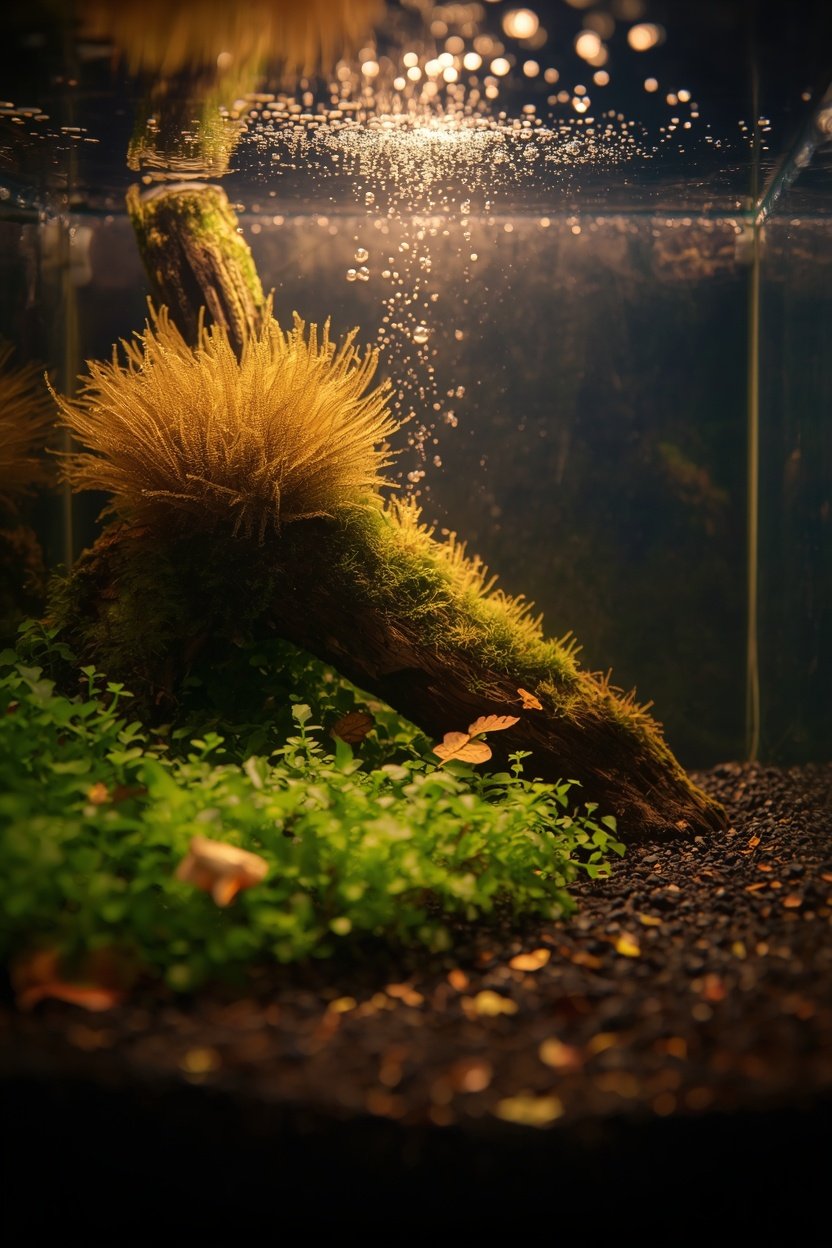
Shrimp fry are extremely small and vulnerable, so the tank environment matters more than any special breeding technique. A tank of five to ten gallons is a comfortable starting size — large enough to keep water parameters stable, small enough that food and shrimp are easy to monitor.
Substrate and Décor
A fine, dark substrate not only shows off colorful shrimp but also helps beneficial biofilm develop, which fry graze on constantly. Fill the tank generously with live plants such as Java moss, Pogostemon, or Anubias, along with driftwood and leaf litter. These surfaces grow biofilm and algae, double as hiding spots during molting, and give newly hatched shrimplets somewhere to disappear from view until they are large enough to be seen with adults.
Filtration
Use a sponge filter rather than a power filter with an open intake. Sponge filters provide gentle water movement and biological filtration without any risk of pulling in fry, which is one of the most common causes of early colony losses.
Tankmates
The safest breeding setup is a species-only tank with no fish at all. Even small, peaceful fish will happily eat shrimp fry. If you want to keep other livestock, do it in a separate aquarium and treat the shrimp tank as a dedicated breeding space.
Getting Water Parameters Right
Stability matters far more than hitting a single perfect number. Shrimp are sensitive to sudden swings in temperature, pH, or hardness, and fluctuations — not the exact values themselves — are the most frequent cause of failed breeding attempts. Test your water weekly with a liquid test kit and change ten to fifteen percent of the water on the same schedule, always matching the temperature of the new water to the tank.
|
Parameter |
Target Range |
Why It Matters |
|
Temperature |
72–78°F (22–26°C) |
Warmer water speeds molting and breeding cycles |
|
pH |
6.5 – 8.0 |
Neocaridina tolerate a wide range; avoid sudden shifts |
|
GH (General Hardness) |
6–8 dGH |
Supplies calcium for shell and molt development |
|
KH (Carbonate Hardness) |
2–4 dKH |
Buffers pH and keeps it from crashing |
|
Ammonia / Nitrite |
0 ppm |
Shrimp are highly sensitive to both |
|
Nitrate |
Under 20 ppm |
Keep low with regular partial water changes |
Feeding for Healthy Breeding
Well-fed shrimp molt more consistently and carry larger, healthier egg clutches. Most of a shrimp's daily diet should come from grazing on biofilm and algae that naturally coats plants, wood, and glass, so avoid the urge to over-supplement. Add a small amount of algae wafers, blanched vegetables such as zucchini or spinach, or a commercial shrimp-specific food two to three times a week, only offering what the colony can clear within a couple of hours.
|
TIP — Avoid Overfeeding • Leftover food rots quickly and spikes ammonia, which is more damaging to a breeding colony than occasional light feeding. • Remove any uneaten food after two to three hours, especially protein-based foods. • A tank with healthy algae and biofilm may need almost no supplemental feeding at all. |
How to Tell Males from Females
Once shrimp mature, at around two to three months old, the sexes become easy to tell apart. Females are noticeably larger and rounder along the underside of the tail, where they eventually carry eggs. Males are slimmer, more streamlined, and often slightly more active as they search the tank for receptive females. A mature female that is not yet carrying eggs sometimes shows a visible "saddle" — a patch of orange or yellow ovaries visible through the shell on her back — which signals she will be ready to breed soon.
The Breeding Process, Step by Step
Once a colony reaches a healthy male-to-female ratio, breeding tends to happen naturally without any intervention. Here is what to expect as it unfolds.
• Mating: after a female molts, she releases pheromones into the water. Males become noticeably active, swimming rapidly around the tank searching for her.
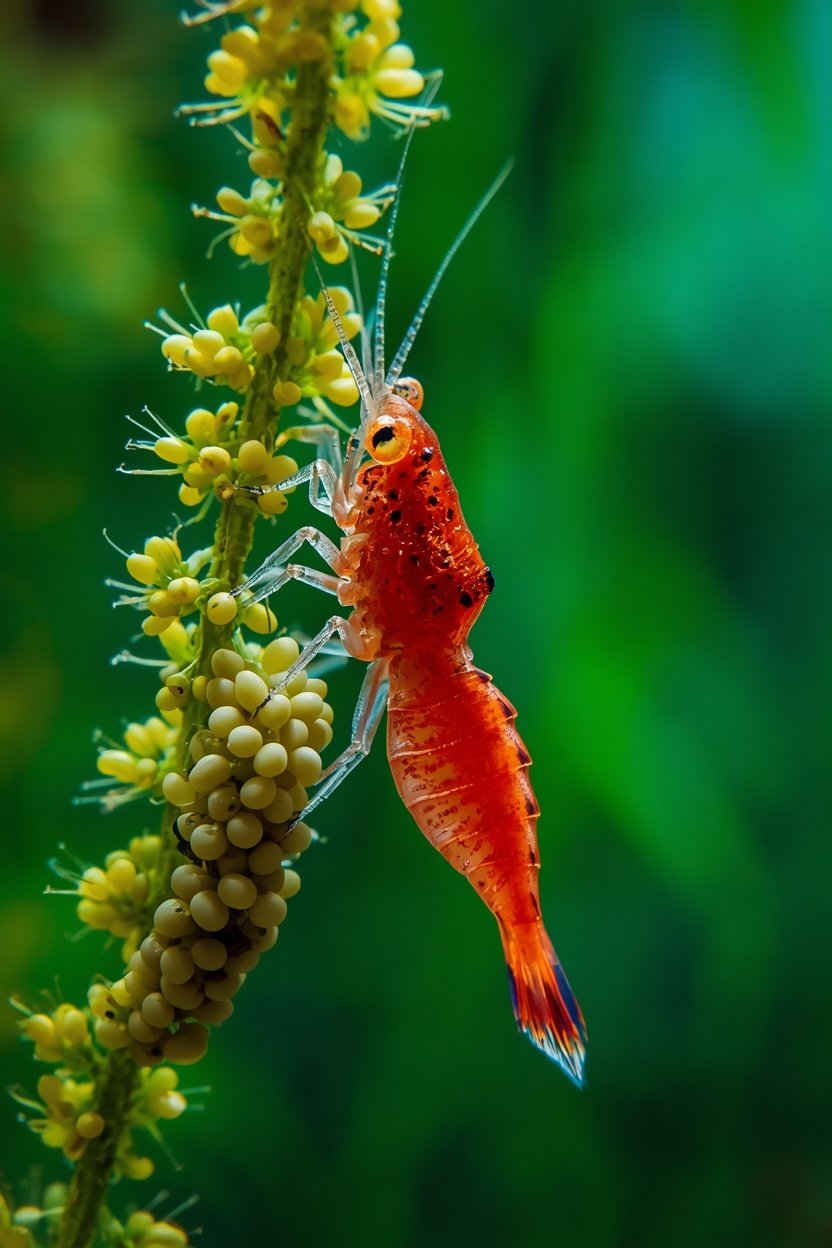
• Egg-laying: within hours of mating, the female transfers fertilized eggs to swimmerets beneath her tail, becoming visibly "berried."
• Carrying: she fans and cleans the egg cluster continuously for roughly three to four weeks, depending on temperature.
• Hatching: fully formed miniature shrimp emerge and immediately begin hiding among plants and biofilm.
• Repeat cycles: a healthy, well-fed female can produce a new clutch every four to six weeks under stable conditions.
Caring for Shrimp Fry
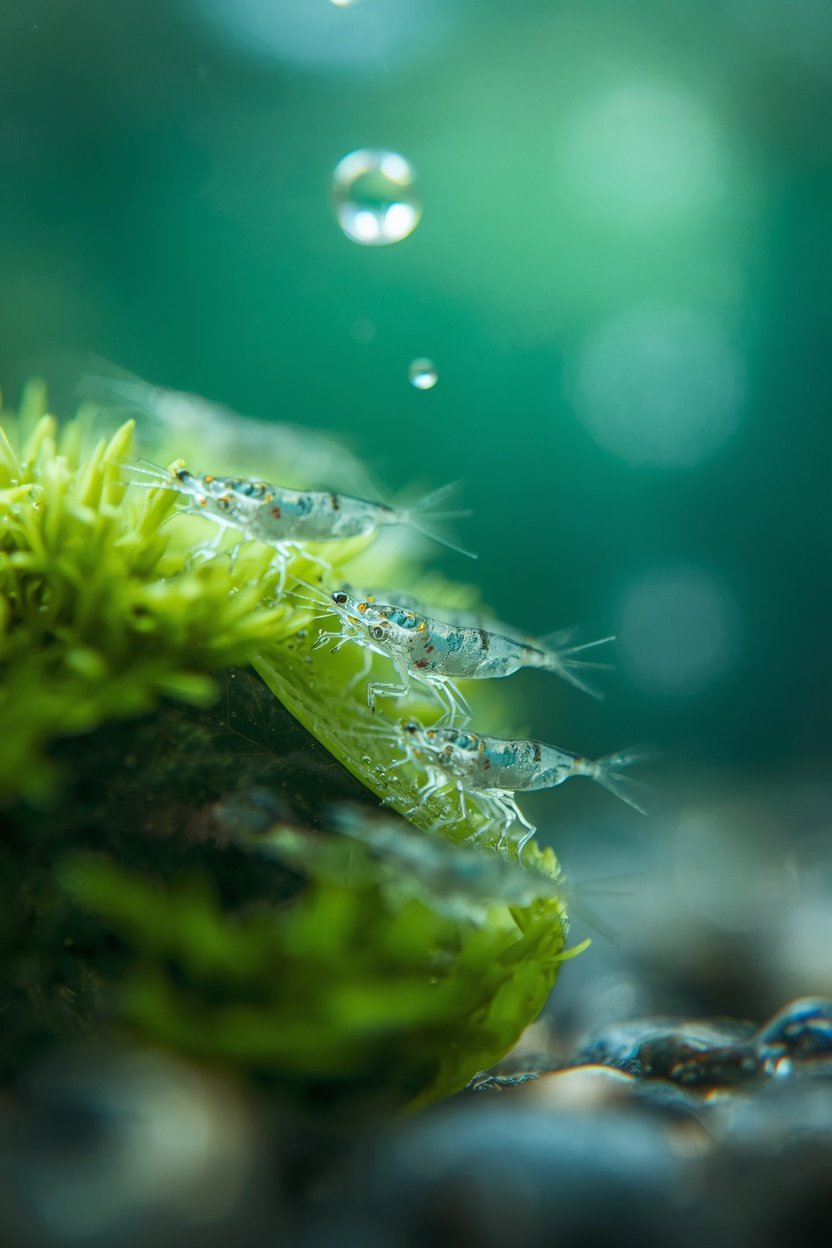
Newly hatched shrimplets are miniature replicas of the adults and need no special food or separate rearing tank — the same biofilm-rich, plant-dense environment that supports the adults will feed and shelter them. The main risks to fry survival are being eaten, pulled into a filter intake, or exposed to a sudden water-parameter swing, all of which the setup described earlier already guards against.
• Keep floating plants like frogbit or dense moss near the surface; fry often graze there in relative safety.
• Avoid large water changes right after a hatch; stick to small, frequent changes instead.
• Resist the urge to move fry to a separate tank — the disturbance is usually more dangerous than leaving them in place.
• Expect a visible population increase within six to eight weeks as fry grow large enough to be seen easily among the adults.
|
AVOID — Common Breeding Mistakes to Avoid • Mixing shrimp with fish that will eat the fry, even "shrimp-safe" species can be opportunistic. • Using tap water without conditioning, chlorine and heavy metals are highly toxic to shrimp. • Changing too much water at once, causing a parameter crash right after a female becomes berried. • Overcrowding the tank before the biofilm and plant mass can support a larger population. • Panicking and re-homing a berried female — the stress of transport often causes her to drop the eggs. |
Frequently asked questions
How long does it take for shrimp eggs to hatch?
Most Neocaridina species carry eggs for three to four weeks before they hatch, with warmer water shortening the timeline slightly.
Do I need a separate breeding tank?
No. A single, stable, well-planted tank without predatory fish is enough for shrimp to breed continuously without any dedicated breeding setup.
Why did my female drop her eggs?
Sudden changes in temperature, pH, or handling stress are the most common causes. Keep parameters stable and avoid netting or moving berried females.
How many shrimp will I end up with?
A healthy colony in a well-established tank can double its population every couple of months once breeding is consistent, so start with a modest group of ten to twenty shrimp.
