
My first attempt at a compact cichlid tank was a stressful few weeks of constant chasing and fin damage, and it took some real research into cichlid behavior — rather than just standard aquascaping advice — to understand why. Cichlids are territorial in a way most community fish simply aren't, and a small tank amplifies that instinct unless the decor is specifically planned to manage it.
These four ideas are built around actual cichlid behavior: their territorial instincts, their need for caves, their digging, and the very real risk of them physically rearranging hardscape over time. Each idea includes a detailed image prompt so you can visualize the finished setup before making changes to your own tank.
Why Compact Cichlid Tanks Need Behavior-First Planning
Cichlids' territorial nature, cave dependency, and digging behavior all become more pronounced challenges in a compact tank simply because there's less physical space to diffuse conflict or accommodate multiple fish comfortably. A successful compact cichlid tank plans around these behavioral realities from the very beginning, rather than applying general aquascaping advice designed with calmer, less territorial fish in mind.
1. Break Sightlines with Vertical Rock Walls
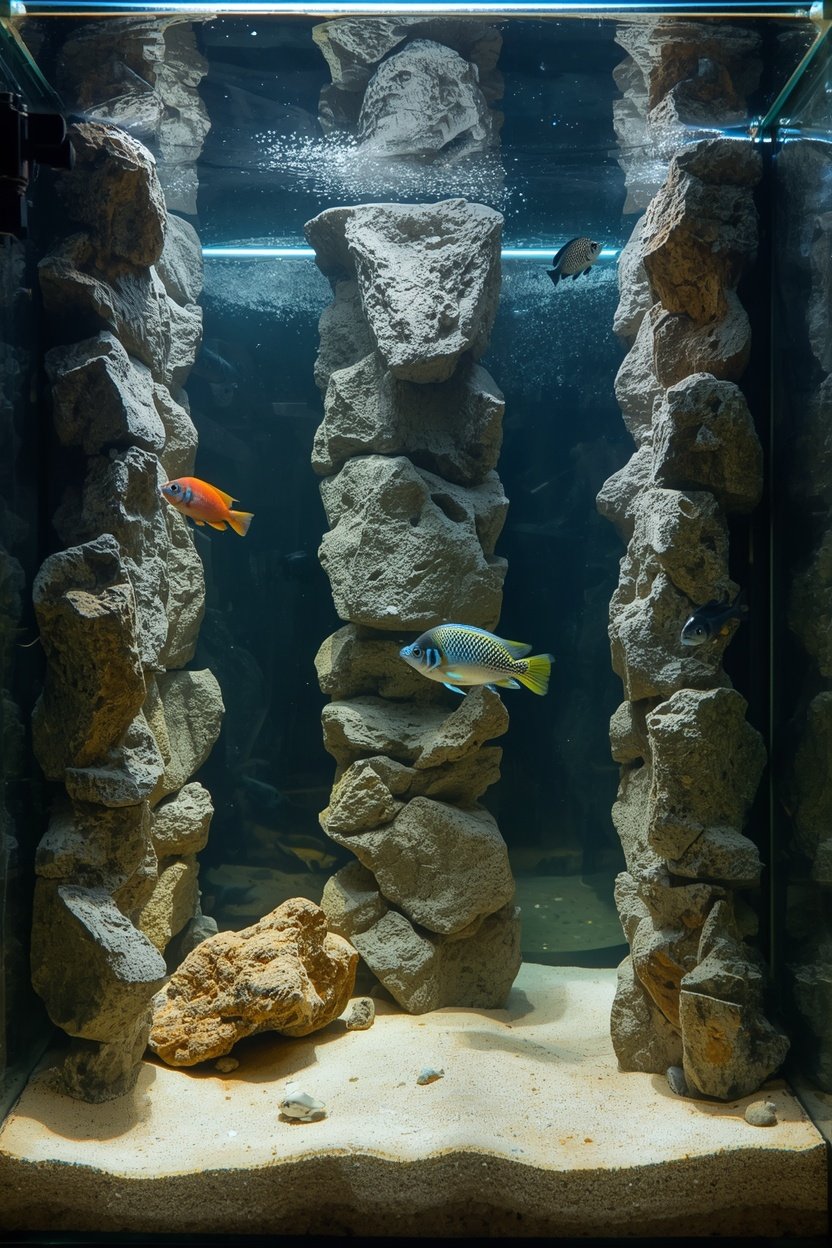
Cichlids are famously territorial, and in a compact tank, that instinct can escalate into constant aggression simply because every fish can always see every other fish at all times. Building one or two vertical rock walls or dense rock columns that partially block direct sightlines across the tank gives more timid or subordinate cichlids genuine visual cover, reducing the near-constant confrontation a fully open layout can trigger in a small space.
Position these rock walls to create distinct zones rather than one open room, similar to how interior walls break up a studio apartment into separate functional areas. Even a compact tank can support two or three loosely defined territories this way, which meaningfully reduces overall aggression compared to a single, fully visible open layout.
This technique is especially valuable for African cichlid species known for their intense territorial behavior, where reducing constant visual confrontation between rival males can be the difference between a thriving, stable compact tank and one plagued by ongoing stress and injury.
2. Provide Multiple Caves Using the "One Per Fish Plus One" Rule
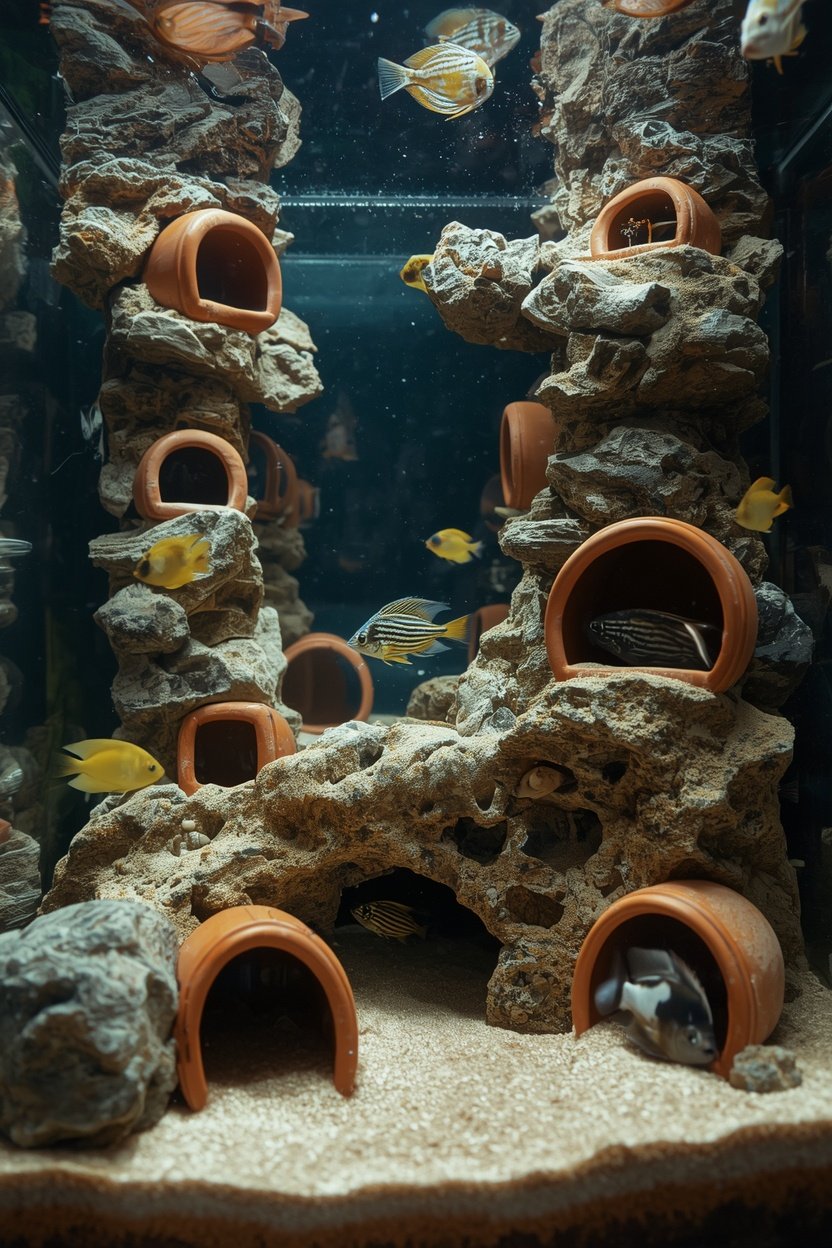
Cichlids rely heavily on caves for breeding, retreat, and establishing their own defended territory, and in a compact tank with limited caves, competition for those few spots can drive constant conflict. A commonly cited guideline among cichlid keepers is providing at least one cave per fish, plus one extra, ensuring there's always an available option even if a dominant fish claims more than its share.
Small clay pots, coconut shells, or specifically designed ceramic cichlid caves all work well in a compact footprint, since they take up relatively little floor space while still providing a fully enclosed retreat. Distribute these caves around the tank's different zones — including within or behind your rock wall dividers from the first idea — rather than clustering them all in one area, which simply relocates the competition rather than resolving it.
This approach directly reduces stress-related aggression by ensuring every fish, even lower-ranking ones, has consistent access to a secure retreat, which matters even more in a compact tank where fish naturally spend more time in close proximity to one another.
3. Use Sand Substrate to Support Natural Digging Behavior
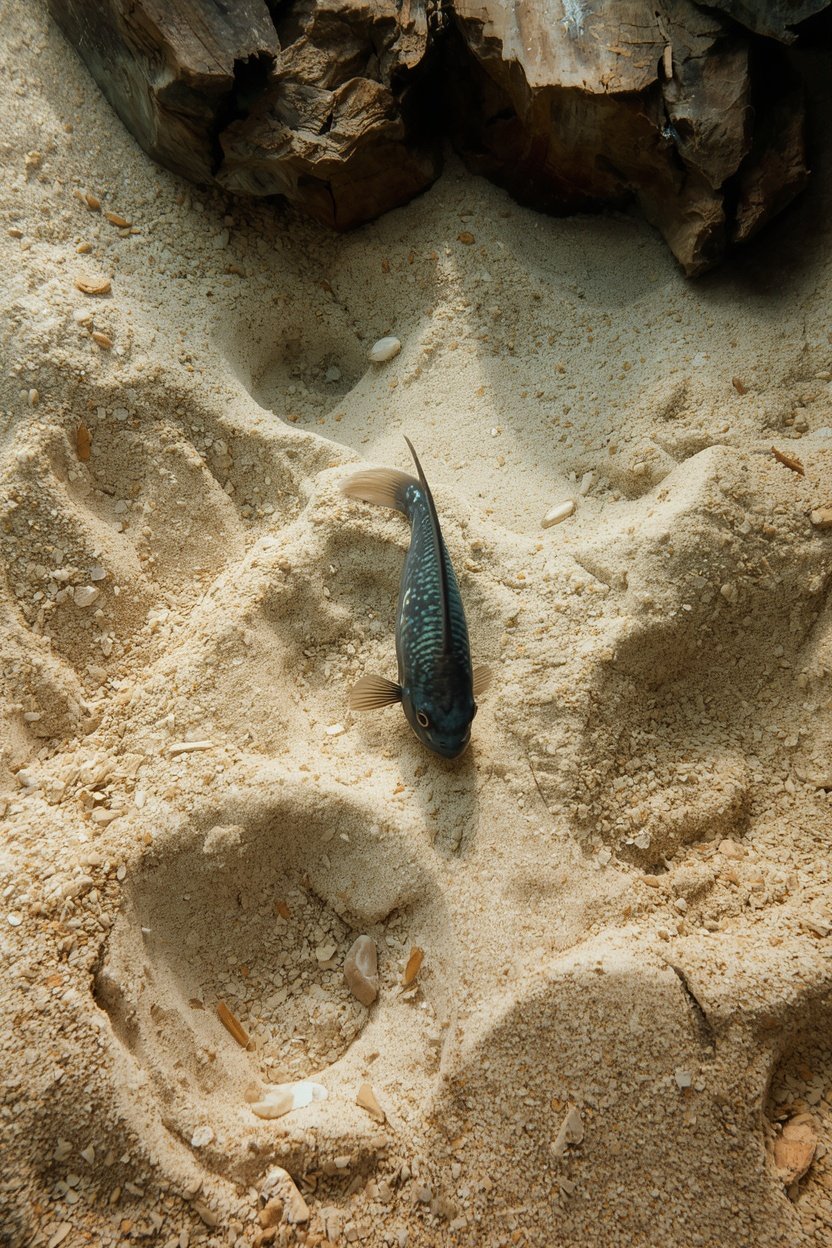
Many cichlid species, particularly those from Africa's Rift Lakes, are enthusiastic diggers by nature, constantly sifting and rearranging substrate as part of normal territorial and nesting behavior. Sand substrate accommodates this instinct far better than gravel in a compact tank, since sand can be redistributed and reshaped by the fish without the sharp edges or trapped debris that gravel often introduces in a heavily disturbed, frequently rearranged layout.
In a smaller footprint, cichlid digging tends to concentrate more intensely in fewer specific spots simply because there's less total substrate area to spread across, making sand's smoother, more forgiving texture especially valuable for a compact setup. Sand also settles more predictably after digging than gravel, keeping your overall hardscape composition more stable even as fish actively rework the substrate around it daily.
Choose a fine-grained, aquarium-specific sand rather than construction or play sand, both of which can introduce contaminants or an inappropriate grain texture not suited to sustained aquarium use.
4. Secure Rockwork Firmly Against Cichlid Excavation
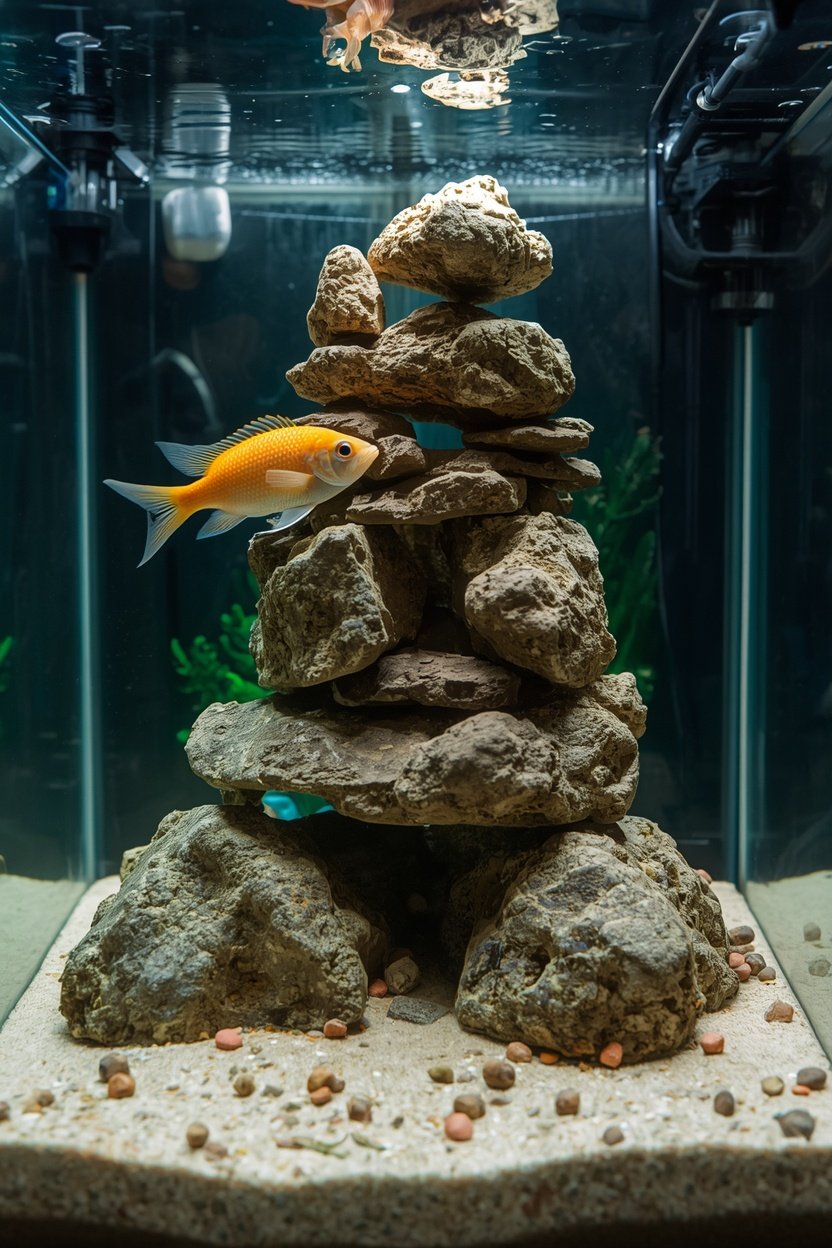
Cichlids don't just dig substrate — many species will actively undermine and shift rocks during territorial displays or nest building, which becomes a genuine safety concern in a compact tank where rock formations sit closer to the glass and have less room to shift safely. Securing all rockwork with aquarium-safe adhesive, or building structures on a separate acrylic base rather than directly on loose substrate, prevents a determined cichlid from gradually collapsing a formation over weeks of digging.
This matters more in compact tanks specifically because there's simply less buffer distance between hardscape and the tank's glass walls, meaning a shifted rock has a shorter path to causing a genuine problem, whether that's cracked glass or a trapped fish. Testing stability by gently pressing on each rock formation after initial placement, and periodically rechecking as the tank matures, catches potential issues before a cichlid's digging causes real structural movement.
This is a less visually exciting decor decision than choosing an attractive rock formation in the first place, but it's arguably the most important one for anyone keeping genuinely active digging and rock-moving cichlid species in a space-limited setup.
Additional Tips for a Successful Compact Cichlid Tank
- Research species-specific compatibility carefully. Not all cichlid species tolerate compact tanks equally well, so confirm your specific species' space and temperament needs before stocking.
- Watch for early aggression signs. Torn fins, constant chasing, or a fish hiding excessively can signal the current layout needs additional territory breaks or caves.
- Avoid overstocking even in a well-planned layout. Good decor reduces but doesn't eliminate the space limitations of a genuinely compact tank.
- Rearrange occasionally if aggression persists. Sometimes reshuffling rock positions resets established territories and can reduce ongoing conflict between specific individuals.
Final Thoughts
A compact cichlid tank can absolutely work well, but it requires decor decisions built specifically around cichlid behavior rather than general aquascaping principles. Sightline-breaking rock walls, abundant caves, digging-friendly sand, and securely anchored hardscape together create a space-limited tank where territorial fish can actually establish stable boundaries rather than existing in constant conflict. Plan around their real instincts from the start, and a compact cichlid tank can be just as successful as a much larger one.
Frequently asked questions
How many cichlids can realistically live in a compact tank?
This varies significantly by species and their specific territorial needs, so researching your exact cichlid type's recommended stocking density is essential rather than relying on general aquarium sizing guidelines.
Will sand substrate clog my filter with a digging cichlid?
Properly sized aquarium sand generally doesn't cause filter issues with standard intake guards in place, though it's worth choosing a filter with a sponge pre-filter for extra protection in a heavily disturbed sand-bottom tank.
