
My first community tank was a lesson in what "compatible" actually means. I'd picked fish purely because I liked how each one looked individually, without considering how they'd actually behave together, and the result was a surprising amount of chasing and stress despite every species being individually labeled "peaceful" on its store tag. It took some research into actual compatibility factors — not just temperament, but water chemistry, activity level, and which part of the tank each species naturally occupies — to finally build a community that genuinely got along.
These four combinations are built around real compatibility principles, not just a shared reputation for being "easy" fish. Each one includes a detailed image prompt so you can visualize the finished community before choosing your own stocking list.
What Actually Makes Freshwater Fish Compatible
True compatibility comes down to a few consistent factors: similar water chemistry needs, comparable temperament and activity level, and ideally, different preferred zones of the tank so species aren't constantly competing for the same space. Fish that share all three factors tend to coexist with minimal conflict, while fish that merely share a general "peaceful" reputation without matching on these specifics can still clash in an actual shared tank.
1. The Classic Tetra, Corydoras, and Otocinclus Trio
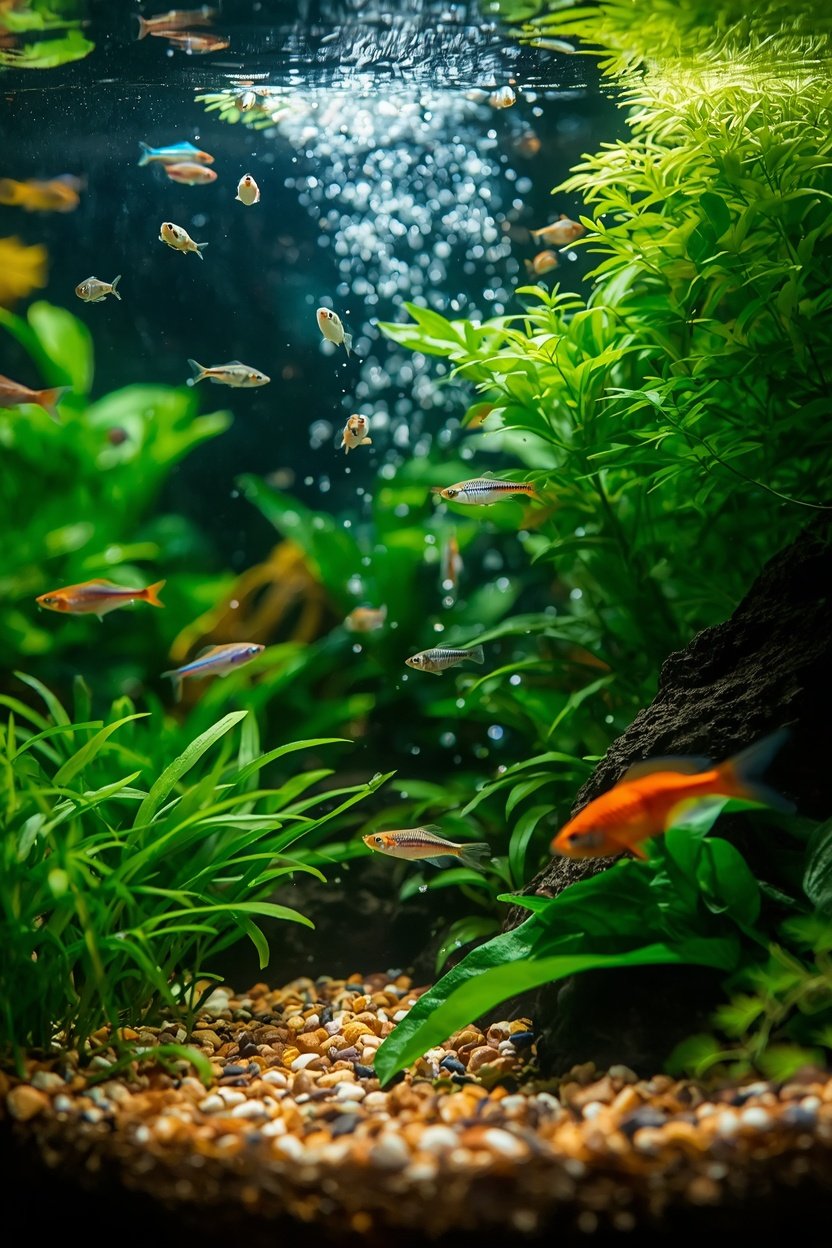
This combination is a longtime favorite for good reason: each species occupies a different part of the tank and none competes directly with the others for space, food, or attention. Neon or ember tetras fill the open mid-water column with movement and color, corydoras catfish patrol the substrate scavenging leftover food, and otocinclus catfish graze quietly on algae along glass and leaves, rounding out all three main zones of the tank.
All three groups share similar water chemistry preferences — soft, slightly acidic to neutral water — and none is aggressive or territorial toward the others, which makes daily coexistence genuinely peaceful rather than merely tolerable. Keep each species in an appropriately sized group, since tetras and corydoras especially rely on shoaling behavior for a sense of security and display noticeably better color and activity levels when kept in proper numbers.
This trio also suits a beginner's maintenance routine well, since corydoras and otocinclus both help manage leftover food and algae, reducing (though never eliminating) some of the manual cleanup a tank otherwise requires.
2. A Betta Paired With Calm, Fin-Safe Companions
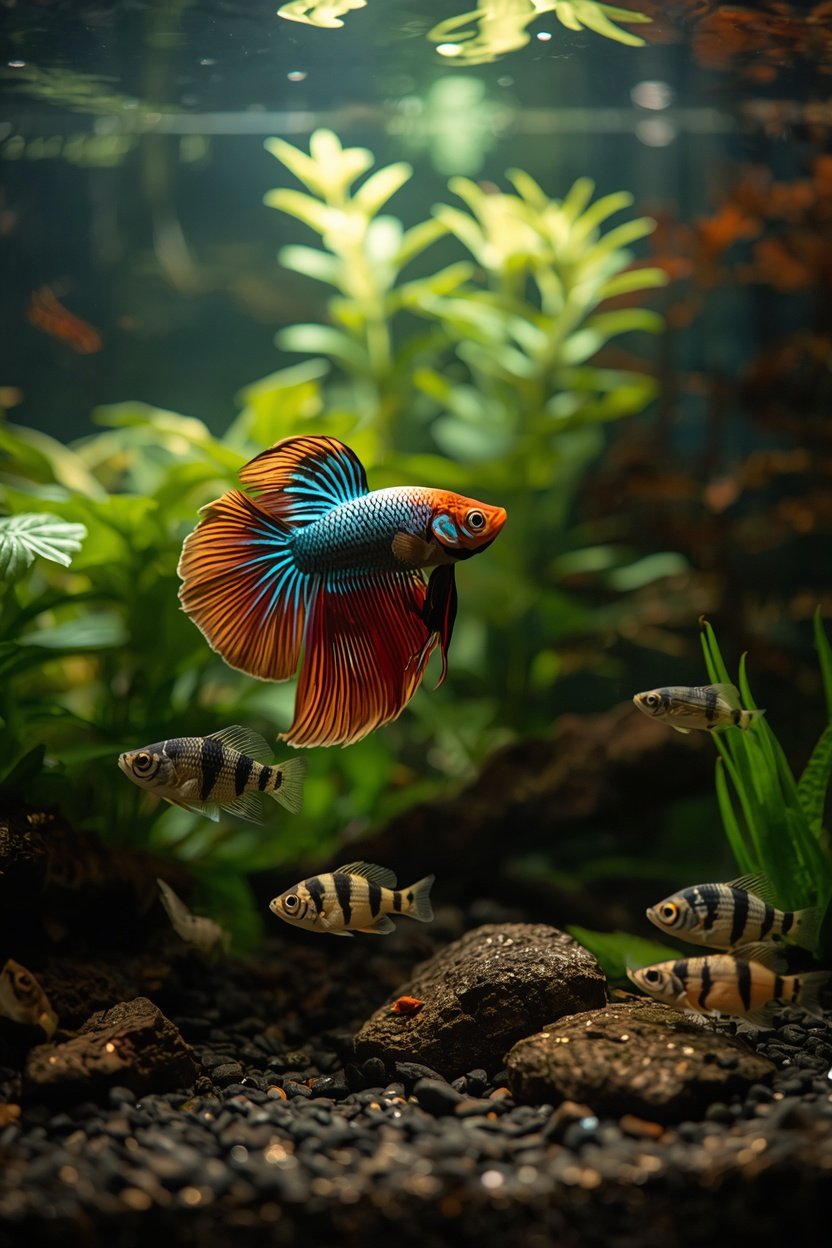
Bettas have a reputation for aggression that's often overstated, but they do require genuinely careful tankmate selection, favoring calm, non-nippy species that won't provoke their territorial instincts or damage their long fins. Corydoras catfish, kuhli loaches, and small, peaceful schooling fish like harlequin rasboras tend to coexist well with a betta, since none of them resembles another betta or displays the fin-nipping behavior some more boisterous species show.
The key compatibility factor here isn't really water chemistry, since most of these species share reasonably similar preferences, but rather temperament and swimming style. Fast, erratic swimmers or brightly colored, long-finned fish can trigger a betta's territorial response, while calm, steady bottom-dwellers and small schooling fish generally register as non-threats.
Every betta has its own individual personality, though, so introducing potential tankmates gradually and watching behavior closely during the first few days remains an important step even when a species is generally considered betta-compatible on paper.
3. A Mixed Livebearer Community
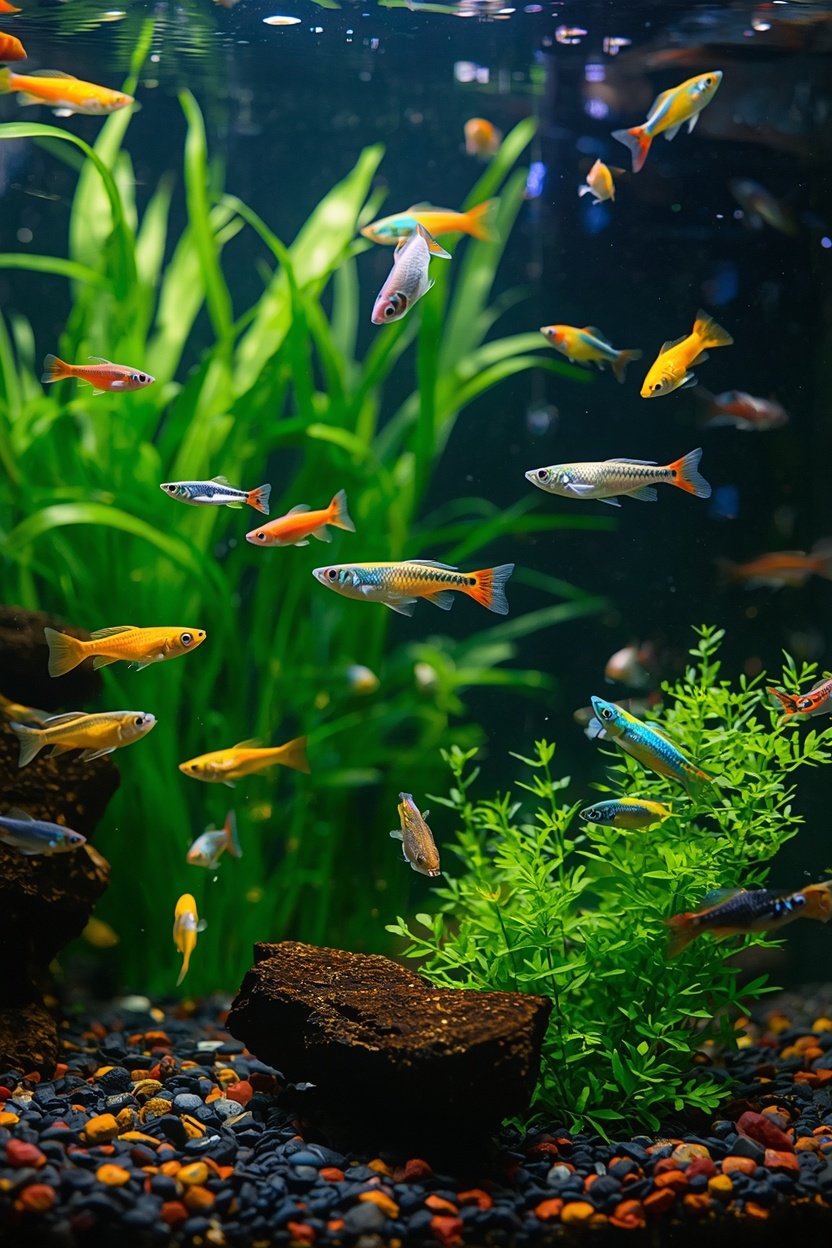
Guppies, platies, and mollies all belong to the same broader livebearer family, share similar water chemistry preferences favoring harder, more alkaline water, and generally display peaceful, non-territorial temperaments that make them easy to combine in a single community tank. Their similar size and activity level also means none tends to bully or outcompete the others for food or space.
This combination offers genuine visual variety, too, since guppies, platies, and mollies each come in a wide range of colors and fin shapes, letting a single tank display considerable diversity while still drawing from species with closely aligned care requirements. Because all three breed readily, be prepared for regular fry if keeping mixed-sex groups of more than one species together.
This livebearer combination is often recommended specifically for beginners transitioning from a single-species tank to their first real community setup, since the compatibility factors are straightforward and the species' hardiness forgives occasional beginner mistakes more readily than more sensitive fish would.
4. Bottom and Top Dwellers That Never Compete
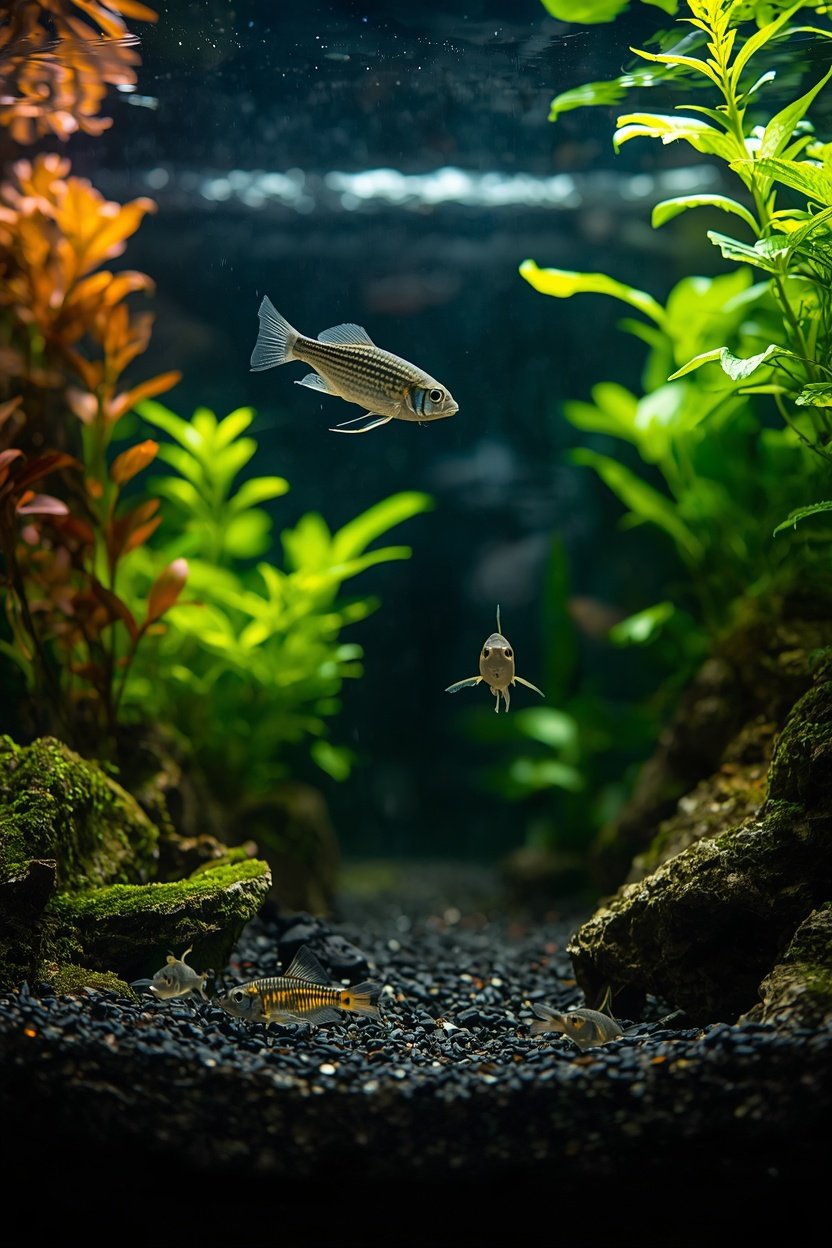
Pairing a bottom-dwelling species like corydoras catfish with a surface-dwelling species like hatchetfish creates a genuinely complementary combination, since the two groups essentially never interact, occupying entirely separate zones of the water column throughout the day. This kind of vertical separation is one of the most reliable compatibility strategies in freshwater fishkeeping, since fish that rarely cross paths rarely develop conflict.
Hatchetfish spend nearly all their time near the surface, using their distinctive flattened profile to feed on insects and food floating on top of the water, while corydoras stay almost exclusively along the substrate, foraging for scraps that settle to the bottom. The middle of the tank, in this pairing, remains open water that neither species claims territorially, reducing any competition even further.
This combination also creates a naturally layered, visually interesting tank simply by virtue of activity happening at multiple distinct heights simultaneously, without requiring any deliberate aquascaping trick to achieve that same layered effect.
Tips for Building Your Own Compatible Community
● Research water parameter overlap before buying. Confirm every species in your planned community shares a genuinely compatible pH and hardness range, not just a similar temperature.
● Consider tank zones, not just temperament. Combining fish that naturally occupy different areas of the tank reduces competition even among generally peaceful species.
● Introduce new fish gradually. Adding species one group at a time, rather than all at once, makes it easier to spot and address any compatibility issues early.
● Keep shoaling species in proper group sizes. Many compatibility problems trace back to fish kept in groups too small to feel secure, rather than genuine conflict with other species.
Final Thoughts
Building a genuinely peaceful community tank comes down to understanding real compatibility factors rather than simply combining fish that each individually seem easy or attractive. Matching water chemistry, temperament, and preferred tank zones — as each of these four combinations does — leads to a tank where fish coexist comfortably rather than merely tolerating each other. Take the time to research these specifics before stocking your next tank, and you'll likely spend far less time troubleshooting conflict down the road.
