
Corydoras were the fish that finally made me pay attention to substrate choice. I'd kept them for months on standard gravel before noticing their barbels looked noticeably shorter and more irritated than when I'd first brought them home, and a little research quickly pointed to the sharp gravel as the likely cause. Switching to sand made an almost immediate difference, and it taught me that corydoras genuinely need decor planned around their specific bottom-dwelling lifestyle, not just whatever substrate happens to look good.
These four ideas are built around how corydoras actually live: foraging constantly along the substrate, resting socially in shared shelters, and shoaling together across open ground. Each idea includes a detailed image prompt so you can visualize the finished setup before making changes to your own tank.
Why Corydoras Need Bottom-Focused Decor Planning
Most community tank advice focuses on mid-water and surface-level decor, since that's where many popular fish spend most of their time, but corydoras live almost their entire lives along the substrate itself. A tank genuinely suited to corydoras plans the bottom layer first, treating substrate texture, foraging space, and shared shelter as the primary decor considerations rather than an afterthought beneath a more typically decorated upper tank.
1. Use Fine Sand Substrate to Protect Sensitive Barbels
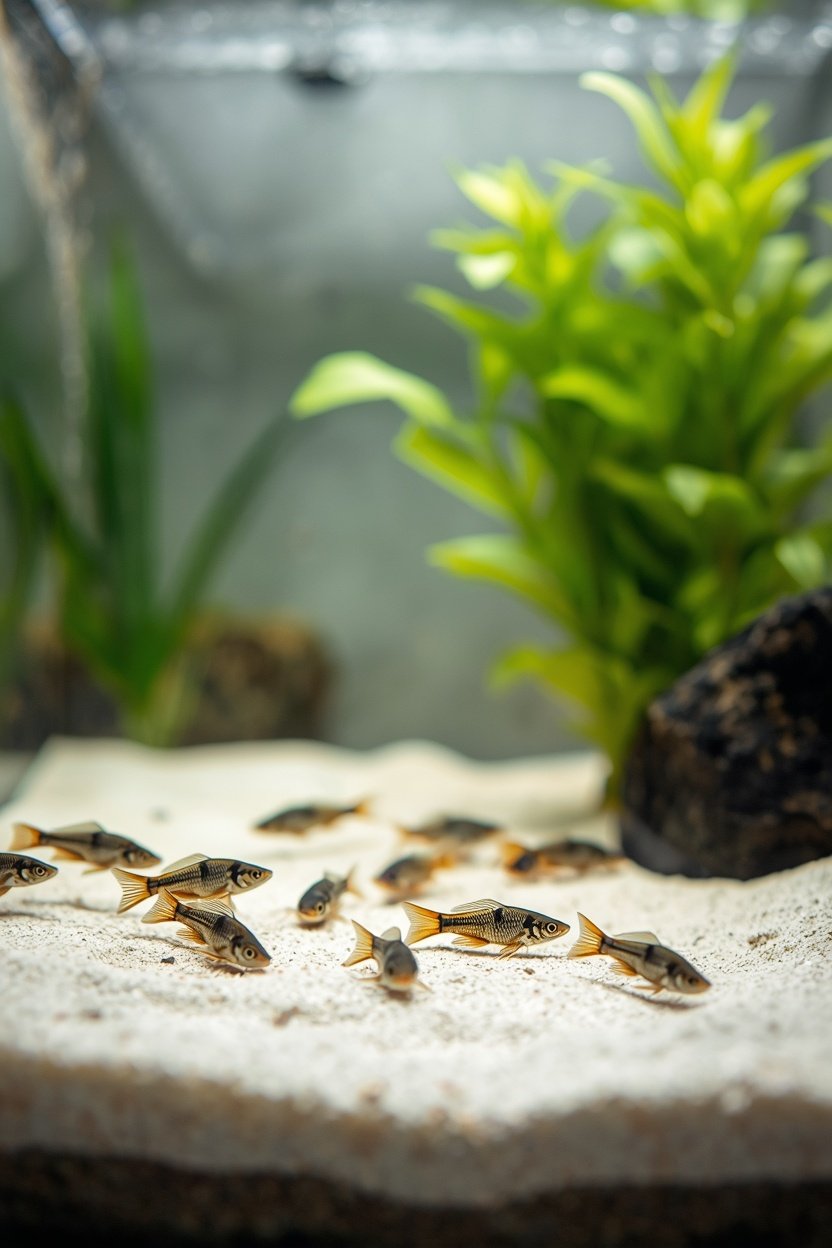
Corydoras catfish spend the majority of their time foraging along the substrate, constantly sifting through it using sensitive whisker-like barbels near their mouth to locate food. Standard gravel, with its sharp, irregular edges, can gradually wear down and damage these barbels over months of constant contact, leading to noticeable irritation or infection in fish kept on the wrong substrate long-term.
Fine, rounded sand eliminates this risk almost entirely, giving corydoras a soft surface to dig and forage through exactly the way they would in their natural riverbed habitat. This single substrate decision is widely considered one of the most important choices for corydoras health, ranking above almost any other decor consideration for this species specifically.
Choose a pool-filter-grade sand or an aquarium-specific fine sand rather than sharp playground sand, and rinse thoroughly before adding it to avoid excessive cloudiness. The soft, pale substrate also has its own understated visual appeal, closely mimicking the natural sandy riverbeds corydoras evolved to forage across.
2. Add Overturned Pots or Caves for Daytime Shelter
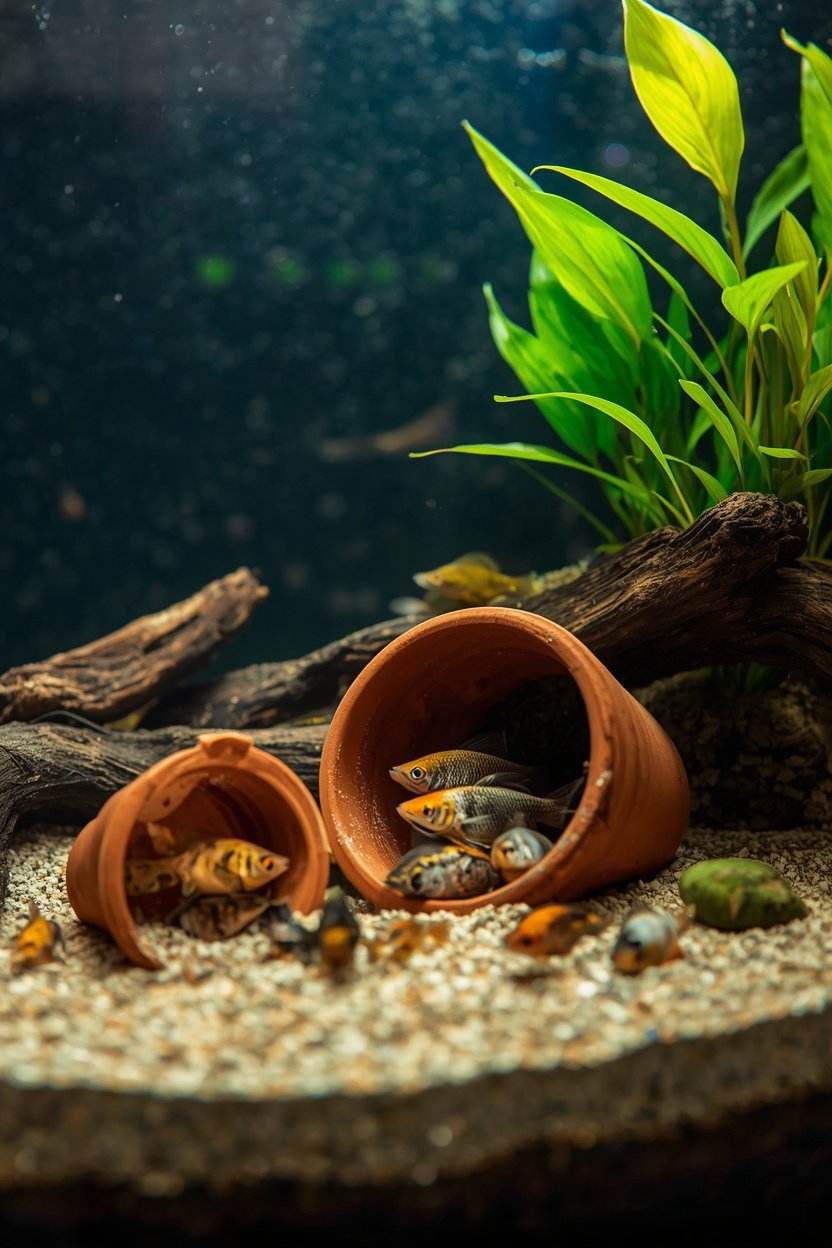
While corydoras are active foragers, they also appreciate having shaded retreats to rest in during brighter parts of the day, mimicking the shelter they'd find beneath submerged logs and root structures in their natural habitat. Small overturned terracotta pots, ceramic caves, or arranged driftwood pieces low to the substrate all provide this kind of low, accessible shelter suited to their bottom-dwelling lifestyle.
Position these hiding spots at multiple points around the tank rather than clustering them in one area, since corydoras often move between different shelters throughout the day as part of their natural foraging pattern. Keep entrances wide enough for the whole group to use comfortably, since corydoras are highly social and often rest together in the same shelter rather than spreading out individually.
This idea also happens to add genuine visual interest to a tank's lower level, an area of the aquarium that's often left comparatively bare in setups designed around mid-water or surface-dwelling fish instead.
3. Keep a Shoal-Friendly Open Bottom Layout
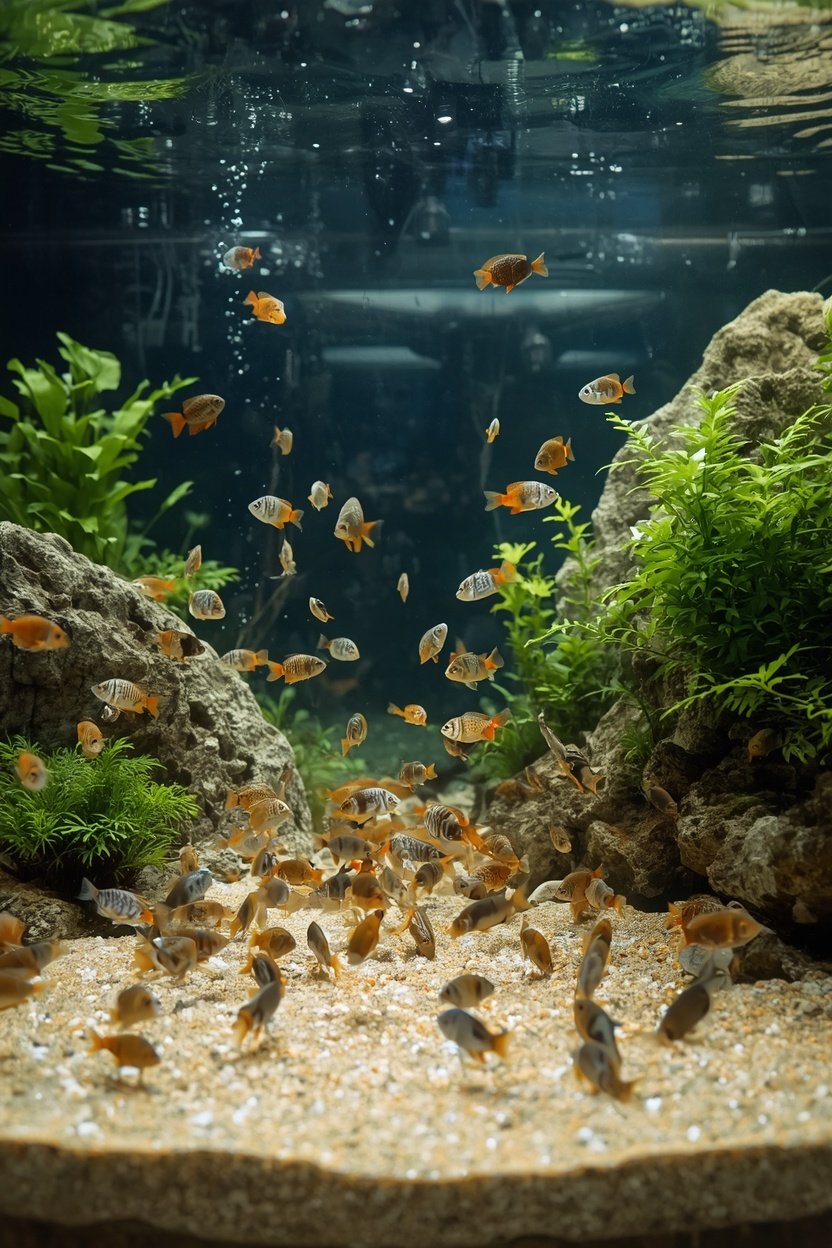
Corydoras are genuinely social fish that display their most natural, confident behavior in groups of six or more, actively foraging together across open substrate rather than hiding constantly. A tank layout with dense hardscape covering most of the substrate leaves little room for this natural group foraging behavior, so keeping a generous, open stretch of sand clear across the tank's floor matters more for corydoras than for many other popular community species.
Position any rocks, plants, or hiding spots toward the edges and back of the tank, preserving a wide central foraging area where the whole shoal can move together comfortably. This open-bottom approach doesn't mean an empty-looking tank overall, since mid-water and background plants can still provide plenty of visual interest above the clear foraging zone below.
Watching a full corydoras shoal forage together across open sand is genuinely one of the more rewarding sights in a community aquarium, and it's a behavior that simply doesn't happen if the substrate is too obstructed for the group to move through it naturally.
4. Include Driftwood and Leaf Litter for Natural Foraging
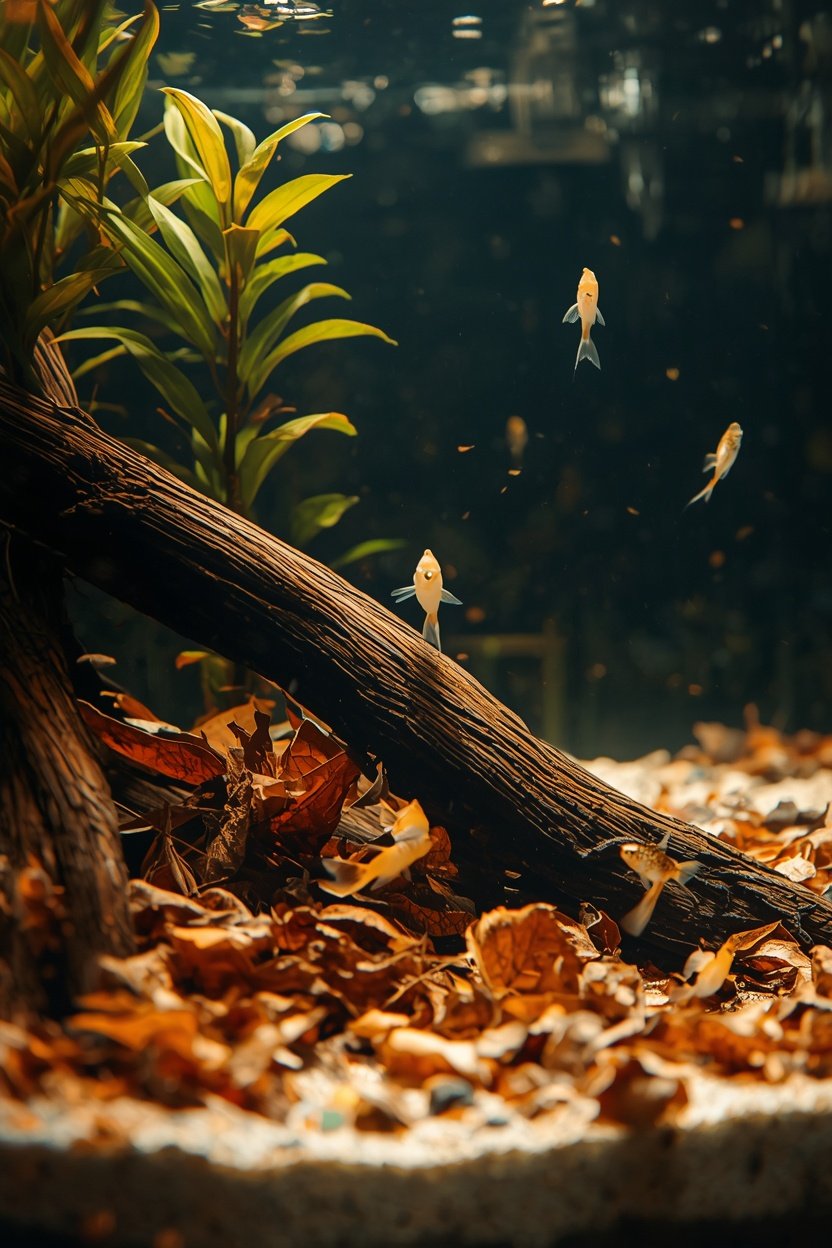
Beyond basic shelter, driftwood and scattered dried leaf litter add genuine foraging value for corydoras, hosting the biofilm and small microorganisms these fish naturally graze on throughout the day alongside their regular food. This turns the substrate and hardscape into an ongoing source of supplemental grazing rather than purely decorative additions, closely mirroring how corydoras actually feed in wild riverbed environments.
Scatter a few dried catappa or oak leaves across the sand near any driftwood, allowing them to break down gradually over several weeks the same way botanical leaf litter is used in more dedicated biotope setups. Corydoras are often seen investigating and foraging directly on and around decomposing leaves, adding an engaging, naturalistic behavior to observe beyond simple open-water swimming.
This idea pairs particularly well with the sand substrate and open-bottom layout from the earlier ideas, together creating a tank that doesn't just look right for corydoras but actively supports the specific foraging and social behaviors that make this species so rewarding to keep well.
Extra Tips for Thriving Corydoras
- Keep them in groups of six or more. Corydoras display noticeably more natural, confident behavior in larger groups than in pairs or small numbers.
- Check existing gravel for sharpness. If switching from gravel isn't immediately possible, running your fingers through it can reveal whether it poses a genuine barbel risk.
- Avoid overly bright, harsh lighting. Corydoras generally prefer more subdued lighting, consistent with their naturally shaded riverbed habitat.
- Supplement with sinking food. Since corydoras forage at the bottom, sinking pellets or wafers ensure they get adequate food rather than relying only on leftovers from surface feeding.
Final Thoughts
Corydoras catfish reward decor planning built specifically around their bottom-dwelling, foraging, and social nature, rather than being treated as an afterthought beneath a tank designed for other fish. Fine sand, accessible shared shelter, open foraging space, and natural grazing material together create an environment where corydoras can display the same confident, active behavior they'd show in the wild, making them a genuinely more rewarding fish to watch and keep.
Frequently asked questions
Can corydoras live on gravel if I can't switch to sand?
Smooth, rounded gravel specifically marketed as corydoras-safe can work, though fine sand remains the gold standard for barbel health and is worth switching to when possible.
How many corydoras should I keep together?
Most experienced keepers recommend groups of at least six, since corydoras are highly social and display more natural foraging and resting behavior in larger numbers.
Do corydoras need a species-specific tank, or can they live with other fish?
Corydoras generally do well in peaceful community tanks alongside calm mid-water and surface-dwelling species, as long as tankmates aren't aggressive toward bottom-dwelling fish.
