
A desktop aquarium is a small fish tank that sits right on your desk, and it can turn a plain workspace into a calm, living scene. If you have ever stared at a screen for hours and wished for something peaceful to rest your eyes on, this hobby might suit you. Small tanks do come with their own rules, though, and beginners often get caught out. This guide walks you through choosing a tank, setting it up safely, picking suitable animals, and styling it with six creative decor ideas.
What Is a Desktop Aquarium?
A desktop aquarium is generally any tank between about 1 and 10 gallons (4 to 38 litres) that is small enough for a sturdy desk, shelf, or counter. Many arrive as all-in-one kits with a built-in light and filter. Hobbyists often call them nano tanks, and the name fits: less water, smaller footprint, big personality.
One thing to understand early is that small does not mean easy. Less water means conditions change faster. A little extra food or a warm afternoon can shift water quality within hours, so a slightly larger tank is actually more forgiving for a beginner. Aim for 5 gallons (about 19 litres) or more if your desk allows.
Is a Desktop Aquarium Right for You?
Quick pros and cons
Pros: calming to watch, fits small spaces, lower starting cost than a big tank, and a wonderful creative outlet.
Cons: needs weekly care, water conditions swing quickly, fewer animals to choose from, and the whole setup is heavy.
Weight deserves special attention. Water weighs roughly 8.3 pounds per gallon (1 kg per litre), so a 5-gallon tank holds around 42 pounds of water before you add gravel, stones, and the glass itself. Place it on a strong, level surface away from the desk edge, never on a wobbly stand.
Essential Equipment Checklist
You do not need much, but each item below has a real job to do.
|
Item |
Why you need it |
Beginner tip |
|
Tank (5+ gallons) |
A stable home for your animals |
Glass resists scratches; acrylic is lighter |
|
Filter |
Removes waste and hosts helpful bacteria |
Choose gentle flow |
|
Heater |
Keeps tropical species comfortable |
Pair it with a thermometer |
|
LED light |
Shows off your scene and feeds plants |
Use a timer for 6 to 8 hours daily |
|
Water conditioner |
Neutralises chlorine and chloramine |
Never use untreated tap water |
|
Test kit |
Measures ammonia, nitrite, and nitrate |
Liquid kits are often more precise than strips |
Step-by-Step Setup
1. Pick your spot. Choose a level, sturdy surface away from direct sunlight and heating vents, because bright sun feeds algae.
2. Rinse everything. Rinse gravel, sand, and decorations in plain water. Never use soap.
3. Design the layout. Add substrate first, then arrange stones and driftwood while the tank is still dry.
4. Fill gently. Pour water slowly onto a small plate so the substrate stays put, then add conditioner.
5. Add live plants. Hardy choices such as Anubias, java fern, and java moss are ideal for beginners.
6. Install equipment. Let the heater sit in the water for about 20 minutes before plugging it in.
7. Be patient. Run the tank without animals while it cycles, as explained next.
Understanding the Nitrogen Cycle
Fish waste turns into ammonia, which is toxic. Helpful bacteria in your filter convert ammonia into nitrite, which is also toxic, and then into nitrate, which is far less harmful and is removed through water changes and plant growth. Building up enough of these bacteria is called cycling, and it commonly takes four to six weeks. Test every few days. When ammonia and nitrite both read zero and nitrate appears, your tank is ready. Adding fish too early is the most common beginner mistake, so patience here saves lives.
Best Animals for Small Desktop Tanks
Choose species that stay small and are happy in limited space, and research each one before buying.
|
Animal |
Minimum tank |
What to know |
|
Betta fish |
5 gallons (19 L) |
Keep one per tank; prefers warm water of roughly 25 to 28°C (77 to 82°F) |
|
Cherry shrimp |
5 gallons (19 L) |
Colourful algae grazers; sensitive to copper and sudden changes |
|
Chili rasbora |
5 gallons (19 L) |
Tiny schooling fish; keep a group of at least six |
|
Nerite snail |
5 gallons (19 L) |
Excellent algae cleaner that will not overrun a freshwater tank |
Avoid goldfish and common plecos. They grow large, produce plenty of waste, and need far bigger tanks. Add animals gradually, a few at a time, so your bacteria can keep up.
6 Creative Desktop Aquarium Decor Ideas
Decor is where your tank gets its personality. Each idea below includes a ready-to-use image prompt for your visuals.
1. The Zen Stone Garden
Inspired by Japanese stone layouts, this style uses one large rock and a few smaller ones on pale sand, with a low green carpet of plants. It is minimal, quiet, and perfect for a tidy workspace.
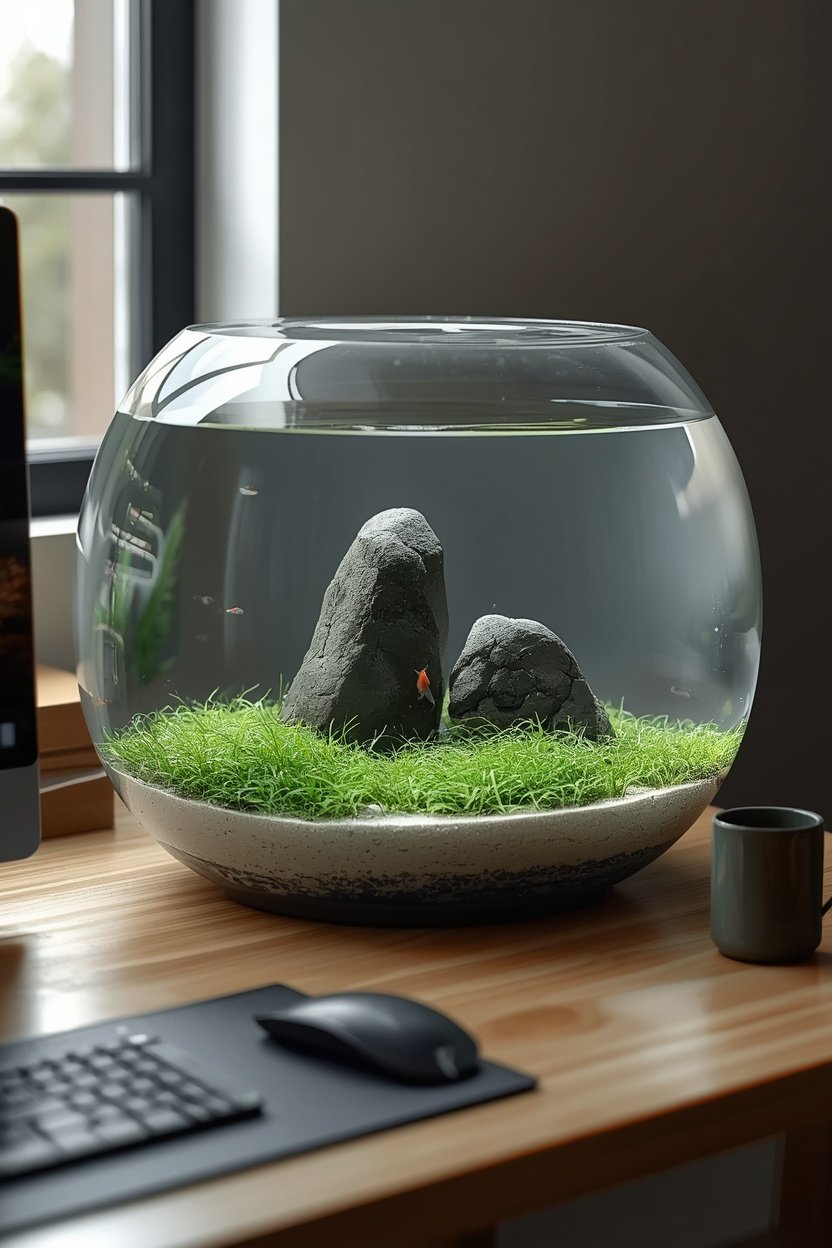
Negative prompt: text, watermark, logo, cluttered background, cartoon style, oversaturated colours, distorted or extra fins, blurry glass
2. The Betta Jungle
Give a single betta a hideaway with curved driftwood, broad Anubias leaves, and floating plants that soften the light. Bettas enjoy resting spots near the surface, so leave open water on top.
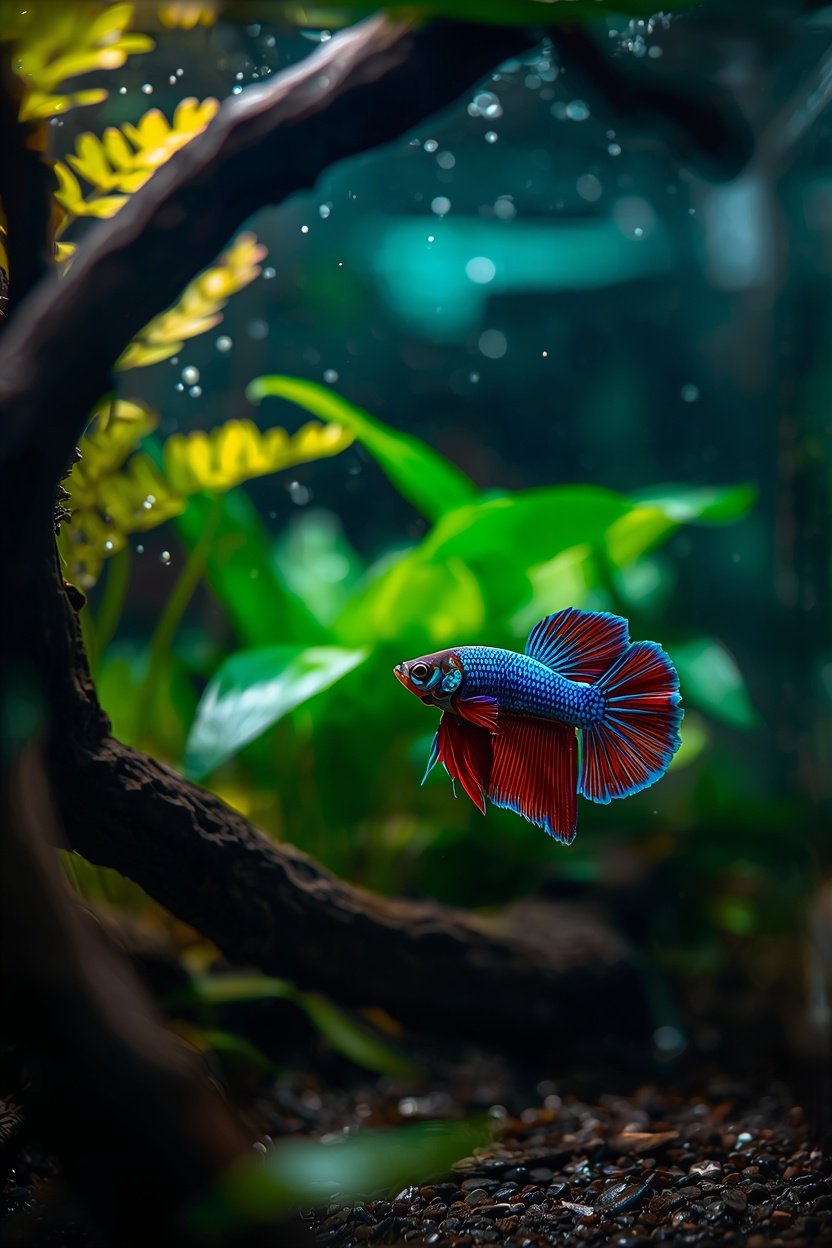
Negative prompt: text, watermark, multiple bettas, torn or frayed fins, plastic-looking plants, harsh flash, low resolution, unrealistic anatomy
3. The Mossy Shrimp Forest
Cover the back wall and hardscape with java moss and let cherry shrimp graze through the green. Their bright red bodies pop against the moss, and the tank looks like a tiny enchanted woodland.
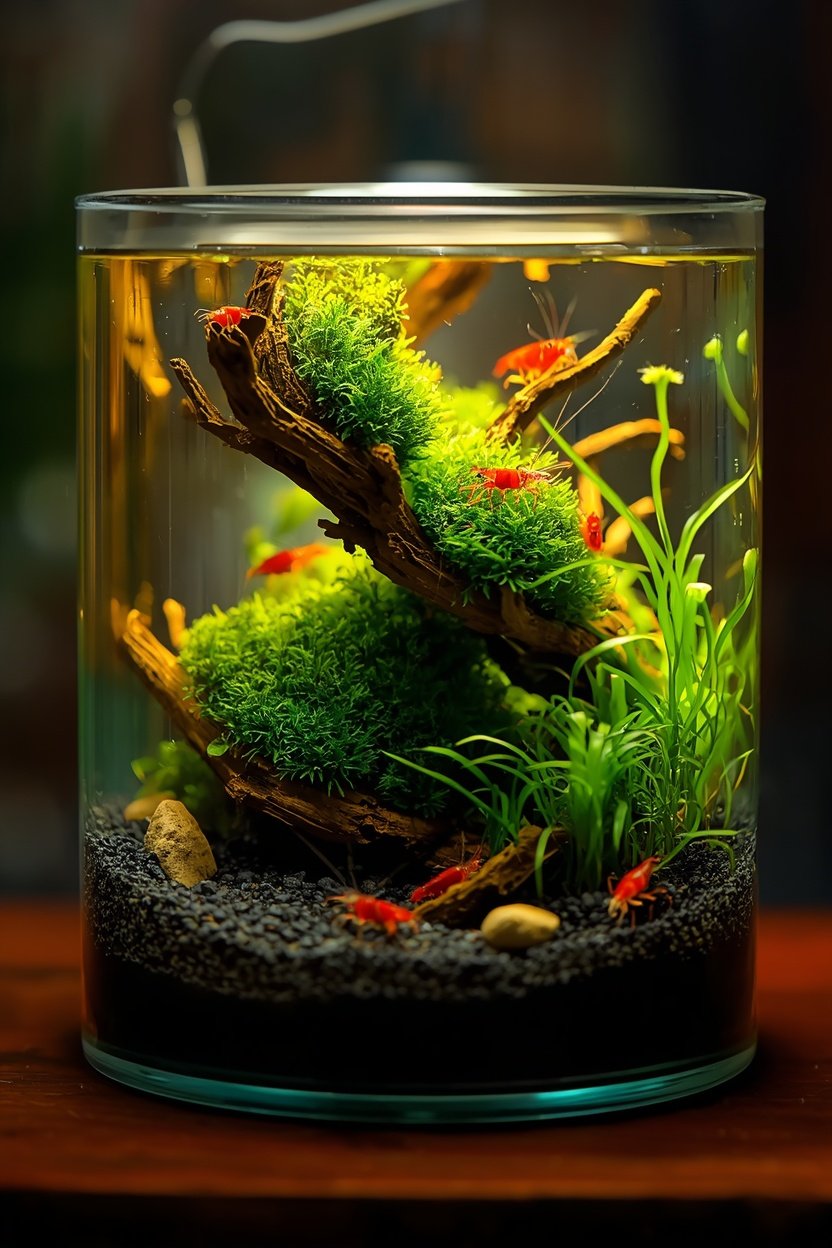
Negative prompt: text, watermark, murky water, dead moss, fish, oversaturated neon colours, cartoon style, grainy noise, distorted shrimp
4. The Sunken Temple Ruin
Use a small stone temple or arch ornament with plants creeping over it, as if nature reclaimed an ancient place. Pick smooth, aquarium-safe pieces so delicate fins are never scratched.
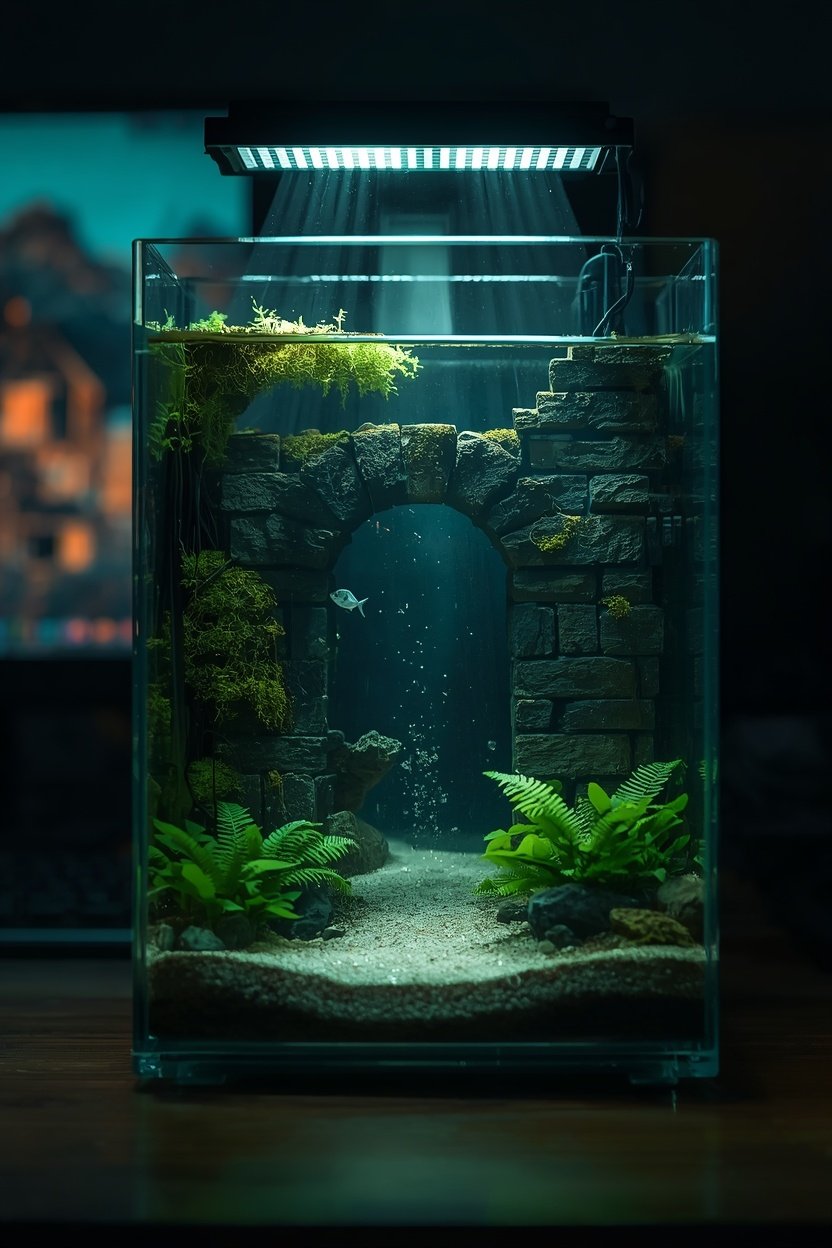
Negative prompt: text, watermark, plastic toy look, cartoon style, cracked glass, cloudy water, oversized fish, harsh reflections, low detail
Simple Maintenance Routine
Each week, change 20 to 25 percent of the water using conditioned water at a similar temperature, gently vacuum debris, wipe algae from the glass, and test your water. Once a month, rinse the filter sponge in a bucket of removed tank water, because tap water can kill the helpful bacteria. Feed lightly, offering only what your animals finish in about two minutes.
The usual beginner mistakes are overfeeding, skipping the cycle, leaving the light on all day, and adding too many animals at once. Avoid these four and you are already ahead of most new hobbyists.
Frequently asked questions
Do desktop aquariums need a filter?
Yes. A filter circulates water and houses the bacteria that keep it safe, even in a tiny tank.
Can I keep goldfish in a desktop tank?
No. Goldfish need much larger tanks because they grow big and create lots of waste.
How often should I clean it?
A small weekly water change plus a quick monthly filter rinse is enough for most setups.
