
Walking into a pet store or browsing aquarium listings online for the first time, it's easy to feel overwhelmed by how many tank types are actually out there. Rectangular, bow-front, rimless, acrylic, nano — the options can start to blur together, especially when you're just trying to figure out what will actually work in your space and for your budget.
This guide breaks down five of the most common fish tank types you'll encounter, covering what makes each one genuinely different, not just in looks but in practical, everyday ownership. Each type includes a detailed image prompt so you can visualize what it actually looks like before making a purchase decision.
What Actually Determines Which Tank Type Is Right for You
Choosing between tank types usually comes down to three practical factors: your available space and budget, how much maintenance flexibility you want, and whether aesthetics or durability matters more for your specific situation. Keeping these three factors in mind while reading through the options below makes the decision considerably easier than comparing tanks on looks alone.
1. Standard Rectangular Glass Tanks
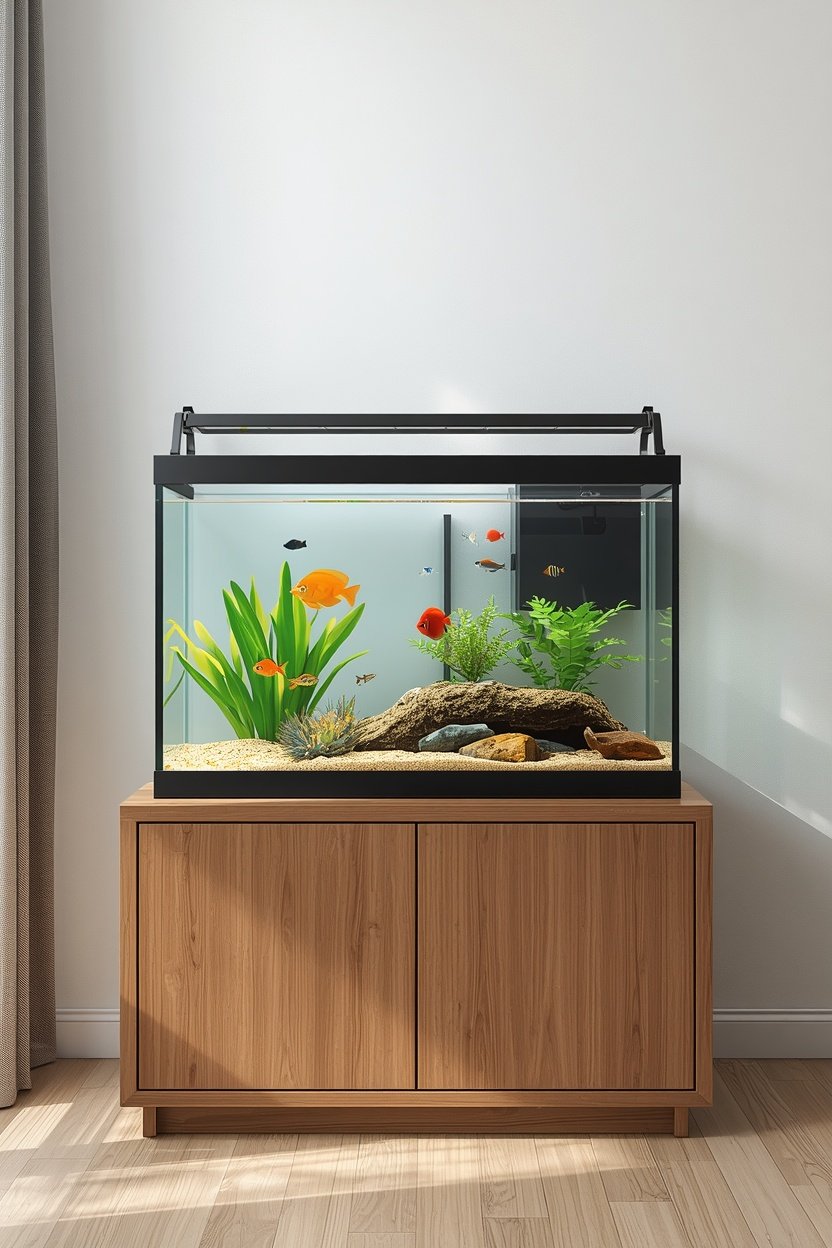
The standard rectangular glass tank is the default starting point for most beginners, and for good reason. Its simple, boxy shape is the most affordable to manufacture, the easiest to find replacement parts and accessories for, and the most forgiving when it comes to aquascaping, since a flat front and consistent depth make it simple to arrange hardscape and view your fish clearly from a single, predictable angle.
These tanks typically come with a plastic frame along the top and bottom edges, which adds structural support and gives manufacturers a place to integrate a hood, light fixture, or filter mount. While this frame isn't the sleekest look compared to newer rimless styles, it does make standard glass tanks some of the sturdiest, most budget-friendly options available, especially in larger sizes.
For a first tank, a standard rectangular glass aquarium remains the safest choice precisely because it's so common — accessories, replacement lids, and stands are all widely available and typically interchangeable across brands, which isn't always true for more specialized tank shapes.
2. Bow-Front and Curved-Glass Tanks
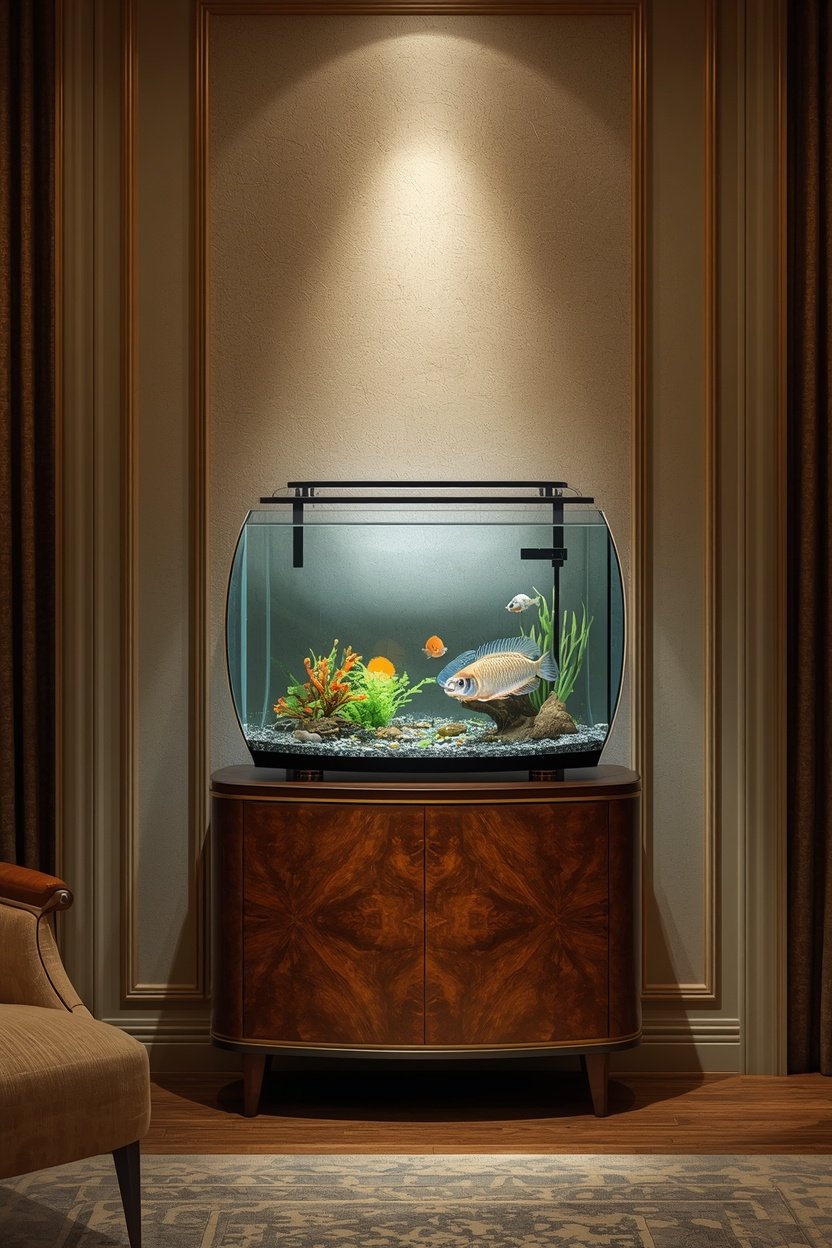
Bow-front tanks feature a gently curved front panel rather than a flat one, creating a wider viewing angle and a subtly different visual presence than a standard rectangular tank. The curve adds a small amount of extra water volume compared to a flat-front tank of the same footprint, and many hobbyists find the rounded silhouette reads as more elegant on furniture or built-in shelving.
This curved glass does introduce some visual distortion at the edges of the bow, which is worth knowing before choosing this style for a tank where precise aquascaping symmetry matters a great deal. For a display tank meant to be enjoyed casually rather than photographed for aquascaping competitions, this distortion is rarely a real problem in practice.
Bow-front tanks tend to cost somewhat more than an equivalent flat-front tank due to the more complex manufacturing process, making them a slightly more premium choice for hobbyists specifically drawn to their distinctive shape.
3. Nano and Pico Tanks
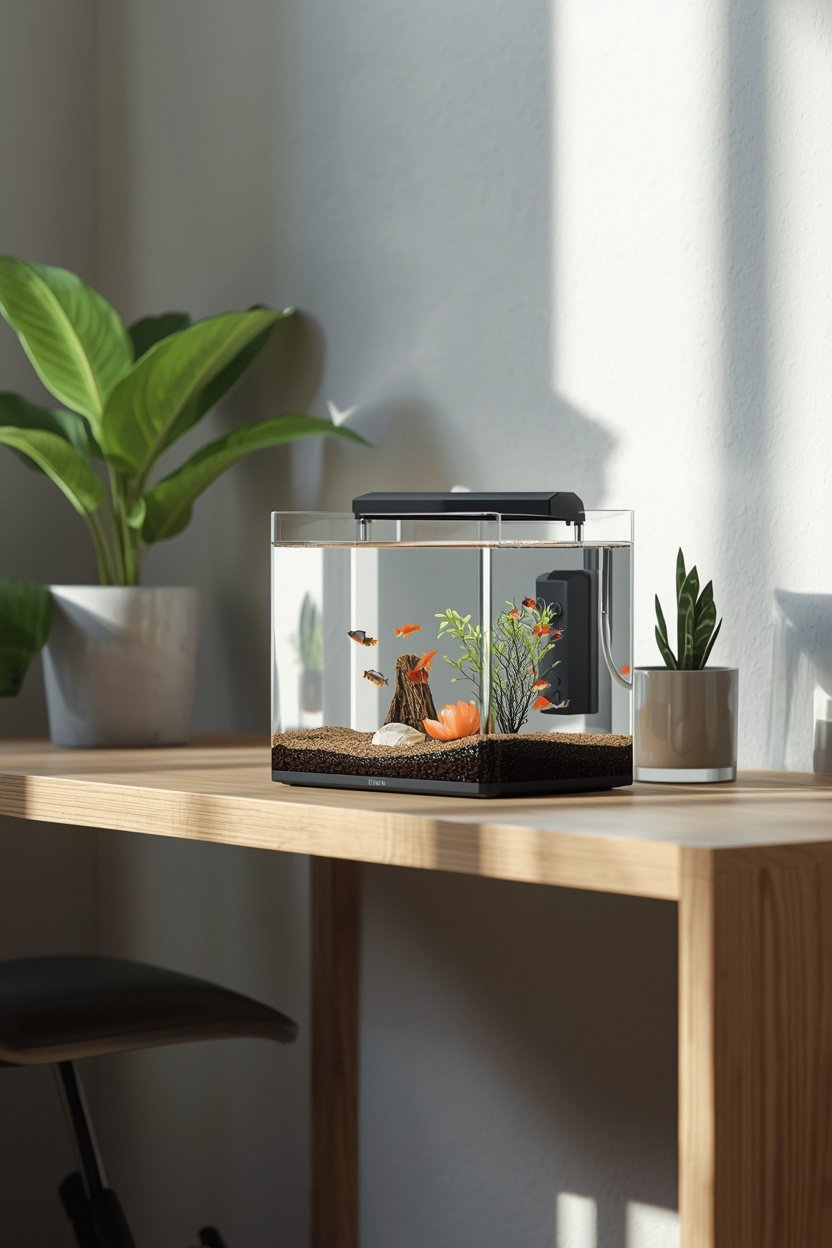
Nano tanks, generally defined as anything under about 10 gallons, and pico tanks, an even smaller subcategory often under 3 gallons, have grown dramatically in popularity as more hobbyists live in smaller homes or apartments. These compact tanks are well suited to desks, shelves, and other tight spaces where a full-size aquarium simply isn't practical.
The tradeoff for their small footprint is reduced stability — smaller water volumes shift temperature and water chemistry more quickly than larger tanks, meaning nano and pico setups generally require more frequent monitoring and smaller, more consistent maintenance routines to stay healthy. They also limit fish choice considerably, since only genuinely small, low-bioload species are appropriate for this scale.
Despite these added maintenance demands, nano and pico tanks remain hugely popular specifically because they make the aquarium hobby accessible to people who genuinely don't have room for anything larger, and modern nano-specific equipment has made successfully maintaining them considerably easier than it once was.
4. Rimless and Frameless Tanks
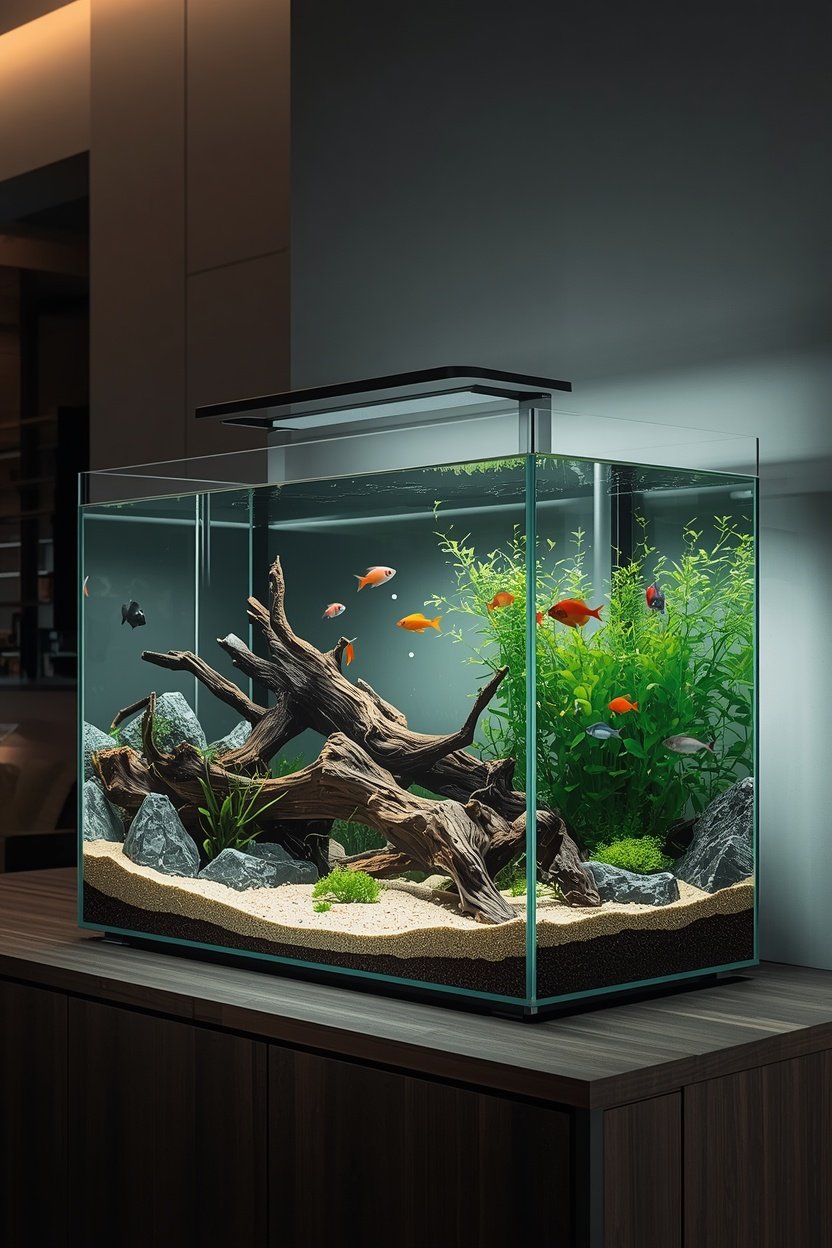
Rimless tanks remove the plastic trim found along the top and bottom of a standard aquarium, creating a cleaner, more seamless look with an unobstructed view of the water and aquascape inside. This style has become closely associated with modern, high-end aquascaping, since the absence of a visible frame lets hardscape and plants take center stage without any visual interruption.
Because there's no frame providing structural reinforcement at the top, rimless tanks are typically made from thicker glass than a standard framed aquarium of the same size, which adds both weight and cost. Many rimless tanks also lack a built-in hood, requiring a separately purchased lid or open-top setup, which is worth planning for before purchase.
This tank style suits hobbyists who prioritize a polished, minimal aesthetic and don't mind the slightly higher price point and the additional planning around lighting and lid options that a rimless design often requires.
5. Acrylic Tanks
Acrylic tanks offer a genuine material alternative to glass, and their main advantages are weight and impact resistance — acrylic is significantly lighter than an equivalent glass tank and far more resistant to cracking or shattering if bumped, making it a popular choice for very large tanks or households where extra durability matters, such as homes with active kids or pets.
The tradeoff is that acrylic scratches more easily than glass during routine cleaning, meaning algae scrapers and cleaning tools need to be chosen carefully to avoid leaving permanent marks on the tank's surface. Acrylic also tends to yellow slightly over many years of UV exposure, something glass doesn't experience in the same way.
For very large custom tanks, unusual shapes that would be difficult to achieve safely in glass, or situations where weight is a genuine concern, acrylic remains the go-to material, even though it requires a slightly different maintenance approach than the glass tanks most beginners start with.
Tips for Choosing Your First Tank Type
● Match tank type to your actual space. A rimless or nano tank suits a tight apartment far better than a large standard rectangular tank, regardless of which style you find more visually appealing.
● Consider your household's risk factors. Homes with young children or active pets may benefit from acrylic's added impact resistance over standard glass.
● Budget for the full setup, not just the tank. Rimless and bow-front tanks often require separately purchased lids or stands, which adds to the total cost beyond the tank itself.
● Start standard if you're genuinely unsure. A basic rectangular glass tank remains the most forgiving, widely supported choice for a true first-time aquarium owner.
Final Thoughts
There's no single "best" fish tank type — the right choice depends entirely on your space, budget, and priorities, whether that's affordability, a sleek modern look, compact size, or long-term durability. Standard rectangular tanks remain the most beginner-friendly default, while bow-front, nano, rimless, and acrylic options each solve for a more specific need. Understanding what genuinely separates these types makes it far easier to choose the one that will actually suit your home and your fishkeeping goals.
Frequently asked questions
Is glass or acrylic better for a first aquarium?
Glass is generally recommended for beginners due to its lower cost and scratch resistance during routine cleaning, while acrylic becomes more advantageous for very large tanks or households prioritizing impact resistance.
Do rimless tanks need special lighting?
Rimless tanks often lack a built-in hood or light fixture mount, so you'll typically need to purchase a separate clip-on or suspended light designed to work with an open-top or lidless setup.
What size tank is considered nano versus standard?
Most hobbyists consider anything under about 10 gallons a nano tank, with pico tanks referring to an even smaller subset typically under 3 gallons, while standard tanks generally start around 10 to 20 gallons and scale up from there.
