
When I got my first fish as a kid, it came home in a small round bowl, the way it had for generations before me. It wasn't until years later, after actually learning about fish biology and talking with more experienced keepers, that I understood why that classic bowl setup is now widely discouraged. A true unfiltered bowl lacks the oxygen exchange, stable temperature, and water quality control that fish genuinely need, and most fish kept this way live significantly shorter, more stressed lives than the same species in even a modest filtered tank.
This guide is built around giving you an honest answer rather than just a list that sounds appealing. That means covering what actually works in a small, bowl-style setup — properly equipped mini tanks and genuinely bowl-tolerant species — rather than pretending a true decorative bowl is a healthy long-term home for any fish. Each option below includes a detailed image prompt so you can visualize a properly set up version before choosing your own pet.
Why True Bowls Fall Short, According to Fishkeeping Experts
A classic round bowl has a small surface area relative to its water volume, which limits oxygen exchange, and without a filter, waste builds up quickly enough to stress or sicken most fish within weeks. Temperature also swings far more in an uninsulated, unheated bowl than in a proper tank, which is especially hard on tropical species. None of this means small containers are impossible — it means "bowl" really needs to mean a small, properly equipped setup, not the classic unfiltered version most people picture.
1. A Single Betta Fish in a Properly Filtered Mini Tank
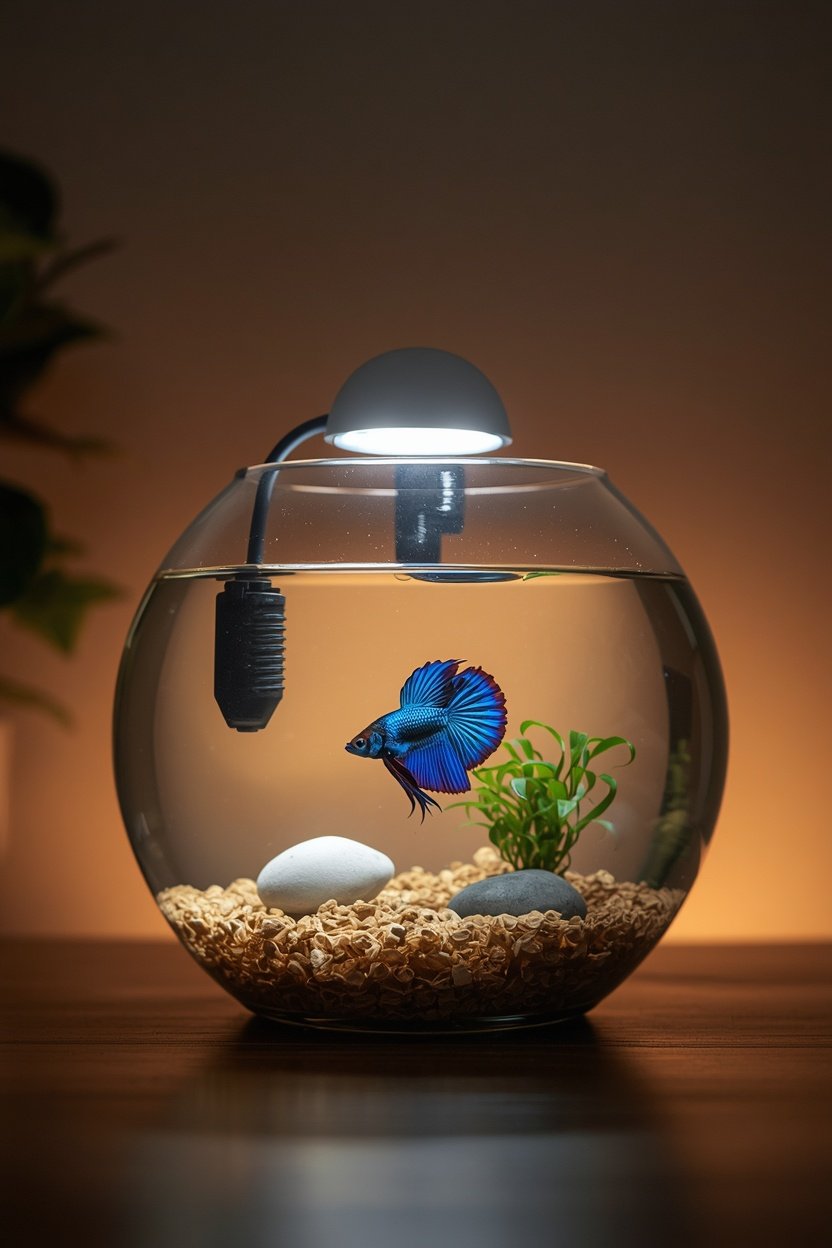
Bettas are the fish most people picture when they think of a bowl, largely due to decades of pet store marketing rather than any genuine suitability for bowl life. In reality, bettas do best in at least a 2-to-5-gallon container with a gentle filter and a small heater, since they're tropical fish that need stable warm water, not the room-temperature, unfiltered conditions a classic decorative bowl provides.
If you're drawn to the rounded, minimalist look of a bowl, a small rounded tank with a low-flow sponge filter tucked discreetly inside can achieve a very similar aesthetic while actually supporting a betta's real needs. Bettas tolerate gentle filtration well despite their reputation for preferring still water, since what they actually dislike is strong current, not filtration itself.
A betta kept this way, in a properly cycled, heated, lightly filtered small container, can live a genuinely healthy life, which is a very different outcome from the shortened lifespan and chronic stress common in true unfiltered bowls.
2. Nerite Snails for Easy, Bowl-Tolerant Care
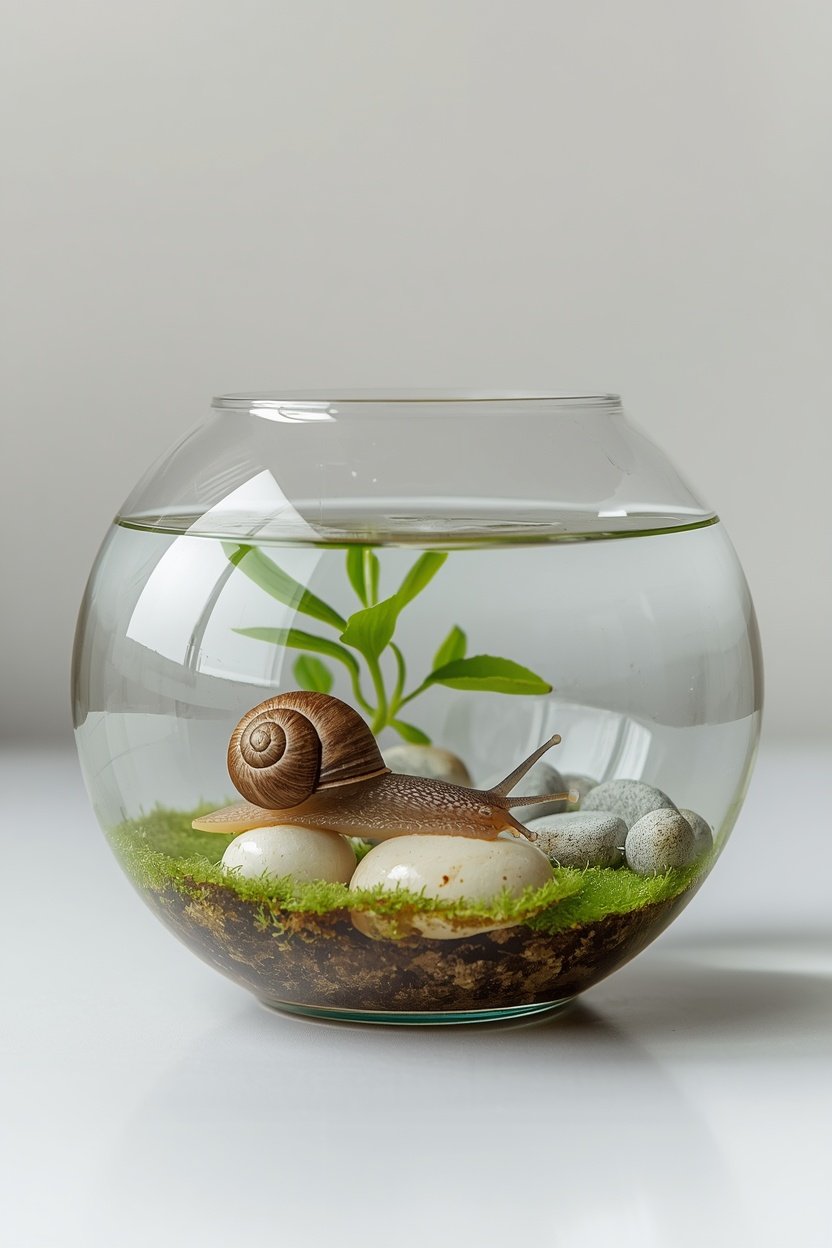
If a true low-maintenance, minimal-equipment bowl is really what you're after, nerite snails are one of the few aquatic animals genuinely better suited to that kind of simple setup than any fish. Their bioload is extremely low, they tolerate a wider range of conditions than most fish, and they're excellent algae grazers, keeping glass and decor naturally cleaner with very little intervention.
Even nerite snails do best with some water movement and regular partial water changes rather than being left entirely stagnant, so a small internal filter or even just consistent manual water changes still matters for their long-term health. They're not a completely "set it and forget it" option, but they come much closer to suiting a simple bowl than any fish realistically can.
One practical note: nerite snails are known escape artists and can climb right out of an open-top bowl, so a secure, well-fitted lid or consistently high water level well below the rim helps prevent your new snail from ending up on the counter.
3. Mystery Snails as Hardy Algae-Eating Companions
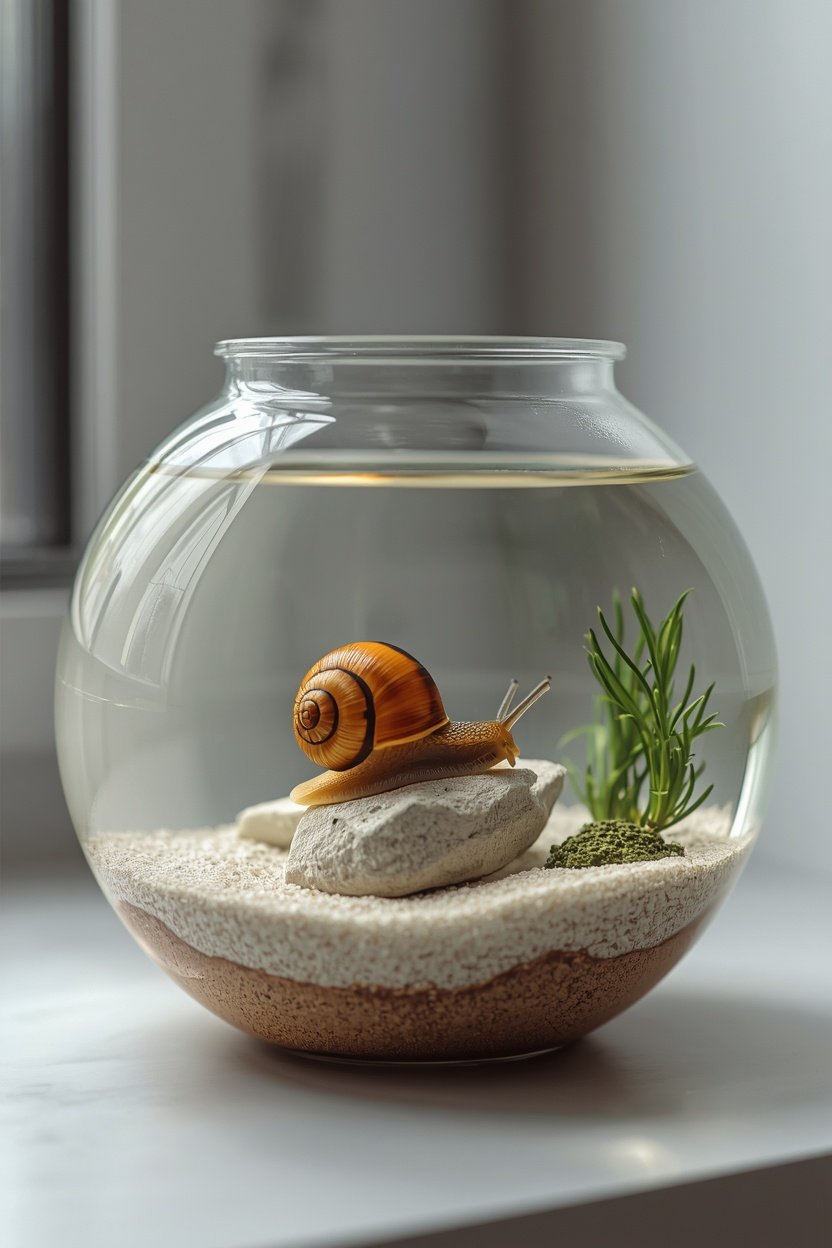
Mystery snails share many of the same bowl-tolerant qualities as nerites — low bioload, easygoing temperament, and a helpful appetite for algae — while also bringing a bit more personality and visible activity to a small setup. They're larger and more colorful than nerite snails, available in shades like gold, blue, and ivory, giving a simple bowl some genuine visual interest beyond just plain glass and water.
Like nerites, mystery snails still benefit from some filtration and regular water changes rather than a fully stagnant environment, and they periodically come up to the surface to breathe air through a siphon tube, which actually makes them somewhat more forgiving of lower oxygen conditions than most fish would tolerate.
A single mystery snail in a well-maintained, several-gallon bowl-style container, with regular partial water changes and occasional algae wafers to supplement natural grazing, represents one of the more genuinely low-stress options for anyone specifically wanting a simple, minimal-equipment aquatic pet.
4. A Small Cherry Shrimp Colony for a Dwarf Setup
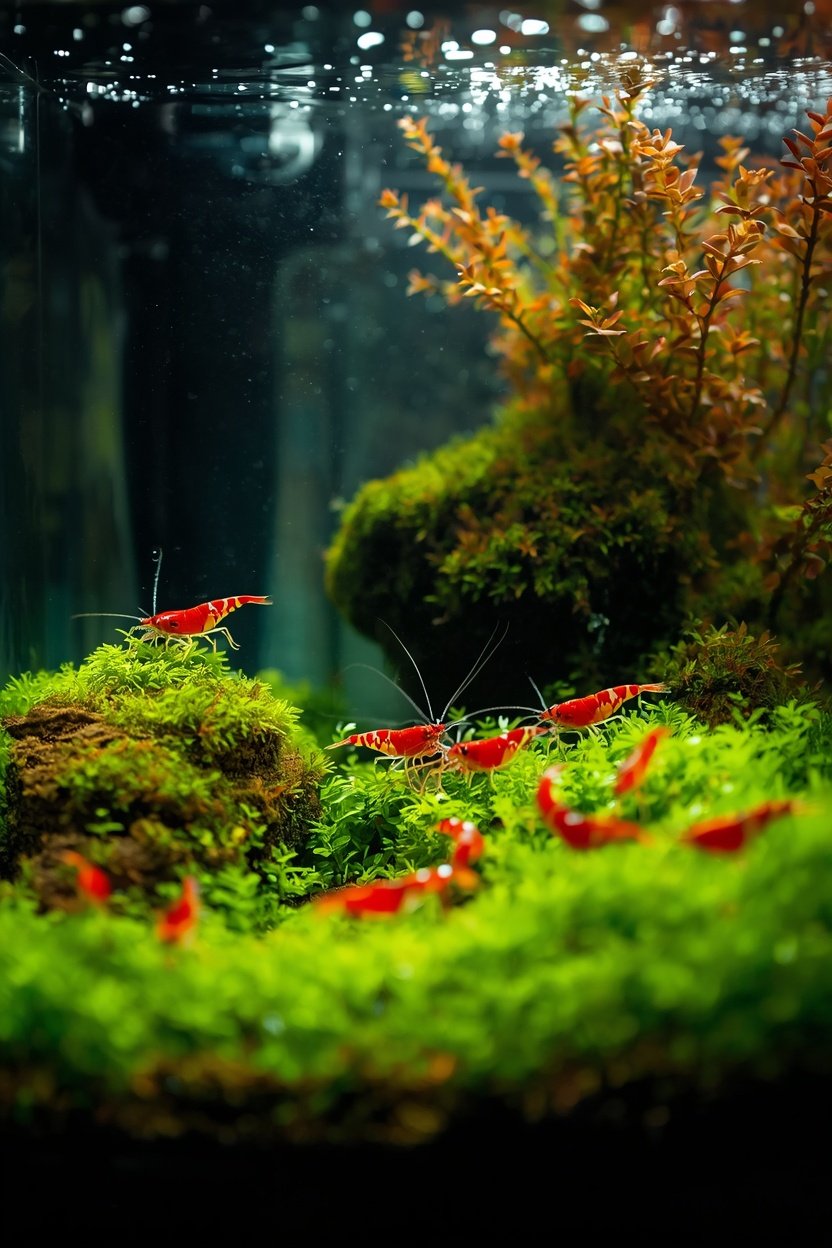
Cherry shrimp, thanks to their tiny size and correspondingly tiny bioload, can genuinely thrive in a smaller container than almost any fish, provided the water is cycled and reasonably stable rather than a true stagnant, unfiltered bowl. A small group of five or more cherry shrimp in a 2-to-3-gallon planted container, with a gentle sponge filter, creates a lively, constantly active little ecosystem rather than a single, often listless fish.
Dense moss or a few live plants give shrimp plenty to graze on throughout the day, and because they're colony animals rather than solitary fish, watching a small group forage and interact adds considerably more movement and interest to a small setup than a single isolated pet typically does.
This option does still require basic cycling and consistent water quality to succeed, so it's not a true zero-maintenance choice, but among small-container options, a cherry shrimp colony offers one of the best balances of visual interest, activity, and genuine suitability to a compact space.
Minimum Requirements for Any Small Bowl-Style Setup
- Cycle the water before adding any pet. A few weeks of fishless cycling establishes the beneficial bacteria needed to safely process waste, even in a small container.
- Include some form of filtration. Even a small sponge or internal filter dramatically improves water quality compared to a completely stagnant bowl.
- Check temperature needs for your chosen species. Tropical species like bettas need a small heater, since room temperature alone is rarely stable or warm enough.
- Commit to frequent partial water changes. Smaller water volumes concentrate waste faster, so more frequent changes are necessary than in a larger tank.
Final Thoughts
The honest answer to "what fish works in a bowl" is that almost nothing thrives in a true, unfiltered, unheated bowl long-term — but a properly equipped small tank, styled to look like a simple bowl, can support a betta beautifully, and genuinely low-bioload species like nerite snails, mystery snails, or a small cherry shrimp colony come even closer to suiting a minimal setup. Choosing any of these options with real cycling, filtration, and consistent care gives you the simple, charming aesthetic you're after without compromising your pet's actual wellbeing.
Frequently asked questions
Can goldfish live in a bowl?
No — goldfish produce significant waste and grow quite large, making them one of the least suitable choices for any small or unfiltered container, despite being historically associated with bowls.
What's the smallest humane tank size for a betta fish?
Most current care guidelines recommend at least 2 to 5 gallons with filtration and heating for a betta, rather than the much smaller unfiltered bowls historically marketed for them.
Do snails and shrimp really need a filter at all?
While they tolerate lower-tech setups better than most fish, snails and shrimp still benefit significantly from some filtration and regular water changes, rather than a fully stagnant, zero-maintenance environment.
