
Searching "fish tank decor ideas" usually turns up an overwhelming scroll of individual photos, with no clear sense of where to actually start. When I set up my first tank, that's exactly the position I was in — plenty of inspiration, but no real understanding of how substrate, hardscape, plants, and lighting actually work together to create a cohesive look rather than a random collection of pretty objects.
This guide breaks decorating down into the four categories every aquarium is ultimately built from, giving you a clear framework to work through rather than an endless list of disconnected ideas. Each category includes a detailed image prompt so you can visualize the concept before shopping for your own tank.
Why Thinking in Categories Beats Browsing Random Ideas
Scrolling through hundreds of individual decor photos can actually make decorating harder, not easier, since it's difficult to tell which elements are doing the real visual work in any given tank. Breaking decor down into substrate, hardscape, plants, and lighting gives you a repeatable framework — one you can apply to any style, from a simple beginner tank to a more ambitious aquascape, without needing to copy someone else's exact layout.
1. Substrate and Background: The Foundation of Every Tank
Before any ornament or plant goes in, substrate and background quietly shape the entire mood of an aquarium. Gravel comes in natural earth tones as well as brighter dyed colors, while sand offers a smoother, more minimal look that many newer hobbyists find easier to keep clean. Neither choice is objectively correct — it mostly comes down to the overall style you're going for and which substrate suits your fish species, since some bottom-dwellers genuinely prefer soft sand over sharper gravel.
Backgrounds matter more than many beginners expect. A plain black or dark blue sheet on the outside of the back glass instantly makes colors inside the tank look richer, while a printed rock or plant-style background adds a sense of depth without any extra work inside the tank itself. Whichever option you choose, picking it early means every other decoration you add will automatically feel more coordinated, since it's being layered onto a foundation chosen with the whole tank in mind.
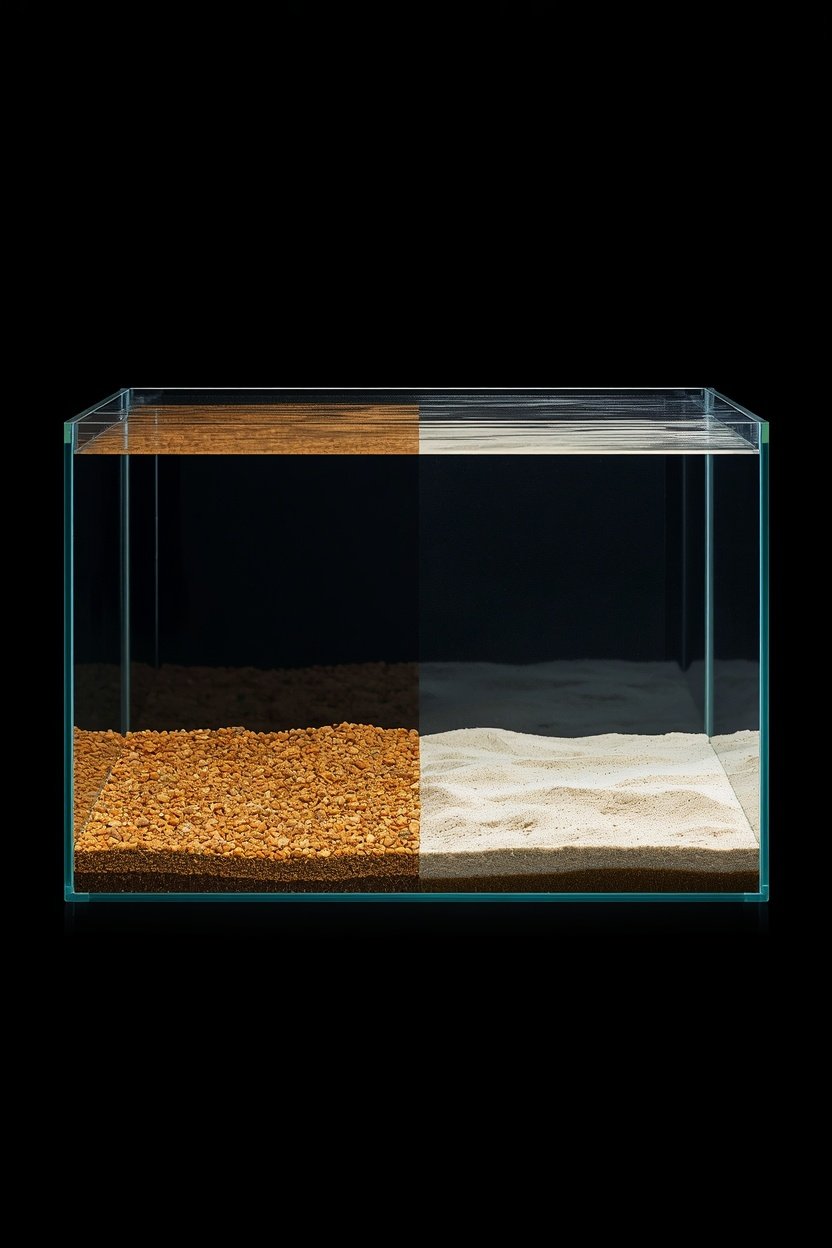
2. Hardscape: Driftwood and Rock Give the Tank Structure
Once the base layer is down, hardscape is where a tank starts to take on real personality. Driftwood ranges from thin, branching spider wood to thick, weathered logs, and each shape creates a different feeling — delicate and airy versus bold and grounded. Rock offers a similar range, from smooth river stone to jagged, dramatic formations, and mixing too many different rock types in one tank is one of the most common beginner mistakes, since it can quickly start to look cluttered rather than intentional.
A good general rule is choosing one dominant hardscape material and letting it do most of the visual work, rather than splitting attention evenly between driftwood and rock. Position your chosen piece slightly off-center instead of directly in the middle of the tank, which tends to look more natural and considered than a perfectly symmetrical placement. This single decision — one strong piece, placed thoughtfully — often does more for a tank's overall look than a dozen smaller ornaments combined.
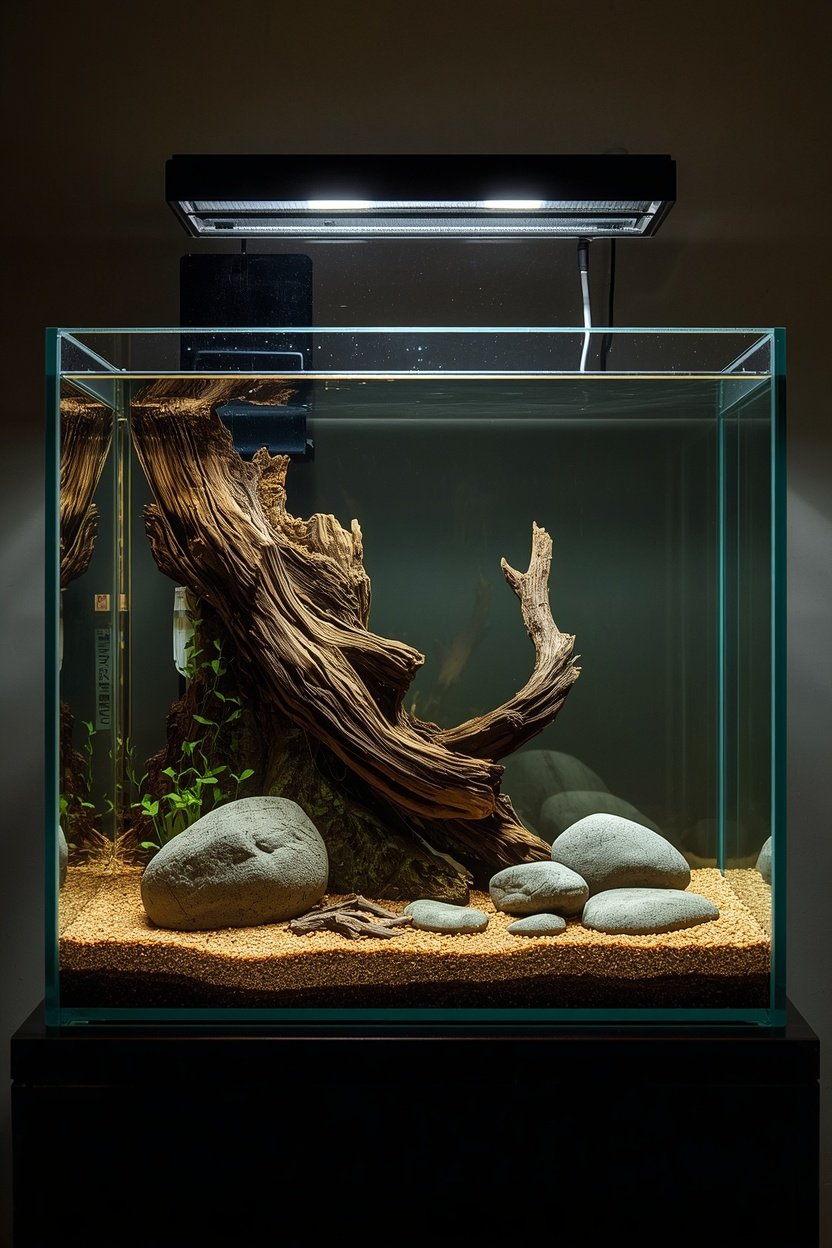
3. Plants: Bringing the Tank to Life
Whether live or artificial, plants are what transform a decorated box of water into something that genuinely feels alive. Live plants like java fern, anubias, and java moss are popular beginner choices because they tolerate a wide range of lighting and water conditions, while also helping absorb excess nutrients that might otherwise fuel algae growth. Artificial plants, meanwhile, offer zero-maintenance color and texture, which can be a perfectly reasonable choice for anyone not ready to manage live plant care yet.
A simple layering principle works well regardless of which type you choose: shorter plants toward the front of the tank, taller ones toward the back, which mirrors how garden landscaping creates depth and keeps the whole scene easy to view at a glance. Even just two or three well-placed plants can noticeably soften a tank's overall look, filling in the visual gaps between hardscape and substrate with a bit of natural movement and color.
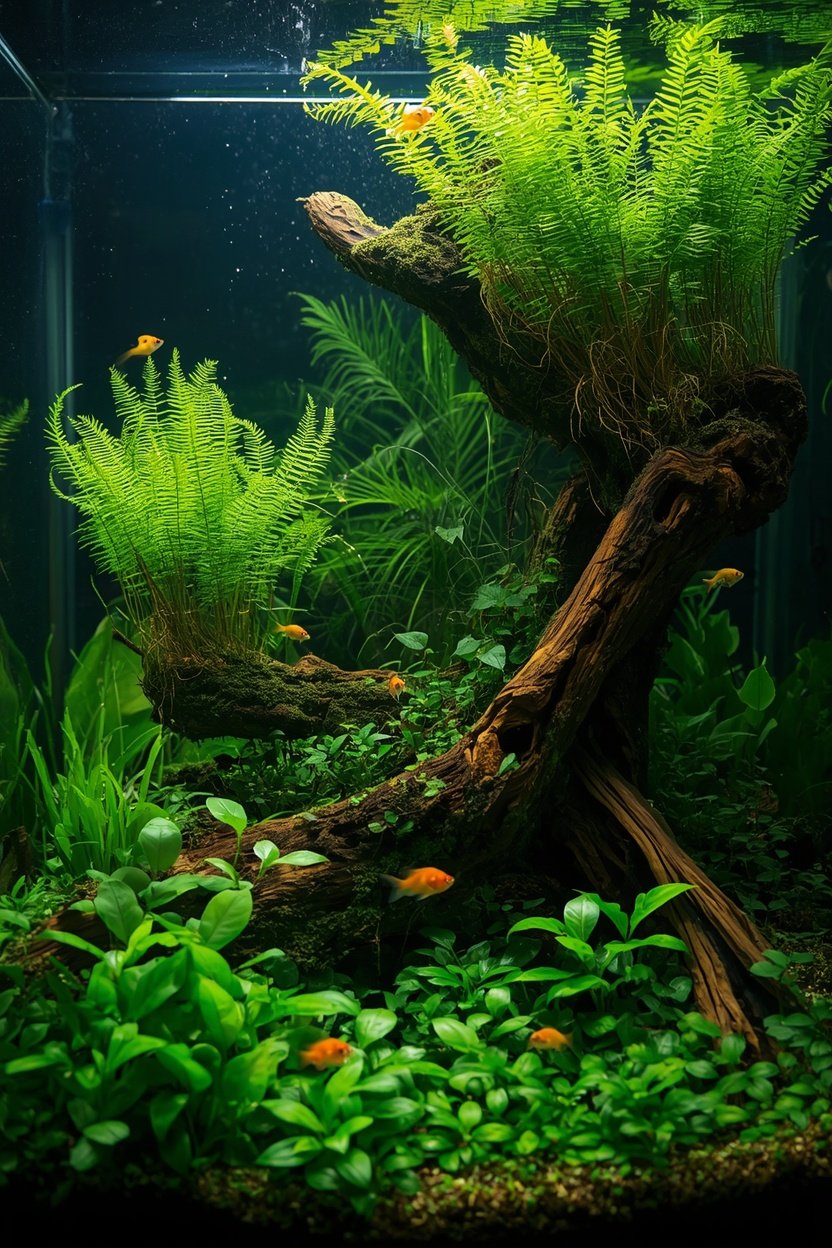
4. Lighting and Ornaments: The Finishing Touches
Lighting does more than just let you see your fish — it fundamentally changes how every other decor choice reads inside the tank. A warm white light flatters driftwood and earthy substrate tones, while a cooler blue-white setting tends to make blues and greens pop more vividly. Many modern aquarium lights also include adjustable color settings or a built-in timer, making it easy to experiment with different moods throughout the day without needing separate equipment.
Ornaments are the most personal layer of any tank's decor, whether that's a single meaningful statement piece or a small cluster of items that reflect your own taste. The most common mistake here is simply adding too many at once, which can overwhelm a layout that was otherwise carefully built up through substrate, hardscape, and plants. Treat ornaments as the final accent rather than the main event, and your tank will likely end up looking more considered than one built around ornaments from the very start.
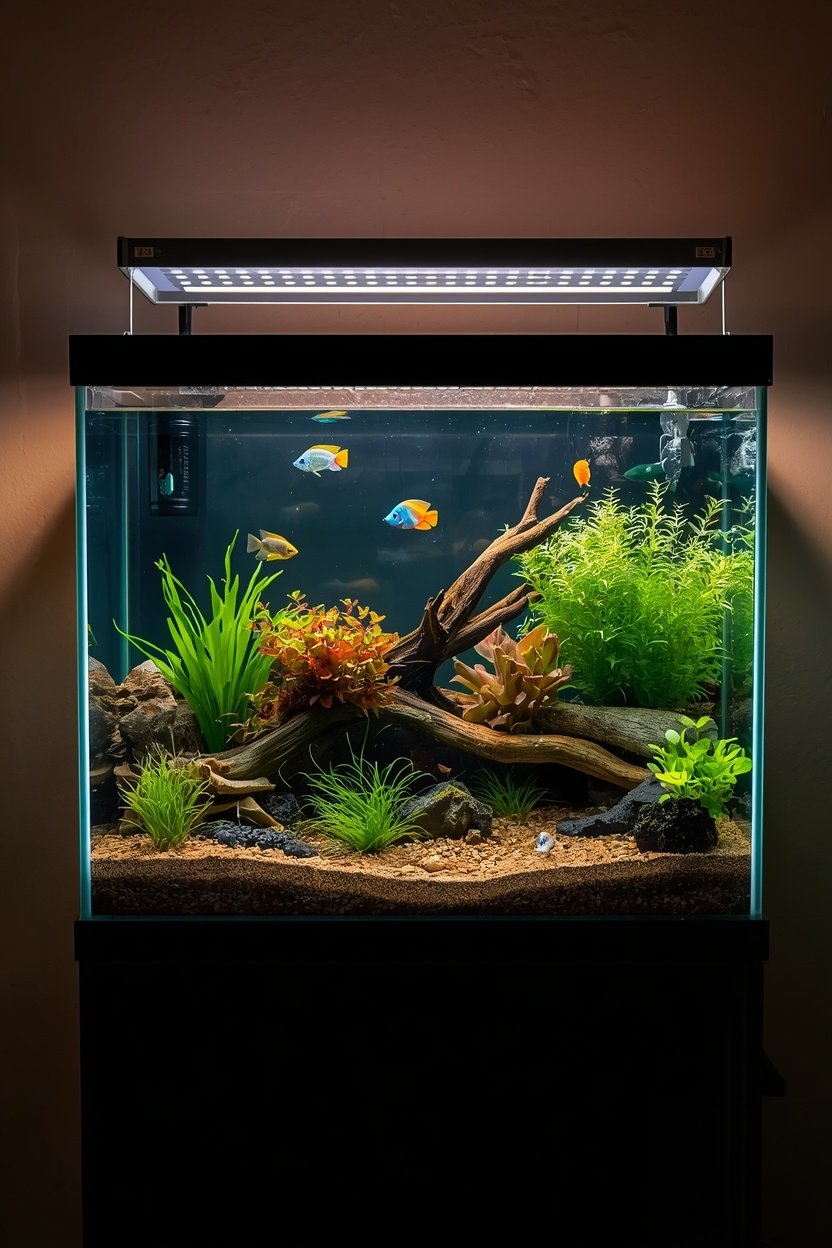
Quick Tips for Combining These Four Categories
- Work through the categories in order. Substrate and background first, then hardscape, then plants, then lighting and ornaments — each layer builds more naturally on the one before it.
- Pick a consistent color story. Warm earth tones or cool neutrals, carried across all four categories, tie a tank together far more than any single standout piece.
- Don't finalize every category at once. It's fine to start simple and add plants or ornaments later as you get more comfortable with maintenance.
- Step back and look at the whole tank regularly. What looks good up close while decorating doesn't always read the same way from across the room — check your progress from a normal viewing distance.
Final Thoughts
Great aquarium decor isn't about finding one perfect photo to copy — it's about understanding how substrate, hardscape, plants, and lighting work together as a system. Once you see decorating as four manageable categories rather than one overwhelming task, building a tank you're genuinely proud of becomes a lot more approachable, whether this is your first aquarium or your fifth.
Frequently asked questions
Which decor category should a beginner focus on first?
Substrate and background are worth settling first, since they form the visual base everything else sits on top of, making later decisions about hardscape and plants considerably easier.
Is it okay to mix live and artificial plants?
Yes, many hobbyists combine both, using hardy live plants where lighting supports them and artificial plants to fill in gaps or add color in lower-light areas of the tank.
How many ornaments is too many for a beginner tank?
If ornaments start to block open swimming space or make routine cleaning difficult, it's generally a sign to scale back — a few well-chosen pieces almost always look better than many competing ones.
