
A glass tank filled with moss, ferns, and a tiny winding path looks like a pocket-sized forest. That is the charm of a fish tank terrarium. You do not need a greenhouse or a big garden. A spare aquarium, a few simple layers, and some patience are enough to grow a small living world on a shelf or desk. This guide explains what a fish tank terrarium is, what to buy, how to build one in clear steps, and four decor ideas you can copy today.
What Is a Fish Tank Terrarium?
The phrase covers two related setups. The first is a land-only terrarium, where an empty aquarium holds soil, plants, and decor instead of water. The second is a paludarium, which keeps part of the tank as water and part as land, so small fish or shrimp can live beside your plants. Both use the same glass box. The only difference is whether you add water and animals. If you are new, start with the land-only version. It costs less, takes less time, and forgives mistakes.
Why Use a Fish Tank for a Terrarium?
• Great glass: clear walls show every layer and hold humidity well.
• Easy to find: common sizes such as 10 or 20 gallons are sold secondhand, and a tank you have retired from fish keeping gets a second life.
• Wide opening: you can reach in to plant, prune, and rearrange.
• Room to design: the roomy footprint fits hills, paths, and a proper background.
What You Need Before You Start
• A clean glass tank, rinsed with plain warm water only. Soap and strong cleaners leave residue that can harm plants and animals.
• A lid or glass cover with a little ventilation.
• Drainage material such as small pebbles, clay balls, or lava rock.
• A mesh divider, such as fiberglass window screen, and a thin dusting of activated charcoal.
• A fertilizer-free potting mix blended with perlite or coarse sand.
• Humidity-loving plants such as ferns, fittonia, peperomia, pothos cuttings, and sheet moss.
• Washed driftwood, smooth rocks, or cork bark for structure.
• A full-spectrum LED light, a spray bottle, and long tweezers.
Choosing the Right Plants and Light
Match every plant to the same environment. Ferns, moss, and fittonia like steady moisture and gentle light, so they belong together in a closed tank. Succulents want dry soil and bright light, so keep them in a separate open tank. Mixing the two usually ends with one group struggling. Place the tallest plant where the light is strongest, and leave a little space between leaves so air can move. Buy small starter plants, since they adapt faster and leave room to grow.
How to Build a Fish Tank Terrarium in 7 Simple Steps
1. Set up the spot. Wipe the glass clean and place the tank on a sturdy surface away from direct sun, which can overheat the glass and stress the roots. Soil and water add real weight.
2. Add drainage. Spread 1 to 2 inches of pebbles or clay balls across the base so extra water has somewhere to go besides the roots.
3. Lay the barrier. Cut the mesh to size, place it over the drainage layer, and dust a thin layer of charcoal on top to keep the mix fresher.
4. Pour in the soil. Add 2 to 3 inches of damp, not soggy, mix. Shape gentle slopes because hills look natural and create depth.
5. Place the hardscape. Set wood and rocks first and press them firmly into the soil so they do not shift later.
6. Plant from tall to short. Begin with the largest plant off-center, fill in the middle, then finish with moss at the front. Loosen roots lightly and firm the soil around each one.
7. Water and watch. Mist until the soil looks damp, then add the lid. A little fog on the glass is normal. Heavy dripping means the lid should come off for a few hours.
4 Fish Tank Terrarium Decor Ideas for Beginners
Once the basics are in place, decor gives your tank its personality. Under each idea you will find a polished image creation prompt you can paste into your favorite AI image tool to preview the look.
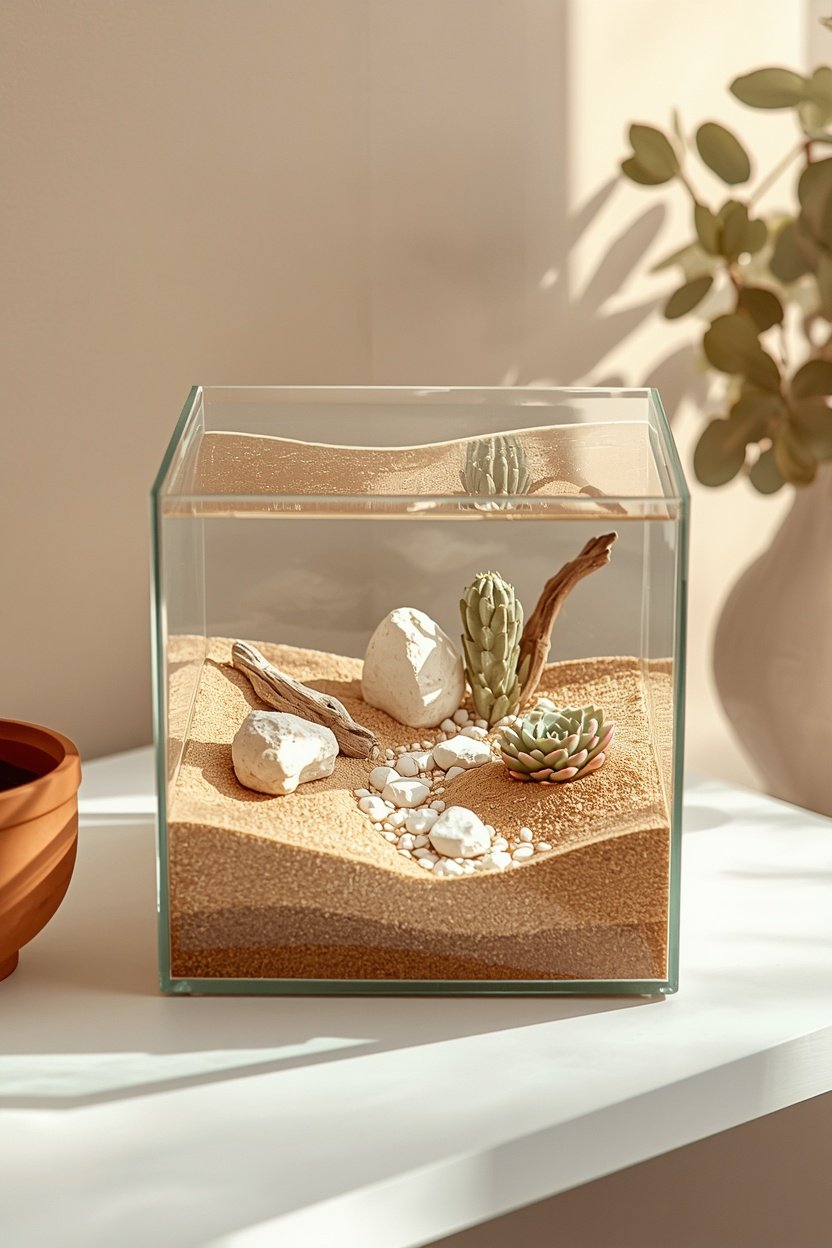
Idea 2: Desert Succulent Scene
Not every tank needs humidity. Swap the soil for a gritty cactus mix, add patches of sand and pale rocks, then plant a few small succulents. Leave the top open for airflow, give the plants bright light, and water only when the mix feels dry deep down.
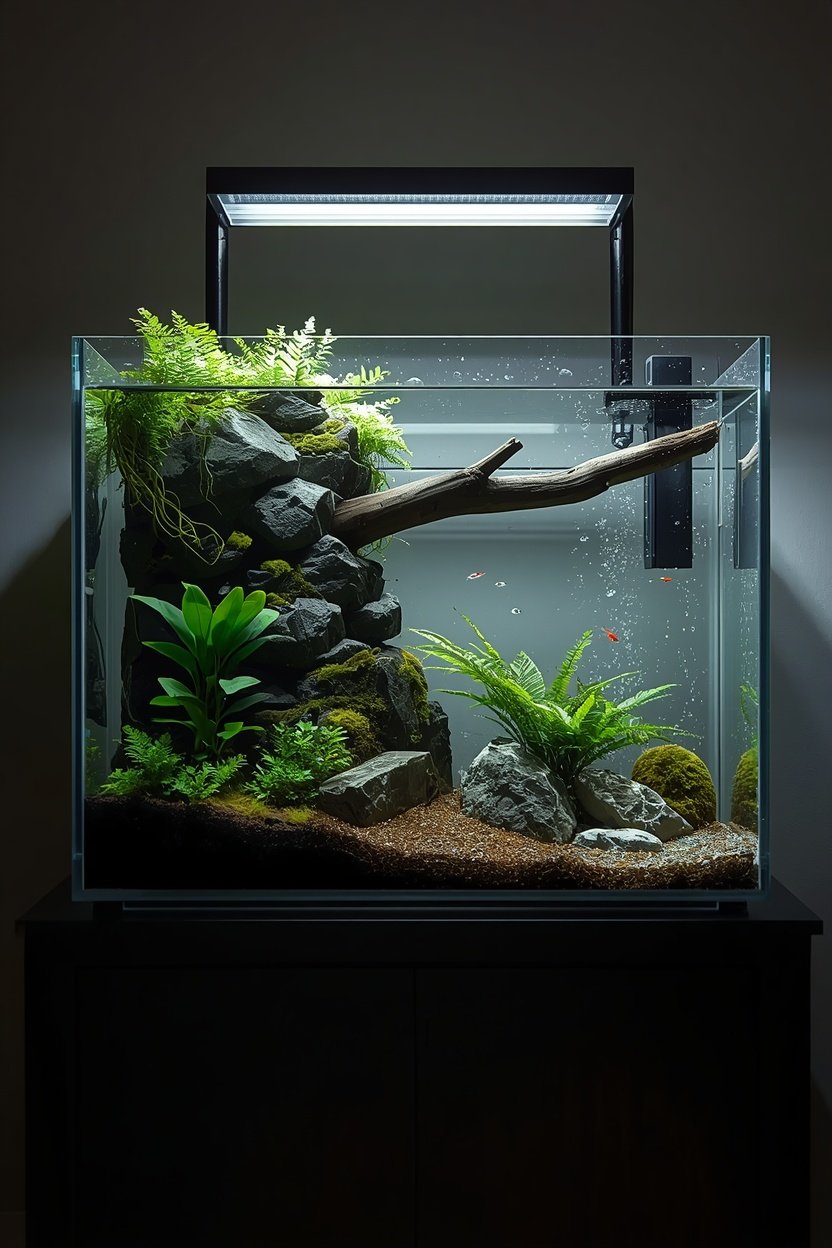
Idea 3: Half-Water Paludarium
Split the tank with a stacked-rock wall or a slanted piece of wood. Fill one side with dechlorinated water for small, peaceful fish or shrimp, and keep the other side planted. Java fern thrives where its roots touch both worlds. Use a snug lid with a small gap, because many fish jump.
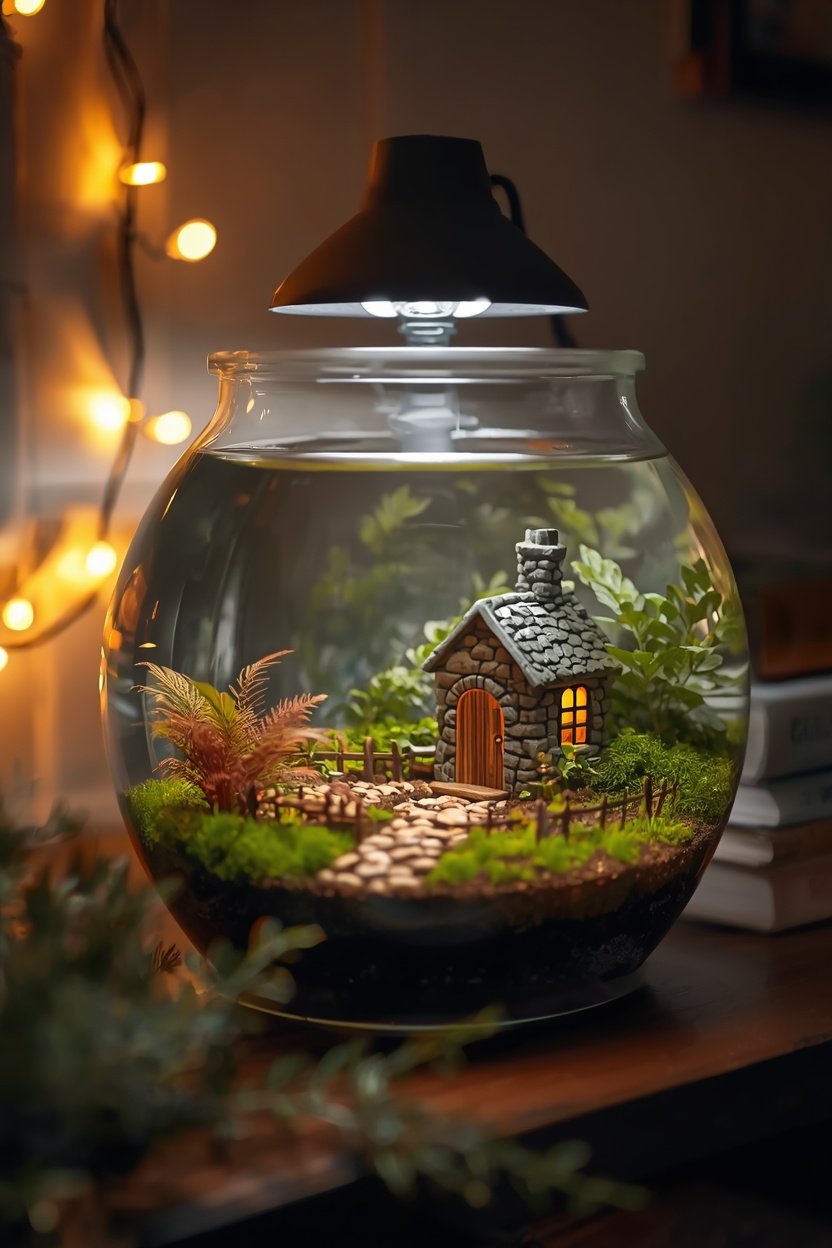
Idea 4: Tiny Cottage Garden
Build a small village scene with a miniature cottage, a pebble path, and low creeping fittonia. Warm white LED strips make it glow in the evening. Pick ceramic or resin ornaments and keep them small so the plants never look crowded.
Open vs. Closed Terrarium: Quick Comparison
Feature | Closed Terrarium | Open Terrarium |
Humidity | High and steady | Low to moderate |
Best plants | Ferns, moss, fittonia | Succulents, haworthia, small cacti |
Watering | Rarely, mist lightly | Occasionally, deep and slow |
Beginner level | Easy once balanced | Very easy |
Simple Care Routine
• Check the soil weekly. Press a finger in; mist only if the top feels dry.
• Trim promptly. Pinch off yellow leaves before they turn into mold.
• Use a light timer. Aim for 6 to 8 hours a day of LED light.
• Let it breathe. If the glass stays foggy all day, crack the lid for an hour.
• Wipe the glass monthly with a damp cloth to keep the view clear.
• Paludarium owners: do small water changes with dechlorinated water and feed fish lightly.
Beginner Mistakes to Avoid Overwatering is the top cause of failure, followed by direct sunlight and crowded planting. Always rinse rocks and wood before use, and let the water side settle and clear before adding any fish. |
