
The first time I saw a proper paludarium — a tank with a genuine land section rising out of the water, covered in real growing plants — I assumed it had to be some kind of specialty, expensive setup way beyond a standard aquarium hobbyist's reach. It turns out hybrid fish tank terrariums come in several distinct styles, ranging from fairly simple riparium planting to full bioactive ecosystems, with a genuine entry point for almost any skill level.
These four ideas each take the "fish tank terrarium" concept in a different direction, from a classic half-and-half paludarium to a more water-focused riparium and a land-dominant vivarium. Each idea includes a detailed image prompt so you can visualize the finished build before gathering materials.
Understanding the Hybrid Tank Spectrum
Hybrid fish tank terrariums exist on a spectrum from almost entirely aquatic to almost entirely terrestrial, with specific names — riparium, paludarium, vivarium — generally describing roughly where a given build falls along that range. Understanding this spectrum before starting helps clarify which style actually matches your goals, whether that's primarily a fish habitat with some land accents or a genuine terrarium with a small water feature.
1. The Classic Half-Water, Half-Land Paludarium
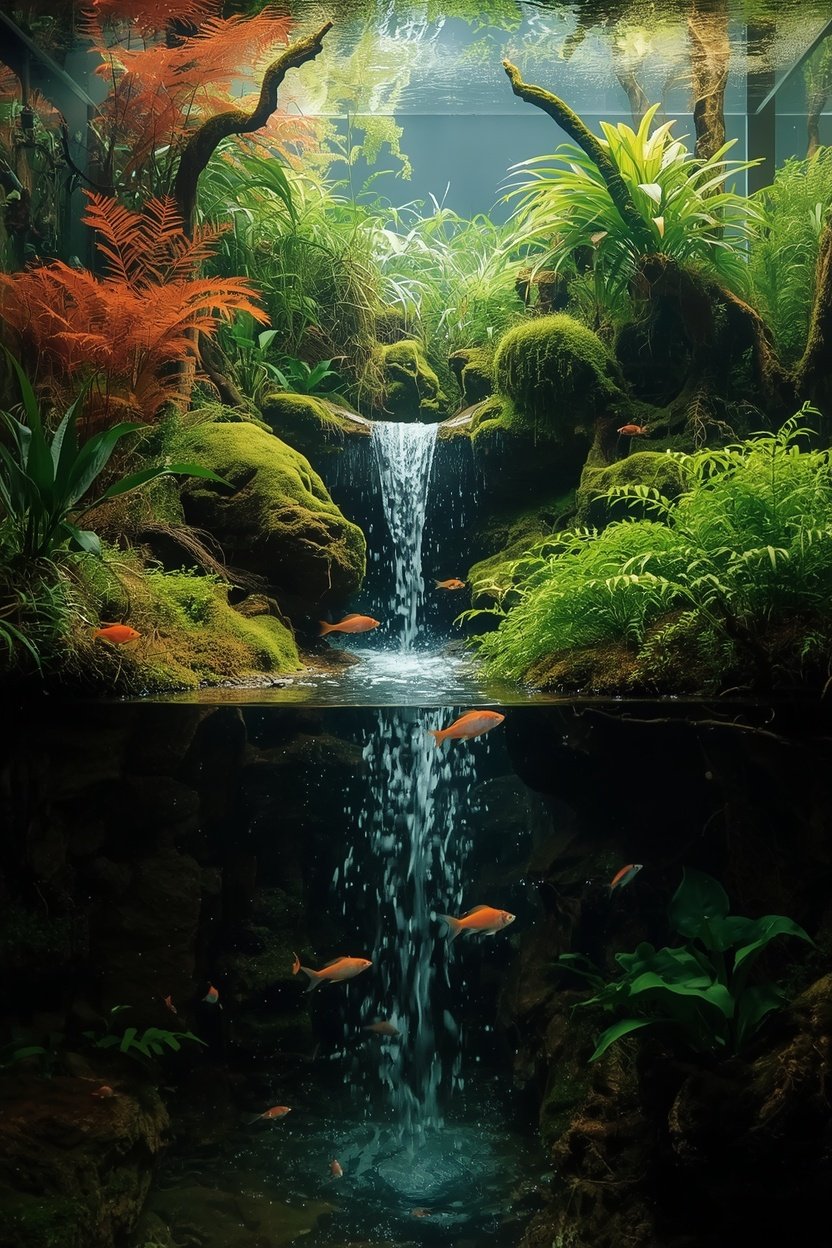
A paludarium splits the tank roughly evenly between a water section and a raised land area, letting you keep fish or shrimp below while growing genuine terrestrial plants like pothos, ferns, or small tropical species above the waterline. This is the setup most people picture when they imagine a "fish tank terrarium," and it offers the most visually dramatic contrast between the two environments.
Build the land section using an egg-crate platform raised above the water, covered with a layer of sphagnum moss and a terrestrial substrate blend, which keeps the land area well-draining while still staying close enough to the water for ambient humidity to support the plants above. A small internal waterfall or gentle slope between the two zones helps tie the land and water together visually, rather than leaving a hard, abrupt boundary between them.
This style works best with fish or shrimp that tolerate a bit of extra humidity and don't need a fully sealed top, since paludariums typically stay more open than standard aquariums to support the terrestrial plants' access to air and light.
2. The Riparium Bank-Style Planted Edge
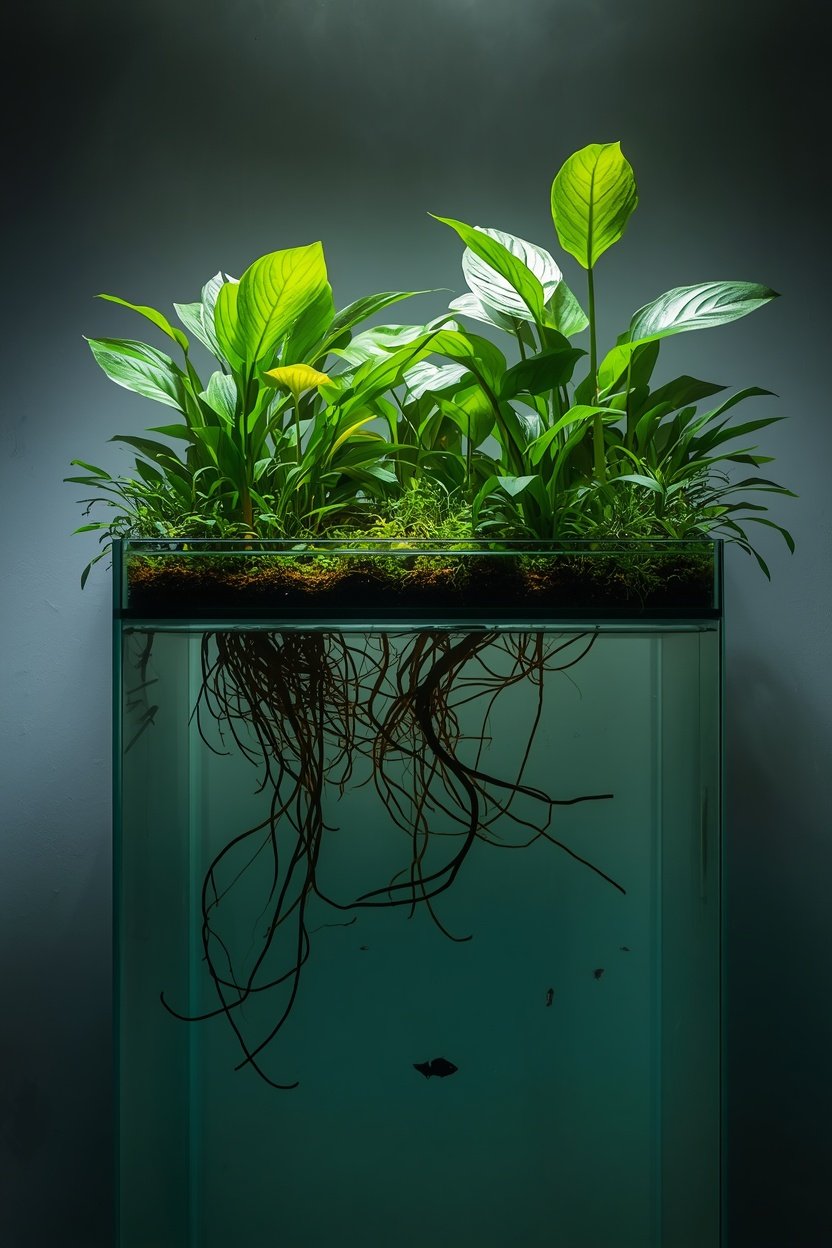
A riparium takes a subtler approach than a full paludarium, keeping the tank almost entirely water-filled but growing emergent plants along the rim or a narrow planted shelf that rises just above the waterline. Rather than a dramatic land mass, this style focuses on plants with roots submerged in water but stems and leaves growing up into the open air, mimicking a natural riverbank or stream edge.
Pothos, peace lilies, and other common houseplants adapt surprisingly well to riparium-style root submersion, with their roots drawing nutrients directly from the aquarium water while their leaves grow entirely above it. This creates a natural filtration benefit alongside the visual effect, since the plants actively absorb nitrates from the water as part of their normal growth.
Because most of the tank remains fully aquatic in this style, it suits a much wider range of standard aquarium fish than a full paludarium does, making it one of the more beginner-accessible hybrid setups on this list despite its sophisticated finished look.
3. The Vivarium Waterfall Feature
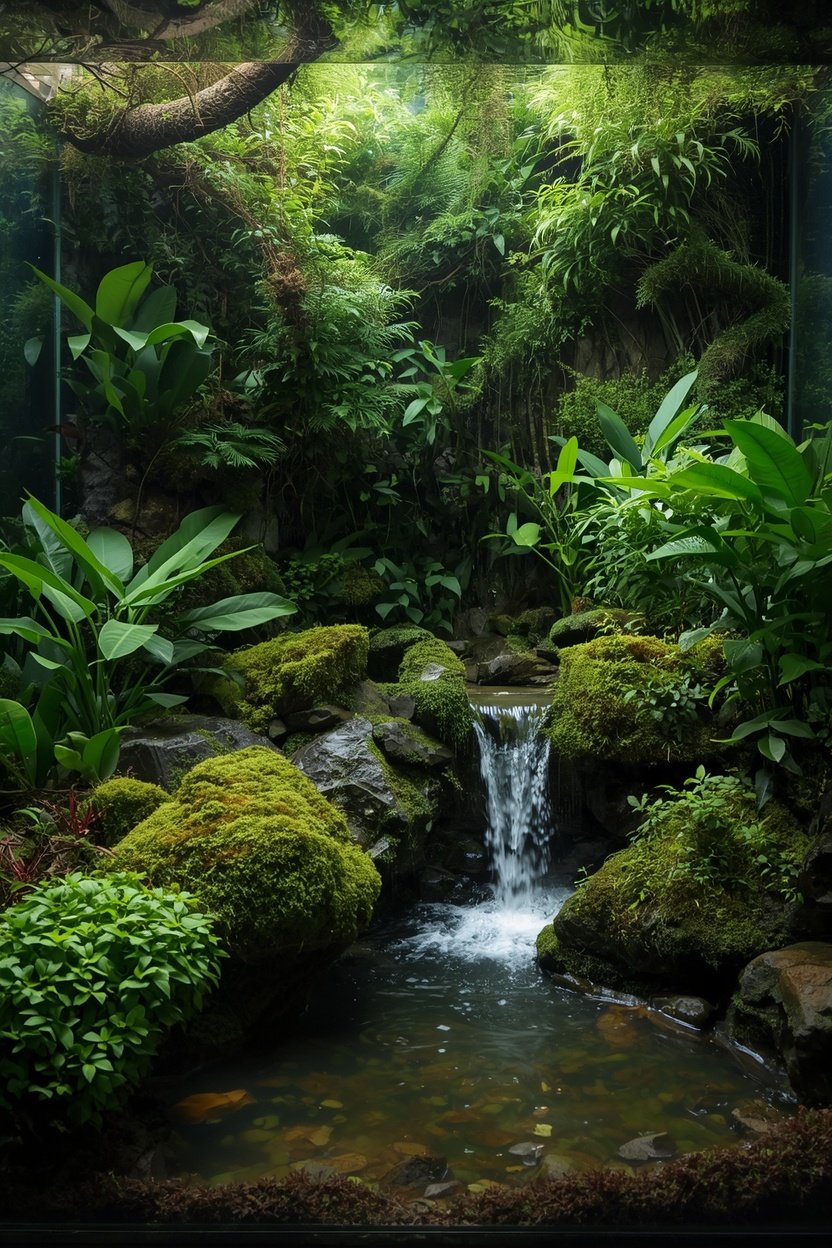
This style flips the typical ratio, dedicating most of the tank to a lush, land-focused terrarium with only a small pond or water feature tucked into one section, often fed by a recirculating waterfall. Rather than being built primarily for fish, this setup usually centers on terrestrial plants, moss, and sometimes small amphibians or invertebrates, with the water feature serving as an accent rather than the main habitat.
A small recirculating pump moves water from the pond up to an elevated point, where it trickles back down over rocks or moss-covered surfaces, creating both a calming visual element and genuine humidity for the surrounding terrestrial plants. If fish are included at all, they're typically limited to very small, hardy species suited to the pond's modest size.
This idea suits anyone more drawn to lush greenery and the sound of moving water than to fish-keeping specifically, offering most of a traditional terrarium's plant-focused appeal with the added dimension a water feature brings to the overall display.
4. The Bioactive Terrarium-Aquarium with a Clean-Up Crew
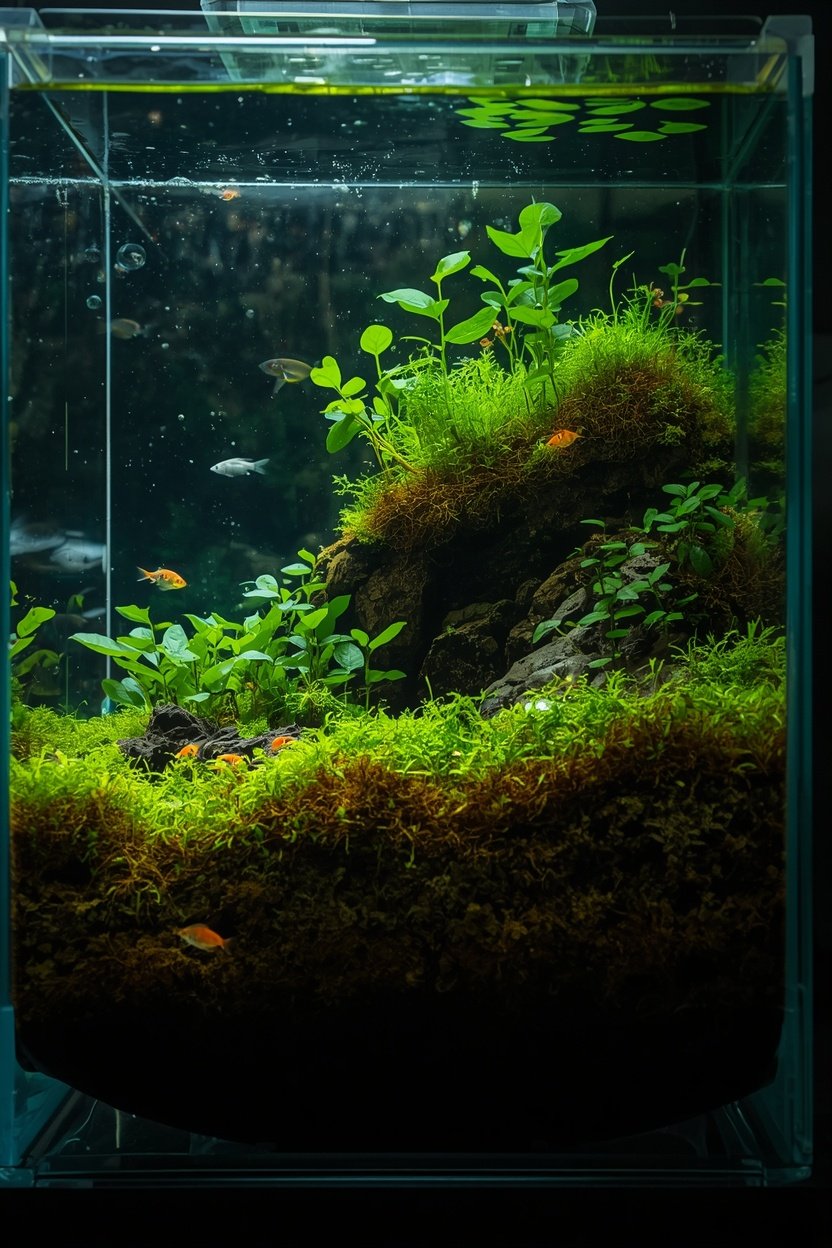
This style borrows from the bioactive terrarium movement, incorporating a living clean-up crew of isopods and springtails into the terrestrial portion of a hybrid tank, alongside fish or shrimp in the aquatic section below. These small invertebrates break down waste, uneaten food, and decaying plant matter on the land side, creating a more genuinely self-sustaining ecosystem than a purely decorative terrestrial section.
Building a bioactive layer requires a proper substrate base — typically a drainage layer, a barrier layer, and a nutrient-rich topsoil blend — beneath the land area's moss and plants, giving the clean-up crew the environment they need to establish and thrive. This adds real ecological function to the terrestrial half of the tank, mirroring the biological filtration already happening in the water below.
This is one of the more advanced ideas on this list, appealing most to hobbyists who enjoy the ecosystem-building side of the hobby as much as the visual result, but it produces one of the most genuinely low-maintenance terrestrial sections achievable in a hybrid fish tank terrarium.
Tips for Building a Successful Hybrid Tank
- Match fish species to your specific setup's water conditions. A smaller aquatic section in a land-focused vivarium may need hardier, more tolerant species than a standard full aquarium.
- Plan drainage and humidity carefully. Terrestrial sections need adequate drainage to avoid root rot, while still maintaining enough humidity to support healthy plant growth.
- Research plant compatibility before mixing terrestrial and aquatic species. Not every houseplant tolerates root submersion well, so confirm compatibility before committing to a specific species.
- Start simpler than you think you need to. A basic riparium is a more forgiving entry point than a full bioactive paludarium for a first hybrid build.
Final Thoughts
A fish tank terrarium opens up genuinely different creative territory than a standard aquarium, blending aquatic and terrestrial elements into a single, cohesive display. Whether you're drawn to the dramatic contrast of a full paludarium, the subtle elegance of a riparium's bank-style planting, a land-focused vivarium with a waterfall accent, or the ecological depth of a bioactive build, each approach offers a genuinely different way to bring both worlds into one tank.
Frequently asked questions
Can I keep regular aquarium fish in a hybrid tank?
Yes, particularly in riparium-style builds where most of the tank remains fully aquatic, though species selection should always account for your specific setup's water volume and conditions.
Do hybrid tanks require more maintenance than a standard aquarium?
Generally yes, since both the aquatic and terrestrial sections need appropriate care, though a well-planned bioactive terrestrial layer can genuinely reduce some of that ongoing maintenance over time.
What's the easiest hybrid style for a first attempt?
A riparium is generally the most approachable starting point, since it requires less structural building than a full paludarium while still introducing the basic concept of emergent, partially submerged planting.
