
Guppies were one of the first fish I ever kept, and they're still one of my favorites, mostly because no two batches of fry ever seem to look quite the same. That same trait — their constant, prolific breeding — means a guppy tank benefits from a slightly different decorating mindset than most other beginner fish, factoring in fry survival and filtration alongside the usual color and layout decisions.
These four ideas cover both the practical and visual sides of a genuinely well-planned guppy tank, from fry-safe plant zones to simple tricks that make their colors pop. Each idea includes a detailed image prompt so you can visualize the finished setup before making changes to your own tank.
Why Guppy Tanks Benefit From Their Own Approach
Guppies' constant breeding, their appeal built almost entirely around color and pattern, and their generally peaceful, easygoing nature all shape what a well-planned guppy tank actually needs. Decorating with fry survival and color contrast specifically in mind, rather than applying generic community tank advice, tends to produce both a healthier colony and a genuinely more striking display.
1. Build a Plant-Dense Breeding and Hiding Zone
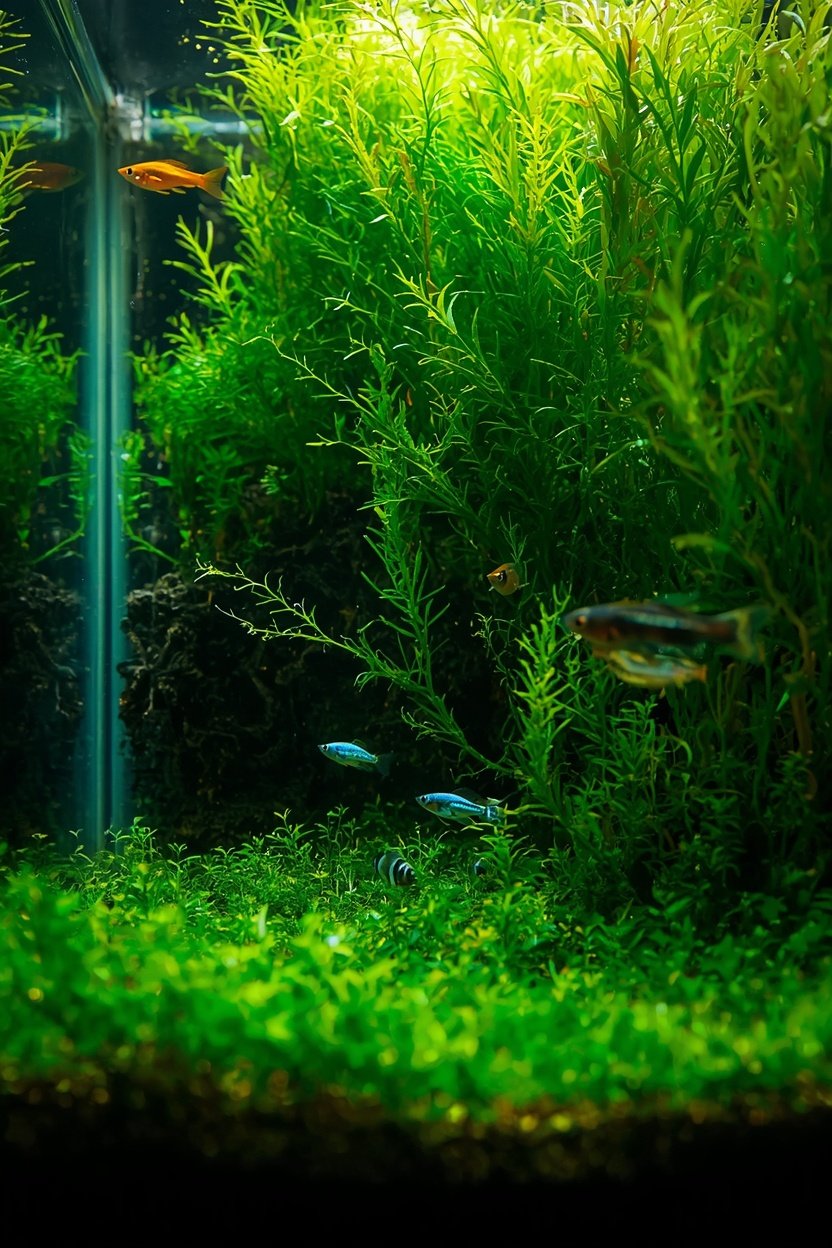
Guppies breed readily and often, and a tank with at least one densely planted corner gives newborn fry a genuine chance to survive among adult tankmates. Unlike a floating canopy, this zone uses rooted, bushy plants like cabomba or hornwort, planted thickly in one section of the substrate, creating a fine-textured thicket that fry can dart into the moment they're born.
Position this planted zone away from your filter intake, since newborn guppy fry are small enough to be pulled into standard equipment not designed to filter around something so tiny. A sponge pre-filter on the intake adds an extra layer of protection regardless of where the plants are positioned.
This idea works whether or not you're intentionally breeding guppies, since their reproductive rate makes unplanned fry a near-certainty in any mixed-sex tank, and having a dedicated dense zone already established means you won't be scrambling to add cover after fry unexpectedly appear.
2. Use Baffled, Fry-Safe Filtration
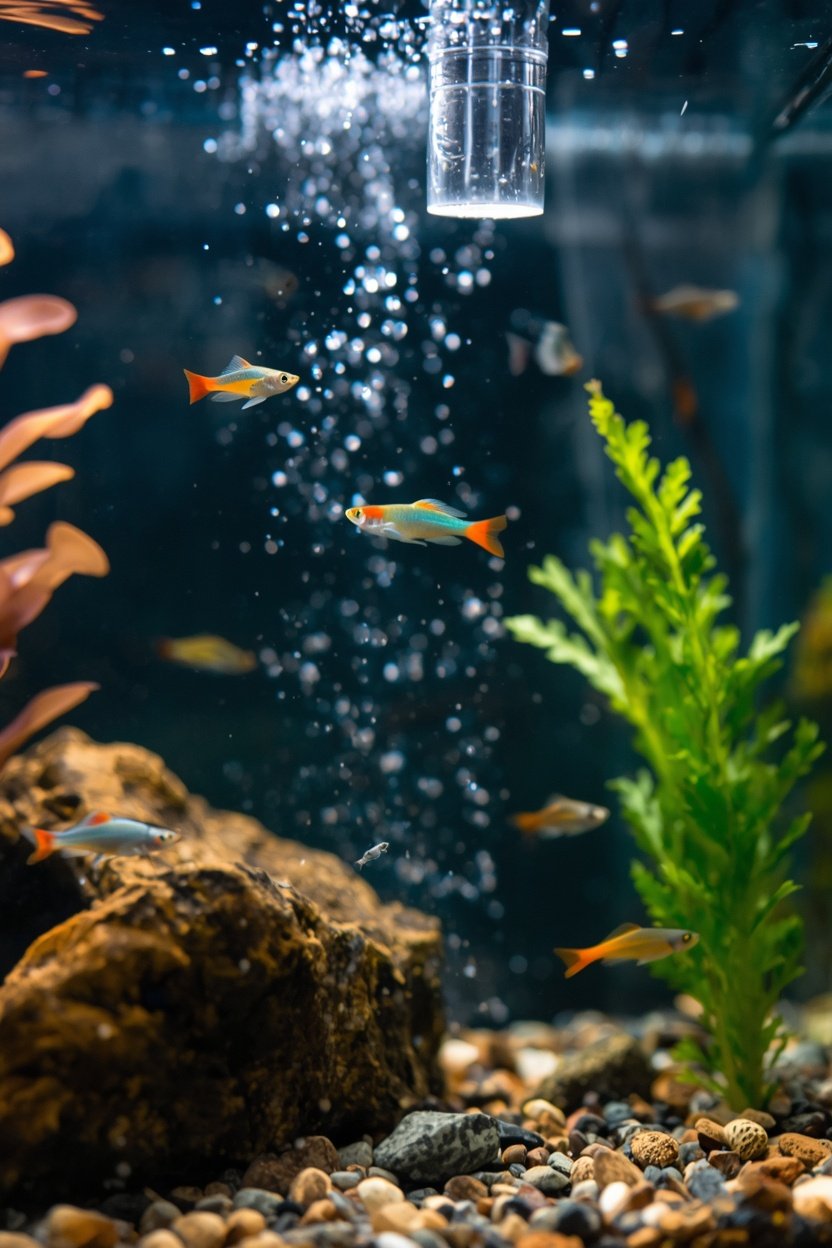
Beyond plant cover, the filter itself can be adjusted to better protect guppy fry and reduce overall stress for the whole colony. Adding a simple baffle — a small piece of sponge or a foam pre-filter attachment — to your filter's intake prevents fry from being pulled in, while also softening the overall water flow throughout the tank to something closer to the calm waters guppies naturally prefer.
This is a particularly valuable decor-adjacent decision for guppy keepers specifically, since guppies are prolific enough breeders that filtration planning genuinely becomes part of the tank's ongoing design rather than a one-time setup decision. A tank that looks beautifully decorated but regularly loses fry to an unguarded filter intake isn't fully serving the fish living in it.
Many sponge pre-filter attachments are inexpensive and simple to install on existing equipment, making this one of the easiest functional upgrades on this list to implement without redesigning anything else about the tank's appearance.
3. Organize the Tank Into Color-Zone Viewing Sections
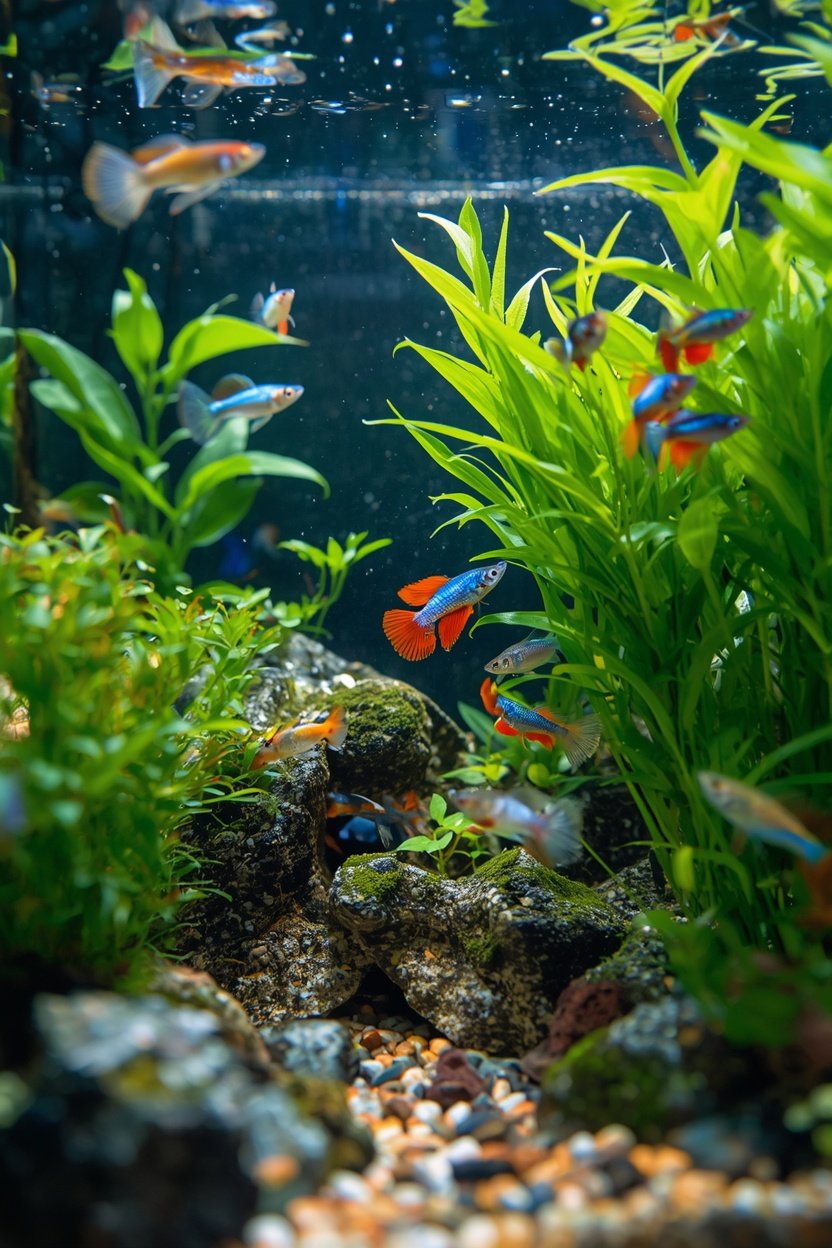
If you're keeping multiple guppy strains together, loosely dividing the tank into visual zones using plant clusters or small rock groupings can help different color strains naturally separate into distinct viewing areas rather than mixing into one visually chaotic blur. This isn't about physically confining fish, since guppies will still swim throughout the tank, but the zones tend to become natural gathering points over time.
Position a cluster of taller plants or a small rock formation partway through the tank to create a soft visual division, then stock each resulting zone with a specific guppy strain's preferred hiding and resting spots in mind. Over time, many guppy keepers notice loose territorial patterns emerge, with certain strains favoring certain zones.
This idea works especially well for anyone showcasing several distinct guppy varieties at once, since it gives viewers a clearer visual path through the tank rather than every color and pattern blending together in one continuous, undifferentiated mass.
4. Choose a Simple Dark Backdrop to Enhance Tail Color
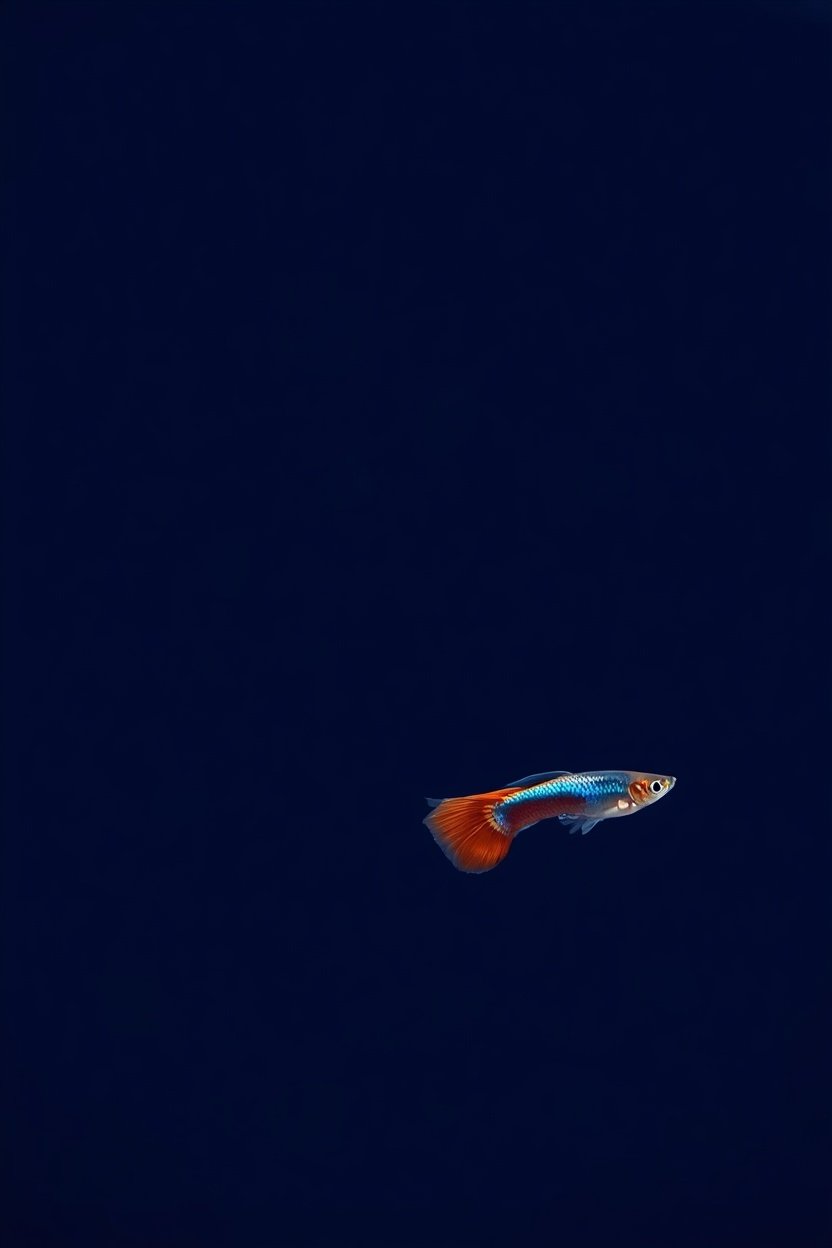
A plain, dark background on the outside of the tank's back glass — deep navy, black, or forest green — makes a dramatic difference in how vividly guppy colors and tail patterns read to the eye, since the contrast against a dark backdrop makes bright oranges, blues, and reds appear considerably more saturated than they do against a bright or patterned background.
This simple addition costs very little and takes only a few minutes to apply, making it one of the highest-impact, lowest-effort upgrades specifically for a guppy-focused tank. Unlike more elaborate decor changes, a background swap doesn't require touching anything inside the tank itself.
Combined with minimal internal hardscape, a dark backdrop lets guppies function as the tank's primary visual interest, which suits the species well given how much of their appeal comes directly from their color and pattern variety rather than from elaborate aquascaping.
Extra Tips for a Thriving Guppy Tank
● Plan for an expanding colony from the start. Guppies breed reliably, so stock your tank with future population growth in mind rather than just your starting numbers.
● Keep a varied diet. A mix of flake, occasional live or frozen food, and some vegetable matter supports vibrant color and healthy breeding condition.
● Separate specific color strains if line-breeding. If you're trying to maintain a specific pattern or color strain, a dedicated breeding tank prevents unwanted cross-breeding.
● Monitor for overcrowding regularly. Check population levels periodically and consider rehoming excess fry if your tank's capacity is being exceeded.
Final Thoughts
A genuinely well-planned guppy tank balances two things at once: showing off their remarkable color variety and supporting their naturally prolific breeding habits. A dense fry-safe planted zone, thoughtful filtration, organized viewing areas for multiple strains, and a simple dark backdrop together create a tank where guppies can both thrive and truly shine, which is really the whole appeal of keeping this endlessly colorful, easygoing fish in the first place.
Frequently asked questions
How quickly do guppy populations grow in a home tank?
Guppies can produce new fry roughly every four weeks under suitable conditions, meaning an unplanned population can grow substantially within just a few months without any intervention.
Do guppies need a species-only tank to thrive?
No, guppies generally do well in peaceful community tanks, though it's worth researching specific tankmate compatibility and avoiding species known to nip fins or prey heavily on fry.
What's the easiest way to boost guppy color without buying new fish?
A dark background and a varied, high-quality diet are two of the simplest, most effective ways to enhance existing guppy coloration without any new livestock purchases.
