
Staircases are some of the most overlooked spaces in a home when it comes to decorating, usually left as purely functional passageways rather than considered design opportunities. When I finally added a small aquarium to a landing on my own staircase, it became one of my favorite spots in the house almost immediately — a small moment of calm built into a part of the home I used to just walk straight through without a second glance.
This guide walks through the process step by step, with particular attention to the safety considerations a staircase specifically requires that most other rooms simply don't. Each step includes a detailed image prompt so you can visualize the finished setup before making any changes to your own stairwell.
Why Staircases Need Extra Safety Planning
Unlike a bedroom or living room, a staircase is a high-traffic transitional space where trip hazards and vibration from regular foot traffic are genuine, ongoing concerns rather than one-time considerations. A cozy staircase aquarium succeeds by respecting these safety realities first, then building the warm, inviting styling around a placement that's already been confirmed safe and stable.
Step 1: Choose a Landing Nook, Not the Stairs Themselves
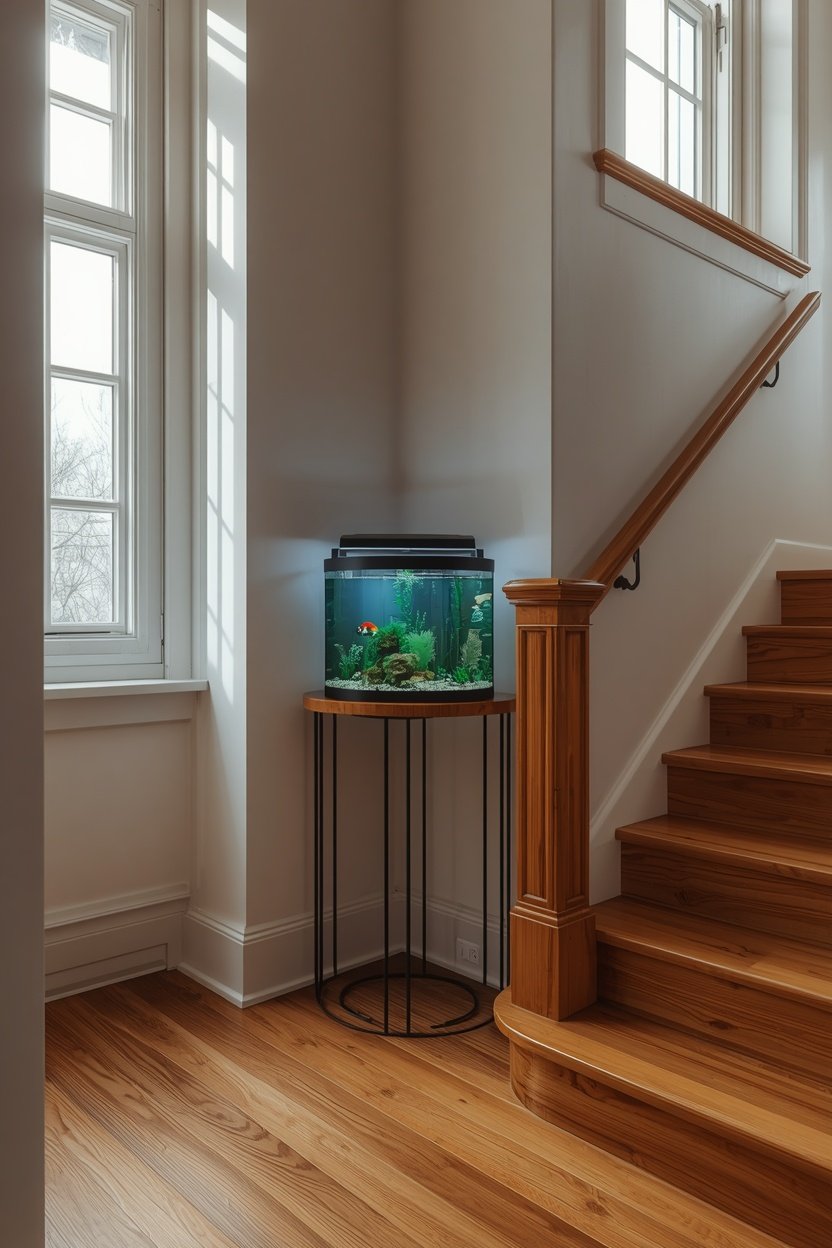
The single most important rule for a staircase aquarium is that it should never sit anywhere near the actual walking path, since even a small obstruction on a stair tread or narrow landing creates a genuine trip hazard. Instead, look for a stair landing with extra width, a windowsill along a stairwell wall, or a built-in alcove partway up the staircase — spaces adjacent to foot traffic rather than within it.
Half-landings on staircases that turn a corner are often ideal, since they typically offer a bit of extra floor space specifically because the stairs change direction there. A small, sturdy corner shelf or a slim console table fitted to that landing space can hold a nano or small tank securely, well clear of anyone's actual footing.
Before finalizing placement, walk the stairs several times as you normally would, checking that the tank and its stand don't reduce handrail access or narrow the usable walking width at any point, even slightly.
Step 2: Choose a Tall, Narrow Tank to Match the Stairwell
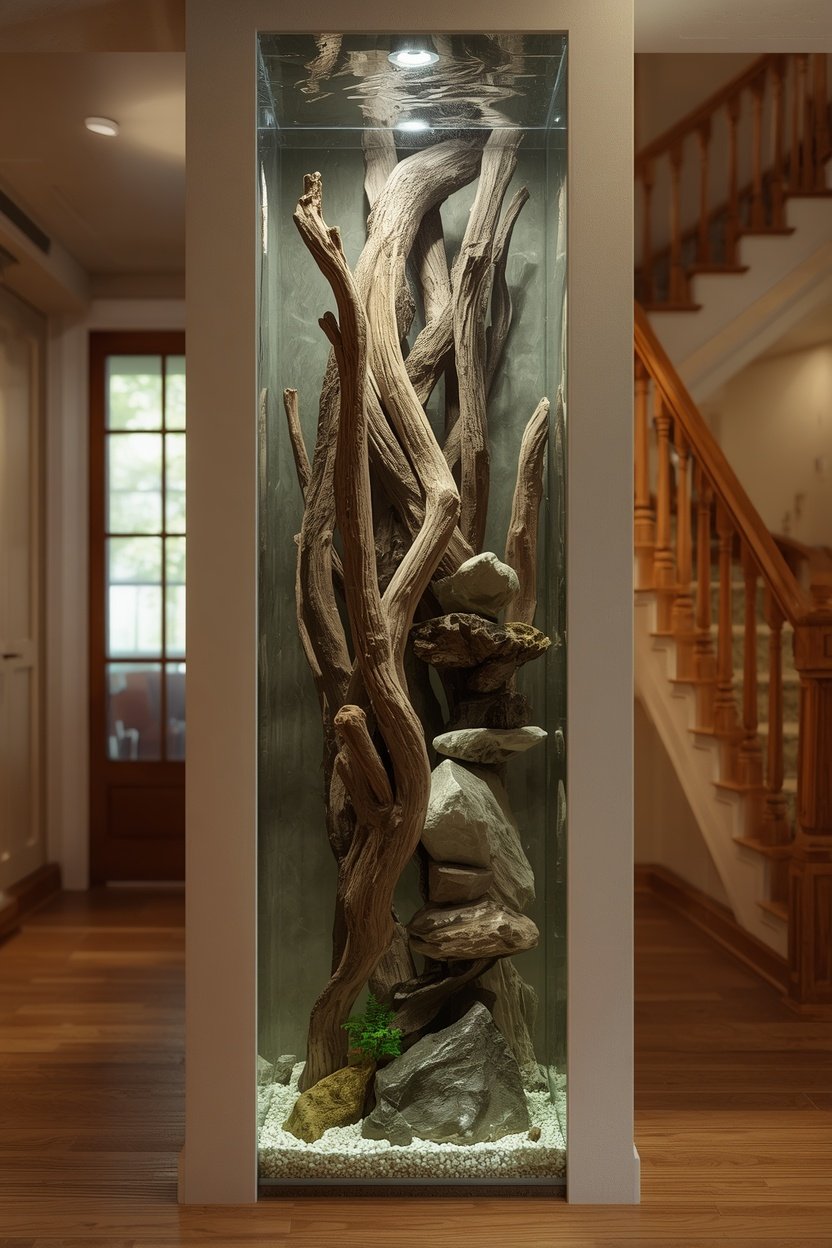
Staircases are naturally vertical spaces, often with tall walls rising alongside the steps, and a tall, narrow aquarium complements that architecture far better than a wide, low tank designed for a horizontal shelf or console table. A column-style or tall nano tank draws the eye upward in a way that echoes the staircase's own vertical lines, making the aquarium feel like a natural extension of the space rather than an object placed awkwardly within it.
Inside the tank, lean into this vertical orientation with upright driftwood or a tiered rock arrangement rather than a flat, spread-out layout, reinforcing the same sense of height the surrounding architecture already establishes. This is one of the rare placements where a tank's proportions genuinely benefit from matching the room's structure so directly.
If your stairwell includes a particularly tall wall section, a tall tank positioned at eye level partway up the stairs can become a striking focal point for anyone ascending or descending, catching the eye at a natural pause point in the daily routine of moving through the house.
Step 3: Add Warm Lighting That Complements Stair Safety Lighting
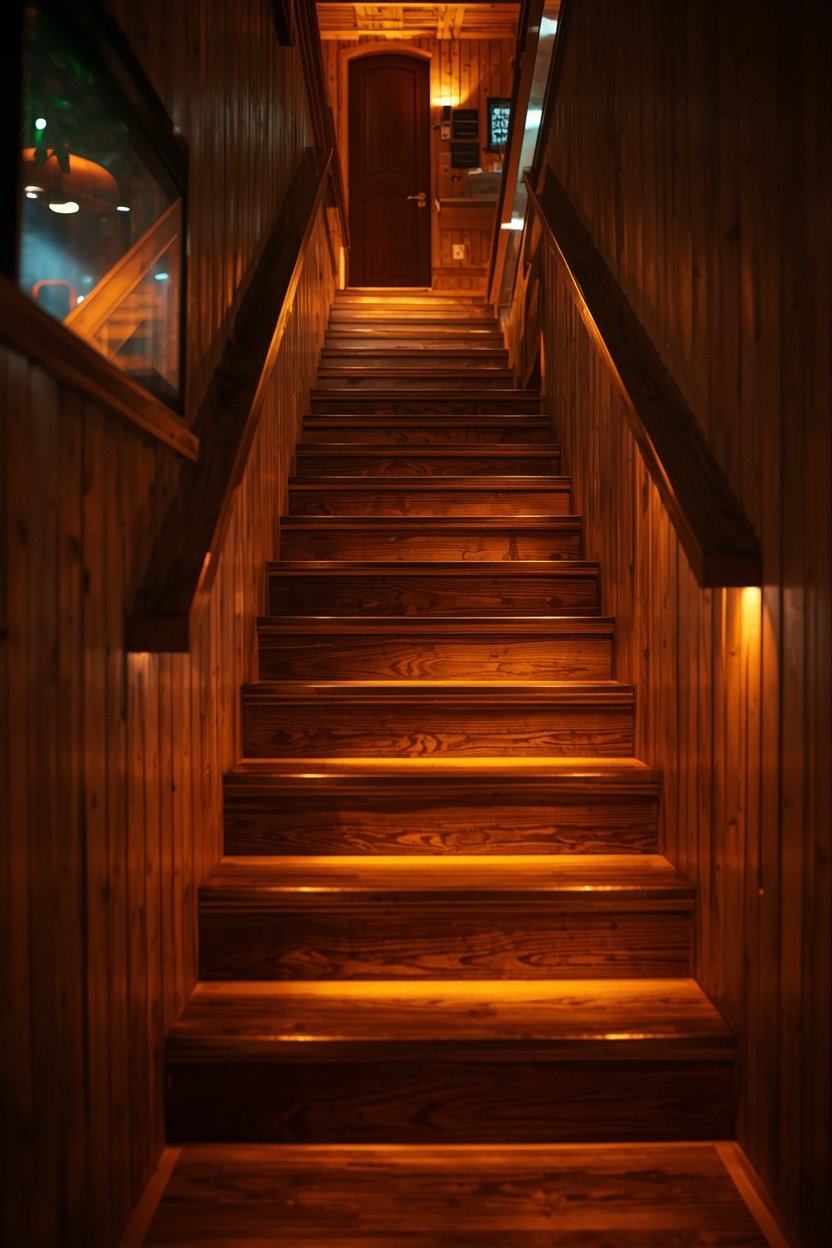
Many staircases already include some form of safety or accent lighting — step lights, a landing sconce, or a pendant over a stairwell — and coordinating your aquarium's light temperature with these existing fixtures creates a cohesive, warm glow throughout the space rather than two competing light sources. A warm white or soft amber aquarium light generally blends more naturally with typical stair lighting than a cool blue setting.
Beyond aesthetics, a well-placed aquarium light can genuinely contribute a small amount of ambient illumination to a landing or stairwell, adding a soft, cozy glow to a part of the home that's often under-lit and purely functional otherwise. This turns a practical necessity — some form of stair lighting — into something warmer and more inviting.
Consider a timer synced to typical usage hours, so the tank's light naturally complements the home's evening lighting routine without requiring a separate manual switch each time someone passes through.
Step 4: Secure Everything for Stair Traffic and Vibration
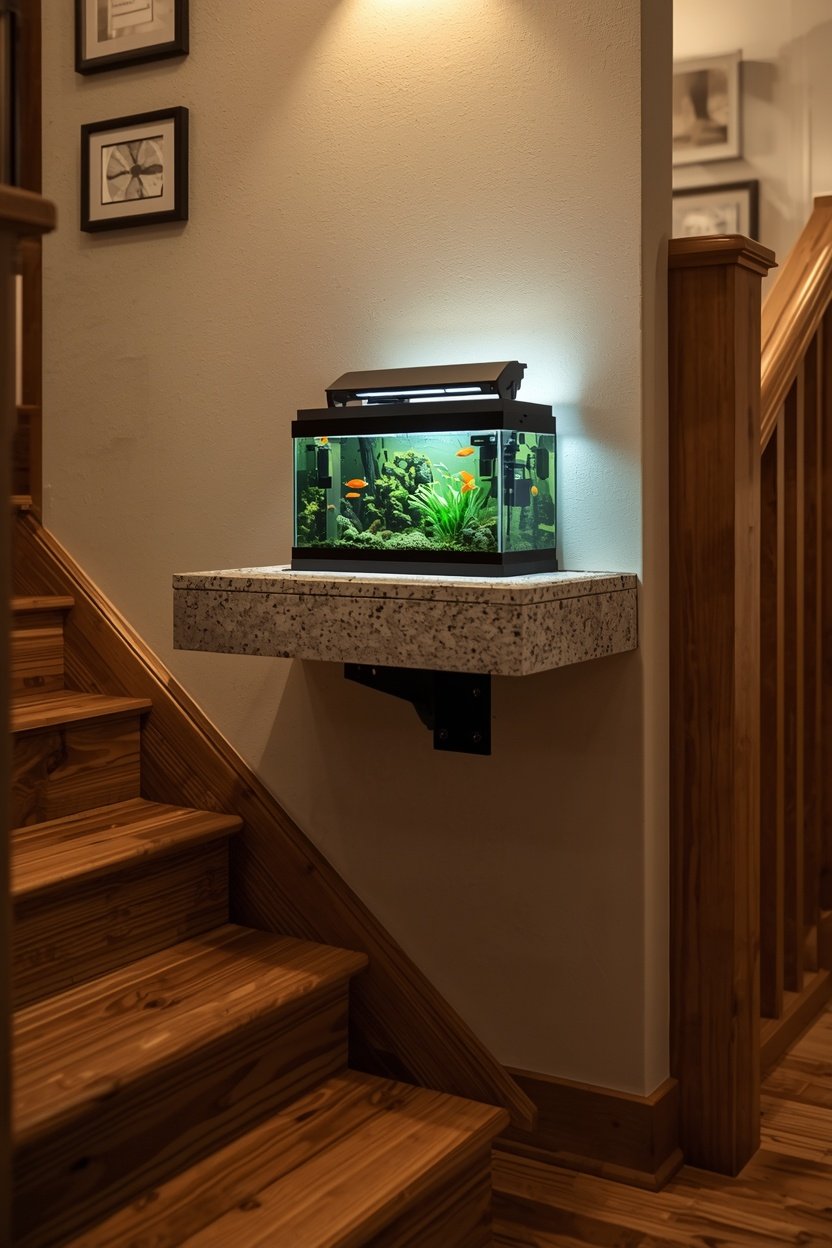
Staircases see regular foot traffic and the accompanying vibration, which makes secure mounting and stable placement more important here than in a typical stationary room. Whatever surface holds the tank — a shelf, console, or built-in nook — should be anchored securely to the wall or floor rather than freestanding on an unstable base, since repeated vibration over time can gradually shift an unsecured stand.
If children or pets regularly use the stairs, consider a tank height and placement that keeps curious hands and paws from easily reaching in, along with a secure lid to prevent any accidental disturbance. A landing nook slightly recessed or elevated beyond easy reach adds an extra layer of practical safety without sacrificing visibility.
Taking these precautions seriously from the start means you can enjoy a genuinely cozy staircase aquarium without worrying every time someone hurries up or down the stairs nearby, which is really the whole point of adding a calming design element to a busy transitional space in the first place.
Additional Tips for a Cozy Staircase Aquarium
● Check local building and safety guidance. Some homes have specific requirements around clearances near stairs, so it's worth a quick check before finalizing placement.
● Choose a small, manageable tank size. A nano or small tank is generally easier to secure safely on a landing than a large, heavy aquarium.
● Keep maintenance tools nearby but tucked away. A small covered basket or drawer near the landing keeps supplies handy without cluttering a walking space.
● Test the space at different times of day. Natural and artificial lighting on a staircase often shifts significantly throughout the day, so observe the space before finalizing your tank's exact position.
Final Thoughts
A staircase aquarium turns one of the most overlooked parts of a home into a genuine moment of calm, as long as safety stays the first priority throughout the planning process. A secure landing placement, a tank shaped to match the stairwell's vertical lines, warm coordinated lighting, and careful attention to traffic and vibration together create a cozy feature that enhances daily movement through the house rather than complicating it.
Frequently asked questions
Is it safe to have an aquarium near stairs with young children?
Yes, with careful placement well outside the walking path, a secure lid, and positioning that keeps the tank out of easy reach, though supervision remains important around any water feature in a home with young children.
What tank size works best for a staircase landing?
A nano or small tank, generally under 10 gallons, tends to fit most landing spaces comfortably while remaining lightweight enough to secure safely without extensive structural reinforcement.
Will vibration from foot traffic harm the fish?
Minor everyday vibration from normal foot traffic is generally not harmful to fish, though a securely mounted, stable stand is still important to prevent any gradual shifting or instability over time.
