
A friend once asked why more elegant kitchens don't feature aquariums, given how naturally a glowing tank of water seems to fit alongside marble and brass. The honest answer is that kitchens come with real practical constraints — heat, steam, hygiene — that most general aquarium decorating advice simply doesn't address, which can make the idea feel riskier than it actually is once you know how to plan around those factors properly.
This guide walks through the process step by step, covering both the elegant styling and the practical safety considerations unique to a kitchen environment. Each step includes a detailed image prompt so you can visualize the finished setup before making any changes to your own space.
Why a Kitchen Aquarium Needs Its Own Planning Approach
Unlike a bedroom or living room, a kitchen introduces heat sources, moisture, food preparation, and hygiene considerations that directly affect where and how an aquarium should be placed. An elegant kitchen aquarium succeeds by accounting for these practical factors from the very beginning, rather than treating the tank as purely a styling decision the way you might in a room with fewer environmental variables to manage.
Step 1: Choose a Tank That Complements Your Countertop Material
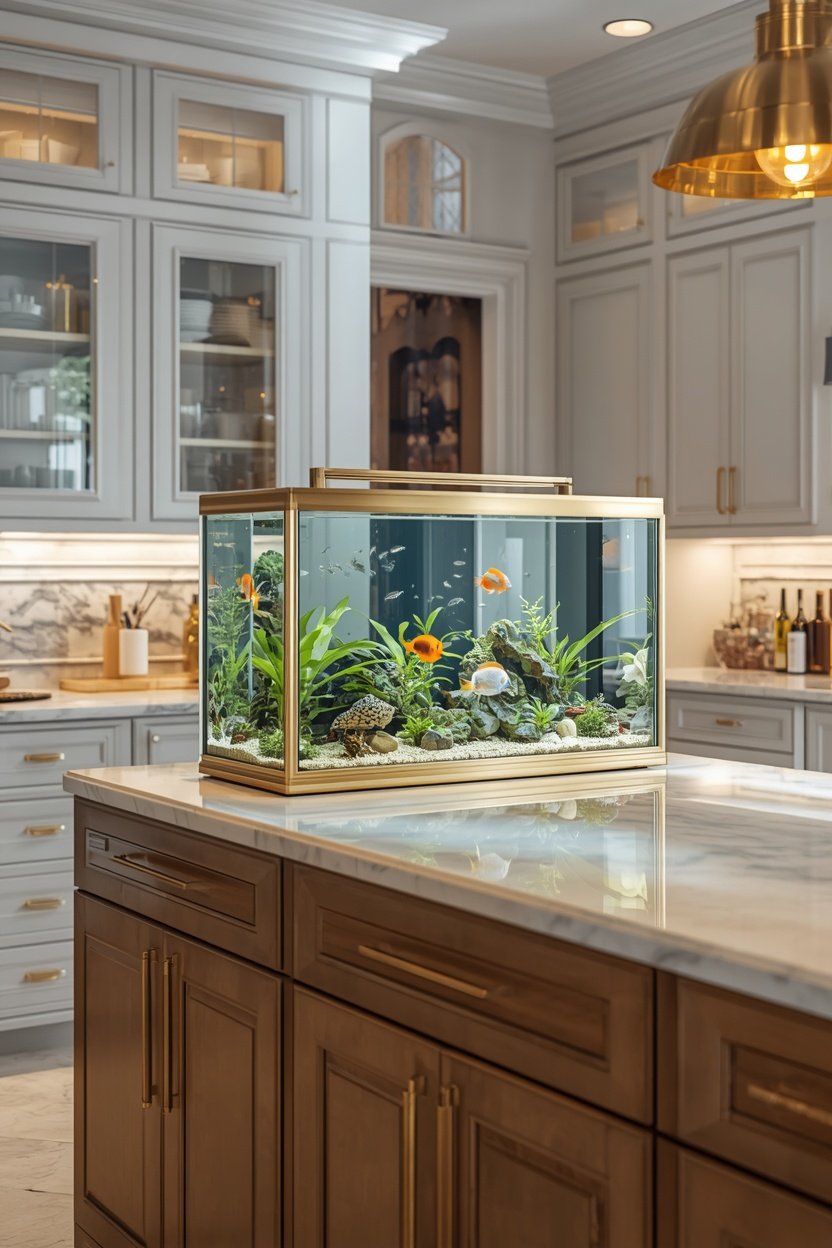
An elegant kitchen typically centers around one or two premium materials — marble, quartz, or a rich wood island — and the aquarium you choose should echo rather than clash with that existing material story. A tank with a brushed brass or matte black metal frame pairs beautifully with marble countertops and gold fixtures, while a warm wood-accented stand complements a kitchen built around natural wood cabinetry.
Rather than treating the aquarium as a separate appliance, think of it the way you would a statement light fixture or a piece of art — chosen specifically to continue the kitchen's existing material palette rather than introducing an entirely new one. A small tank on a matching marble-look stand, or one with brass trim echoing your cabinet hardware, immediately reads as considered rather than incidental.
This first decision sets the tone for everything else, since a tank that already coordinates with your kitchen's materials makes every later styling choice — hardscape, lighting, surrounding decor — considerably easier to get right.
Step 2: Position Away from Heat, Steam, and Splash
Kitchens present a genuinely different set of environmental challenges than any other room in the house, and this is the step most decorating guides skip entirely. Positioning an aquarium too close to a stovetop, oven, or sink exposes it to heat fluctuations, steam, and occasional splashing, all of which can affect water temperature stability and equipment longevity over time.
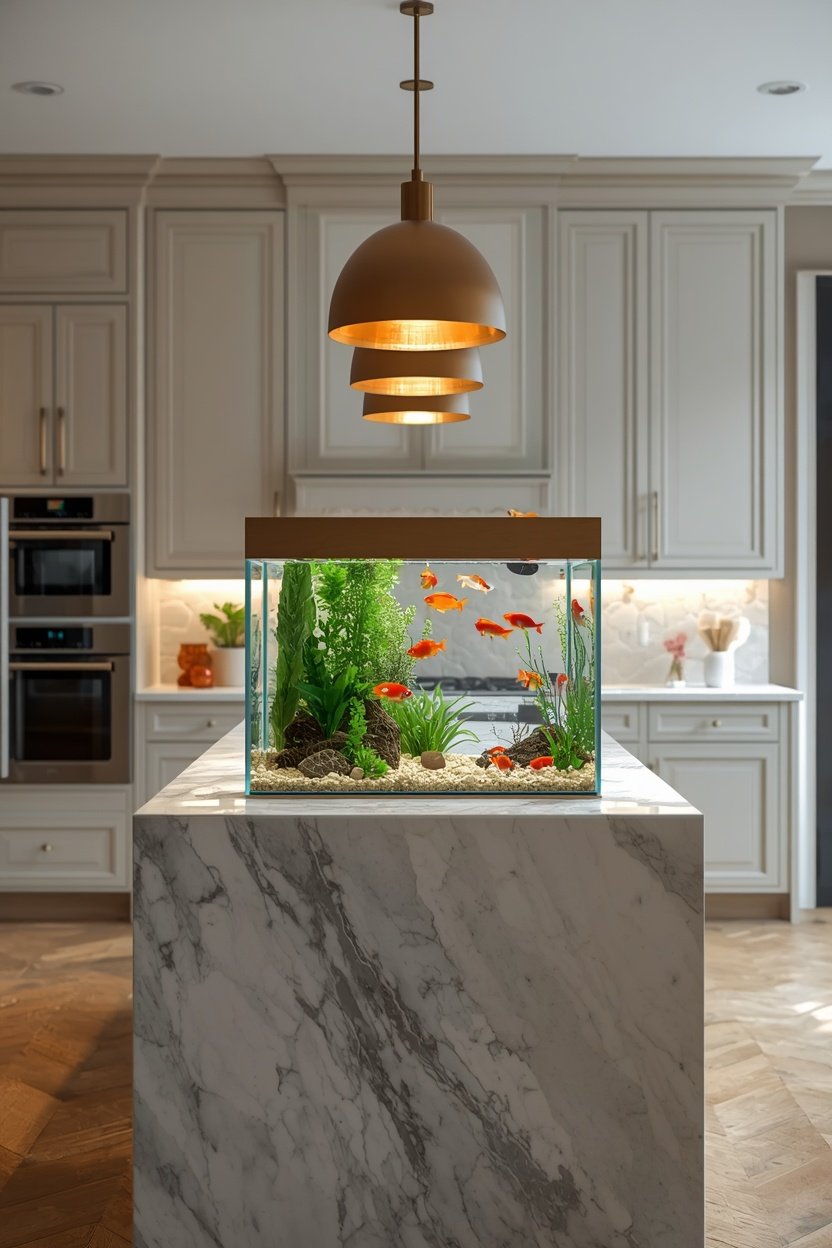
A kitchen island end, a dedicated counter section away from the cooking zone, or a nearby breakfast nook typically offers a safer placement that still keeps the tank visually connected to the kitchen without sitting in the direct path of cooking activity. Maintaining at least a few feet of distance from any heat source helps keep water temperature consistent, which matters far more to fish health than most people initially realize.
This practical step doesn't have to compromise the elegant look you're going for — many of the most striking kitchen aquariums are actually positioned at a room's edge or on an island's far end, which often makes for a more visually balanced placement anyway.
Step 3: Use Elegant Neutral Hardscape
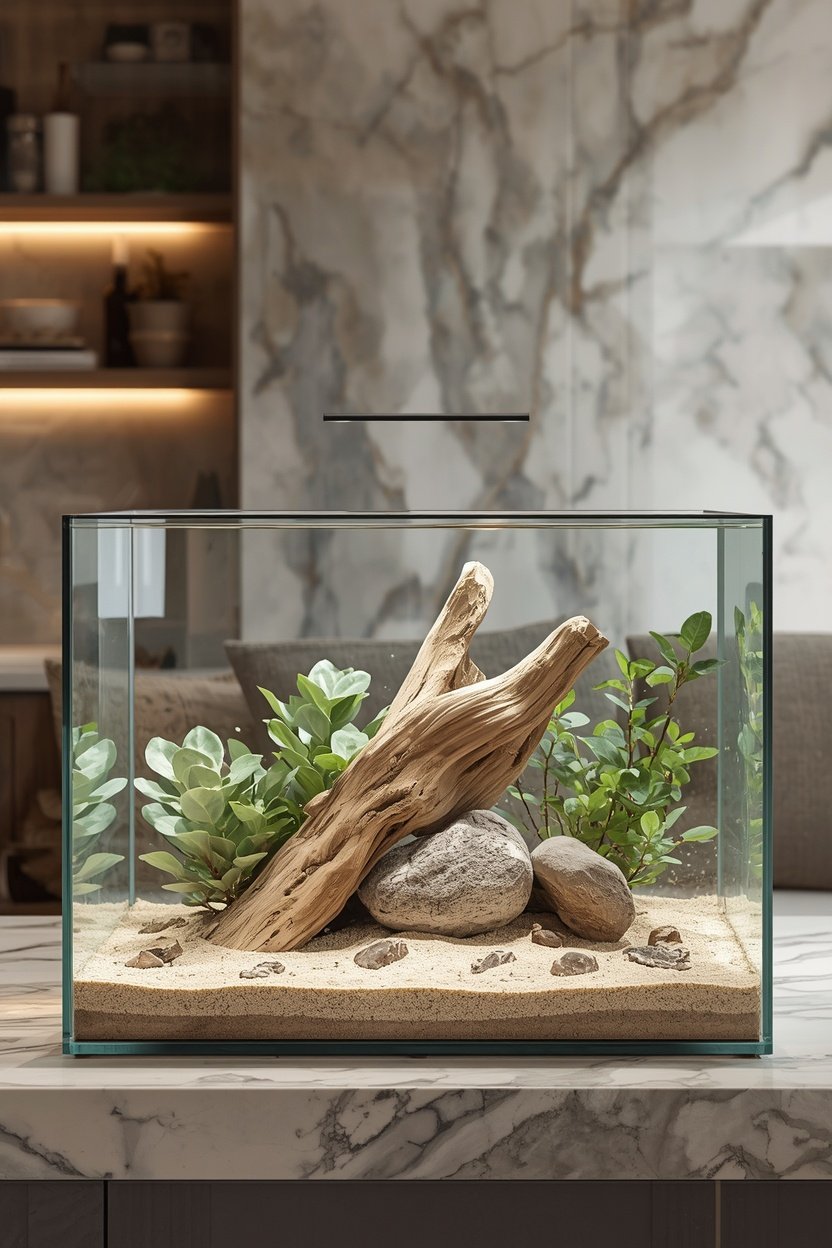
An elegant kitchen generally favors a restrained, neutral palette, and the aquarium's internal decor should follow that same principle rather than introducing bright, busy colors that clash with the room's sophistication. Pale sand or light grey substrate, paired with one or two pieces of pale driftwood or smooth white-veined stone, echoes the same marble-and-neutral material language found throughout an elegant kitchen.
Keep the hardscape count intentionally low, favoring one elegant, well-chosen piece over several competing ornaments, the same restraint you'd apply to countertop styling in this kind of kitchen. A single striking piece of driftwood or one dramatic stone formation reads as curated, while a cluttered layout can undercut the refined atmosphere you're building throughout the rest of the space.
Muted green plants, like anubias or java fern, add a touch of natural color without disrupting the neutral palette, giving the tank life and texture while still staying visually aligned with an elegant kitchen's typically restrained color story.
Step 4: Keep Feeding and Maintenance Kitchen-Hygiene Friendly
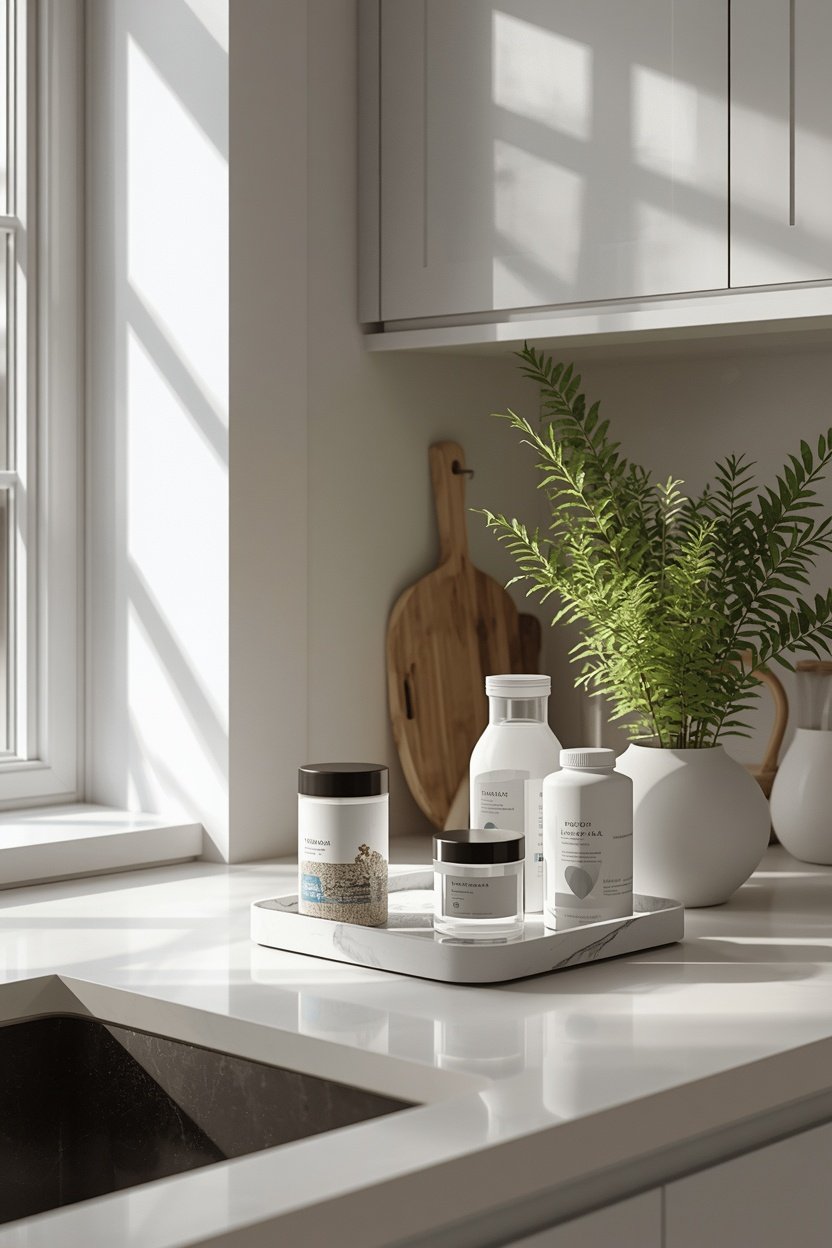
A kitchen aquarium introduces a practical consideration unique to this particular room: keeping fish food, maintenance tools, and food-prep areas appropriately separated for basic hygiene. Store fish food, nets, and water conditioner in a dedicated container or cabinet away from food and cooking utensils, treating aquarium supplies with the same organizational separation you'd give cleaning products.
Wash your hands thoroughly before and after any tank maintenance, just as you would after handling raw ingredients, and avoid performing water changes or feeding directly over food-prep surfaces. These simple habits keep an elegant kitchen aquarium as practical as it is beautiful, without introducing any genuine hygiene concerns into a space centered around food preparation.
A small, elegant tray or dedicated shelf nearby for aquarium supplies keeps everything accessible without cluttering your actual food-prep counters, maintaining both the refined look and the practical organization an elegant kitchen depends on.
Additional Tips for a Sophisticated Kitchen Aquarium
- Choose a stable, water-resistant surface. Kitchen counters see frequent wiping and occasional spills, so confirm your tank's placement area can handle regular moisture exposure.
- Keep the tank's footprint proportional to counter space. An oversized tank on a smaller kitchen island can disrupt workflow, so measure your actual usable counter space carefully first.
- Consider a quiet filter given the kitchen's active use. Kitchens are high-traffic, frequently occupied spaces, so a quiet filter keeps the tank from adding unwanted background noise during meal prep.
- Match your lighting temperature to existing kitchen fixtures. A warm-toned aquarium light generally coordinates better with typical kitchen pendant and under-cabinet lighting than a cool white setting.
Final Thoughts
An elegant kitchen aquarium is entirely achievable once you plan around the room's specific practical demands alongside its aesthetic ones. Choosing a tank that echoes your existing materials, positioning it safely away from heat and splash, styling the hardscape with the same neutral restraint as the rest of the kitchen, and keeping maintenance hygienically separate together create a tank that feels like a genuine, sophisticated extension of the space. Follow these four steps, and your kitchen aquarium can be every bit as elegant as the room around it.
Frequently asked questions
Is it safe to keep an aquarium near a kitchen sink?
It's best to maintain some distance from the sink to avoid splash exposure, though a few feet of separation is generally sufficient to keep the tank and its equipment protected from routine sink use.
Will kitchen heat and cooking affect my fish?
Significant heat exposure from being placed too close to a stove or oven can affect water temperature stability, so positioning the tank a reasonable distance from active cooking areas is an important practical consideration.
What kitchen aquarium size works best for a standard island?
A 5-to-15 gallon tank typically fits well on a kitchen island without overwhelming counter space, though the ideal size depends on your specific island dimensions and how much workspace you need to preserve.
