
When my sister asked for help setting up an aquarium in her daughter's minimalist-styled bedroom, her first concern wasn't the aesthetic at all — it was safety. That conversation reshaped how I think about kids' room aquariums generally: the styling matters, but it has to be built on a genuinely safe foundation first, which turns out to be a more specific set of considerations than a typical adult bedroom setup requires.
This guide walks through the process step by step, with safety addressed first and the minimalist styling woven in around it rather than treated as a separate concern. Each step includes a detailed image prompt so you can visualize the finished setup before making changes to your own child's room.
Why Kids' Room Aquariums Need Safety-First Planning
A children's bedroom introduces safety considerations that most general aquarium decorating advice doesn't specifically address — stability against climbing, secure lids, and durable, non-hazardous decor all matter here in ways they simply don't in an adult-only space. A genuinely successful kids' room aquarium plans around these factors from the very beginning, then builds its minimalist styling on top of that secure foundation.
Step 1: Choose a Secure, Child-Safe Placement
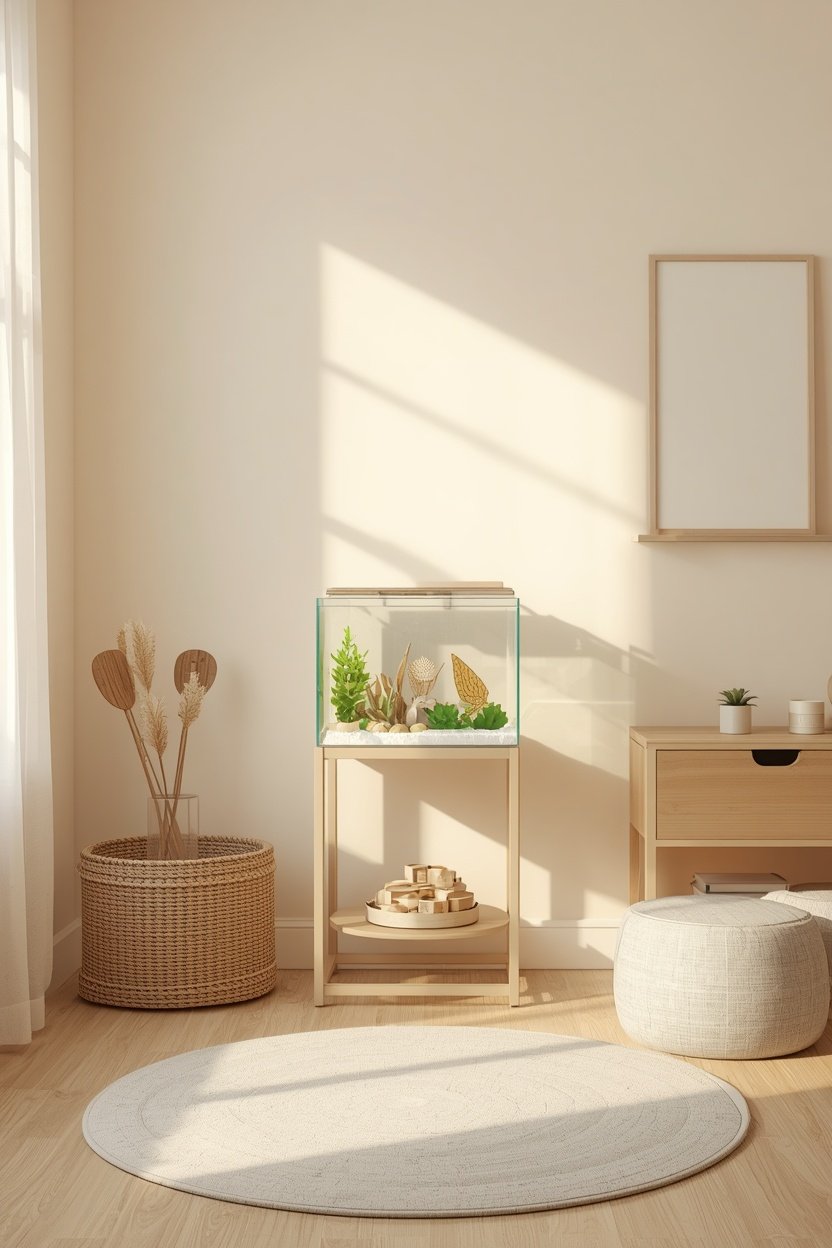
Safety comes first in any kid's room, and that starts with a genuinely stable, securely anchored stand rather than anything a curious child could tip or climb. Choose furniture rated well beyond the tank's filled weight, anchor taller stands to the wall with furniture straps, and avoid placing the tank anywhere near a bed, shelf, or dresser a child might use as a climbing route to reach it.
A secure, fitted lid matters just as much here as stand stability, both to prevent a child from reaching into the water and to keep the tank's contents contained if it's ever bumped or nudged during play. Look for a lid with minimal gaps and a design that resists being easily pried open by small hands.
This first step isn't the most visually exciting part of a minimalist kids' room aquarium, but it's the foundation everything else in this guide depends on, and it's worth prioritizing above any styling decision that follows.
Step 2: Keep the Aquascape Simple and Durable
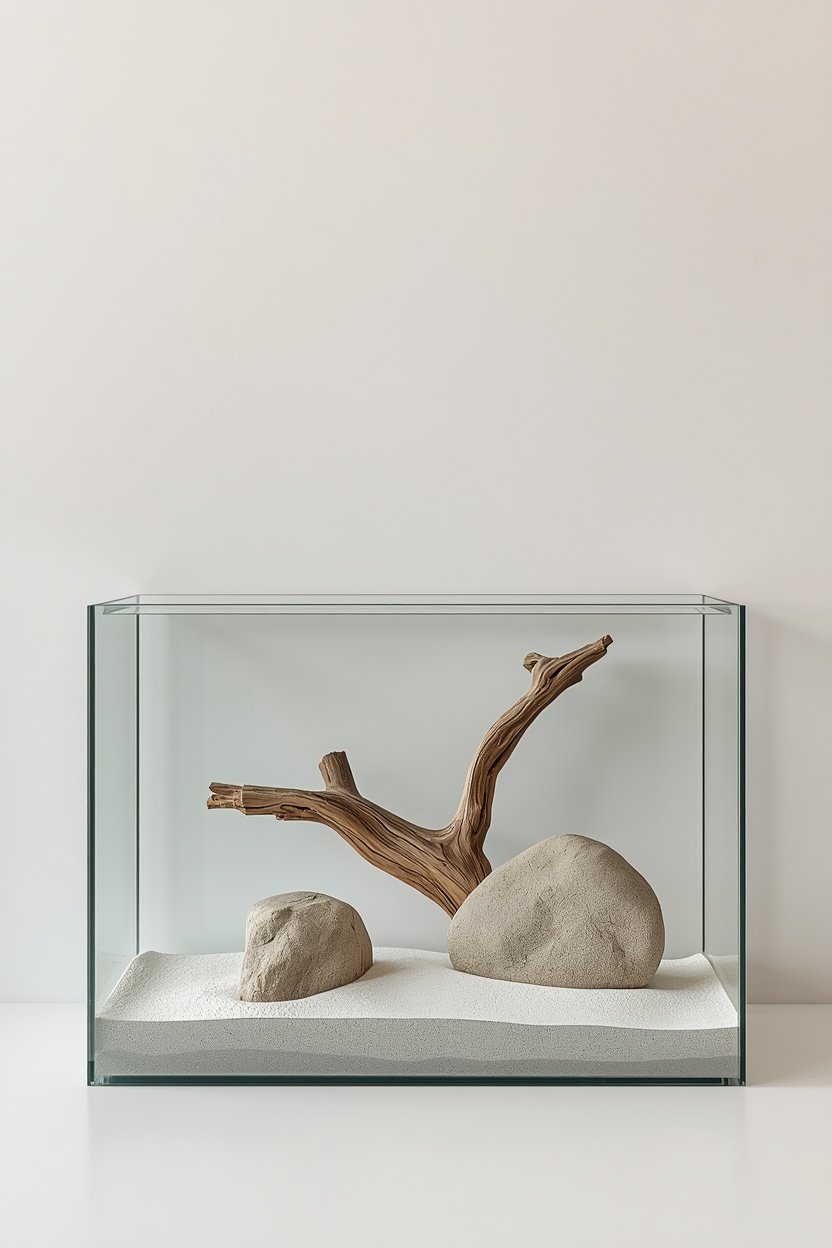
Minimalist style naturally suits a kids' room aquarium beyond just aesthetics, since fewer decor pieces mean fewer small, potentially loose objects and an overall easier tank to keep clean. A single piece of driftwood, one or two smooth rocks, and a simple substrate deliver a calm, considered look while minimizing anything that could break loose or create sharp edges over time.
Choose sturdy, well-secured hardscape rather than delicate or lightweight pieces that might shift easily if the tank is bumped, and avoid small decorative elements that could pose a choking hazard if a child ever managed to remove the lid. This is one case where the safest choice and the most stylistically minimalist choice genuinely align.
A simple layout is also considerably easier to maintain, which matters if you're hoping to eventually involve your child in basic tank care — fewer pieces mean fewer things to navigate during cleaning, making the whole process more approachable for a young helper.
Step 3: Position at a Child's Eye Level for Engagement
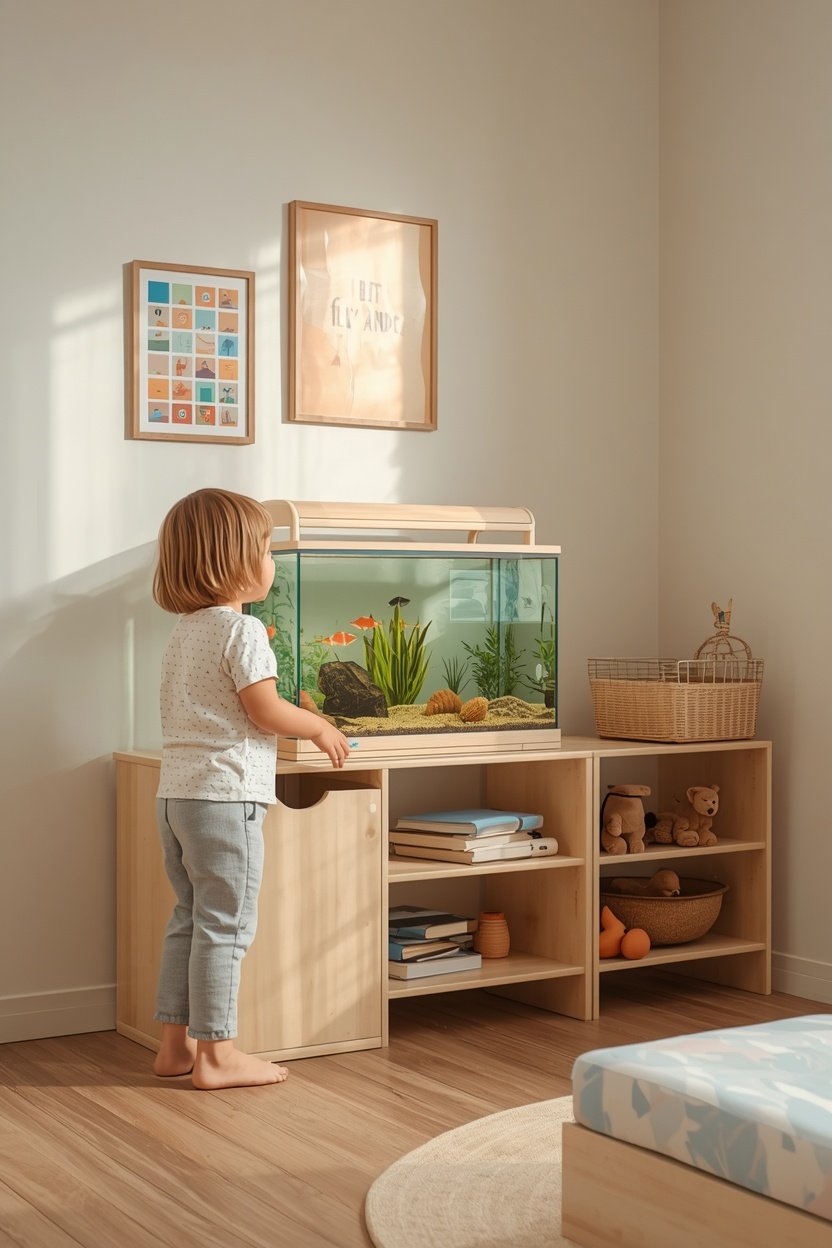
Once safety and simplicity are settled, positioning the tank where a child can comfortably view it while seated or standing nearby turns the aquarium into a genuine source of engagement rather than something they can only glimpse from across the room. A low, stable shelf or a secured stand at a height slightly above a child's standing eye level, safely out of direct reach, balances visibility with the safety considerations from step one.
This placement also supports early lessons in responsibility and observation, letting a child watch feeding, notice daily changes, and eventually help with simple, supervised tasks as they get older. A tank they can actually see clearly tends to hold far more genuine interest than one placed purely for adult convenience.
Just make sure this improved visibility doesn't come at the cost of the security measures already in place — a tank positioned for engagement should still be unreachable for actual physical contact, maintaining the same safety standard established from the very beginning.
Step 4: Use Soft, Muted Colors to Match the Room
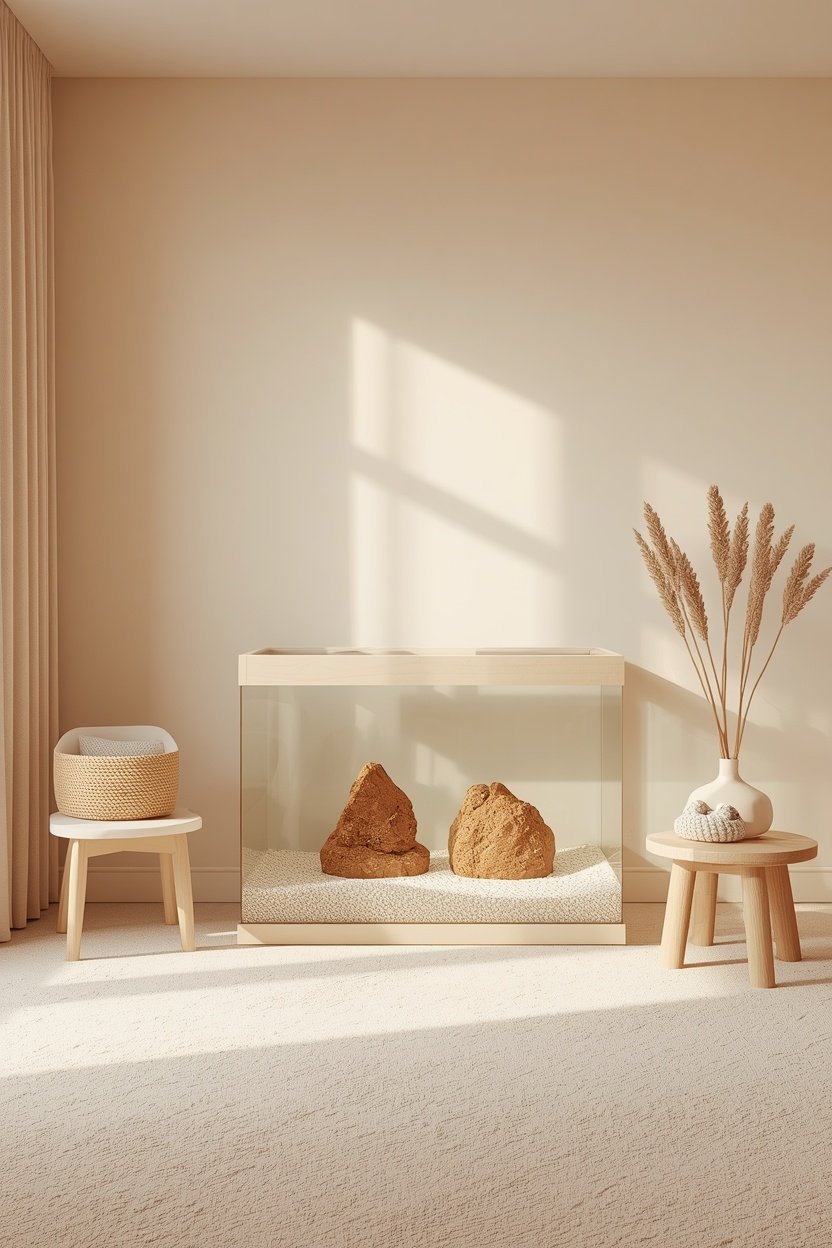
Minimalist kids' rooms often favor a soft, muted palette — pale neutrals, gentle pastels, warm wood tones — and the aquarium's substrate and lighting should echo that same restrained color story rather than introducing bright, saturated colors that clash with the room's calmer aesthetic. Pale sand and warm neutral-toned rock generally coordinate best with this style.
A warm white or soft amber aquarium light suits a minimalist palette better than a cool blue setting, and dimming the light slightly in the evening can even support a calming bedtime routine, turning the aquarium into a gentle source of ambient light rather than a bright, stimulating one right before sleep.
This muted approach also tends to age gracefully as a child grows, since a calm, neutral-toned aquarium won't feel as tied to a specific childhood phase the way brightly colored, cartoon-themed decor eventually can, making it a longer-lasting choice within an evolving room.
Additional Tips for a Safe Kids' Room Aquarium
- Supervise all feeding and maintenance initially. Even simple tasks should be supervised until you're confident a child understands the basics of safe, gentle interaction with the tank.
- Choose calm, hardy fish species. Bettas and small, peaceful community fish tend to suit a child's room well, tolerating minor environmental fluctuations more easily than sensitive species.
- Keep maintenance supplies stored safely. Fish food and water conditioner should be stored out of a young child's reach, just like any other household product.
- Revisit safety measures as your child grows. A toddler's room and an older child's room may call for different levels of physical safeguarding around the tank.
Final Thoughts
A minimalist kids' room aquarium is entirely achievable without compromising either safety or style, as long as safety comes first and the calm, restrained aesthetic is built carefully around it. A secure, anchored placement, a simple durable aquascape, thoughtful viewing height, and a soft, muted color palette together create a tank that's genuinely safe for a child's room while still fitting beautifully into a minimalist design.
Frequently asked questions
What age is appropriate for a child to have an aquarium in their room?
There's no strict age rule, but younger children generally need more supervision and stricter physical safeguards around the tank, while older children can gradually take on more responsibility with continued guidance.
Are glass tanks safe for a child's bedroom?
Standard aquarium glass is generally safe when properly supported on a stable, appropriately rated stand, though acrylic tanks offer additional shatter resistance if that's a specific concern for your household.
What's the easiest fish for a kid's room aquarium?
A single betta fish is often recommended for kids' rooms, since it requires a relatively small, manageable tank and is generally hardy and forgiving of minor care inconsistencies compared to more sensitive species.
