
When I first considered adding an aquarium to my rustic-styled bedroom, I worried it would clash — glass, metal equipment, and bright lighting don't exactly scream "cozy farmhouse." What I found, though, is that an aquarium can fit beautifully into a rustic space as long as you choose the right materials and lighting from the very beginning, rather than trying to force a standard, modern setup into a space it was never designed for.
This guide walks through the process step by step, from the stand the tank sits on to the styling of the space immediately around it. Each step includes a detailed image prompt so you can visualize the finished look before making any purchases or changes to your own room.
Why Rustic Style Requires a Different Approach
Most aquarium setup guides assume a fairly neutral or modern backdrop, but a rustic bedroom has its own specific visual language — natural wood, warm tones, textured materials, and soft lighting — that a standard glossy tank and cool white light can genuinely clash with. Working with that language deliberately, rather than against it, is what makes the difference between an aquarium that feels bolted onto the room and one that feels like it was always meant to be there.
Step 1: Choose a Reclaimed Wood Stand
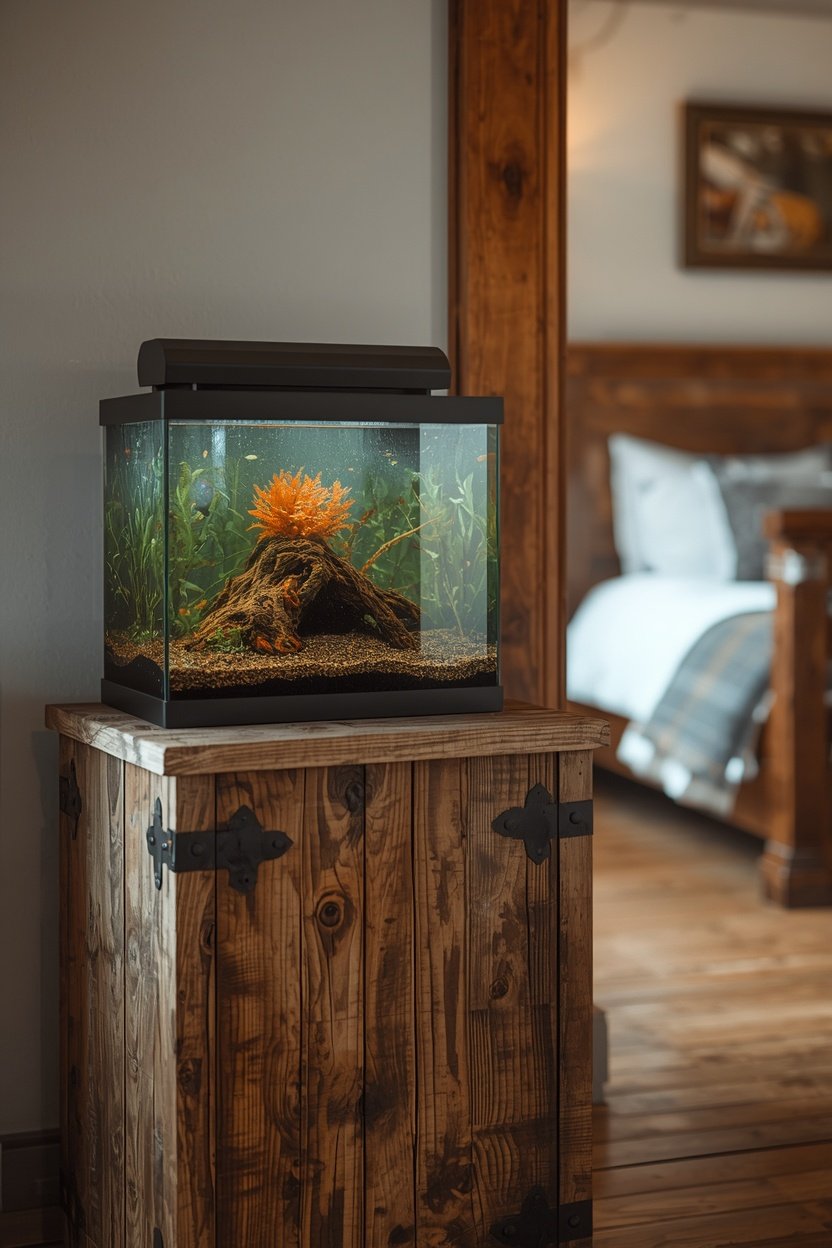
The foundation of a rustic bedroom aquarium starts before the tank itself — it starts with what the tank sits on. A stand built from reclaimed or distressed wood, with visible grain, knots, and an unpolished finish, immediately sets a warm, lived-in tone that a sleek modern cabinet simply can't replicate. Look for pieces with real texture: rough-sawn edges, visible saw marks, or a slightly uneven, hand-finished quality.
If a genuine reclaimed piece isn't available or budget allows for it, a solid wood stand can be distressed at home with sandpaper and a light wood stain, softening any factory-new sheen into something that reads as naturally weathered rather than freshly manufactured. Choosing iron or black metal hardware, like simple straight legs or corner brackets, complements the wood without competing with its texture.
This stand becomes the visual anchor for everything that follows — the tank, the lighting, and the surrounding decor all read as more intentionally rustic once they're sitting on a foundation that already tells that story clearly.
Step 2: Layer in Natural Wood and Stone Hardscape
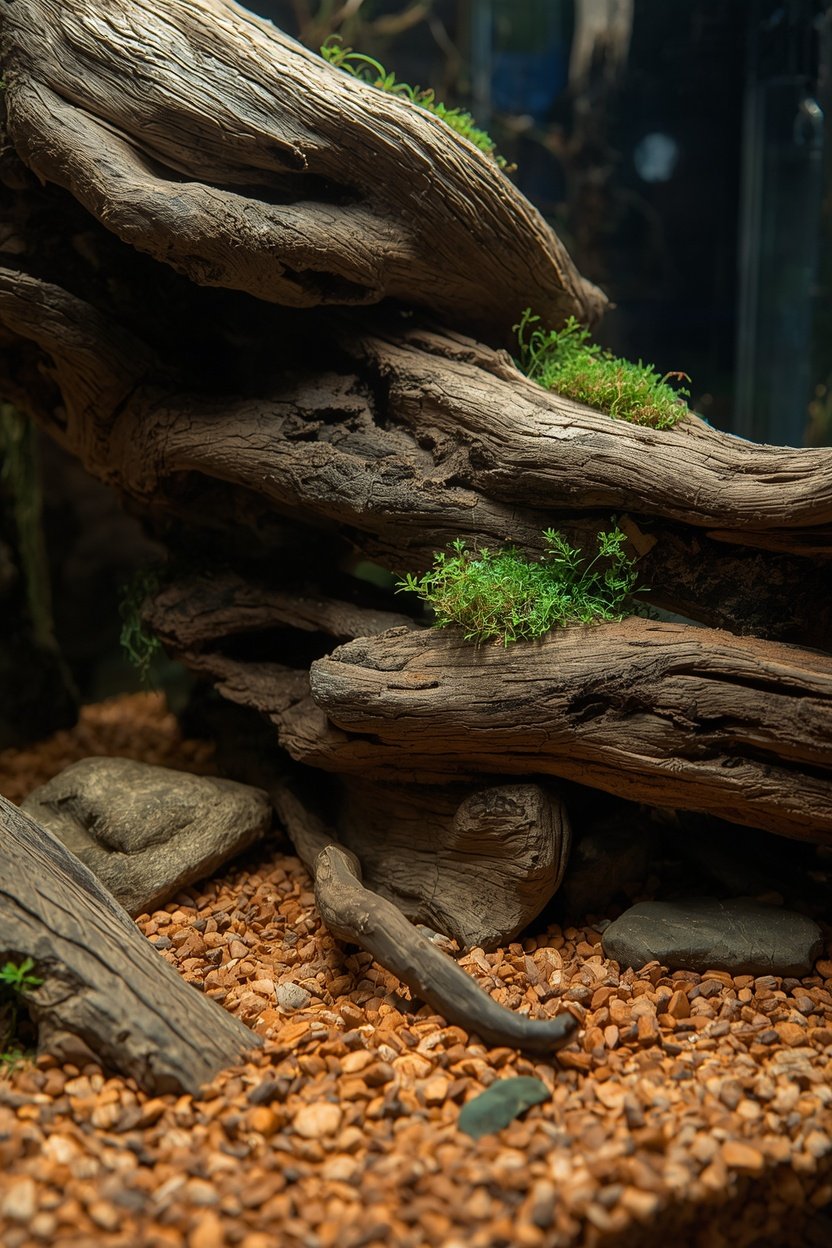
Inside the tank, rustic style depends on hardscape that echoes the same natural, unpolished materials found on the stand beneath it. Choose driftwood with rough, weathered bark texture and stones with a matte, earthy finish rather than smooth, polished river rock, which can read as too refined for this particular aesthetic.
Layer two or three pieces of driftwood at varying heights, allowing some bark texture and irregular branching to remain visible rather than selecting a single, overly smooth piece. Pair this with warm-toned gravel or sand in shades of tan, brown, or rust, avoiding stark white or cool grey substrates that can clash with the warmth established by the wooden stand.
A few sprigs of java moss tied loosely across the wood adds a touch of greenery without overwhelming the natural, earthy palette this style depends on — the goal is a tank that looks like a small piece of forest floor brought indoors, consistent with the reclaimed materials surrounding it.
Step 3: Warm Amber Lighting for a Rustic Glow
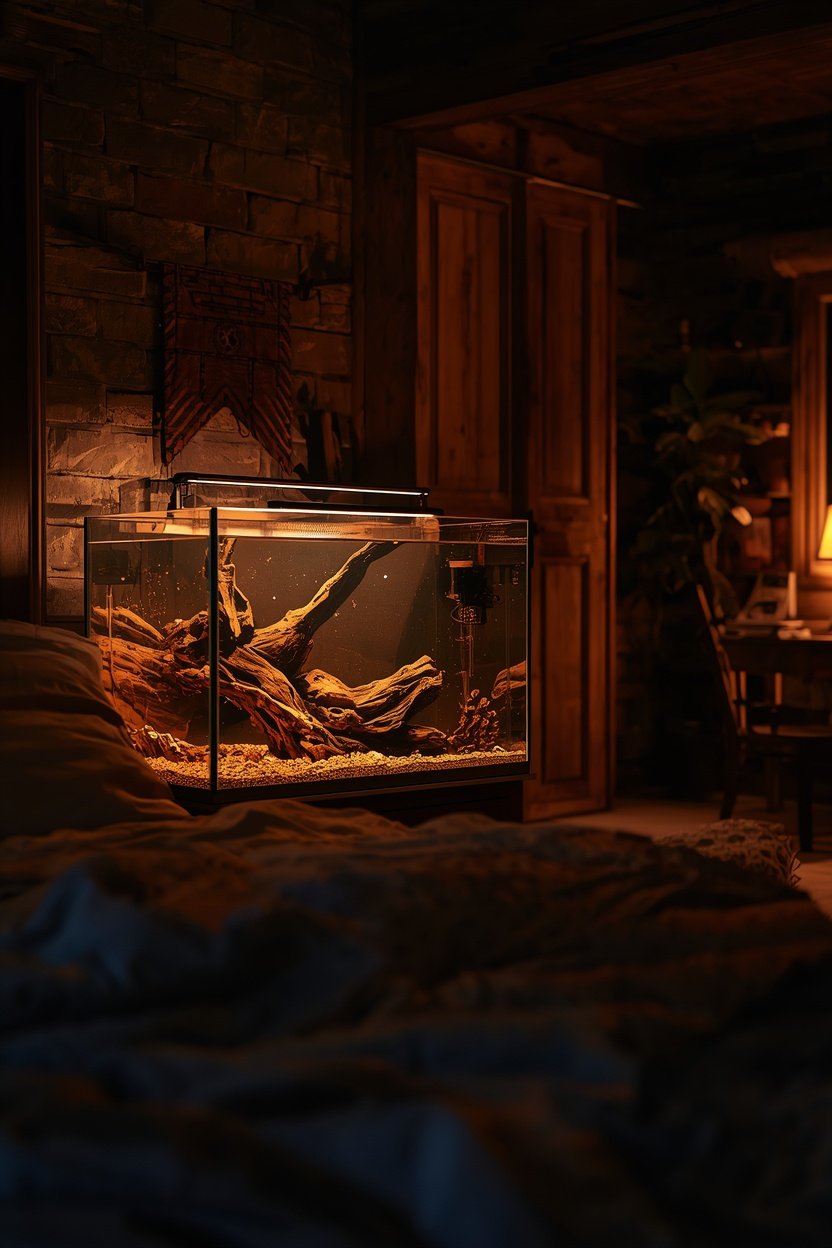
Cool white or blue-tinted aquarium lighting can undercut a rustic bedroom's warm, cozy atmosphere, so switching to a warm amber or soft yellow-toned LED setting is a small change with a significant visual payoff. This warmer light temperature mimics the glow of candlelight or an old-fashioned lamp, tying the aquarium's lighting directly to the same warm palette as the rest of a rustic bedroom.
Many adjustable aquarium lights include a warm white or sunset setting specifically for this kind of mood lighting, and dimming the intensity slightly in the evening enhances the cozy effect further, especially paired with the room's other lighting sources like a bedside lamp or string lights.
This warm glow also flatters the wood tones used throughout the setup, making both the stand and the driftwood inside the tank appear richer and more golden in the evening, rather than washed out under a colder, clinical white light.
Extra Tips for a Cohesive Rustic Aquarium
● Match metal finishes throughout. Black iron, aged brass, or bronze hardware on the stand should echo any other metal accents already in the bedroom.
● Keep equipment visually minimal. Route cords and tubing discreetly along the back of the stand so modern equipment doesn't interrupt the rustic look from the front.
● Choose fish with warm, earthy coloring. Species like honey gouramis or certain tetra varieties complement a warm rustic palette better than very bright, cool-toned fish.
● Let the tank become a nightstand feature. If space allows, positioning the aquarium near the bed lets its warm glow double as ambient bedroom lighting in the evening.
Final Thoughts
Adding a fish tank to a rustic bedroom is entirely achievable once you approach it as a design project rather than just a standard aquarium setup. A reclaimed wood stand, natural hardscape, warm amber lighting, and cohesive surrounding decor together create an aquarium that feels like a genuine extension of the room's existing style, not an addition that fights against it. Take it step by step, and you'll end up with a corner of your bedroom that's both a thriving aquarium and a beautifully styled rustic retreat.
Frequently asked questions
Is it safe to keep an aquarium near a bed?
Yes, as long as the stand is stable and rated for the tank's filled weight, keeping an aquarium near a bed is safe and many people enjoy the ambient sound and gentle glow it provides in the evening.
Will warm amber lighting affect plant growth in the tank?
A warm light setting can be slightly less effective for plant growth than a full-spectrum white light, so if you're keeping live plants, consider alternating between a fuller daytime spectrum and a warmer evening setting rather than using amber light exclusively.
What's the most affordable way to get a reclaimed wood look?
Lightly sanding and staining an inexpensive solid wood stand at home is generally far more affordable than purchasing genuine reclaimed furniture, while still achieving a similar warm, textured appearance.
