
Dining rooms are often the most furniture-constrained room in a home, with the table and chairs claiming nearly all the available floor space before anything else even gets considered. When I added a small aquarium to my own compact dining room, the challenge wasn't styling — it was figuring out where a tank could actually fit without turning mealtimes into an obstacle course around the furniture.
This guide walks through the process step by step, balancing genuine space constraints with the elegant, conversation-friendly atmosphere a dining room depends on. Each step includes a detailed image prompt so you can visualize the finished setup before making any changes to your own space.
Why a Small Dining Room Needs Careful Planning
A dining room's function hosting meals and conversation around a central table creates space and noise constraints that most general aquarium decorating advice doesn't address directly. Successfully adding an aquarium here means respecting both the room's tight furniture footprint and its purpose as a quiet, social space, rather than treating it like any other living area in the home.
Step 1: Position Away From the Table, Within Sightline
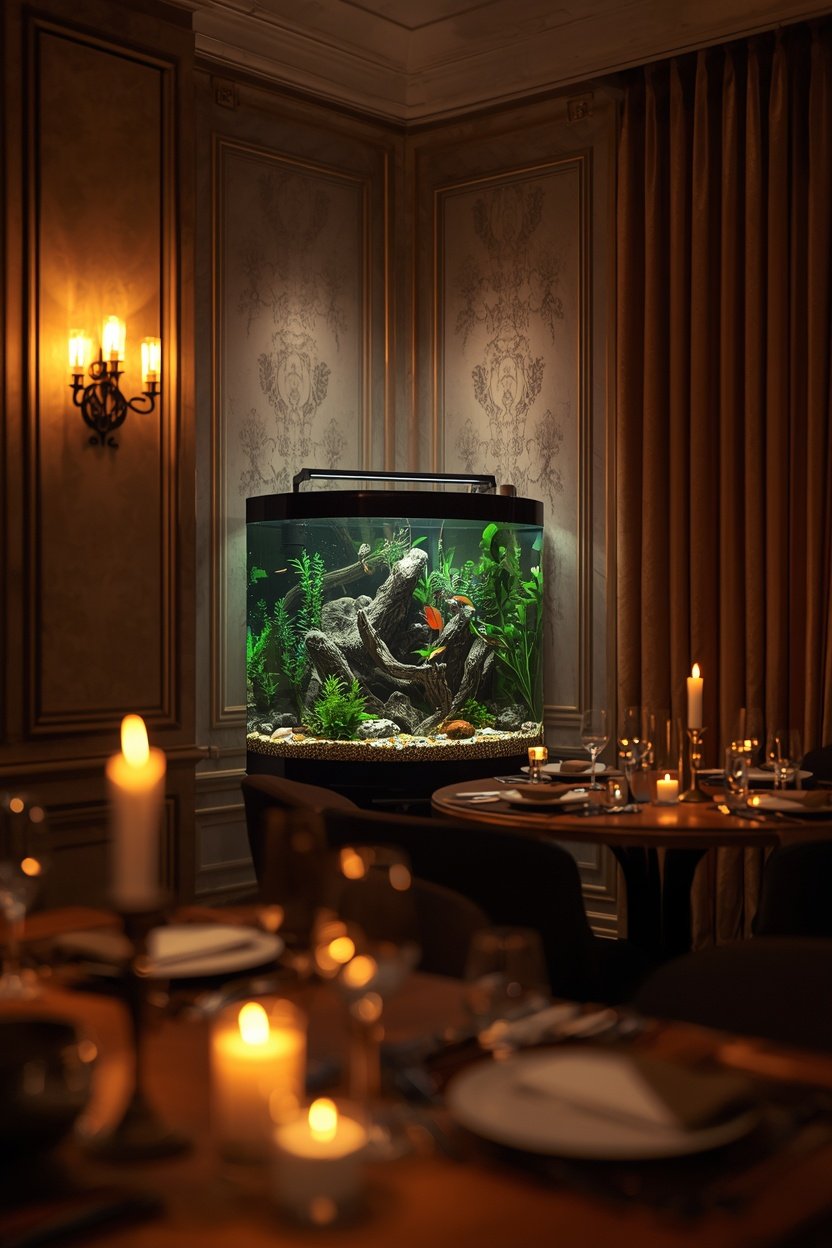
A small dining room's biggest constraint is usually the table itself, which typically claims most of the room's usable floor space, leaving little room for anything else. Rather than fighting for space near the table, look for a wall or corner outside the immediate dining area but still visible from the seats a side wall, a corner behind the head chair, or a narrow gap beside a window — so the tank remains part of the dining experience without physically crowding the table setting.
This placement matters for practical reasons too: keeping the aquarium a reasonable distance from the table reduces the chance of splashes or spilled food affecting the tank, and vice versa, while still letting the tank's movement and color contribute to the room's atmosphere during meals.
In a small dining room, even a few feet of thoughtful distance between the table and the tank can make the difference between a room that feels cluttered and one where the aquarium reads as a deliberate, considered feature rather than an obstacle guests have to navigate around.
Step 2: Choose a Sideboard or Buffet-Style Stand
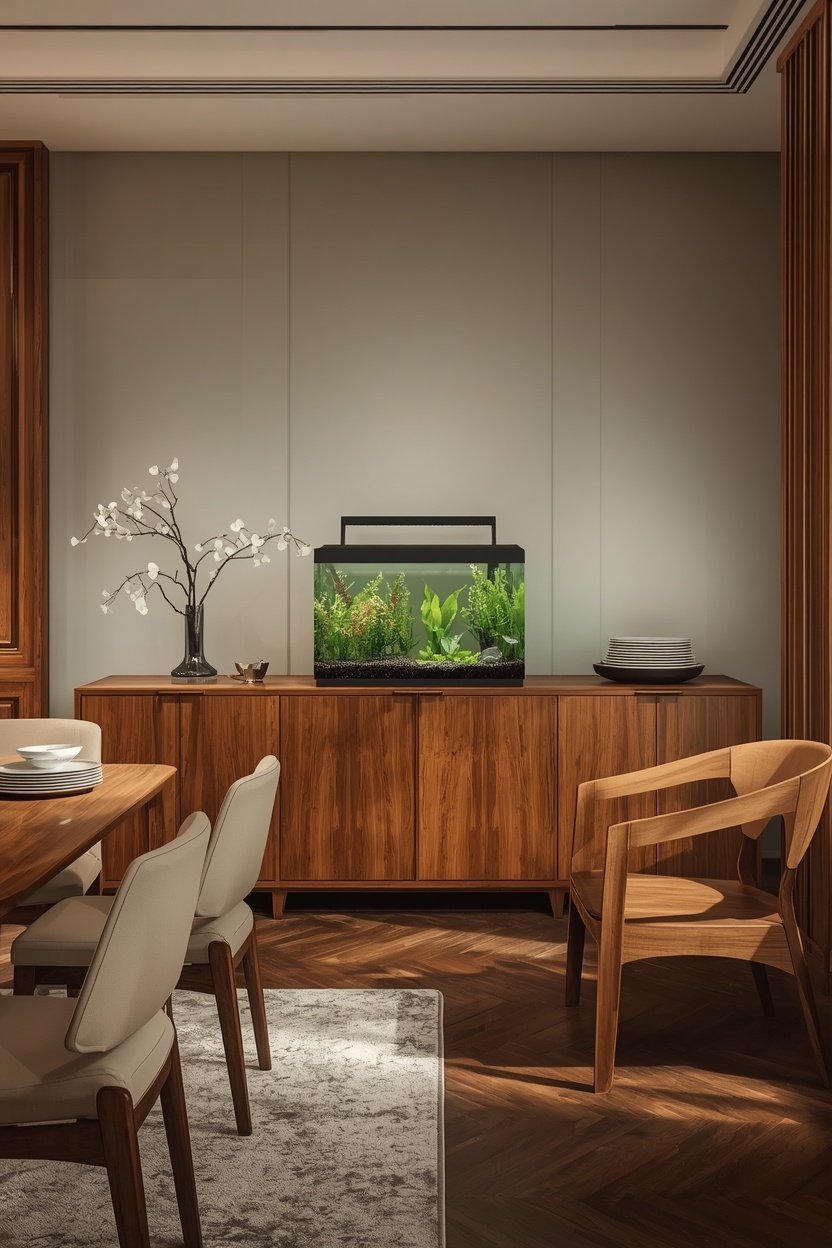
Dining rooms often already include a sideboard or buffet for serving dishes and storage, and repurposing or pairing a similar-style piece as your aquarium stand keeps the room's furniture language consistent rather than introducing an unrelated aquarium stand style. A low, long buffet-style stand with a tank positioned at one end also leaves the remaining surface free for actual serving use during meals and gatherings.
This approach is particularly space-efficient in a small dining room, since it avoids adding an entirely separate piece of furniture dedicated only to the aquarium. Instead, the tank becomes one function among several the sideboard already serves, which matters considerably when every square foot of floor space is already accounted for by the table and chairs.
Choose a stand finish that matches or complements your existing dining furniture's wood tone or finish, reinforcing the sense that the aquarium was planned as part of the room rather than added as an afterthought once the rest of the furniture was already in place.
Step 3: Use Quiet Equipment for Conversation-Friendly Ambiance
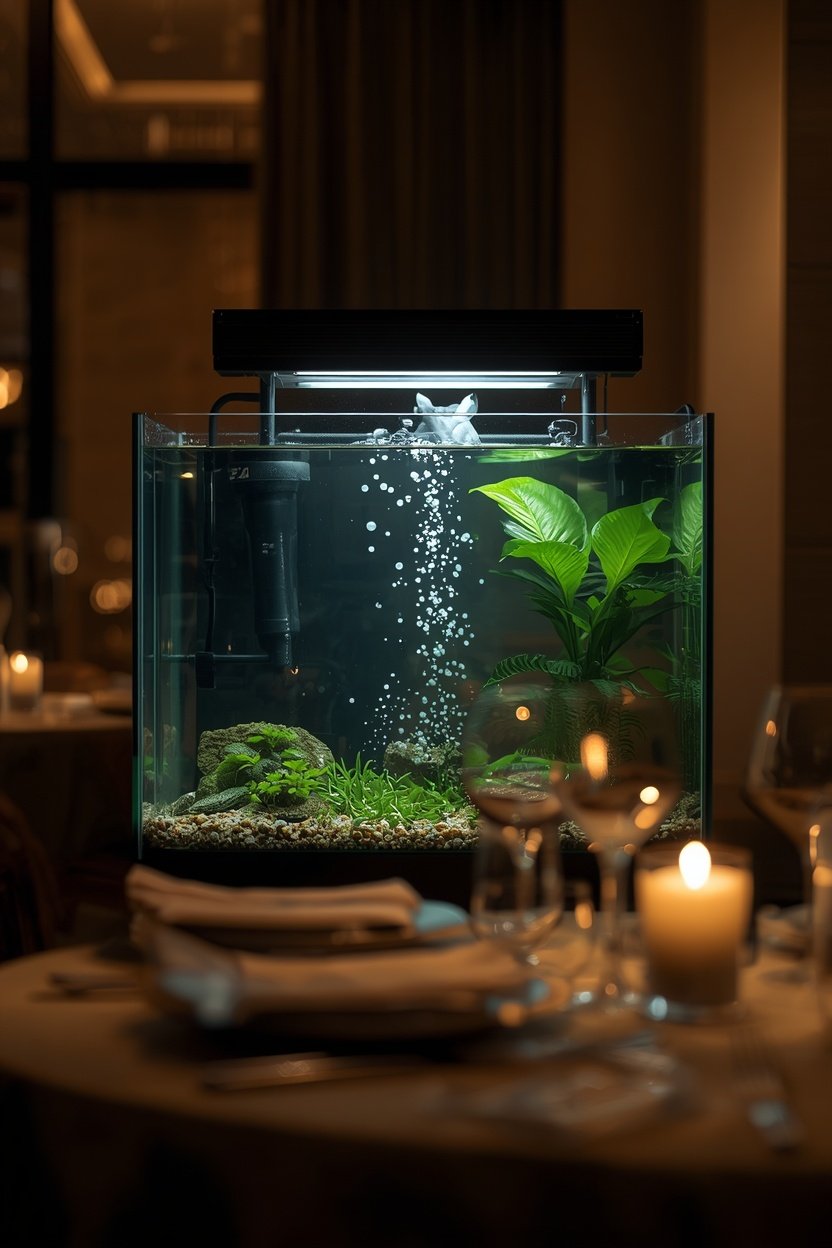
A dining room is a space built around conversation, whether during a quiet weeknight dinner or hosting guests, and a loud filter or bubbling air pump can genuinely compete with that conversation in ways it wouldn't in a busier, noisier room like a kitchen. Choosing a quiet internal filter or sponge filter over a louder hang-on-back model keeps the tank's presence purely visual and calming rather than an audible distraction during meals.
This consideration matters more here than in almost any other room on this list, since dining rooms are specifically used for focused social interaction rather than passive background activity. A softly gurgling or humming tank can be pleasant as gentle ambiance, but anything louder tends to pull attention away from the table in a way that undercuts the room's actual purpose.
Testing your equipment's noise level during an actual seated meal, rather than just standing near the tank briefly, gives a much more accurate sense of whether the sound level genuinely suits a room built around conversation.
Step 4: Style Hardscape to Complement Table Decor
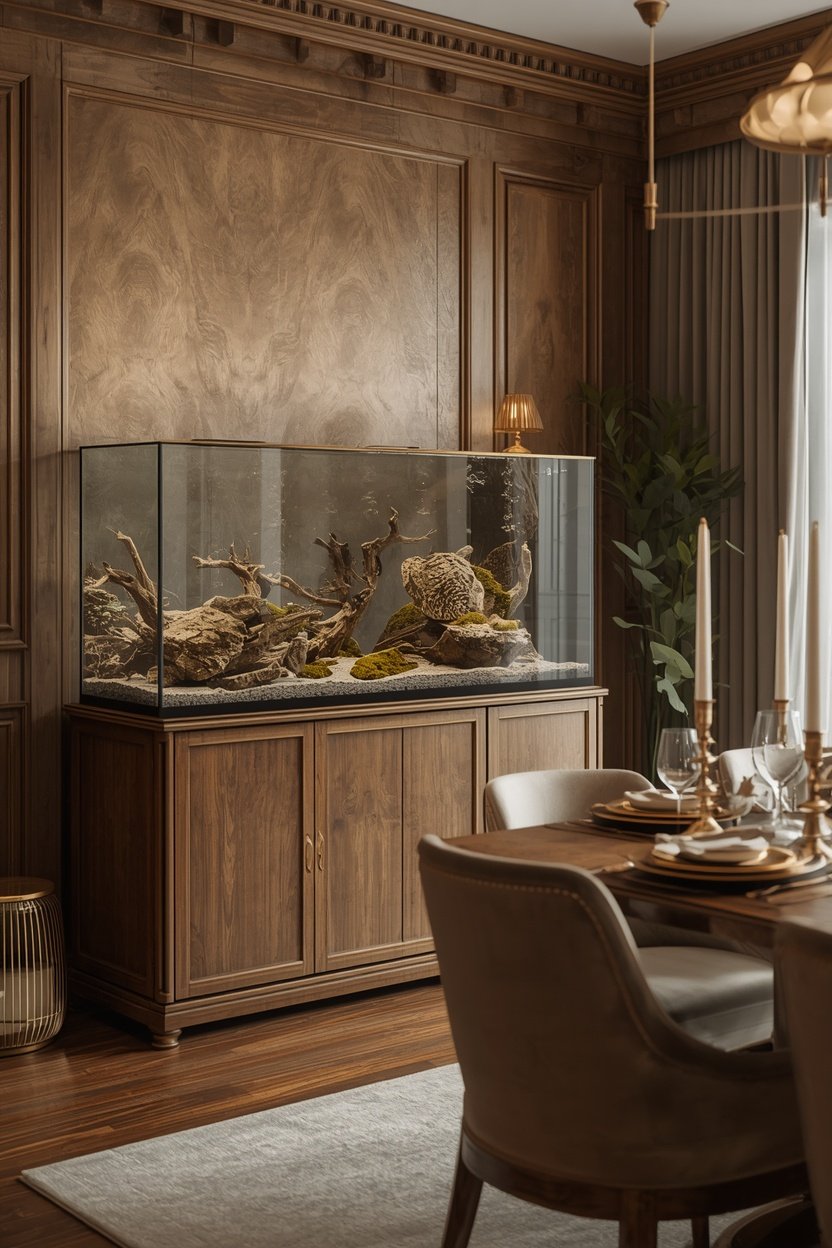
A dining room's decor typically follows a fairly considered, cohesive style — table linens, candlesticks, a particular wood tone — and the aquarium's internal hardscape should echo that same palette rather than introducing a completely separate color story. Warm driftwood and muted stone tones generally coordinate well with traditional dining room styling, while a more monochrome, minimal hardscape suits a modern dining space.
Consider echoing a specific material already present in the room, such as pairing a brass-trimmed tank with existing brass candlesticks or cabinet hardware, which ties the aquarium visually into the room's broader material story rather than treating it as a completely separate object.
Keeping the internal layout relatively simple and elegant, rather than a busy, heavily decorated aquascape, also suits a dining room's generally more formal, considered atmosphere, mirroring the same restraint typically applied to a well-set table.
Extra Tips for a Dining Room Aquarium
- Measure chair clearance, not just floor space. Account for the space needed to pull chairs out from the table when confirming your aquarium placement won't interfere.
- Choose calm, non-startling fish. Slow-moving species suit a dining room's quieter atmosphere better than fast, erratic swimmers that can catch the eye distractingly during conversation.
- Schedule maintenance outside mealtimes. Routine cleaning is easier to manage well before or after meals rather than around a dining schedule.
- Consider a dimmer for evening meals. A dimmed aquarium light during dinner can enhance candlelit ambiance rather than competing with it.
Final Thoughts
A small dining room can absolutely accommodate a genuinely elegant aquarium, as long as the setup respects both the room's tight furniture footprint and its role as a space for quiet conversation. Thoughtful placement away from the table, a space-efficient sideboard-style stand, quiet equipment, and hardscape that echoes the room's existing decor together create a tank that enhances mealtimes rather than complicating them.
Frequently asked questions
How far should an aquarium be from the dining table?
A few feet of clearance is generally sufficient to avoid splash concerns while keeping the tank visually connected to the dining experience, though exact distance depends on your room's specific layout.
Will aquarium equipment noise disrupt dinner conversation?
Standard filters can introduce noticeable background noise, so choosing a quiet internal or sponge filter is worth prioritizing specifically for a dining room, more so than in rooms used for less focused conversation.
What tank size works best for a small dining room?
A 5-to-15 gallon tank generally fits well on a sideboard-style stand without overwhelming a small dining room, though the right size ultimately depends on your available wall space and furniture layout.
