
Before I ever kept fish, I had a small glass bowl of floating water lettuce sitting on my kitchen table, and it remains one of my favorite low-effort additions to a home I've ever made. Indoor water gardens get overshadowed by full aquariums in most decorating guides, but they offer their own distinct appeal: calming, genuinely low-maintenance, and often requiring far less commitment than a fish-focused setup.
These four ideas range from the simplest possible entry point to more ambitious, statement-making displays, all built entirely around water and plants rather than fish. Each idea includes a detailed image prompt so you can visualize the finished result before gathering materials for your own space.
Why Indoor Water Gardens Are Worth Considering
An indoor water garden offers many of the same calming, biophilic benefits as a full aquarium — moving water, living greenery, a small piece of nature indoors — without the ongoing responsibility of fish care, filtration, or feeding schedules. This makes water gardens a genuinely appealing option for anyone drawn to the aesthetic of an aquarium but not ready, or not interested, in keeping fish.
1. A Tabletop Glass Bowl Water Garden
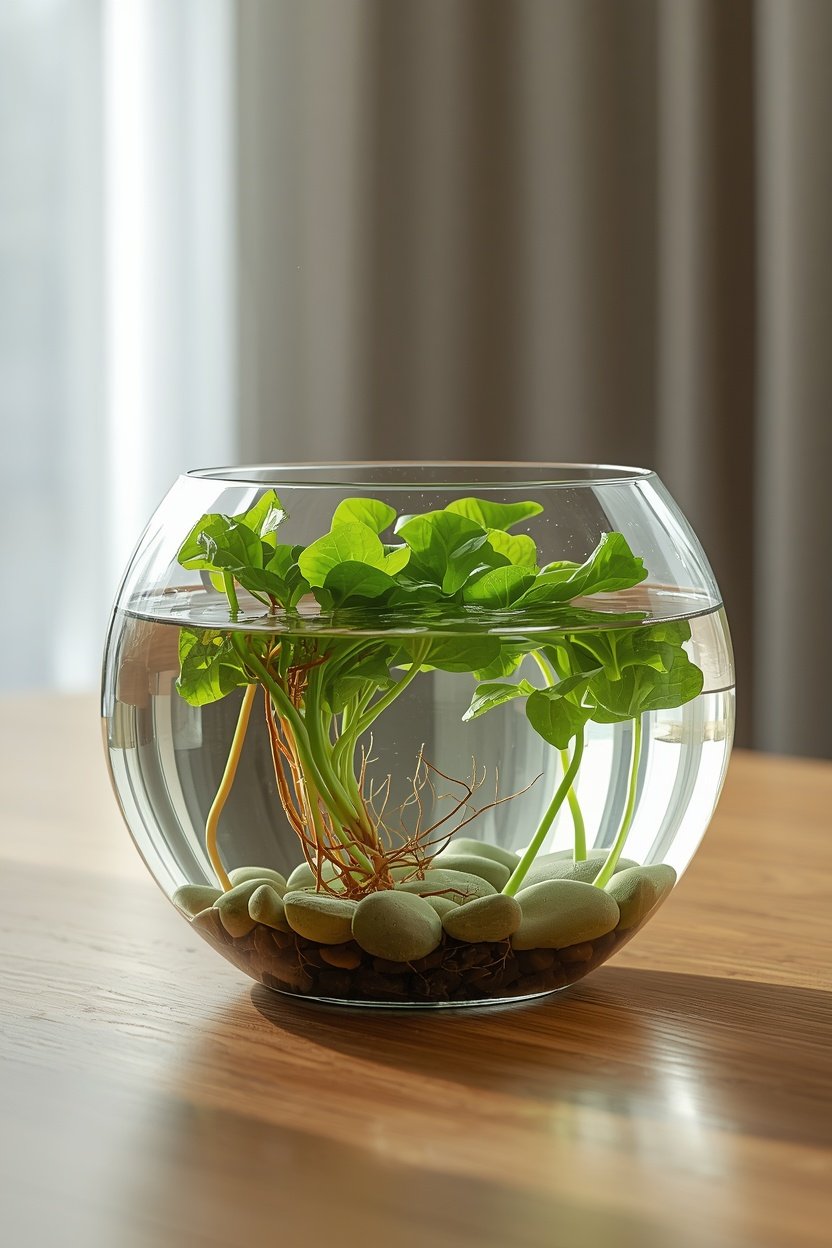
The simplest entry point into indoor water gardening is a wide, shallow glass bowl filled with water and a few floating plants, requiring no filtration, pump, or fish at all. Water lettuce, frogbit, or a small water hyacinth float freely across the surface, their roots trailing down into the water in a soft, delicate curtain that looks beautiful from every angle of a clear glass bowl.
This style works well on a coffee table, a kitchen windowsill, or a dining table centerpiece, since the bowl's open top and shallow depth make it easy to view from above as well as from the side. A few smooth stones placed at the bottom add a bit of visual weight and interest without requiring any additional equipment.
Because there's no fish to support, water quality needs are minimal — a partial water change every week or two, paired with bright indirect light, is generally enough to keep floating plants healthy and multiplying, often to the point where you'll need to thin them out periodically as they spread.
2. A Vertical Wall-Mounted Water Garden Panel
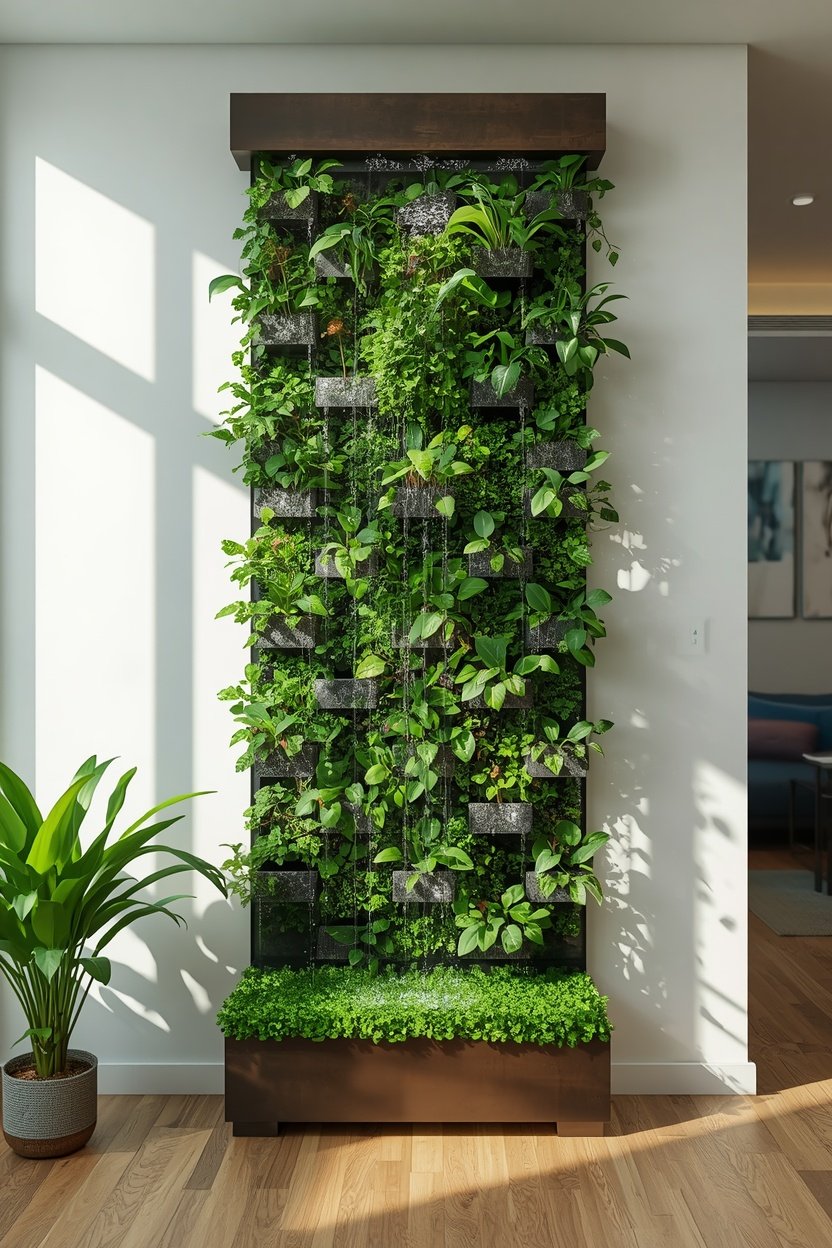
For anyone with limited horizontal surface space, a vertical wall-mounted water garden panel turns an indoor water feature into genuine wall art rather than a tabletop object. These panels typically use a series of small connected pockets or a slow-circulating water channel, allowing aquatic or semi-aquatic plants to grow along a vertical surface while water gently trickles or pools through the structure.
This style introduces both visual and auditory interest, since a slow, trickling water sound adds a genuinely calming ambient element most other indoor water garden styles don't offer. Choose plants suited to consistently moist or wet roots, like certain pothos varieties grown hydroponically or true aquatic marginal plants, depending on your specific panel design.
A vertical water garden does require more setup than a simple bowl, typically involving a small pump to keep water circulating through the structure, but the resulting living wall feature offers a level of visual drama a flat tabletop display can't match.
3. A Self-Contained Closed-Jar Ecosystem
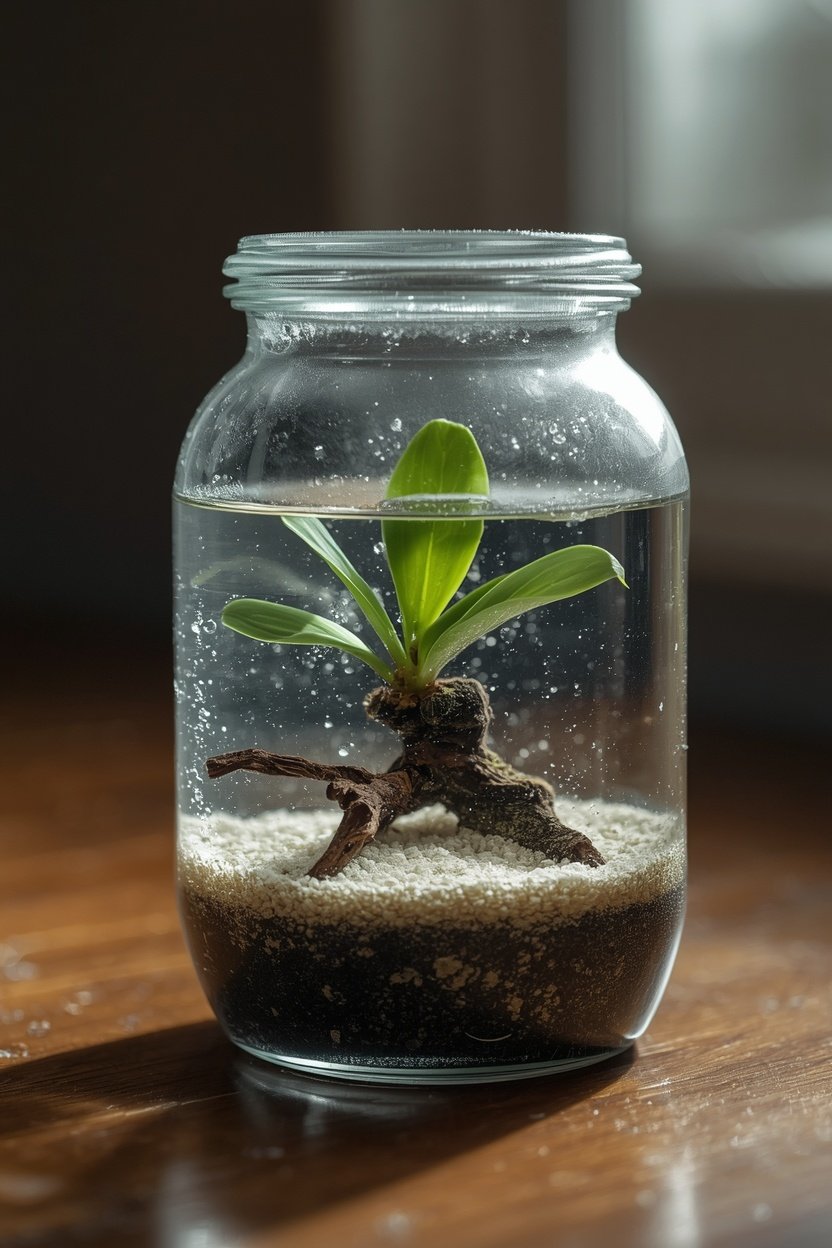
A sealed glass jar water garden, sometimes called a closed aquatic terrarium, creates a nearly self-sustaining miniature ecosystem using just water, substrate, a hardy aquatic plant like anubias or java fern, and a tightly sealed lid. Once balanced, these closed systems can go remarkably long stretches with minimal intervention, since the sealed environment recycles moisture and gases within the jar itself.
Building one requires a bit of patience during the initial setup — layering a small amount of substrate, planting a hardy species tied to a tiny piece of driftwood or anchored directly in the substrate, then sealing the jar and observing carefully over the following weeks to confirm the balance holds without excess algae or cloudy water developing.
This idea appeals particularly to anyone drawn to the low-maintenance philosophy of a terrarium but wanting a genuinely aquatic, rather than purely soil-based, growing environment. A small closed jar makes a striking desk or shelf accent precisely because of how self-sufficient and quietly alive it appears once properly established.
4. A Multi-Tier Container Water Garden
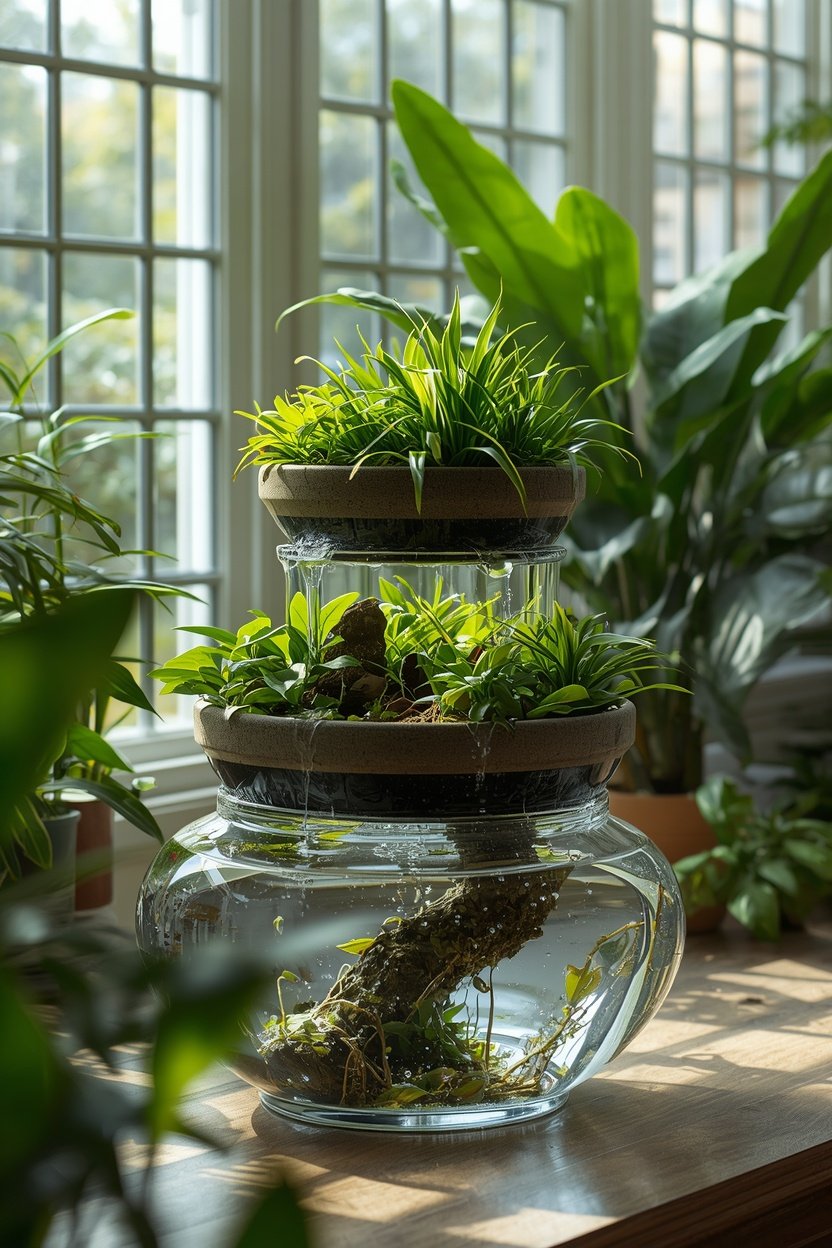
For a more elaborate indoor display, stacking two or three shallow containers at different heights — using simple risers or a tiered plant stand — creates a miniature cascading water garden reminiscent of a small tiered pond. Each tier can host different plants or water depths, with water gently overflowing from the top container down into the ones below if you incorporate a small pump for circulation.
Alternatively, a static version without circulation still achieves a beautiful tiered visual effect, simply treating each container as its own independent small water garden rather than a connected cascading system, which considerably simplifies setup and maintenance for a beginner.
This style suits a larger indoor space, like a sunroom, entryway, or a wide windowsill, where its multi-level footprint has room to be appreciated fully. Varying the plant selection across each tier — perhaps floating plants on top and a rooted marginal plant below — adds genuine textural variety across the whole display.
Tips for a Thriving Indoor Water Garden
- Prioritize bright, indirect light. Most aquatic and floating plants need consistent light to thrive, though direct sun can overheat small containers or cause excessive algae growth.
- Change water regularly even without fish. Stagnant water can develop odor or algae issues over time, so a partial refresh every one to two weeks keeps most water gardens healthy.
- Choose plants suited to your container's depth. Floating plants work in almost any container, while rooted aquatic plants need enough substrate depth to anchor properly.
- Thin overgrown plants promptly. Fast-growing floating plants like water lettuce can quickly cover an entire container's surface if not thinned periodically.
Final Thoughts
An indoor water garden brings much of the same calm, living quality as a full aquarium into your home, without requiring fish care or complex equipment. Whether you start with a simple tabletop bowl, build toward a striking vertical wall panel, experiment with a self-contained closed jar, or create a tiered cascading display, each of these ideas proves that water and plants alone can create a genuinely captivating indoor feature.
Frequently asked questions
Do indoor water gardens need a filter?
Most simple water garden styles, like a floating plant bowl or a closed jar, don't require filtration, since the plant density and manageable water volume generally keep the system stable with regular partial water changes.
Can I add fish to an indoor water garden later?
Some styles, like a larger tabletop bowl, can be adapted to support a small fish like a betta with some additional planning around water depth and basic filtration, though closed jar systems generally aren't suitable for fish.
How much light does an indoor water garden need?
Most aquatic and floating plants do well with several hours of bright, indirect natural light daily, though a small supplemental grow light can help in rooms with limited natural light exposure.
