
Most aquascaping advice online is written with small nano fish in mind, and I learned the hard way that a lot of it simply doesn't hold up once you're stocking larger community species. My first attempt at a tank full of bigger barbs and gouramis saw plants uprooted within days and a rock formation gradually shift out of place over a few weeks — problems I'd never encountered with smaller, gentler fish.
These four ideas are built specifically around the real physical presence and behavior of larger community fish: their strength, their need for open swimming space, and their genuinely bigger bodies. Each idea includes a detailed image prompt so you can visualize the finished setup before making changes to your own tank.
Why Larger Community Fish Need Different Decor Planning
Bigger community fish bring more physical force and a greater need for open swimming space than the small nano species most decorating advice assumes, which means hardscape stability, plant durability, and shelter sizing all need to be reconsidered rather than simply scaled down from smaller-tank advice. Planning around these larger fish's actual physical needs from the start avoids the gradual wear and tear a mismatched layout tends to suffer over time.
1. Choose Heavy-Duty, Securely Anchored Hardscape
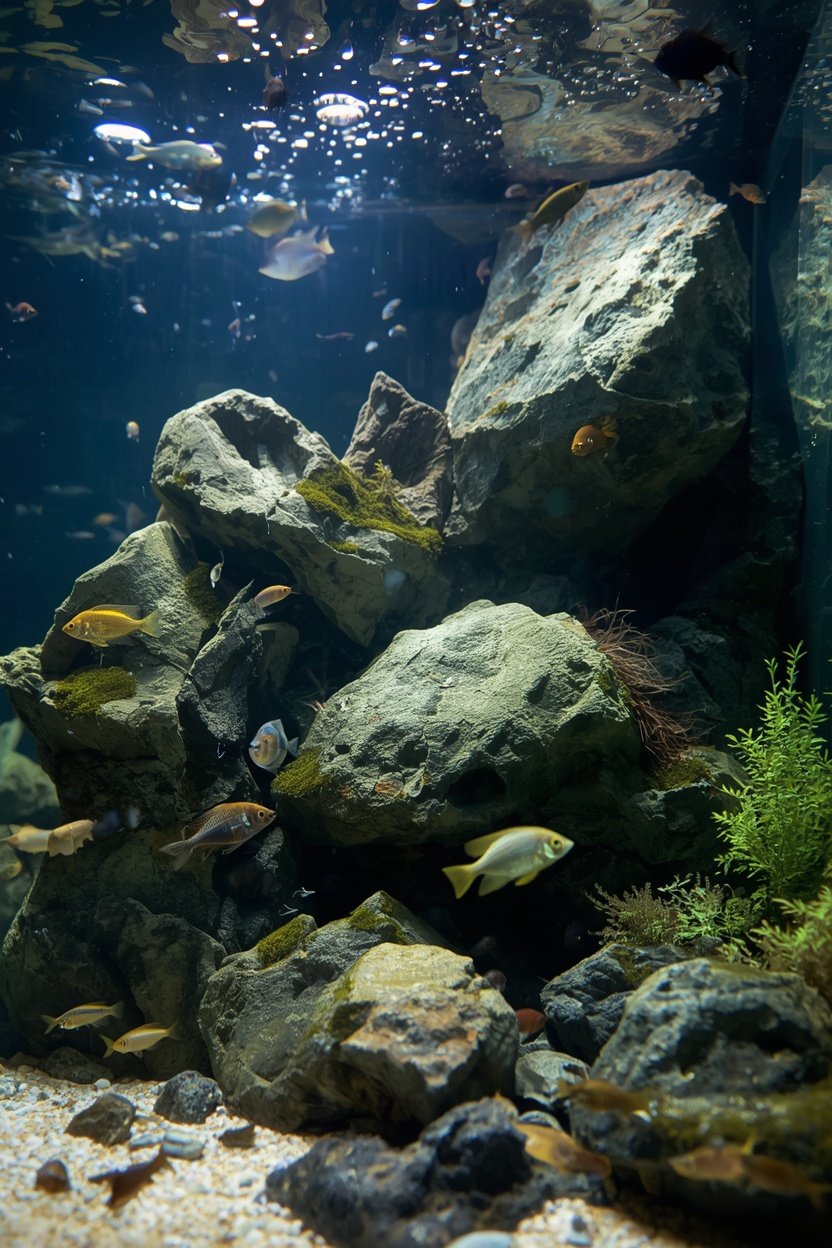
Larger community fish — think bigger barbs, adult gouramis, or larger rainbowfish — are considerably more powerful swimmers than the small nano species most decor guides are written around, and a lightweight or loosely placed rock formation that would sit perfectly stable in a small tank can shift or topple once bigger, more forceful fish are swimming past and around it regularly. Choosing substantial, heavier hardscape pieces, secured with aquarium-safe adhesive at contact points, prevents this kind of gradual destabilization.
This matters even more for structures with any height, since a tall rock formation has a longer lever arm and is more easily nudged off balance by a large fish brushing past than a low, wide one would be. Building with a wider base and lower overall profile, or securing tall pieces to a hidden acrylic plate beneath the substrate, adds real stability without necessarily changing the visual impact of the layout.
Testing your finished hardscape by gently pushing on it from multiple angles before adding fish is a simple but genuinely useful step, giving you a rough sense of how a large, active fish's regular movement might affect the structure over the following months.
2. Prioritize Long, Open Swimming Lanes
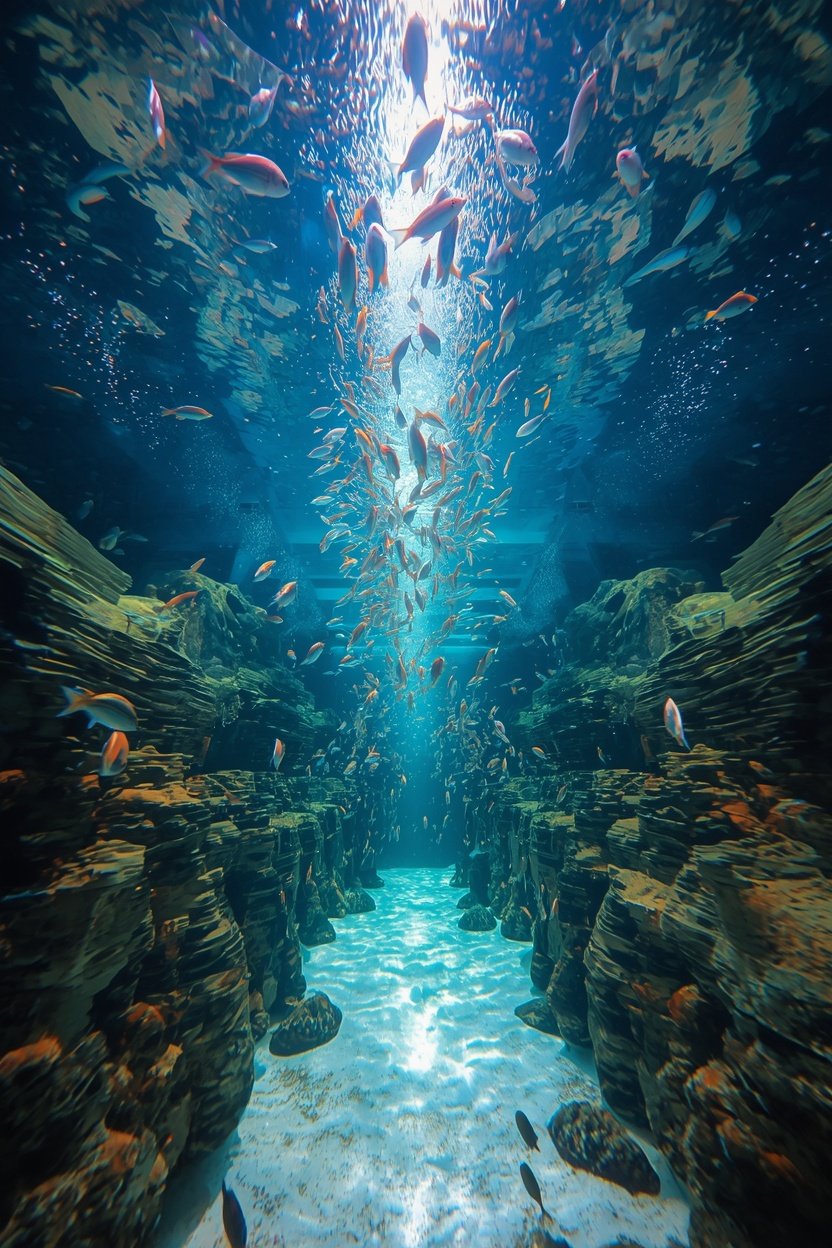
Larger community fish typically need considerably more linear swimming distance than small nano species to display natural, comfortable movement, particularly schooling species like larger barbs or bigger tetra varieties that move together in coordinated groups. A tank decorated with dense, maze-like hardscape throughout restricts this movement in a way that can genuinely stress fish built for open water travel.
Concentrate your hardscape and planting toward the back and sides of the tank, preserving a long, clear lane running front to back or side to side, depending on your tank's specific dimensions, so schooling fish have room to move as a coordinated group rather than breaking formation around obstacles. This open-lane principle matters even more in a longer tank, where the full length can genuinely be used for swimming rather than just visual depth.
This doesn't mean skipping an interesting aquascape entirely — it simply means being deliberate about preserving genuine open water, the same open-space planning principle that benefits many active fish, but one that carries real behavioral importance for larger schooling community species specifically.
3. Use Robust, Large-Leafed Plants
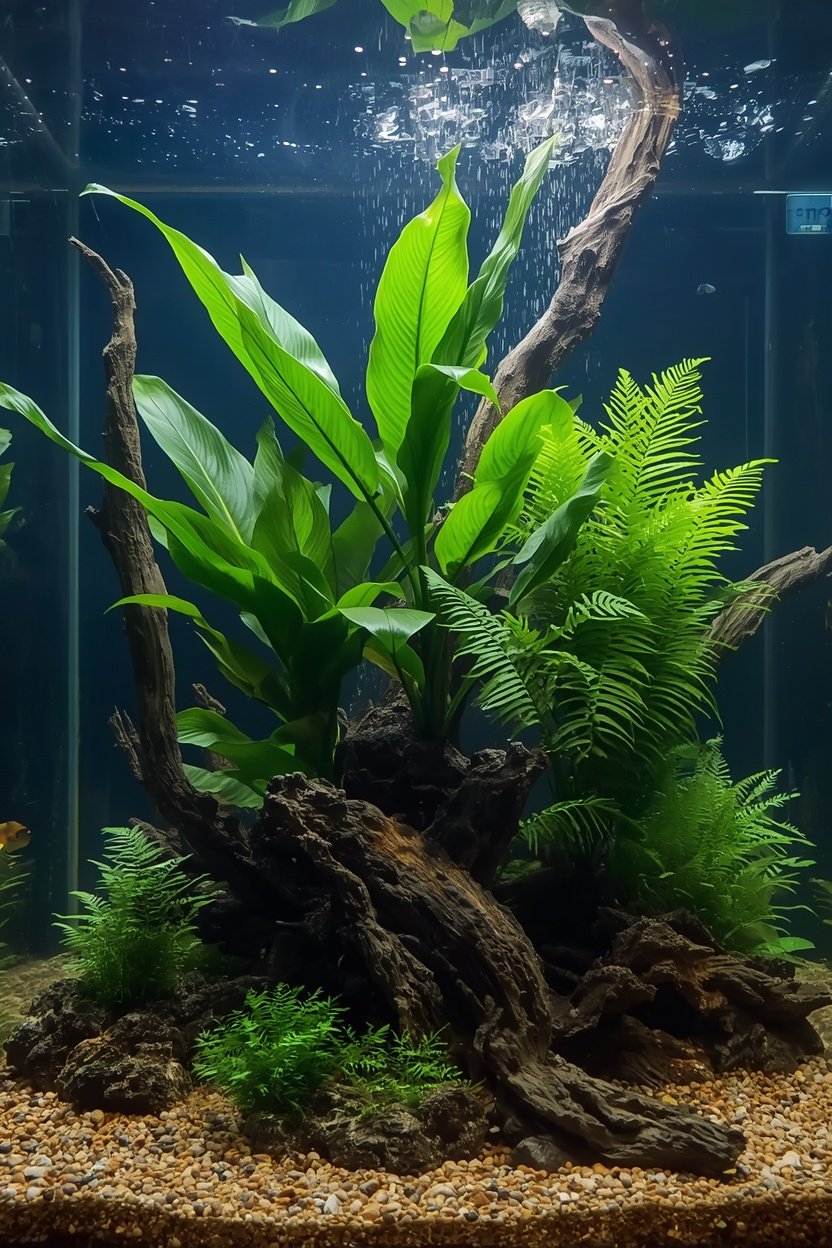
Delicate, fine-textured plants that work beautifully in a nano or small community tank often struggle against the more forceful swimming and occasional grazing of larger community fish, getting uprooted, torn, or simply overwhelmed. Robust species like Amazon sword, Java fern, and larger anubias varieties hold up considerably better, offering sturdy leaves and secure root or rhizome attachment that withstands regular contact from bigger, more active tankmates.
Anchoring plants like java fern and anubias directly to driftwood or rock, rather than into loose substrate, adds an extra layer of resilience, since a plant physically tied to a heavy, stable piece of hardscape is far less likely to be uprooted than one relying on substrate alone for anchorage. This technique benefits any planted tank, but it becomes genuinely important once larger, more physically forceful fish are involved.
Choosing plant species proven to handle larger fish from the start saves considerable ongoing frustration compared to attempting a delicate planted layout that ends up needing frequent replacement as bigger tankmates gradually work through it.
4. Provide Appropriately Sized Shelter and Structure
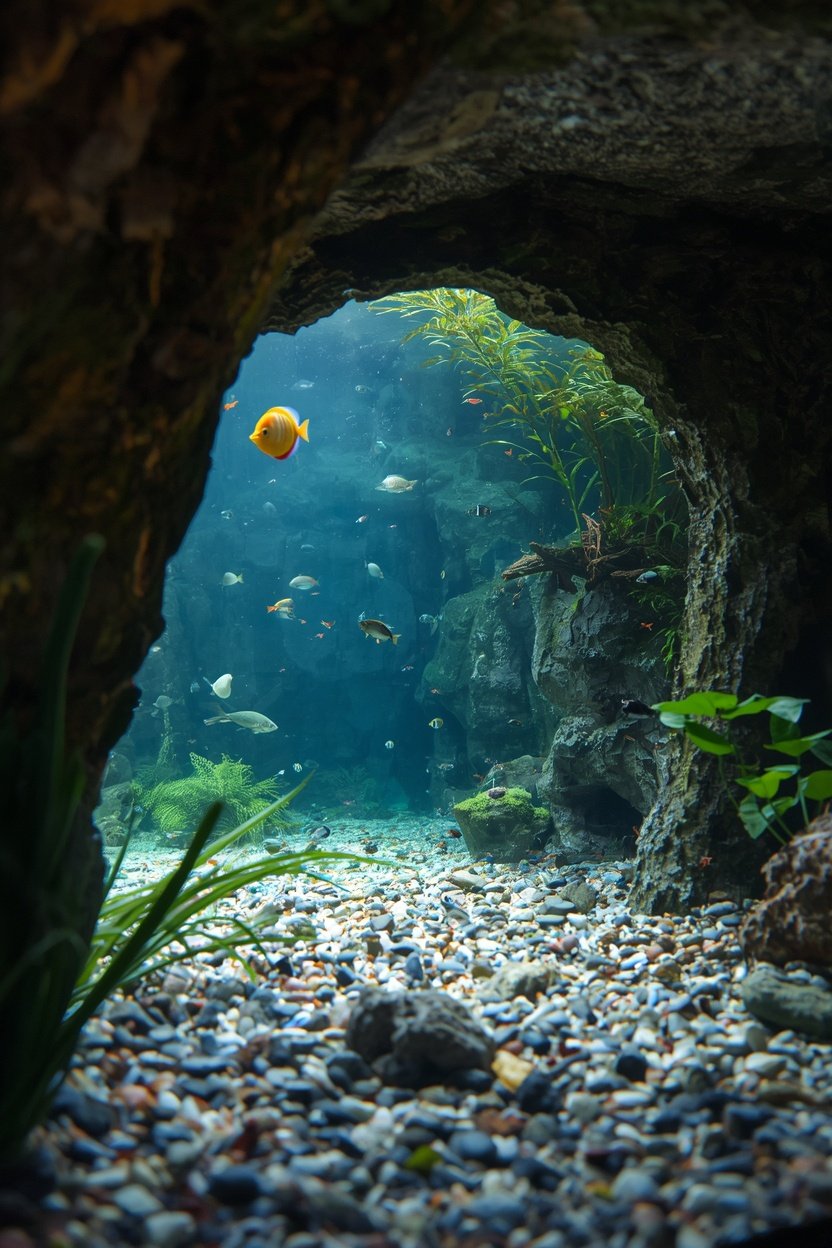
Cave and shelter decor sized for small nano fish often simply doesn't fit or function properly for larger community species, which need genuinely larger openings and interior space to use a hiding spot comfortably rather than squeezing awkwardly into something built for much smaller fish. Choosing caves, overhangs, and structural gaps proportional to your specific fish's actual adult size ensures shelter decor serves its intended purpose rather than sitting unused.
This is particularly relevant for semi-aggressive or territorial larger community species, like certain gourami varieties, which genuinely benefit from having an appropriately sized retreat available during territorial disputes or simply when seeking a moment of solitude within an active community tank. A shelter too small to actually use provides no real behavioral benefit, regardless of how attractive it looks in the layout.
Scale your entire hardscape's proportions to your specific fish's adult size from the beginning, rather than defaulting to standard nano-tank-scaled decor and hoping larger fish will simply adapt to structures that were never really built with their size in mind.
Additional Tips for Decorating Large Community Tanks
- Research adult size, not juvenile size. Many community fish sold small at pet stores grow considerably larger, so plan your decor around their eventual adult dimensions.
- Recheck hardscape stability periodically. Even well-secured structures are worth rechecking every few months as larger fish continue to interact with them over time.
- Choose a tank size that supports genuine swimming room. Good decor planning still depends on starting with a tank large enough to accommodate your specific fish's space needs.
- Balance shelter and open water deliberately. Larger community tanks benefit from the same shelter-versus-open-space planning smaller tanks do, just scaled proportionally larger throughout.
Final Thoughts
Decorating for larger community fish isn't simply a bigger version of small-tank aquascaping it calls for genuinely reconsidering hardscape stability, plant durability, swimming space, and shelter sizing around fish with real physical presence and different behavioral needs. Secure heavy hardscape, long open swimming lanes, robust plants, and appropriately scaled shelter together create a tank that holds up to bigger, more active fish rather than gradually being dismantled by them.
