
My first goldfish tank was a constant battle: delicate plants uprooted within days, fine gravel that seemed to trap waste no matter how often I vacuumed, and a cloudy tank that needed far more attention than I'd expected. It took switching my whole approach — working with goldfish behavior rather than against it — before the tank finally became something I could maintain without a weekly headache.
These four ideas are built specifically around how goldfish actually behave: their digging, their appetite for soft plants, and their above-average waste output. Rather than fighting these traits, each idea works with them to create a tank that looks genuinely good while asking far less of you week to week. Every idea includes a detailed image prompt so you can visualize the finished setup before making changes.
Why Goldfish Tanks Need a Different Maintenance Strategy
Goldfish differ from many popular aquarium fish in three key ways that directly affect decor choices: they produce significantly more bioload, they instinctively dig and forage through substrate, and they'll eat or uproot most soft-leaved plants given the chance. A low-maintenance goldfish tank accounts for all three factors from the very beginning, rather than applying generic aquascaping advice that assumes a very different kind of fish.
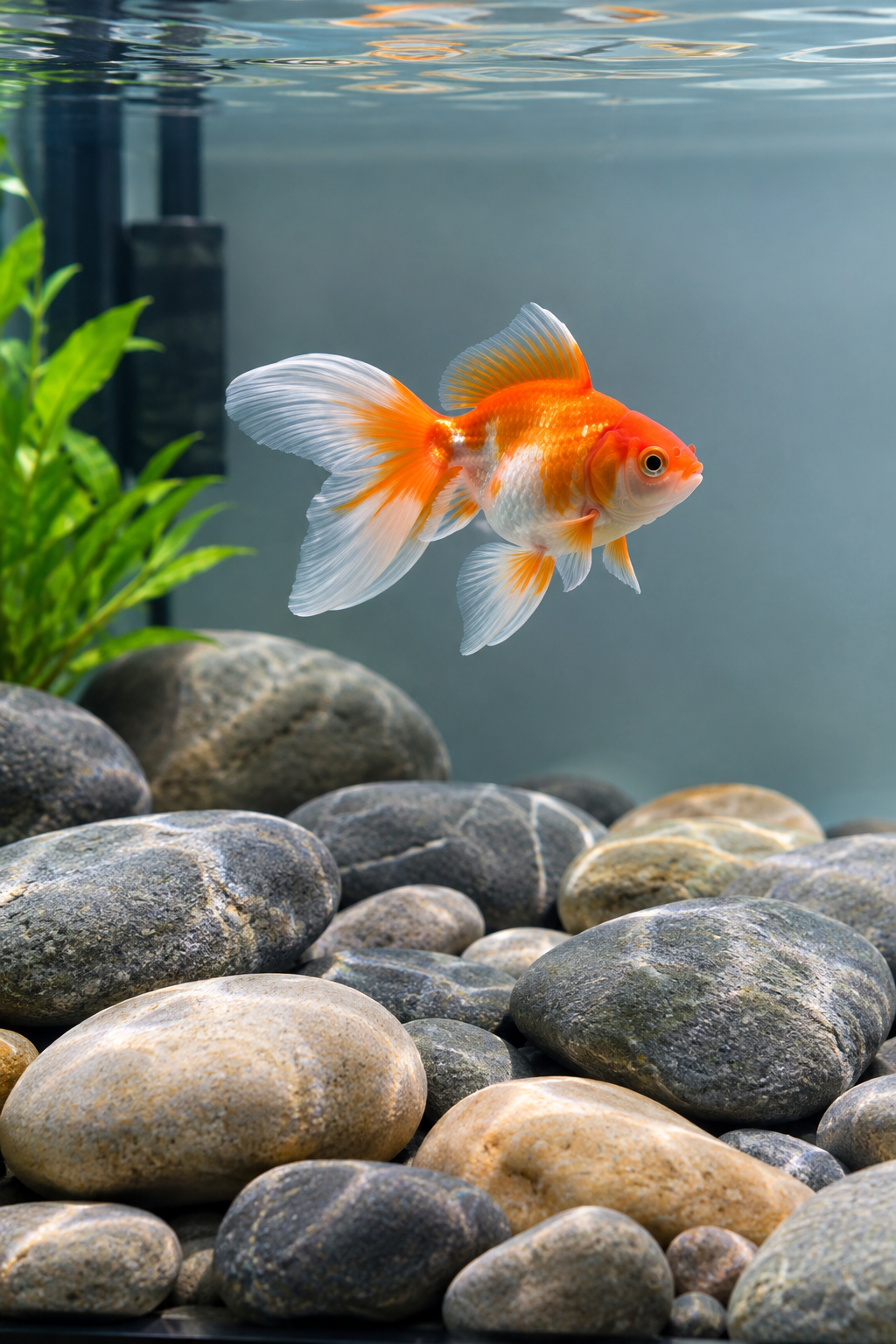
1. Skip Fine Gravel for Smooth, Large River Rock
Goldfish are enthusiastic diggers and notorious for sifting through substrate while foraging, which means fine gravel or small pebbles carry a real risk of accidental ingestion and impaction. Switching to smooth river rock too large for a goldfish to fit in its mouth removes that risk almost entirely, while also happening to be one of the easiest substrates to maintain long-term.
Large rock doesn't trap waste and uneaten food the way fine gravel does, since debris tends to settle on top of the smooth surface rather than sinking down between tightly packed grains. This makes routine vacuuming faster and more effective, since a gravel vacuum can lift waste straight off the rock's surface instead of having to dig it out from between small particles.
Choose rocks in a consistent, natural tone for the calmest visual effect, and rinse thoroughly before adding them to the tank, since larger rock can sometimes carry more surface dust than pre-washed bagged gravel.
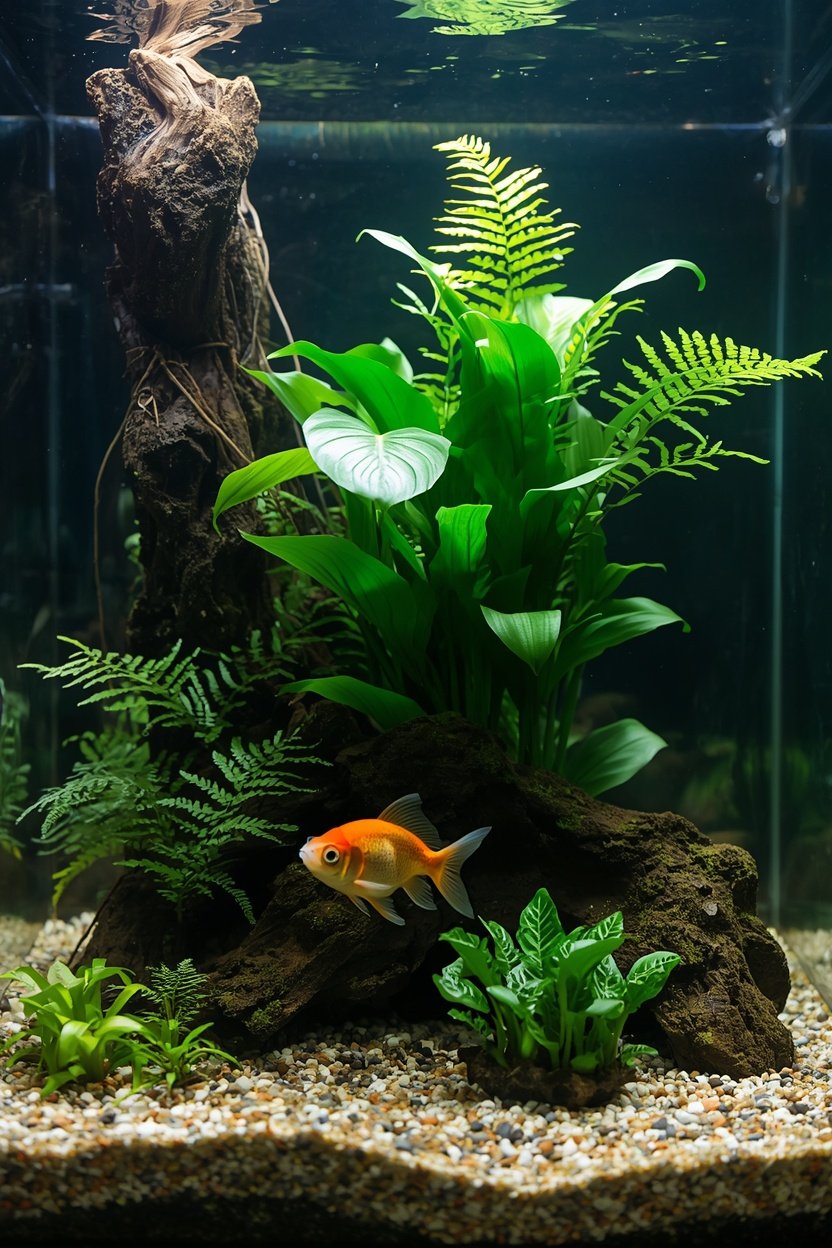
2. Choose Hardy Plants Goldfish Won't Destroy
Goldfish are notorious plant destroyers, often uprooting soft, delicate species or eating through tender leaves within days of planting. Rather than fighting this instinct, a low-maintenance goldfish tank works with it by choosing tough, unpalatable plants like anubias, java fern, or Amazon sword, tied or wedged onto rocks and driftwood rather than planted directly in substrate where goldfish can dig them up.
These hardier species have thicker, less appealing leaves that goldfish generally leave alone, meaning you get the benefits of live plants — some nutrient absorption, a more natural look — without needing to constantly replant or replace nibbled greenery. Anchoring plants to hardscape rather than substrate also protects them from goldfish digging around the base, which is often what uproots more delicate plants in the first place.
This single decision saves considerable ongoing maintenance time compared to attempting a lush, soft-leaved planted layout that goldfish will likely dismantle within the first week regardless of how carefully it's arranged.
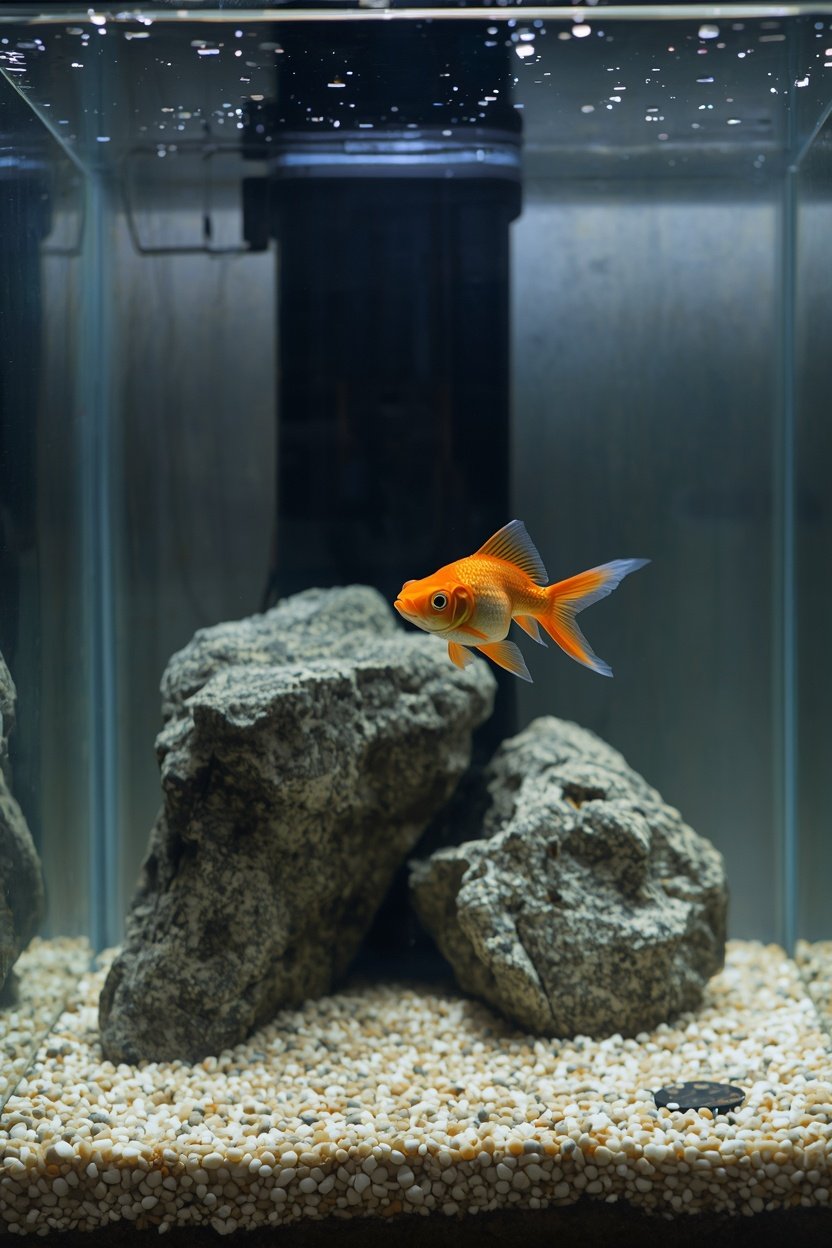
3. Hide Extra Filtration Behind Simple Hardscape
Goldfish produce considerably more waste than most similarly sized fish, and inadequate filtration is one of the biggest contributors to a high-maintenance tank that needs constant water changes and cleaning. Adding a secondary sponge filter or extra filter media, tucked discreetly behind a simple rock formation or piece of driftwood, boosts biological filtration capacity without disrupting the tank's overall visual layout.
This approach treats filtration capacity as a decor planning decision rather than an afterthought, positioning hardscape specifically to conceal the extra equipment while still allowing adequate water flow around it. A well-filtered tank genuinely needs less frequent intervention, meaning this upfront decor choice pays off in significantly reduced ongoing maintenance.
Because goldfish tanks benefit so much from strong filtration, this idea is arguably one of the highest-impact changes on this entire list, even though the filtration itself stays mostly hidden from view behind the rockwork doing the visual work.
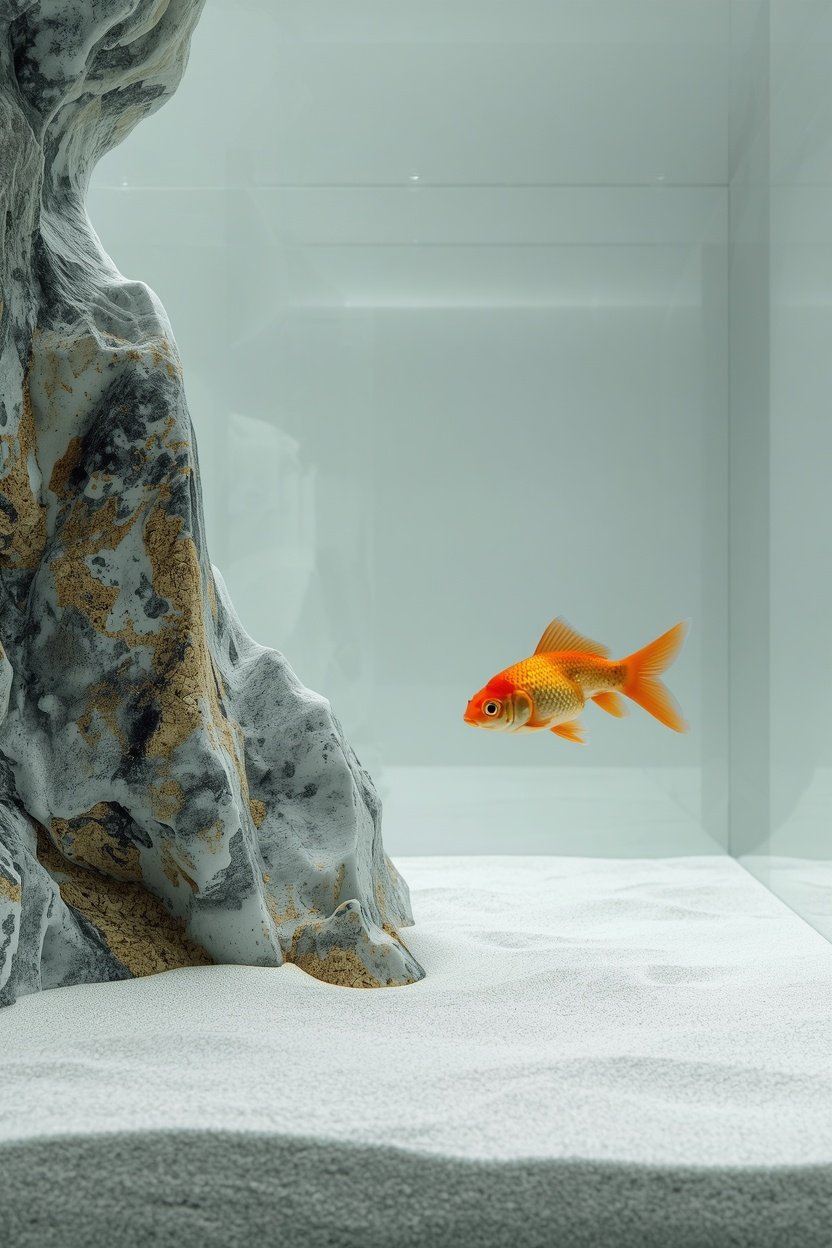
4. Keep the Layout Open for Easy Vacuuming and Swimming
Goldfish grow considerably larger than many popular aquarium species and need genuine open swimming space to stay healthy and active, which conveniently aligns with the least labor-intensive decor approach too. A sparse layout with just one or two hardscape pieces, rather than a densely decorated tank, is both easier to navigate with a gravel vacuum and better suited to a goldfish's actual size and activity level.
Every additional ornament in a goldfish tank becomes another obstacle during weekly maintenance and another surface where waste and algae can accumulate, so keeping the total decor count intentionally low directly reduces the time spent cleaning each week. This isn't a compromise on style so much as a genuinely better match between the tank's function and its resident fish's real needs.
A single large rock formation or one accent piece of driftwood, combined with the large substrate and durable plants from the earlier ideas, is often all a goldfish tank actually needs to look complete while staying genuinely simple to maintain week after week.
Additional Low-Maintenance Goldfish Tips
- Oversize your filtration from the start. Goldfish generally benefit from filtration rated for a larger tank than their actual water volume, reducing how often you'll need to intervene.
- Stick to a consistent feeding routine. Overfeeding is one of the biggest contributors to excess waste and cloudy water in goldfish tanks, regardless of how the tank is decorated.
- Choose a tank size generous for adult growth. Goldfish grow substantially larger than their juvenile size, and adequate space reduces stress-related health issues that can complicate maintenance.
- Do smaller, more frequent water changes. Slightly more frequent partial water changes are often easier to manage than infrequent large ones, especially in a heavily stocked goldfish tank.
Final Thoughts
A genuinely low-maintenance goldfish tank isn't about doing less — it's about making decor choices that align with how goldfish actually live, dig, and eat, rather than fighting their nature every week. Large substrate, durable plants, hidden extra filtration, and an open, uncluttered layout together create a tank that looks intentional while asking far less of you over time. Set it up this way from the start, and you'll spend a lot less time troubleshooting and a lot more time simply enjoying your fish.
Frequently asked questions
Can goldfish live with any live plants at all?
Yes, tougher species like anubias, java fern, and Amazon sword generally survive goldfish tanks well, especially when anchored to hardscape rather than planted directly in substrate where they're more vulnerable to digging.
How often should a goldfish tank be cleaned?
Most goldfish tanks benefit from a partial water change and substrate vacuuming weekly, though a well-filtered, sparsely decorated tank following these ideas often requires less intensive cleaning at each session.
Is large river rock safe for all goldfish sizes?
Yes, as long as the rocks are clearly too large for your goldfish to fit in its mouth, which is generally true for standard river rock sold for aquarium use, though it's worth double-checking sizing against your specific fish.
