
A quick note before diving in: freshwater angelfish, the tall, graceful fish most people picture first, grow far too large and territorial for any true nano tank, needing at least 20 to 29 gallons of space to thrive. What this guide covers instead are dwarf, or pygmy, marine angelfish — species like the coral beauty or flame angelfish — which stay compact enough to genuinely suit a nano reef setup, making them one of the more popular small-tank angelfish options in the saltwater side of the hobby.
These four ideas focus on the specific behavioral needs of dwarf angelfish within a nano reef: their instinct for shelter, their natural grazing habits, and their sometimes complicated relationship with certain corals. Each idea includes a detailed image prompt so you can visualize the finished setup before making changes to your own tank.
Why Dwarf Angelfish Need Behavior-Specific Reef Planning
Dwarf angelfish bring real personality and grazing behavior into a nano reef, but that same natural behavior — a taste for coral polyps, a need for structural shelter, an active grazing instinct — means a nano reef built around them needs more specific planning than a generic coral-focused display. Accounting for these behavioral realities from the start leads to a healthier fish and a more stable, long-lasting reef overall.
1. Build Live Rock Caves and Crevices for Shelter
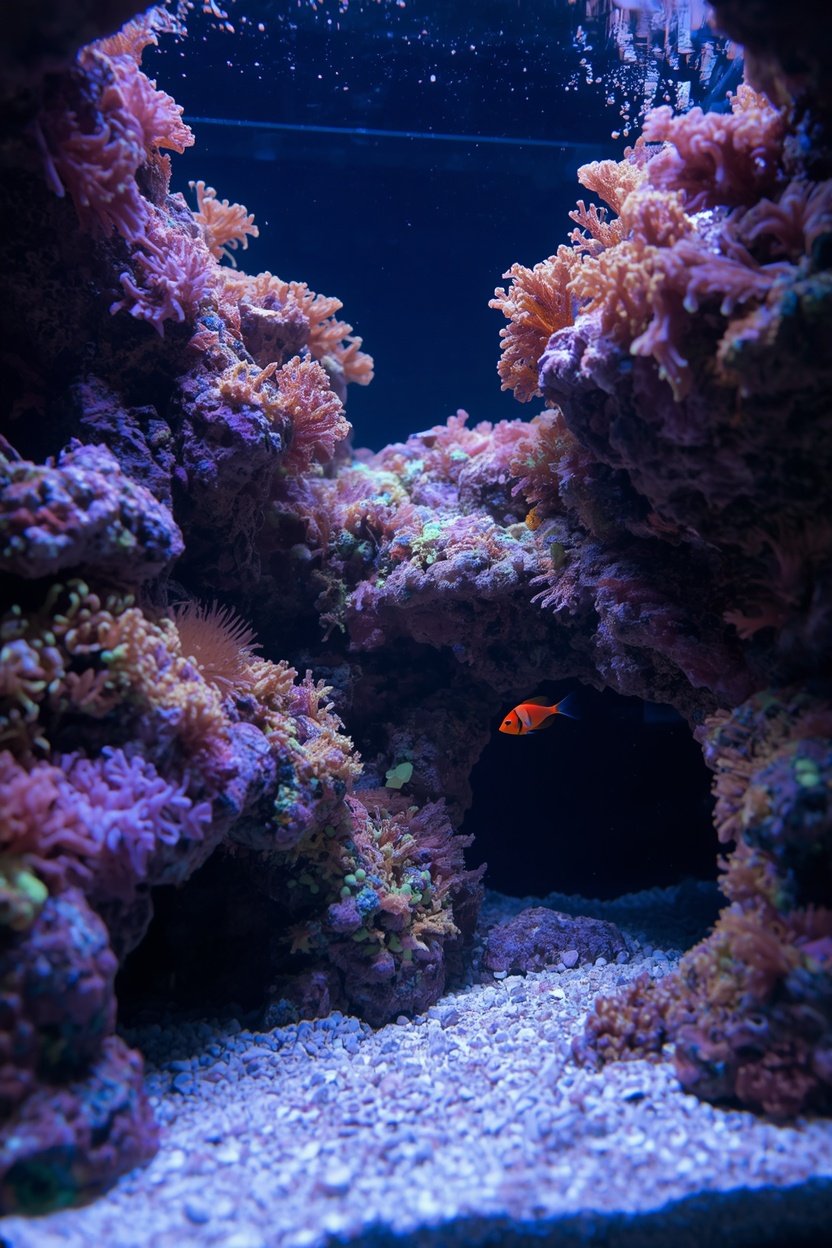
Dwarf angelfish, like the popular coral beauty or flame angelfish, are naturally found darting between crevices on real reef structures, retreating into small caves whenever they feel exposed or threatened. Recreating that same structure with porous live rock, arranged into a series of small caves and overhangs rather than one large open formation, gives your angelfish the security it instinctively looks for throughout the day.
Stack live rock with genuine gaps and tunnels running through the structure, rather than a solid wall, since dwarf angelfish specifically favor weaving through interconnected passages over sitting in a single open cave. This rockwork also naturally hosts the beneficial bacteria and biodiversity that support overall reef tank health, making it a functional choice as much as a behavioral one.
In a nano reef specifically, where total rock volume is limited, prioritizing genuine structural complexity over sheer rock quantity tends to produce a much more secure-feeling environment for a dwarf angelfish than simply piling in as much rock as the tank can hold.
2. Connect a Macroalgae Refugium for Natural Grazing
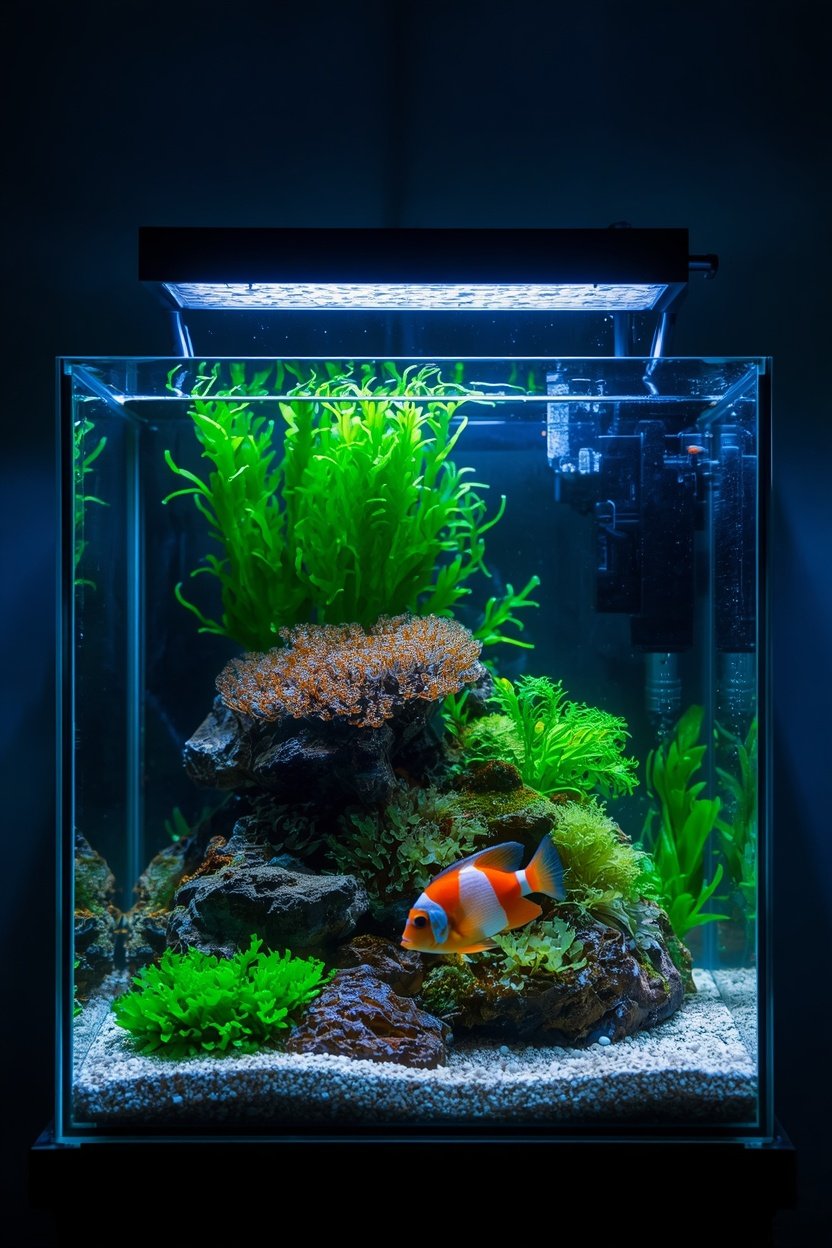
Dwarf angelfish are largely herbivorous grazers in the wild, picking at algae and biofilm across reef surfaces throughout the day, and a connected refugium growing macroalgae like chaetomorpha gives your fish a genuine, ongoing food source beyond scheduled feedings. Even a small hang-on or in-sump refugium can support this grazing behavior while also helping export excess nutrients from the main display.
Beyond the functional benefit, macroalgae's texture and movement add a different kind of visual interest to a nano reef setup, distinct from the more common coral-focused aquascaping most reef tanks lean toward. Watching a dwarf angelfish graze naturally across live rock and macroalgae throughout the day is often more visually engaging than watching the same fish simply wait for feeding time.
This idea requires a bit more plumbing planning than most decor choices on this list, but the payoff is a genuinely healthier, more naturally behaving angelfish, which matters considerably in a species prone to stress in an under-stimulating tank.
3. Choose Coral-Safe Aquascaping Carefully
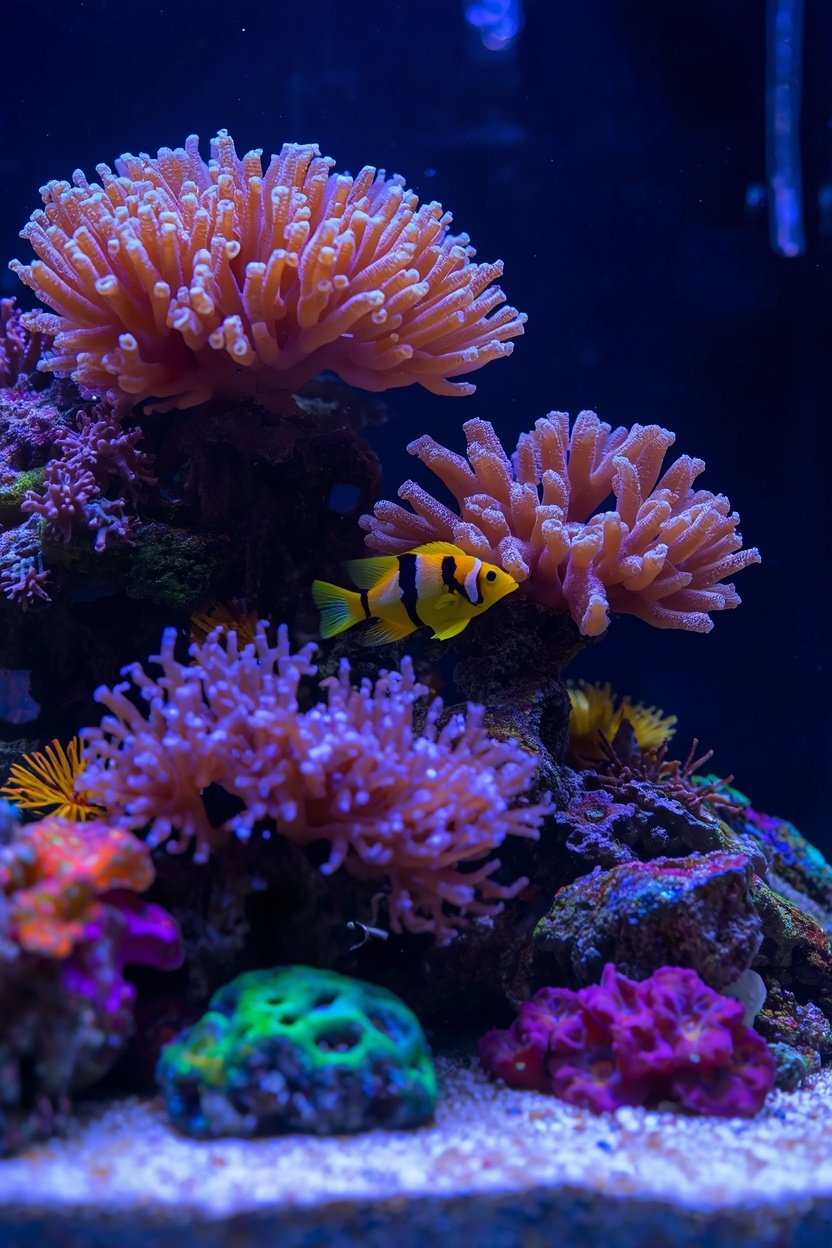
Many dwarf angelfish species have a well-documented reputation for nipping at certain coral polyps, particularly large-polyp stony corals and some soft corals, which makes coral selection a genuinely important decor decision rather than a purely aesthetic one. Researching your specific angelfish species' known coral compatibility before stocking a nano reef prevents a beautifully aquascaped tank from being slowly picked apart after the fact.
Small-polyp stony corals and certain zoanthid varieties tend to be nipped less frequently than large, fleshy LPS corals, making them a comparatively safer starting point for a nano reef that includes a dwarf angelfish. Even with more resistant coral choices, watching your specific fish's individual behavior closely during the first few weeks remains important, since coral-nipping tendency can vary noticeably between individual angelfish.
This idea is less about a specific visual layout and more about a research-first mindset that should shape every other coral and hardscape decision in the tank, since an angelfish's natural grazing instinct doesn't pause just because a coral looks expensive or was carefully placed.
4. Preserve Open Swimming Lanes Despite Dense Rockwork
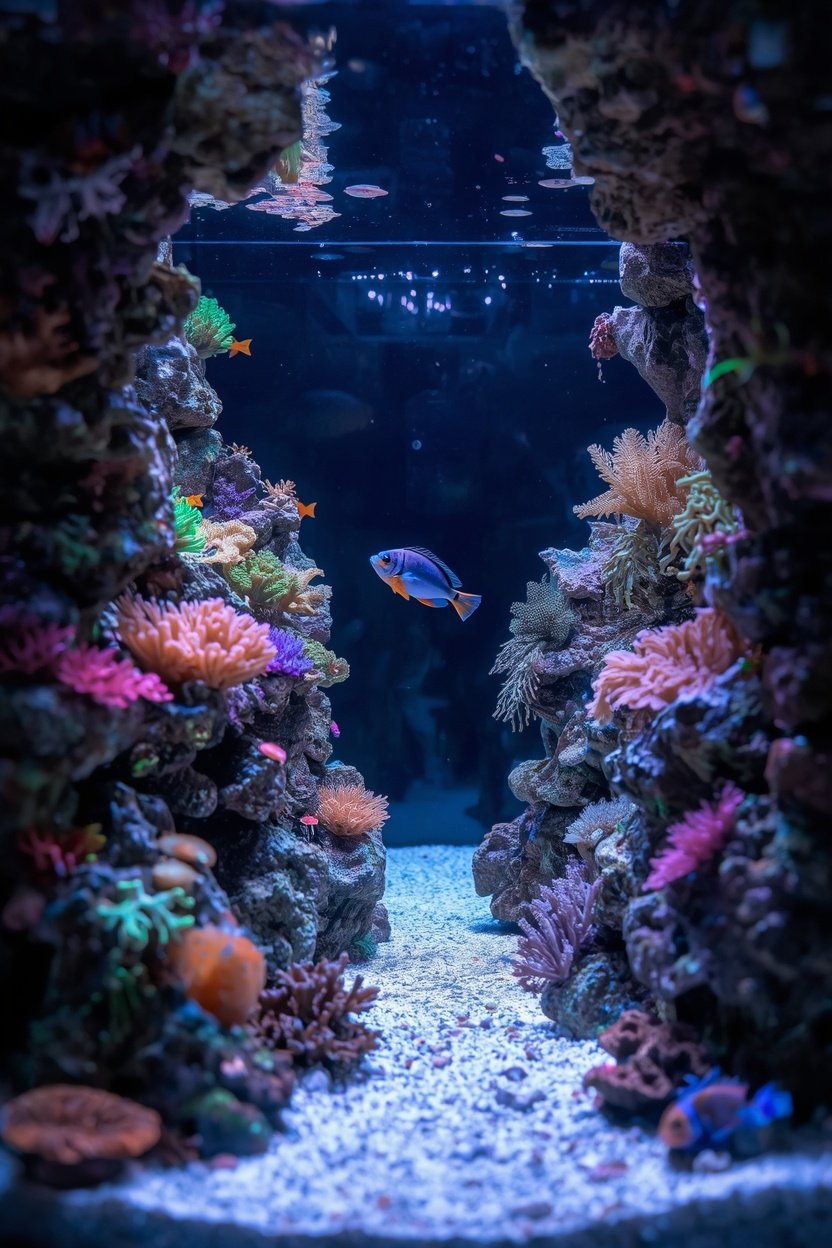
While shelter and structure matter enormously for dwarf angelfish, an overly dense rockscape that leaves no genuine open swimming space can be just as stressful as too little cover at all. Aim to leave at least one clear horizontal swimming lane running through the tank, even in a heavily aquascaped nano reef, so your angelfish can move freely between rock formations rather than navigating a maze at every turn.
Position your densest rockwork toward the back and sides, leaving the front-center portion of the tank relatively open, similar to the layout principle used in many freshwater aquascaping styles. This also happens to improve overall visibility for viewing your angelfish and any tankmates, rather than watching fish disappear into an entirely enclosed rock structure.
Balancing genuine shelter with genuine open space is really the core challenge of nano reef aquascaping for an active, curious species like a dwarf angelfish, and getting that balance right does more for the fish's long-term wellbeing than any single decorative choice on this list.
Additional Tips for a Successful Nano Angelfish Reef
- Research your specific species' adult size. Even among dwarf angelfish, adult sizes vary, so confirm your chosen species truly suits your tank's dimensions long-term.
- Introduce your angelfish last. Adding a dwarf angelfish after coral and rockwork are established reduces the temptation for it to sample every new coral immediately.
- Monitor water parameters closely. Nano reefs are less forgiving of parameter swings than larger systems, so consistent testing matters even more in a small angelfish reef.
- Keep only one dwarf angelfish per nano tank. Most dwarf angelfish species are territorial toward their own kind, making a single specimen the safer choice in a space-limited reef.
Final Thoughts
A genuinely successful nano angelfish reef starts with choosing the right kind of angelfish in the first place, then building the aquascape around its specific instincts for shelter, grazing, and coral interaction. Structured live rock, a connected grazing refugium, carefully chosen coral-safe hardscape, and a deliberate balance of shelter and open swimming space together create a small reef where a dwarf angelfish can genuinely thrive, not just survive.
Frequently asked questions
What's the smallest tank size for a dwarf angelfish?
Most dwarf angelfish species need at least 20 to 30 gallons of stable, well-established reef water to thrive long-term, so "nano" in this context generally means a compact reef rather than an extremely small tank under 10 gallons.
Do all dwarf angelfish nip at coral?
Coral-nipping tendency varies by species and by individual fish, so researching your specific angelfish and observing its behavior closely after introduction is more reliable than assuming any single species is entirely safe or unsafe with coral.
Can dwarf angelfish live with other fish in a nano reef?
Yes, many peaceful nano-reef-appropriate fish can cohabit with a single dwarf angelfish, though careful research into specific compatibility and adequate tank size for the combined bioload remains essential.
