
I didn't expect to fall in love with shrimp the way I did with my first cherry shrimp colony. I'd originally added them purely as a planted tank accent, something to help with algae and biofilm, but within a few weeks I found myself genuinely checking in on them daily, watching their tiny personalities and constant activity in a way I hadn't anticipated from what I'd assumed were just background cleanup crew.
If you're interested in shrimp specifically as pets, rather than purely as a planted tank accessory, these four ideas shift the focus toward genuine observation and interaction. Each one includes a detailed image prompt so you can visualize the finished setup before making changes to your own tank.
Why Pet-Focused Shrimp Keeping Is Different
A tank designed purely for planted aquascaping and one designed around actually enjoying your shrimp as pets can look quite different, even when both include the same species. Prioritizing visibility, feeding engagement, and genuine colony safety over pure aesthetic density shifts several decisions compared to a display-first approach, resulting in a tank that's just as enjoyable to interact with daily as it is to look at from across the room.
1. Start With a Colorful, Hardy Species Like Cherry Shrimp
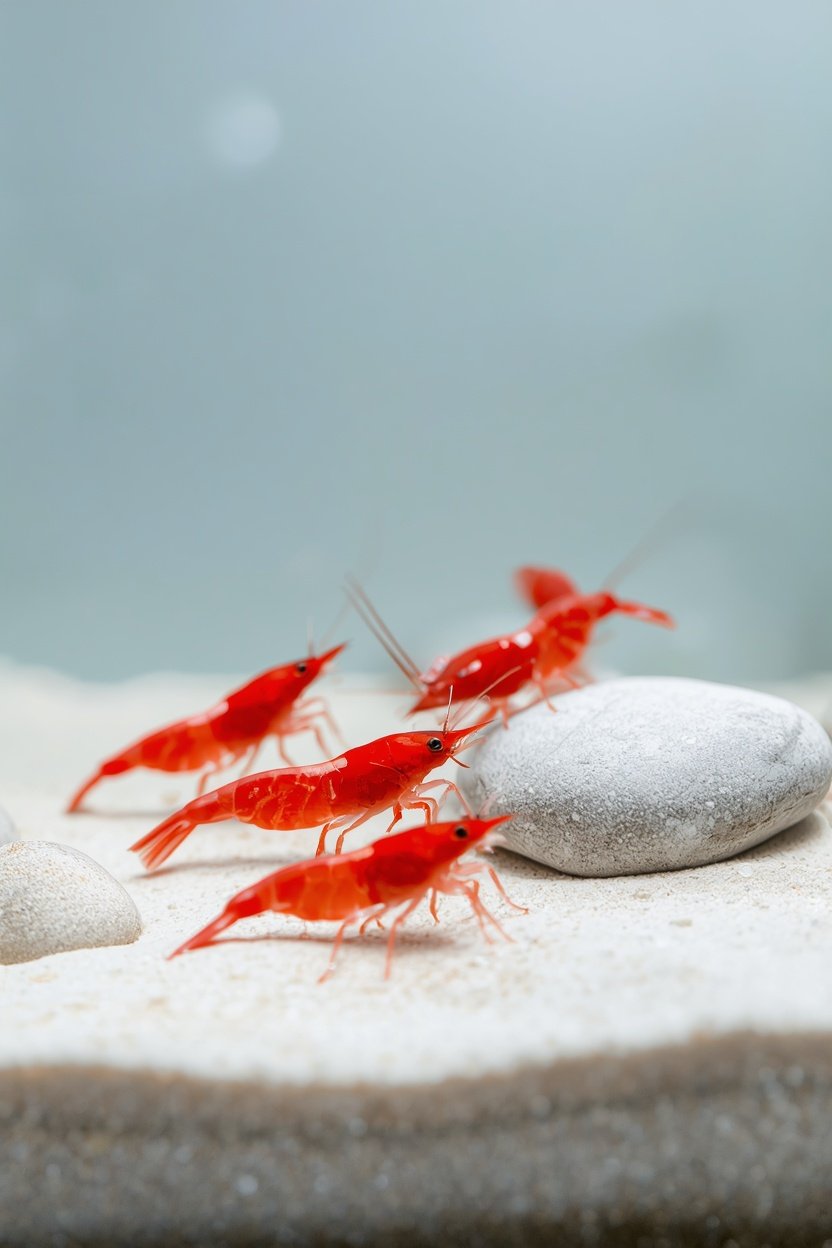
If you're keeping shrimp primarily as pets rather than as part of a larger planted display, species choice matters even more than usual. Red cherry shrimp, along with their blue dream and yellow varieties, are widely considered the most forgiving starting point, tolerating a reasonably wide range of water conditions while still offering the vivid, saturated color that makes shrimp genuinely enjoyable to watch.
These Neocaridina species are also active and visible throughout the day, constantly grazing and exploring rather than hiding for long stretches, which matters a lot if the appeal of pet shrimp is actually watching them. More sensitive species, like crystal red shrimp, can be stunning but demand considerably more precise water parameters, making them a better second step once you're comfortable with the basics.
Starting with a hardy, colorful species sets up the entire pet-keeping experience for success, giving you room to learn the fundamentals of shrimp care without also troubleshooting a finicky, parameter-sensitive species at the same time.
2. Build an Unobstructed Viewing Tank
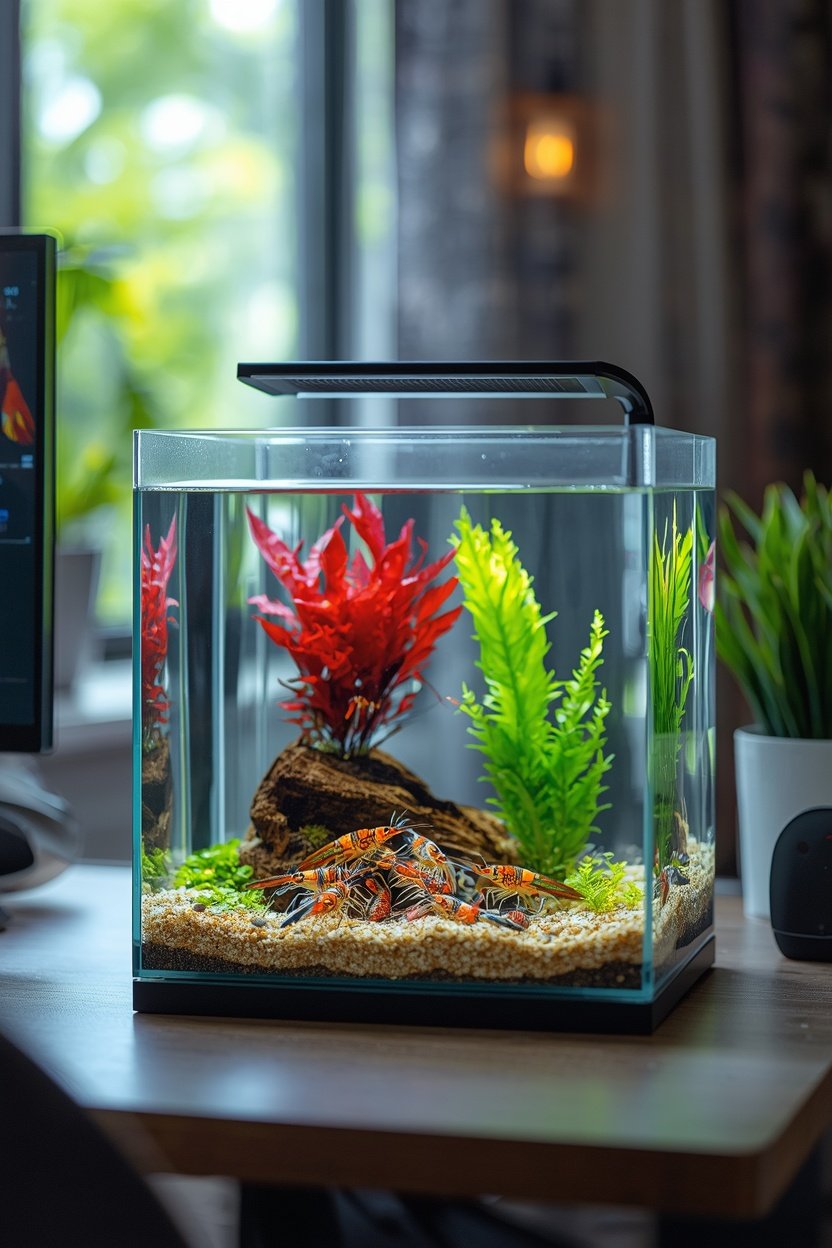
Unlike a heavily planted display tank designed primarily to look good from across the room, a pet-focused shrimp tank benefits from a layout that keeps the front glass genuinely clear for close, regular observation. A rimless or low-profile tank positioned at a comfortable seated eye level, with decor kept toward the back and sides, makes it easy to actually watch your shrimp's daily behavior rather than glimpsing them occasionally between plants.
This doesn't mean skipping decor entirely — shrimp still need cover and grazing surfaces to feel secure and stay healthy — but positioning that cover thoughtfully, rather than filling the whole tank uniformly, keeps a genuine open viewing zone where shrimp naturally gather to forage. Many shrimp keepers find their colony gravitates toward these open areas anyway, since that's typically where the most biofilm and food accumulates.
A small desk or shelf placement at eye level reinforces this viewing-focused setup further, turning quick daily check-ins into an easy, natural habit rather than something requiring you to crouch down or seek the tank out specifically.
3. Add a Simple Feeding Dish for Easy Observation
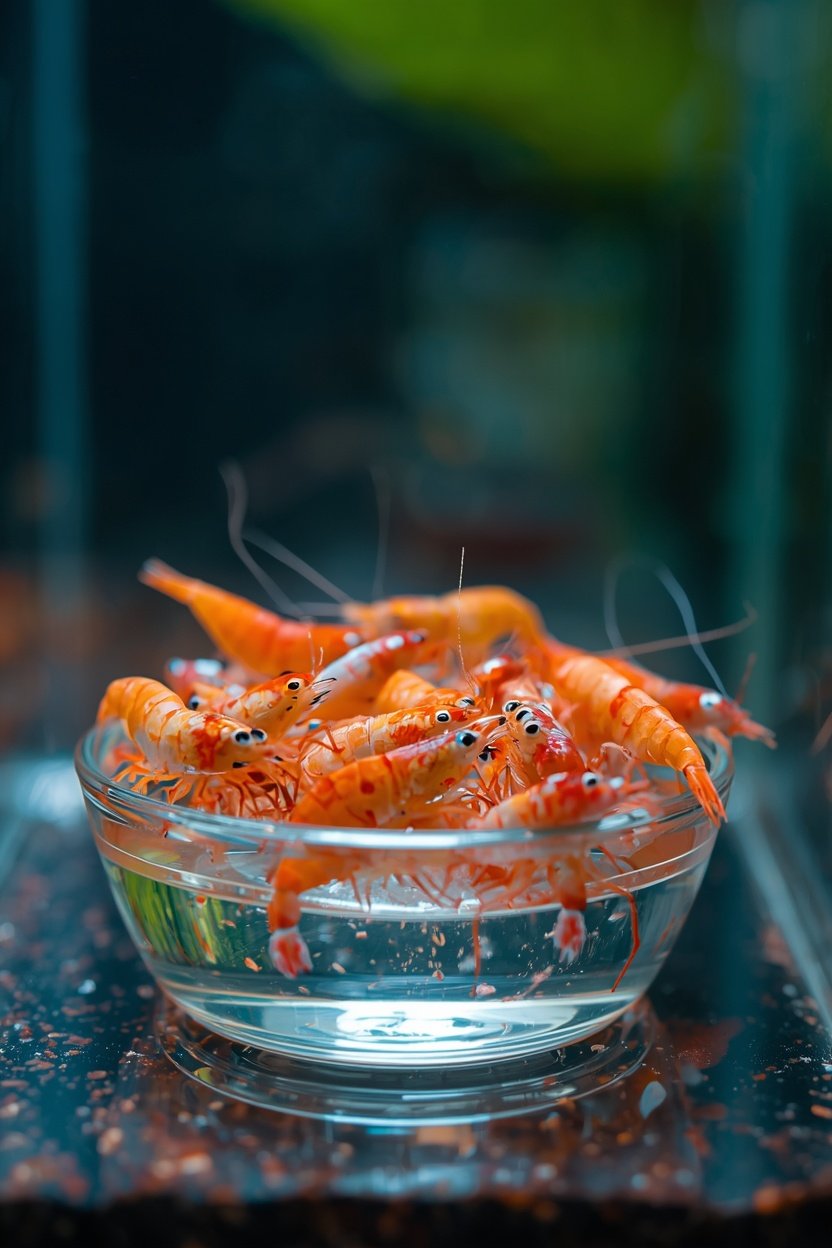
One of the most genuinely enjoyable parts of keeping pet shrimp is watching them swarm and feed, and a small, flat feeding dish placed in a clearly visible spot turns feeding time into a reliable daily viewing moment rather than scattered food disappearing into substrate and plants. A shallow glass or ceramic dish, placed in the open viewing zone from the second idea, concentrates feeding activity exactly where you can see it best.
This small addition also makes it considerably easier to monitor how much your shrimp are actually eating, helping you avoid both overfeeding and underfeeding by giving you a clear visual reference rather than guessing based on scattered food particles throughout the tank. Removing any uneaten food from the dish after fifteen to twenty minutes keeps water quality in check.
Beyond the practical benefit, there's something genuinely satisfying about watching an entire colony converge on a feeding dish together, antennae waving and legs working through a piece of blanched vegetable or a shrimp pellet — it's often the single most pet-like, engaging moment a shrimp tank offers.
4. Choose Gentle, Shrimp-Safe Filtration
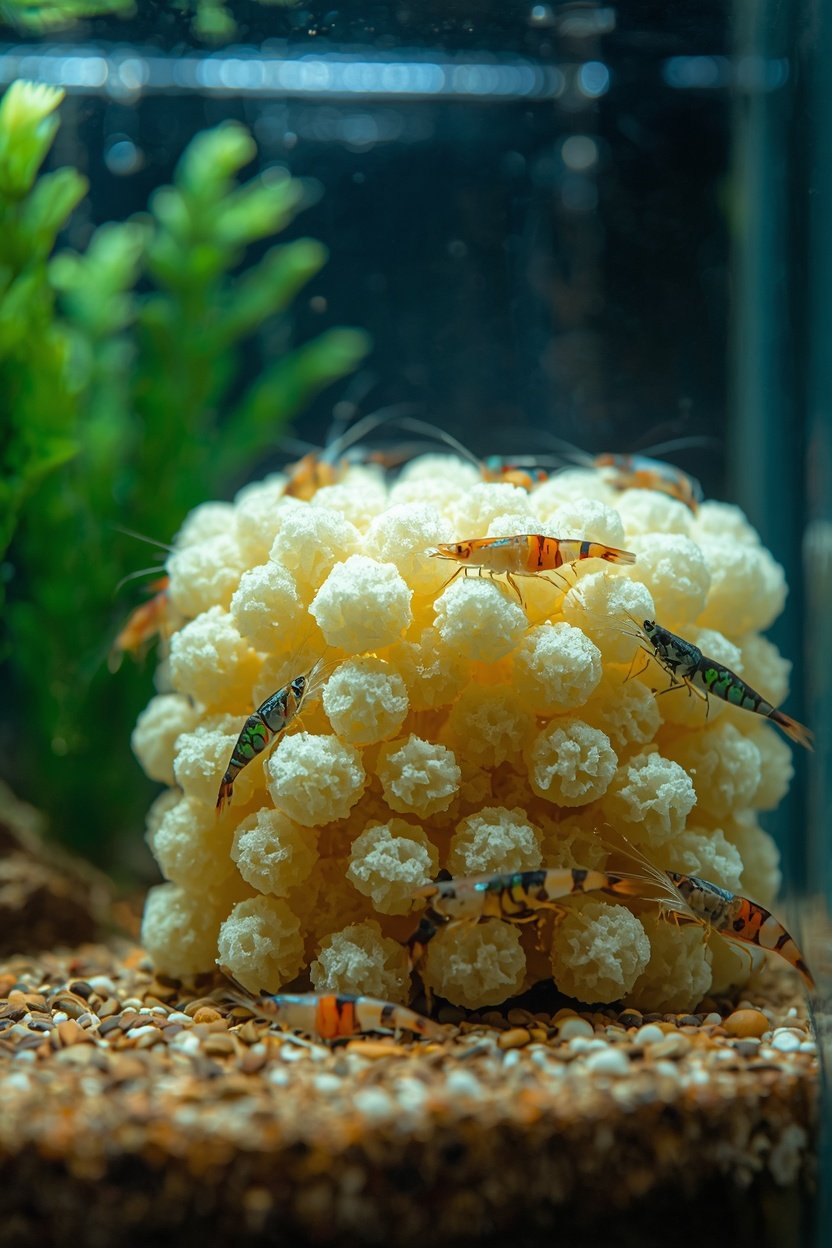
Standard aquarium filters, particularly those with a powerful intake, pose a genuine risk to small and baby shrimp, which can be pulled into the intake if it isn't properly guarded. A sponge filter, which draws water through a porous foam block rather than an open tube, eliminates this risk almost entirely while still providing effective biological and mechanical filtration suited to a shrimp-focused tank.
Beyond safety, sponge filters offer an unexpected pet-keeping bonus: the foam surface quickly develops a layer of biofilm that shrimp graze on constantly throughout the day, turning the filter itself into an ongoing source of entertainment and nutrition rather than just background equipment. It's common to see shrimp picking at a sponge filter for extended periods, making it one of the more genuinely interactive pieces of equipment in the entire tank.
This equipment choice might seem like a purely practical, unglamorous decision compared to the other ideas on this list, but it directly protects your entire colony's long-term survival, making it arguably the single most important choice for anyone treating their shrimp as genuine, long-term pets rather than a short-term decorative addition.
Extra Tips for Enjoying Pet Shrimp
- Learn to recognize individual shrimp. Subtle color and pattern differences make it genuinely possible to recognize individual shrimp within a colony over time, adding another layer of enjoyment.
- Keep a consistent feeding schedule. Shrimp quickly learn feeding routines, often gathering near the feeding dish shortly before their usual mealtime.
- Resist handling shrimp directly. Shrimp are delicate and generally best enjoyed through observation rather than handling, which can cause genuine stress or injury.
- Keep a water testing routine even in a simple tank. Pet-focused tanks still need the same water quality attention as any other aquarium to keep your colony thriving long-term.
Final Thoughts
Shrimp make genuinely rewarding pets once a tank is set up with real observation and interaction in mind, not just as a planted tank accessory. A hardy, colorful species, a clear viewing zone, an engaging feeding dish, and safe, grazing-friendly filtration together create a pet-keeping experience that goes well beyond simple background decor, giving you a colony that's just as fun to watch daily as any more traditional pet.
Frequently asked questions
Do pet shrimp recognize their owners?
Shrimp don't recognize individual people the way some fish or mammals might, but many do learn to associate movement near the tank with feeding time, often gathering visibly in anticipation.
How long do pet shrimp typically live?
Most Neocaridina species, like cherry shrimp, live around one to two years with proper care, though individual lifespans can vary based on water quality and overall tank conditions.
Can I keep pet shrimp with fish?
Many small, peaceful fish can cohabit with adult shrimp, though most fish will eat shrimp fry, so a shrimp-only tank is generally recommended if you want to see the colony grow through natural breeding.
