
I lost my first small shrimp colony within a few months, and it took some research to understand why: I'd built the tank using standard planted-tank advice meant for fish, without accounting for how differently shrimp actually experience a tank. Their vulnerability during molting, their grazing behavior, and their extreme sensitivity to copper all called for decisions a typical fish-focused planted tank simply doesn't need to make.
These four ideas are built specifically around shrimp biology and behavior, not just general aquascaping principles. Each one includes a detailed image prompt so you can visualize the finished setup before making changes to your own tank.
Why Shrimp Tanks Need Different Planning Than Fish Tanks
Shrimp face risks and have needs that most planted-tank advice doesn't address: vulnerability during molting, a diet built largely around grazing biofilm rather than typical fish food, and an extreme sensitivity to copper that can make otherwise fish-safe products dangerous. A genuinely successful shrimp tank accounts for all three factors from the very beginning, rather than applying generic planted-tank advice and hoping for the best.
1. Build a Dense Moss Carpet for Molting Safety
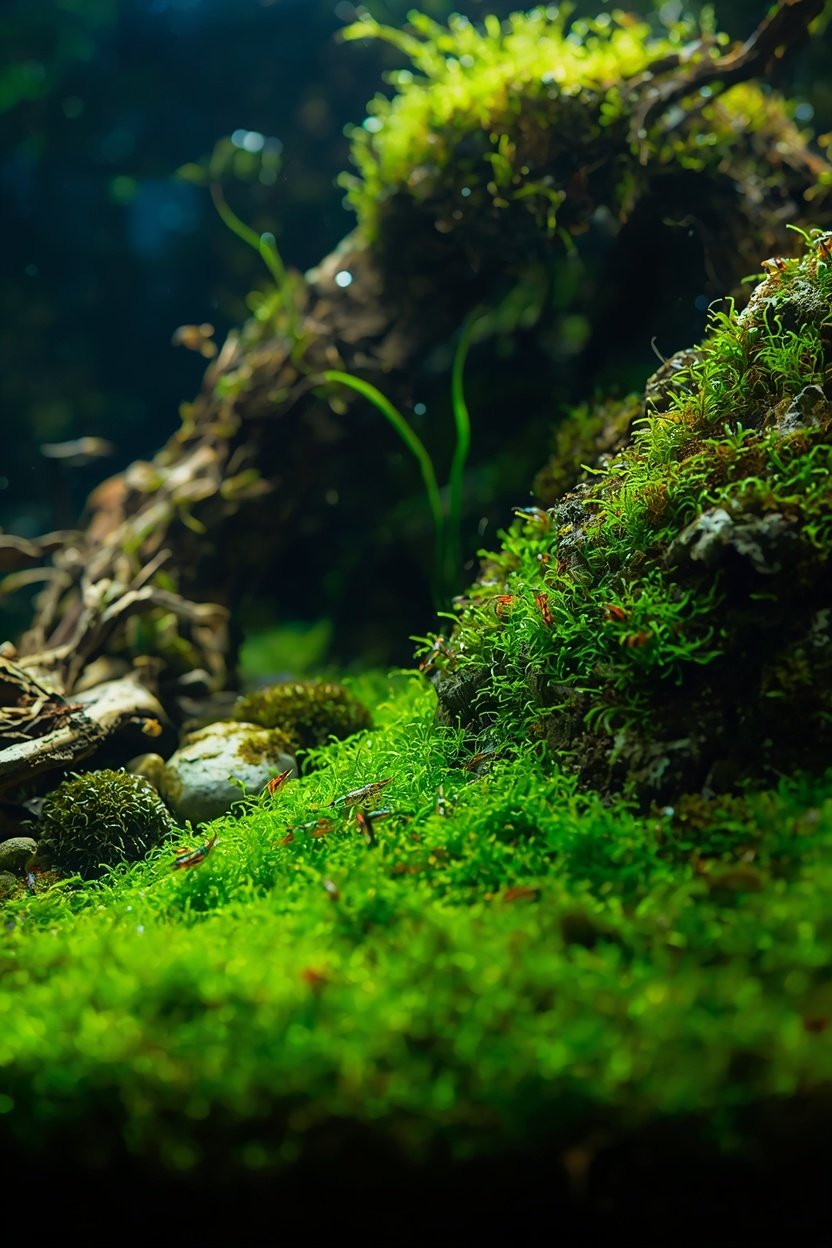
Shrimp are at their most vulnerable immediately after molting, when their new shell is still soft and they're temporarily unable to swim or defend themselves effectively. A dense carpet of java moss or Christmas moss across rocks, wood, and substrate gives shrimp countless small hiding spots to retreat into during this critical window, significantly improving survival rates in a mixed or breeding colony.
Beyond hiding, moss also grows a natural layer of biofilm and microorganisms on its surface, which shrimp graze on constantly throughout the day. This turns moss into both shelter and a steady food source simultaneously, reducing how much supplemental feeding your colony actually needs while keeping them consistently active and visible as they forage.
Cover as much surface area as reasonably possible with moss for a true shrimp-focused tank — unlike other aquascaping styles where moss is a texture element, here it's functioning as essential habitat, so more coverage generally translates directly to a healthier, more secure shrimp population.
2. Add Botanical Leaf Litter for Grazing and Water Buffering
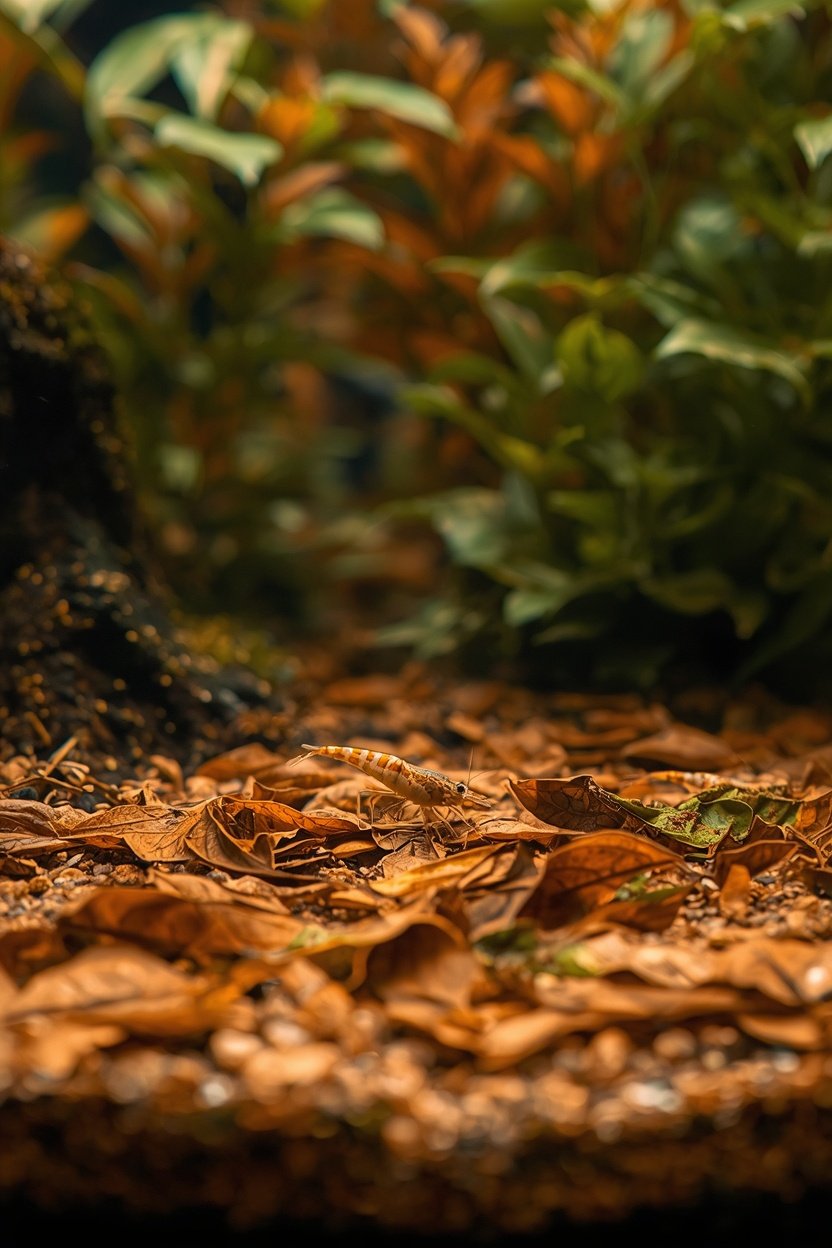
Dried catappa (Indian almond) leaves and alder cones, scattered across the substrate, serve double duty in a shrimp tank: they provide another biofilm-rich grazing surface as they slowly break down, and they release mild tannins that many shrimp keepers believe support a slightly softer, more acidic water chemistry closer to what shrimp thrive in naturally.
As leaves decompose over several weeks, shrimp — especially younger ones — spend considerable time picking at their surface, extracting the biofilm and microorganisms that accumulate there. This natural grazing behavior is both visually engaging to watch and genuinely beneficial to shrimp nutrition, supplementing whatever commercial food you're also providing.
Replace leaves gradually as they fully break down rather than removing them all at once, maintaining a consistent supply of this grazing surface rather than letting the tank cycle between fresh leaves and none at all.
3. Layer Plant Density with Clear Viewing Pockets
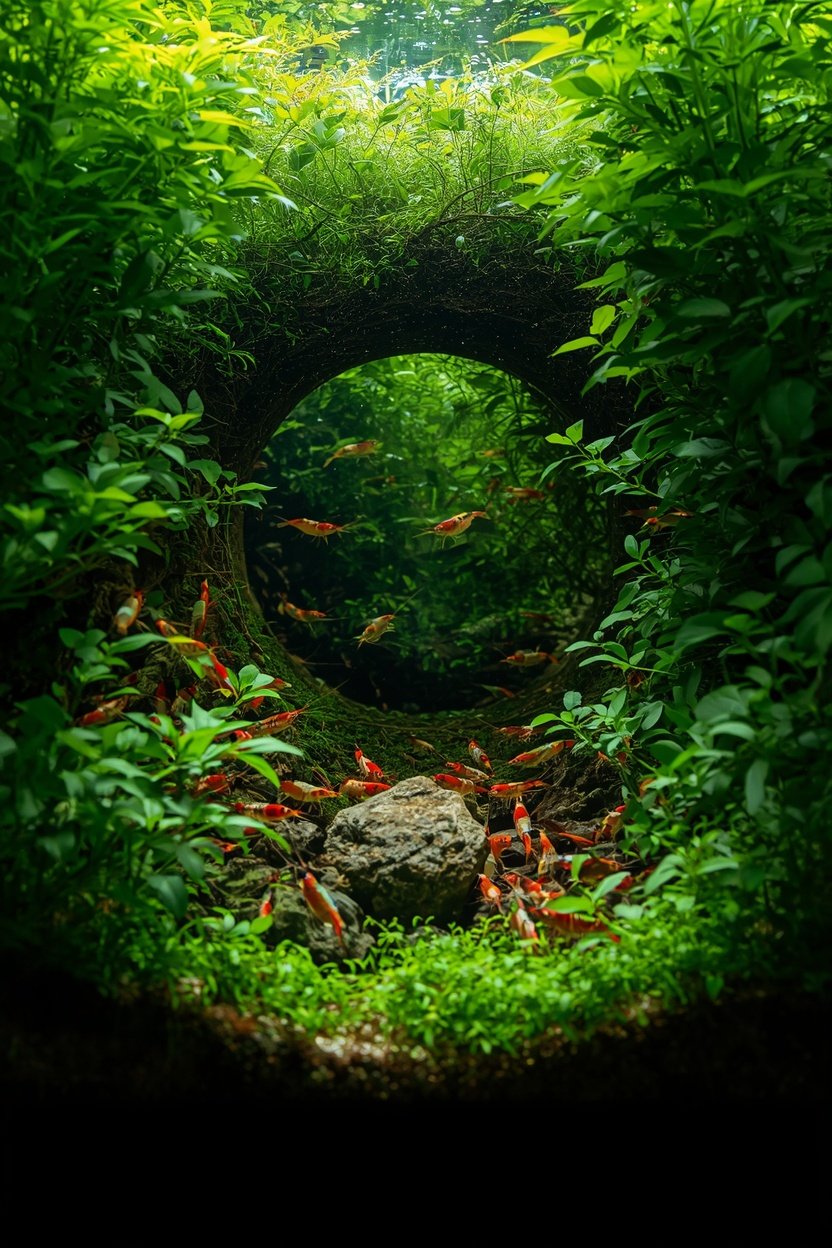
Shrimp are tiny, and a tank planted too uniformly dense can make them almost impossible to actually see and enjoy, despite technically providing excellent cover. The solution is layering: dense planting along the back and sides for security, paired with one or two deliberately open, clear viewing pockets — small clearings among the greenery — where shrimp naturally congregate to graze in plain sight.
Positioning a flat stone or a small piece of driftwood within one of these clearings gives shrimp a natural gathering point, since they tend to favor stable, algae-dusted surfaces for feeding. Over time, shrimp learn these open areas are safe and often become comfortable spending time there, rewarding patient viewers with regular sightings rather than a tank where shrimp are only ever glimpsed disappearing into cover.
This layered approach balances the colony's genuine need for security with your practical desire to actually watch and enjoy them, which is easy to overlook when planning a tank focused purely on shrimp welfare.
4. Choose Copper-Free Hardscape and Fertilizers
Shrimp are dramatically more sensitive to copper than most fish, and even trace amounts found in some tap water, certain fertilizers, or specific rock types can be fatal to a shrimp colony while barely affecting fish in the same water. Before adding any hardscape or plant fertilizer to a shrimp tank, confirming it's explicitly labeled copper-free or shrimp-safe is a genuinely essential step, not just a nice-to-have precaution.
Many all-in-one plant fertilizers contain trace copper as a micronutrient for plant health, which makes checking labels carefully non-negotiable for shrimp keepers, even when a product is marketed as suitable for general planted tanks. Dedicated shrimp-safe fertilizer lines exist specifically because of this sensitivity and are worth seeking out rather than assuming a standard product is safe.
This idea might not sound like a typical "decor" choice, but it directly shapes which hardscape and plant-care products are actually usable in a shrimp-focused build, making it one of the most important practical decisions in the entire setup, regardless of how beautifully everything else is arranged.
Extra Tips for a Thriving Shrimp Colony
Test new tap water sources for copper. Municipal water treatment and household plumbing can both introduce trace copper, so testing is worth doing if you notice unexplained colony decline.
Introduce new shrimp slowly. A gradual drip acclimation process reduces shock far more effectively for shrimp than the faster acclimation methods often used for fish.
Avoid medications containing copper. Many common fish medications are unsafe for shrimp, so always verify shrimp safety before treating any tank that includes them.
Keep a stable, mature tank before adding shrimp. Shrimp generally do best in an established tank with stable parameters rather than a newly cycled one.
Final Thoughts
A genuinely thriving planted shrimp tank comes down to understanding what shrimp actually need, not simply applying fish-focused planted-tank advice and expecting the same results. Dense moss for molting safety, botanical grazing surfaces, thoughtfully layered viewing pockets, and strict copper-free product choices together create an environment where a shrimp colony can genuinely flourish, breed, and stay visible for you to enjoy.
Frequently asked questions
How do I know if my water source contains copper?
A basic aquarium test kit that checks for copper can confirm whether your tap water is a concern, which is worth checking before establishing a dedicated shrimp tank, especially in older homes with copper plumbing.
Can shrimp live with fish in a planted tank?
Yes, many peaceful, small fish species can cohabit with shrimp successfully, though very young shrimp and shrimp during molting remain vulnerable to predation from larger or more active tankmates.
How much moss coverage does a shrimp tank actually need?
There's no strict rule, but many experienced shrimp keepers aim for moss or dense plant cover across at least a third to half of the tank's surfaces to provide adequate grazing and hiding opportunities.
