
When I switched from a standard framed tank to a rimless one for my guppy colony, the difference was immediate — suddenly every fish was visible from every angle, without a plastic frame or visible seam breaking up the view. It changed how I thought about decorating entirely, since a heavily decorated layout that looked fine in a framed tank suddenly felt like it was competing with the fish for attention in a rimless one.
These four ideas lean into what makes a rimless tank genuinely different: the clarity, the open sightlines, and the way it puts your fish front and center rather than the decor around them. Each idea includes a detailed image prompt so you can visualize the finished setup before making any changes to your own tank.
Why Rimless Tanks and Guppies Are a Natural Match
Guppies are prized almost entirely for their color and pattern variety, and a rimless tank's unobstructed glass does more to showcase that variety than almost any other tank style. Where a heavily decorated aquascape might suit fish valued for subtler, more naturalistic beauty, guppies genuinely benefit from a cleaner, more restrained approach that treats the fish themselves, rather than the hardscape, as the main visual event.
1. Let Minimal Hardscape Showcase Guppy Color
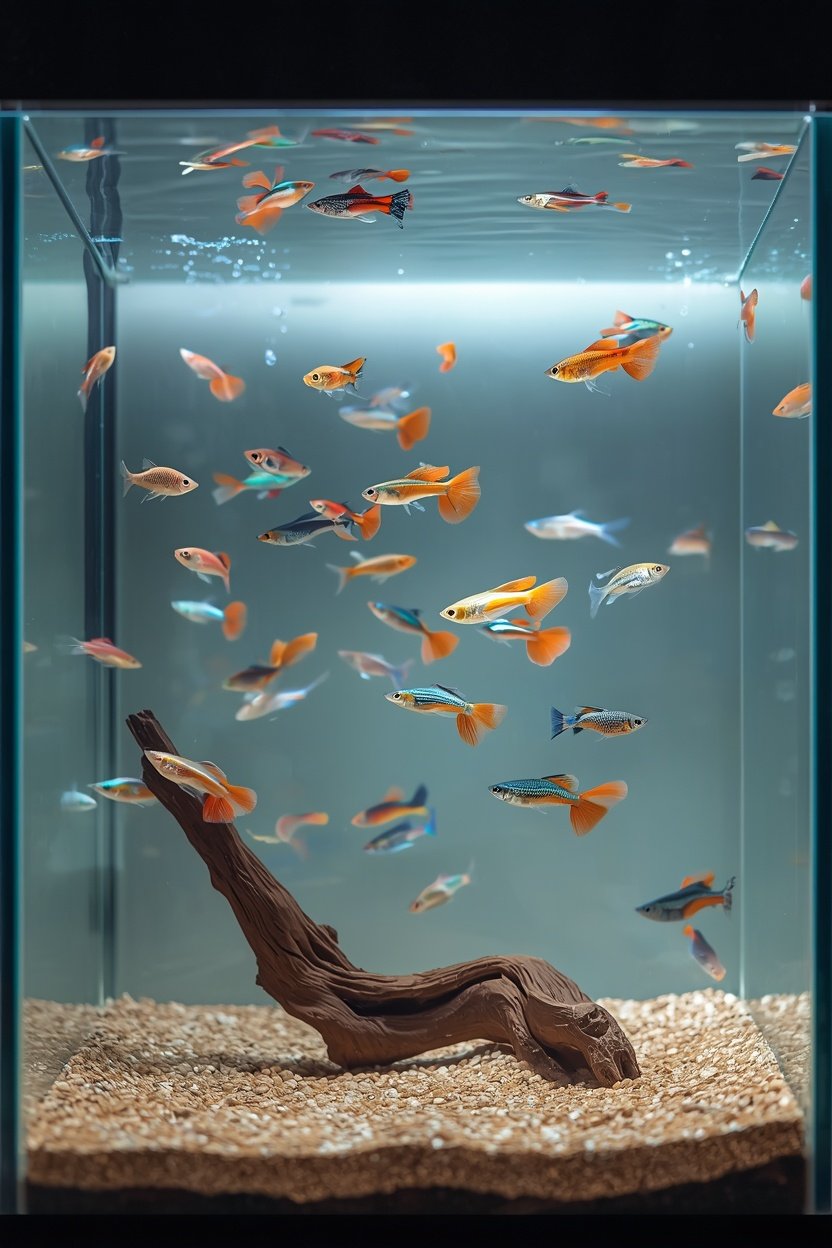
A rimless tank's biggest advantage is its unobstructed, edge-to-edge view, and guppies — with their extraordinary range of tail patterns and colors — are exactly the kind of fish that benefits most from that clear sightline. Rather than filling the tank with competing decor, keep hardscape minimal: one small piece of driftwood or a single cluster of stone, leaving the majority of the tank as open water where guppies can be seen clearly from every angle.
This approach treats the fish themselves as the primary decoration, which is a genuinely different mindset from most aquascaping advice that centers hardscape and plants as the main visual event. With guppies, restraint in decor actually highlights the fish more effectively than an elaborate layout ever could, since there's simply less visual competition for the eye.
A rimless tank's seamless glass edges reinforce this effect further, since there's no visible frame or trim breaking up the view the way a standard framed aquarium would, letting the guppies' movement and color read as the tank's entire visual story.
2. Build a Dense Floating Plant Canopy for Fry Safety
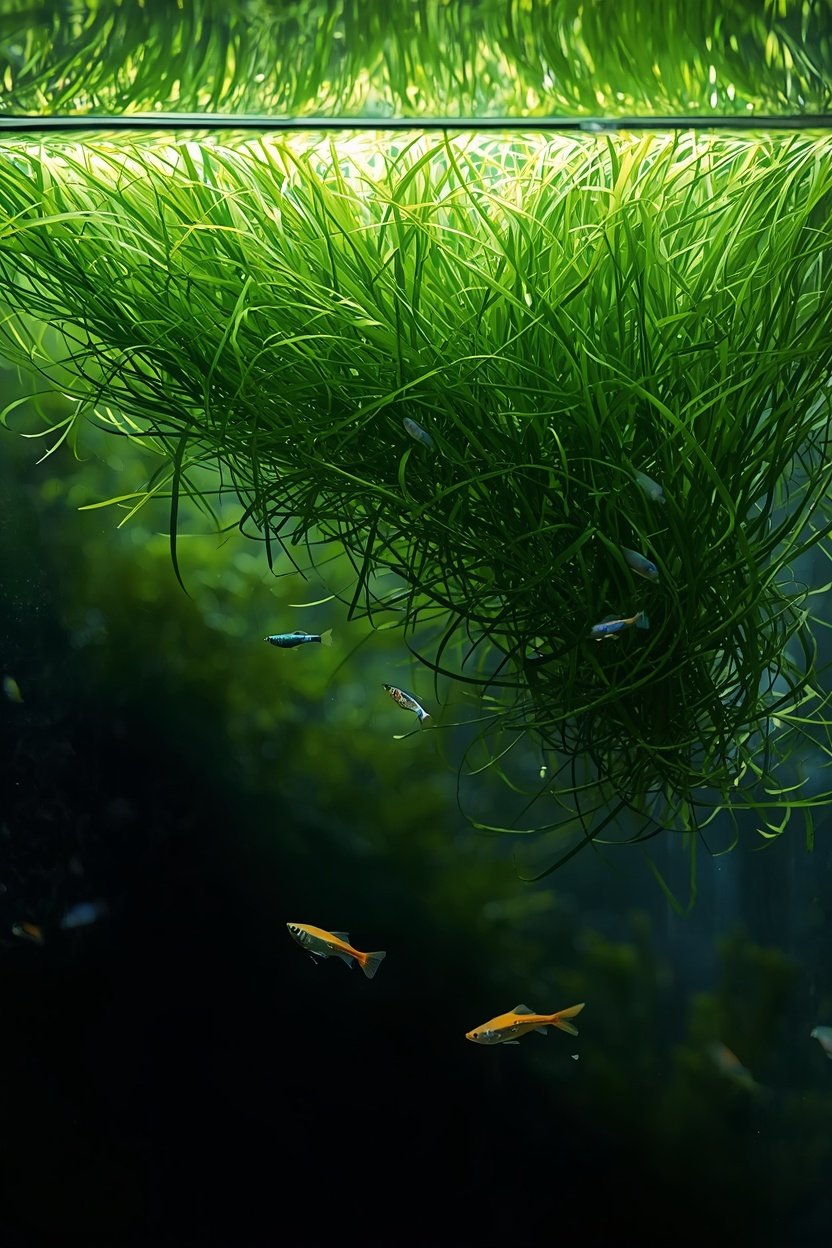
Guppies are prolific breeders, and if you're hoping to see fry survive to adulthood rather than being eaten by adult tankmates, a dense floating plant layer like guppy grass or najas provides genuine cover newborn fry instinctively hide within. This isn't purely functional either — a soft green canopy floating across part of the water's surface adds real visual texture to a rimless tank's otherwise clean, open look.
Guppy grass in particular grows quickly and forms a tangled, fine-textured mass that fry can dart into within seconds of birth, while still allowing enough open water below for adult guppies to swim freely. Covering roughly a third to half of the surface strikes a good balance between fry protection and maintaining enough light penetration for the rest of the tank.
This idea pairs particularly well with a rimless tank's open-top design, since there's no hood or lid obstructing the floating plants from spreading naturally across the surface the way a framed tank's covered top often restricts.
3. Choose Seamless Glass Corners for an Uninterrupted View
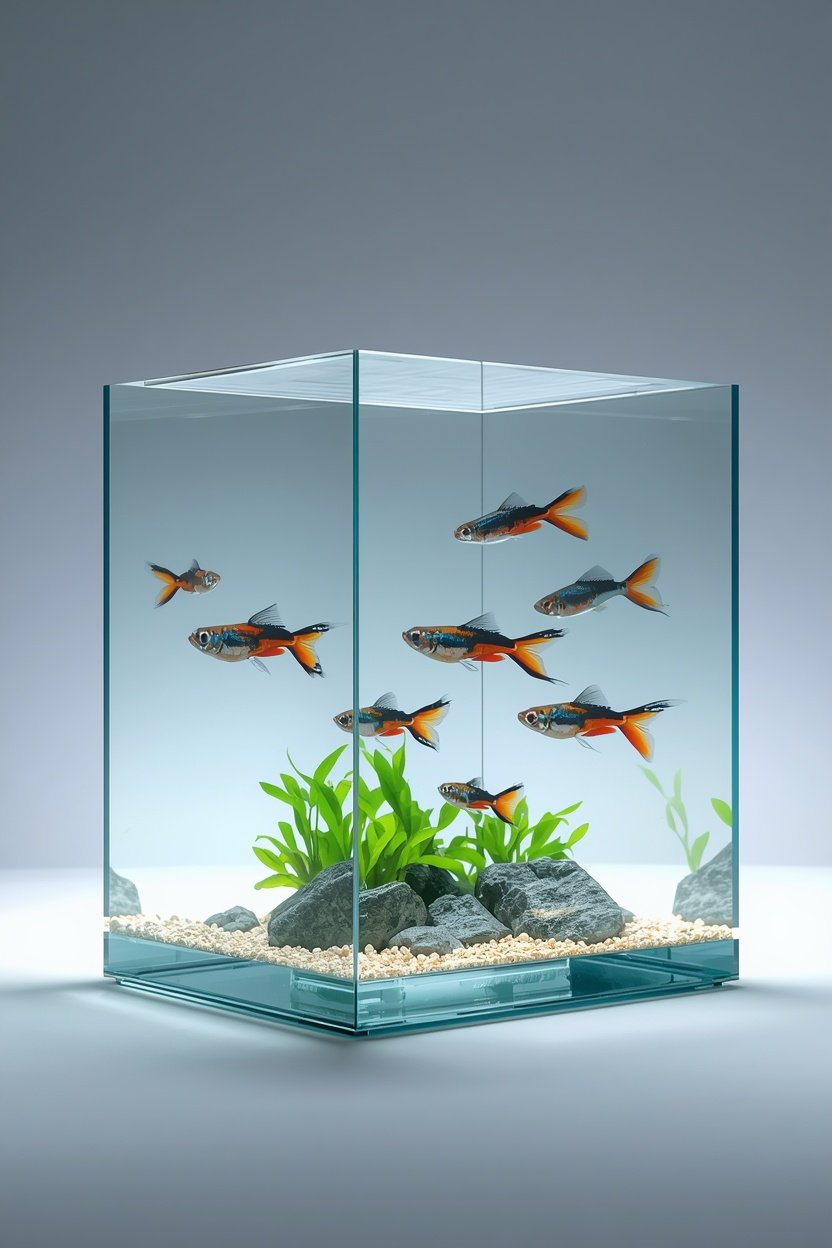
Standard rimless tanks still typically have a visible silicone seam at each corner, but premium low-iron rimless tanks with precision-cut, nearly invisible seams take the clean aesthetic a step further, creating what looks almost like a single sheet of curved glass rather than four separately joined panels. For a guppy showcase tank specifically, this level of glass clarity matters more than it might for other fish, since it removes any visual distortion or tinting that could subtly dull the vivid colors guppies are prized for.
Low-iron, or "ultra-clear," glass avoids the faint green tint standard glass carries, which can otherwise slightly mute bright oranges, reds, and blues over the width of a larger tank. Paired with seamless corner construction, this creates the closest thing to an unobstructed, true-color view of your guppies that glass aquarium technology currently offers.
While this upgrade costs more than a standard rimless tank, guppy breeders and showcase-tank hobbyists often consider it worthwhile specifically because color accuracy and clarity are so central to what makes a guppy display tank impressive in the first place.
4. Coordinate Substrate Tone to Your Guppy Strain
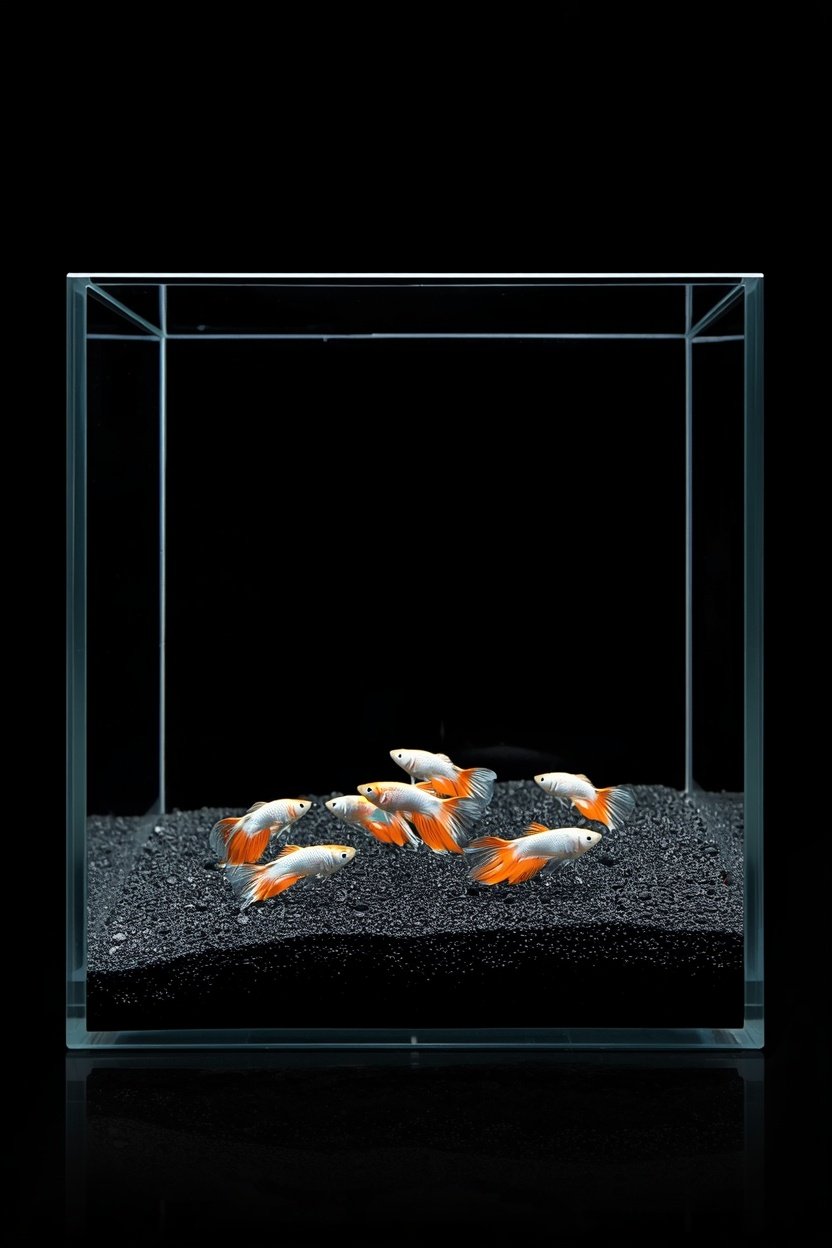
Serious guppy keepers and breeders often select substrate color specifically to complement a particular strain's coloring, the same way a photographer chooses a backdrop to flatter a subject. A pale sand substrate makes darker-bodied guppy strains stand out dramatically, while a dark, near-black substrate does the same for pale or brightly colored strains, creating strong contrast that shows off a specific strain's coloring far more effectively than a mismatched or neutral choice.
This is a particularly useful idea if you're keeping or breeding a single guppy strain rather than a mixed community, since you can tailor the entire tank's palette around exactly how that one strain's colors read best. Take a moment to observe your guppies against a few substrate samples before committing, since color contrast can look quite different in person than it does in a product photo.
In a rimless tank especially, where the substrate is often clearly visible from multiple angles without a frame breaking up the sightline, this coordinated approach has an outsized visual impact compared to a standard framed aquarium where less of the substrate is typically visible at once.
Tips for Maintaining a Rimless Guppy Tank
- Clean the glass more frequently. Rimless tanks show every smudge and water spot clearly, so a quick wipe-down more often keeps the view genuinely crisp.
- Use a secure lid alternative if needed. Guppies can occasionally jump, so consider a mesh cover or careful water-level management if your rimless tank has no hood.
- Thin floating plants regularly. A guppy grass canopy can spread quickly, so trim it back periodically to maintain the balance between fry cover and open light.
- Handle rimless glass carefully during cleaning. Without a protective frame, rimless tank edges are more exposed, so use caution with any hard-edged cleaning tools near the glass corners.
Final Thoughts
A rimless tank and a guppy colony genuinely bring out the best in each other — the clean, unobstructed glass gives every fish's color and pattern room to be seen clearly, while minimal, thoughtfully chosen decor supports rather than competes with that display. Whether you focus on fry-safe floating plants, premium seamless glass, or substrate coordinated to a specific strain, each of these ideas puts your guppies exactly where they belong: front and center.
Frequently asked questions
Do guppies need a lid on a rimless tank?
While guppies aren't the most prone jumpers, keeping the water level a few inches below the rim and adding a simple mesh cover can help prevent occasional jumping, especially in a busy household.
Will floating plants block too much light for other plants?
If floating coverage stays around a third to half of the surface, most lower plants still receive adequate light — regular thinning keeps this balance in check as the floating plants grow.
Is low-iron glass necessary for a guppy tank?
It's not necessary, but it does noticeably improve color clarity and is a popular choice among serious guppy breeders and showcase-tank hobbyists who prioritize true-to-life color display.
