
Aquascaping a shrimp tank is not quite the same challenge as designing a display tank for fish. While a fish aquascape is judged almost entirely on visual composition, a shrimp aquascape has to work just as hard functionally as it does aesthetically. Every piece of wood, patch of moss, and layer of substrate does double duty: it needs to look intentional and beautiful while also supplying the hiding spots, grazing surfaces, and stable conditions a shrimp colony depends on to thrive.
This guide walks through how to design a shrimp-friendly aquascape from the ground up, covering substrate choice, hardscape placement, plant selection, and the layout habits that separate a tank shrimp merely survive in from one where they breed and thrive. Whether you are setting up your first shrimp tank or reworking an existing one, these principles apply at any budget or tank size.
Why Aquascaping Matters More for Shrimp Than Fish
Shrimp are small, slow-moving, and sit near the bottom of the food chain even within their own tank. Every open, exposed stretch of substrate is a place where a shrimp feels vulnerable, and a tank with too much bare space tends to keep its colony constantly hidden and stressed. Good aquascaping solves this by breaking up open sightlines with plants and hardscape, giving shrimp a network of cover they can move through without ever feeling exposed. The payoff is a colony that is visible, active, and confident enough to breed consistently, which is often the real difference between a tank that merely houses shrimp and one where a colony actually flourishes.
Choosing the Right Tank Size and Shape
Shrimp aquascapes work well at almost any scale, from small nano tanks of five gallons to larger show tanks, but shape matters as much as volume. Wider, shorter tanks give you more usable floor space to work with, which is where shrimp spend most of their time grazing and socializing. Taller tanks look dramatic but often leave the lower third — the zone shrimp actually use — cramped and underdeveloped. For a first shrimp aquascape, a standard rectangular tank between five and twenty gallons offers the easiest balance of stability and design flexibility.
Substrate: The Foundation of a Shrimp Aquascape
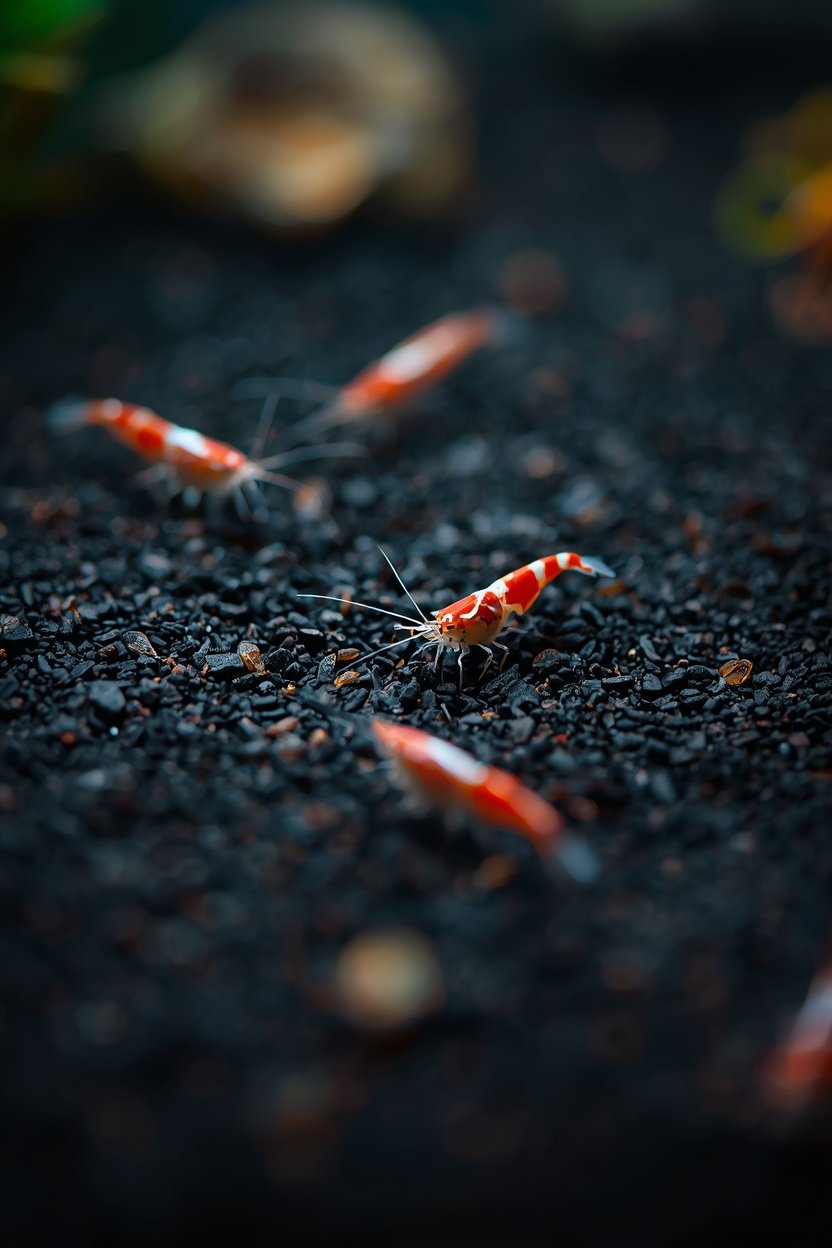
Substrate does more in a shrimp tank than anchor plants; it also influences water chemistry and provides the surface where biofilm — a shrimp's primary food source — develops. Broadly, substrates fall into two categories: inert substrates, which do not affect water chemistry, and active or buffering substrates, which gradually soften water and lower pH.
|
Substrate Type |
Effect on Water |
Best For |
|
Inert sand or fine gravel |
No chemical effect |
Neocaridina shrimp; keepers who want stable, adjustable parameters |
|
Active/buffering substrate |
Softens water, lowers pH over time |
Caridina shrimp needing soft, acidic conditions |
|
Dark, fine-grain substrate |
Varies by product |
Any tank; improves shrimp color contrast and visibility |
Hardscape: Wood, Rock, and Creating Territory
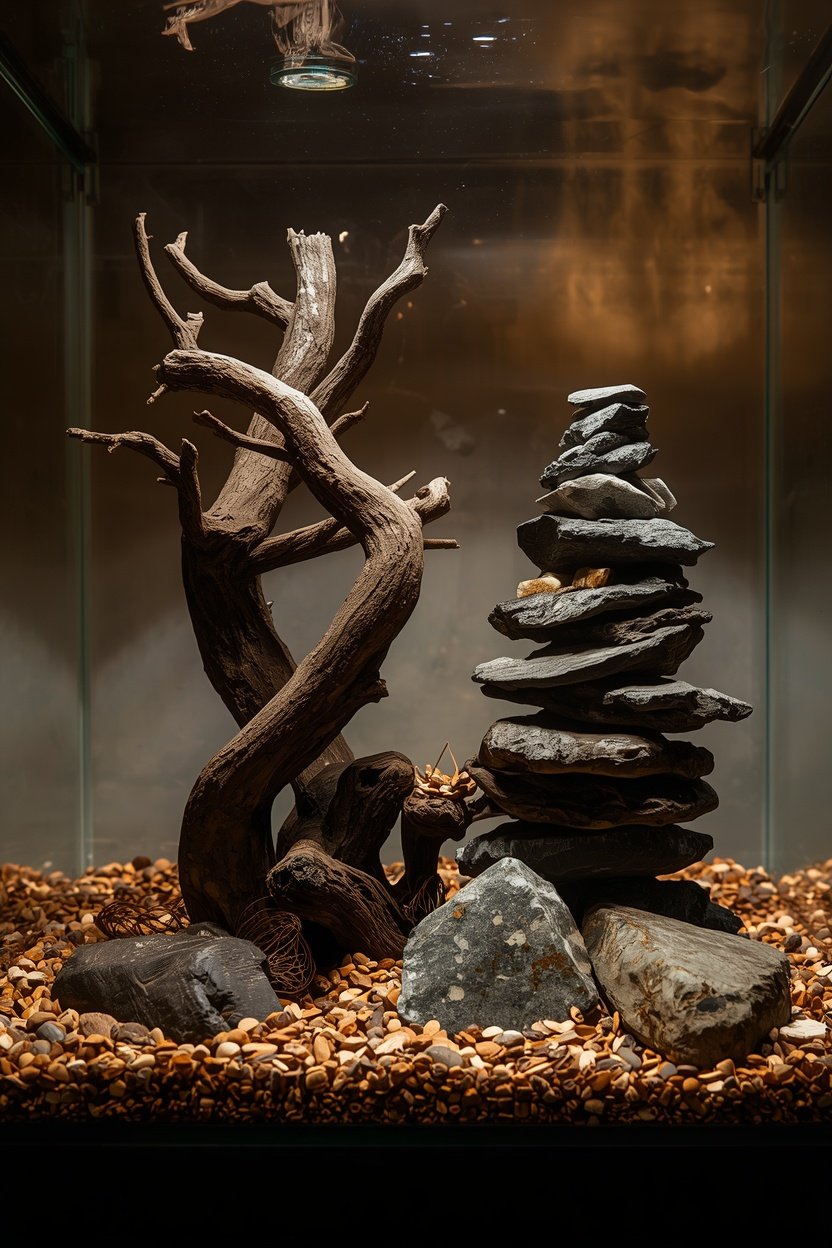
Hardscape gives a shrimp aquascape its structure and, just as importantly, its biofilm-growing surface area. Spider wood, Malaysian driftwood, and dragon stone are popular choices because their textured, porous surfaces develop biofilm quickly and offer shrimp countless small crevices to graze and hide in. Always rinse and, where needed, boil or soak new wood before adding it to avoid leaching tannins too aggressively or introducing contaminants.
Arrange hardscape asymmetrically rather than centering a single piece, and stack smaller stones or branches at varying heights to create distinct zones. This kind of layered arrangement gives shrimp a vertical range to explore instead of confining them to a flat, single-level tank floor.
Plants That Work Best in Shrimp Tanks
Plants are where a shrimp aquascape earns most of its visual appeal, but the best choices for shrimp keepers prioritize surface area and low-light tolerance over dramatic size. Mosses like Java moss and Christmas moss are aquascaping workhorses, easy to attach to wood or rock and constantly generating biofilm. Broad-leafed plants like Anubias and Bucephalandra add contrast and structure without demanding strong lighting or CO2 injection, making them ideal for beginners.
|
Plant |
Light Needs |
Role in the Aquascape |
|
Java Moss |
Low |
Biofilm surface, fry hiding cover, texture on hardscape |
|
Anubias |
Low–Medium |
Structural focal points, easy to attach to wood/rock |
|
Bucephalandra |
Low–Medium |
Colorful accent plant, slow-growing and low-maintenance |
|
Frogbit / Floating plants |
Low |
Surface cover, dappled light, extra grazing surface |
Aquascaping Styles Suited to Shrimp Tanks
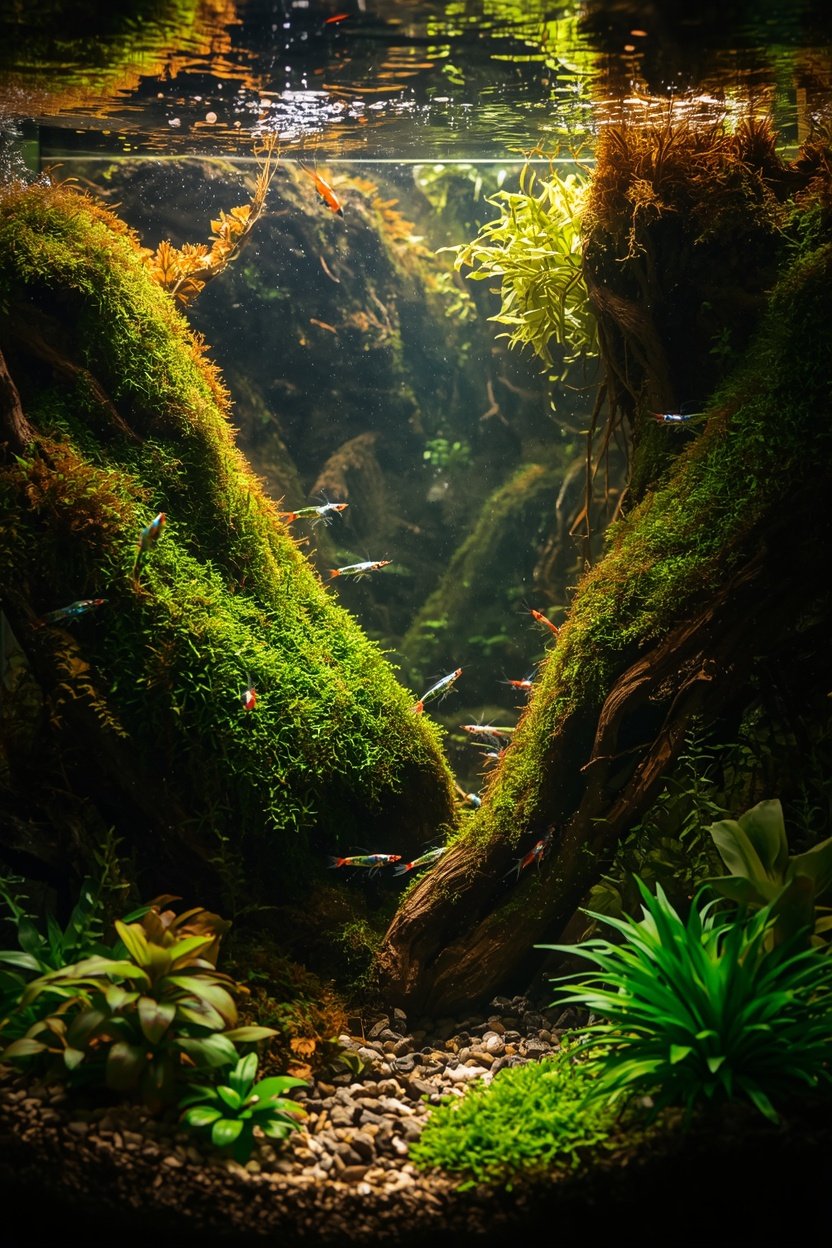
You do not need a competition-level aquascape to design something both beautiful and functional. A jungle-style layout, dense with moss and stem plants, is naturally shrimp-friendly since the sheer plant mass creates cover almost by default. A modified nature-style layout, built around one or two hardscape focal points softened with moss and low-growing plants, offers a cleaner look while still giving shrimp plenty of places to graze and hide along the wood and stone.
|
TIP — Balancing Beauty with Function • Leave some open substrate for grazing and visibility, rather than covering every inch with plants and hardscape. • Prioritize surface area over sheer plant volume; textured, biofilm-friendly surfaces matter more than dense growth alone. • Build in at least two to three distinct hiding zones at different heights so shrimp of all ages have cover. • Keep a clear path for water flow around filtration so debris does not stagnate in dense plant thickets. |
Lighting and Filtration Considerations
Most shrimp-friendly plants thrive under low to moderate lighting, which keeps algae growth manageable and avoids the need for CO2 injection in a beginner setup. Pair your lighting with a sponge filter, which provides gentle circulation without risking fry or juvenile shrimp being pulled into an intake. Good, even flow throughout the aquascape also helps prevent detritus from building up in dense plant clusters, which can otherwise affect water quality over time.
|
AVOID — Common Aquascaping Mistakes to Avoid • Leaving too much bare, open substrate with no cover, which keeps shrimp constantly hidden and stressed. • Using sharp-edged rock or unfinished wood that can injure shrimp during molting. • Overcrowding hardscape so densely that water flow stagnates in pockets of the tank. • Choosing high-light, CO2-dependent plants before you are ready to manage the added complexity. • Skipping a cycle-in period for new hardscape and substrate before adding a shrimp colony. |
