
When I set up my first aquarium, I added fish within days of filling the tank, with no idea that invisible, odorless ammonia was quietly building up to dangerous levels while I wasn't testing for it. Losing those first fish taught me a lesson every experienced aquarist eventually learns the hard way: a tank isn't actually ready for fish the moment the water looks clear. It's ready once an invisible biological process, called the nutrient cycle, has had time to establish itself.
This guide breaks that process down into four clear stages, from the moment waste enters the water to the point where it's finally removed from the system entirely. Understanding each stage doesn't just help you avoid the mistake I made — it also explains why experienced hobbyists test water regularly, why new tanks need patience, and why water changes remain a permanent part of aquarium care. Each stage below includes a detailed diagram prompt so you can visualize the process clearly.
Why This Cycle Matters So Much for Fish Health
Ammonia and nitrite are both highly toxic to fish even in small concentrations, interfering directly with their ability to breathe and regulate their internal chemistry. The nutrient cycle is the aquarium's natural defense against this toxicity, converting dangerous compounds into progressively safer ones through a predictable, well-understood biological process. Skipping or rushing this process is one of the most common reasons new aquarium owners lose fish in the first few weeks of a tank's life.
1. Waste Production: Where the Cycle Begins
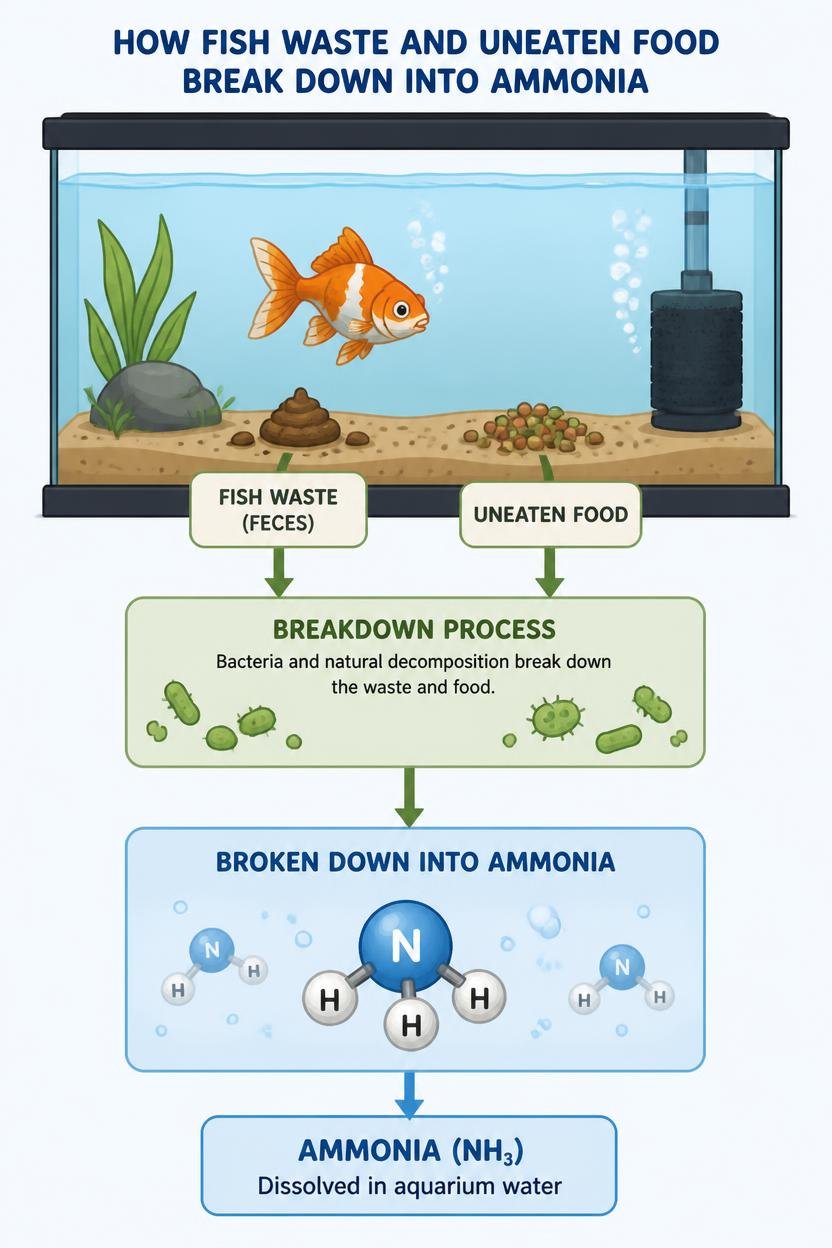
Every nutrient cycle in an aquarium starts with waste, and there's more of it than most beginners expect. Fish waste, uneaten food, decaying plant matter, and even dead bacteria all break down in the water, releasing ammonia as their primary byproduct. Ammonia is highly toxic to fish even in small concentrations, which is exactly why understanding what happens to it next matters so much for anyone keeping a healthy tank.
This stage is constant and unavoidable in any tank with living fish — the goal was never to eliminate waste production, but to build a system that processes it safely before it can build up to dangerous levels. Overfeeding is one of the most common beginner mistakes here, since excess food that goes uneaten breaks down into ammonia just as readily as fish waste does, effectively doubling the load your tank's cycle needs to handle.
2. First Conversion: Ammonia Into Nitrite
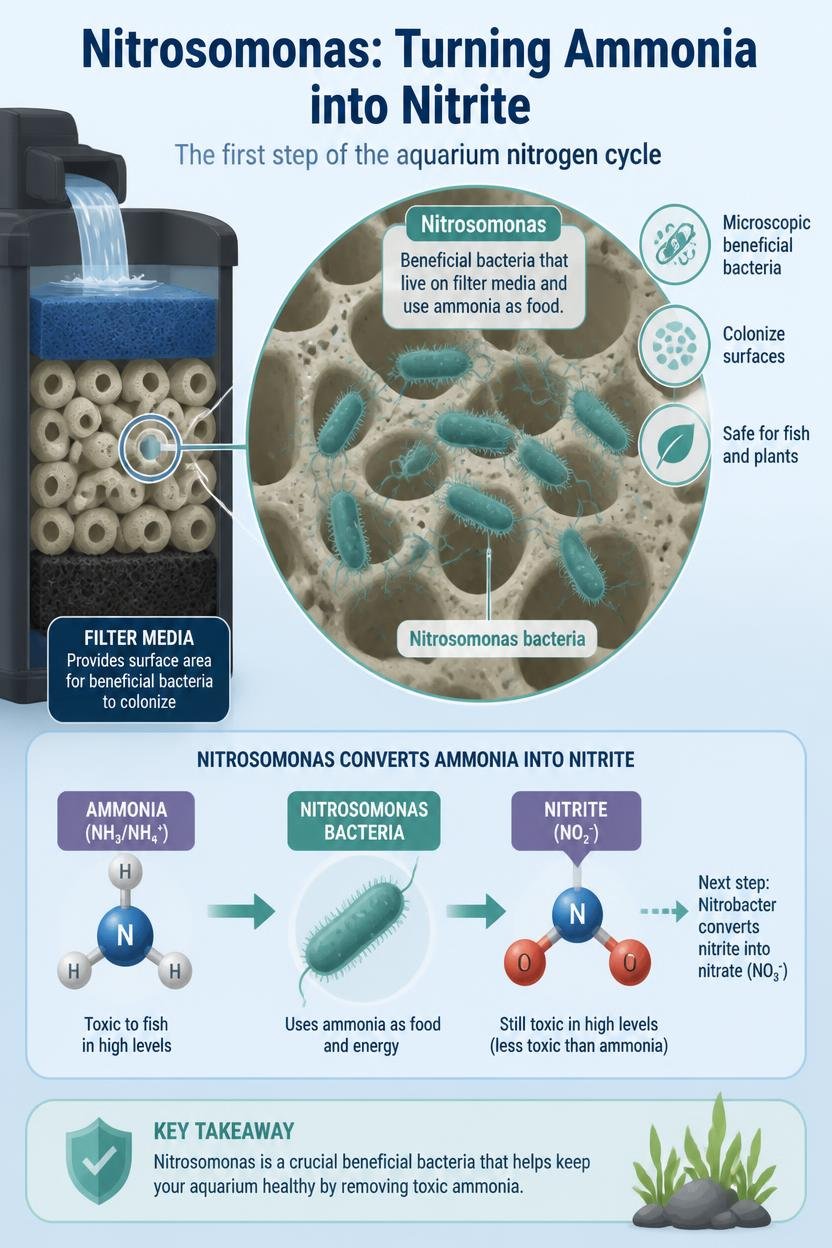
The next stage relies entirely on beneficial bacteria, specifically a group called Nitrosomonas, which colonize your filter media, substrate, and any other surface inside the tank. These bacteria consume ammonia as their energy source and convert it into nitrite, a different compound that's still toxic to fish but represents genuine progress in the overall cycle.
This is the step most new aquarium owners are referring to when they talk about "cycling" a tank — waiting for this bacterial population to establish itself in sufficient numbers to keep pace with the ammonia being produced. It typically takes one to two weeks of consistent ammonia presence for Nitrosomonas colonies to build up enough to handle a tank's typical waste load, which is why patience during initial setup matters so much.
Nitrite, like ammonia, interferes with a fish's ability to transport oxygen through its bloodstream, so a tank stuck at this stage of the cycle — with ammonia converting to nitrite but nitrite having nowhere further to go yet — can still be a genuinely dangerous environment despite the ammonia reading at zero.
3. Second Conversion: Nitrite Into Nitrate
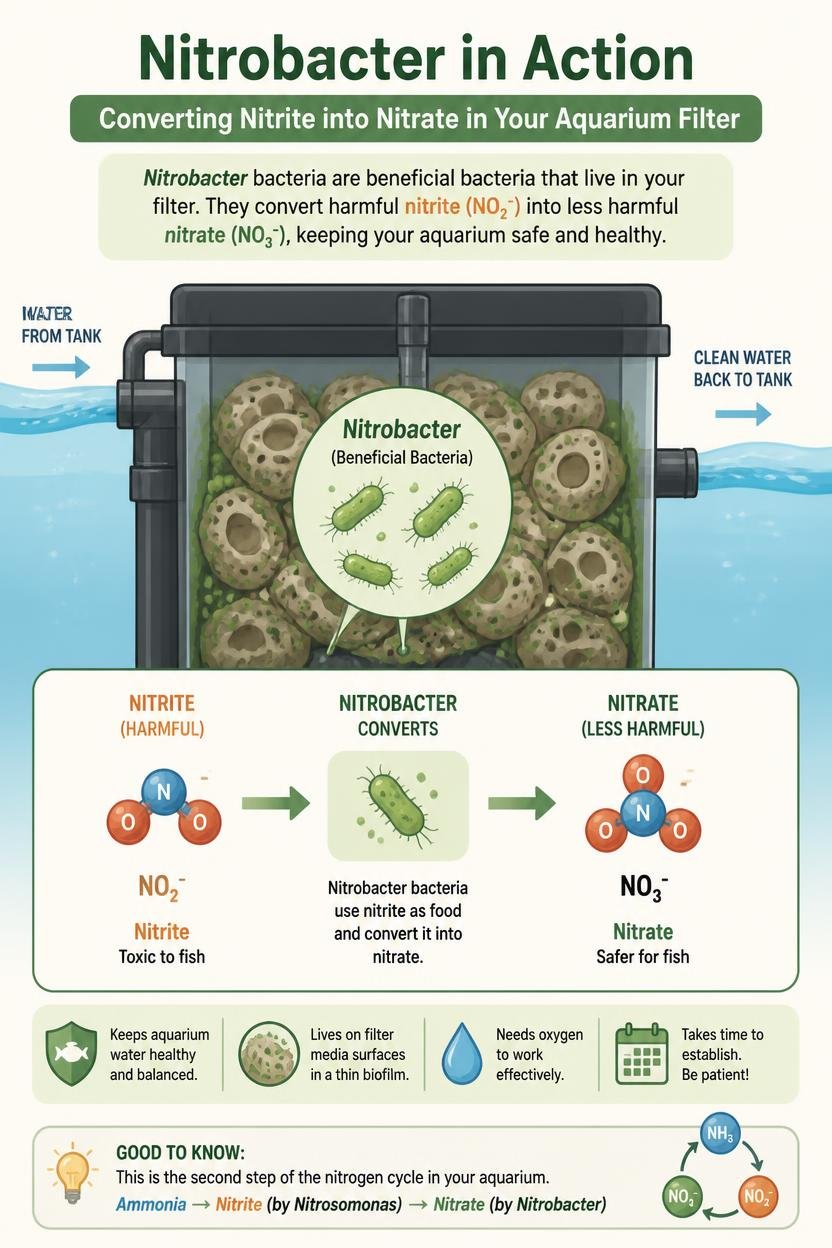
A second group of beneficial bacteria, called Nitrobacter, takes over from here, consuming the nitrite produced in the previous stage and converting it into nitrate. Nitrate is considerably less toxic than either ammonia or nitrite, tolerable to fish in much higher concentrations, which is why this final conversion represents the real finish line of a fully established nitrogen cycle.
Nitrobacter colonies generally take slightly longer to establish than Nitrosomonas, meaning a newly cycling tank often shows a temporary spike in nitrite even after ammonia has dropped to zero, simply because the bacteria converting nitrite haven't caught up yet. This staggered timeline is completely normal and is exactly why aquarium test kits measure all three compounds separately rather than relying on a single reading.
Once both bacterial populations are fully established and stable, a tank is considered "cycled," meaning it can reliably process the ammonia produced by its fish into the far less harmful nitrate, continuously and without dangerous spikes, as long as the bioload stays within what the established bacteria can handle.
4. Nutrient Export: Removing Nitrate From the System
Unlike ammonia and nitrite, nitrate doesn't get broken down further by the bacteria naturally present in most home aquariums, which means it steadily accumulates over time unless something actively removes it. Regular partial water changes are the most reliable and widely used method, physically diluting and removing accumulated nitrate before it climbs high enough to stress fish or fuel excessive algae growth.
Live plants offer a second, complementary removal pathway, since they absorb nitrate directly as a nutrient source for their own growth, effectively competing with algae for the same resources. A heavily planted tank can sometimes reduce how often water changes are strictly necessary, though plants alone rarely eliminate the need entirely in a typical home aquarium.
This final stage is really the ongoing maintenance side of the nutrient cycle, the part that continues indefinitely for as long as the tank is running, which is why a consistent water change schedule remains one of the single most important habits for any aquarium owner, regardless of how established or stable the tank's bacterial colonies have become.
Practical Tips for Supporting a Healthy Nutrient Cycle
● Test your water regularly, not just during initial cycling. Ammonia, nitrite, and nitrate levels can shift as bioload changes, so periodic testing helps catch problems early even in an established tank.
● Avoid overfeeding. Excess food breaks down into additional ammonia, placing unnecessary strain on your tank's bacterial colonies.
● Never fully clean your filter media at once. Beneficial bacteria live primarily on filter media, so rinsing it gently in old tank water, rather than replacing or scrubbing it completely, preserves your established cycle.
● Stick to a consistent water change schedule. Since nitrate isn't broken down further naturally, regular partial water changes remain essential regardless of how mature your tank's bacterial colonies are.
Final Thoughts
The nutrient cycle isn't the most visually exciting part of the aquarium hobby, but understanding it is genuinely one of the most important steps toward keeping fish successfully long-term. From ammonia's initial release, through two stages of bacterial conversion, to the ongoing work of exporting nitrate through water changes and plants, this invisible process is quietly running in every healthy tank at all times. Give it the patience and attention it deserves, and the rest of the hobby becomes considerably easier to manage.
