
Most aquarium decor guides lean bright and cheerful by default — turquoise gravel, sunny lighting, colorful ornaments — which never quite matched what I actually wanted from my own tank. When I finally built a gothic-style aquarium instead, using black substrate, weathered ruins, and deep red lighting, it became easily the most complimented tank I've ever owned, precisely because it looked nothing like the standard pastel setups everyone else seemed to be building.
If bright and pastel isn't your style, these two ideas go all-in on a moody, dramatic dark aesthetic instead. Since this title only calls for two ideas, each one below gets extra depth so you have a genuinely complete blueprint to work from, along with a detailed image prompt to preview the final look before buying anything.
Why Gothic Aquariums Work So Well Visually
Dark aesthetics succeed in aquariums for the same reason they work in interior design: contrast. A black substrate and dark backdrop make every lighter element — pale stone, glowing red light, a cream-colored fish — pop with far more intensity than it would against a bright background. Gothic tanks aren't just "regular tanks in dark colors"; they're built around using that contrast deliberately, which is what gives the finished result its dramatic, almost theatrical quality.
1. Weathered Ruins on Black Substrate
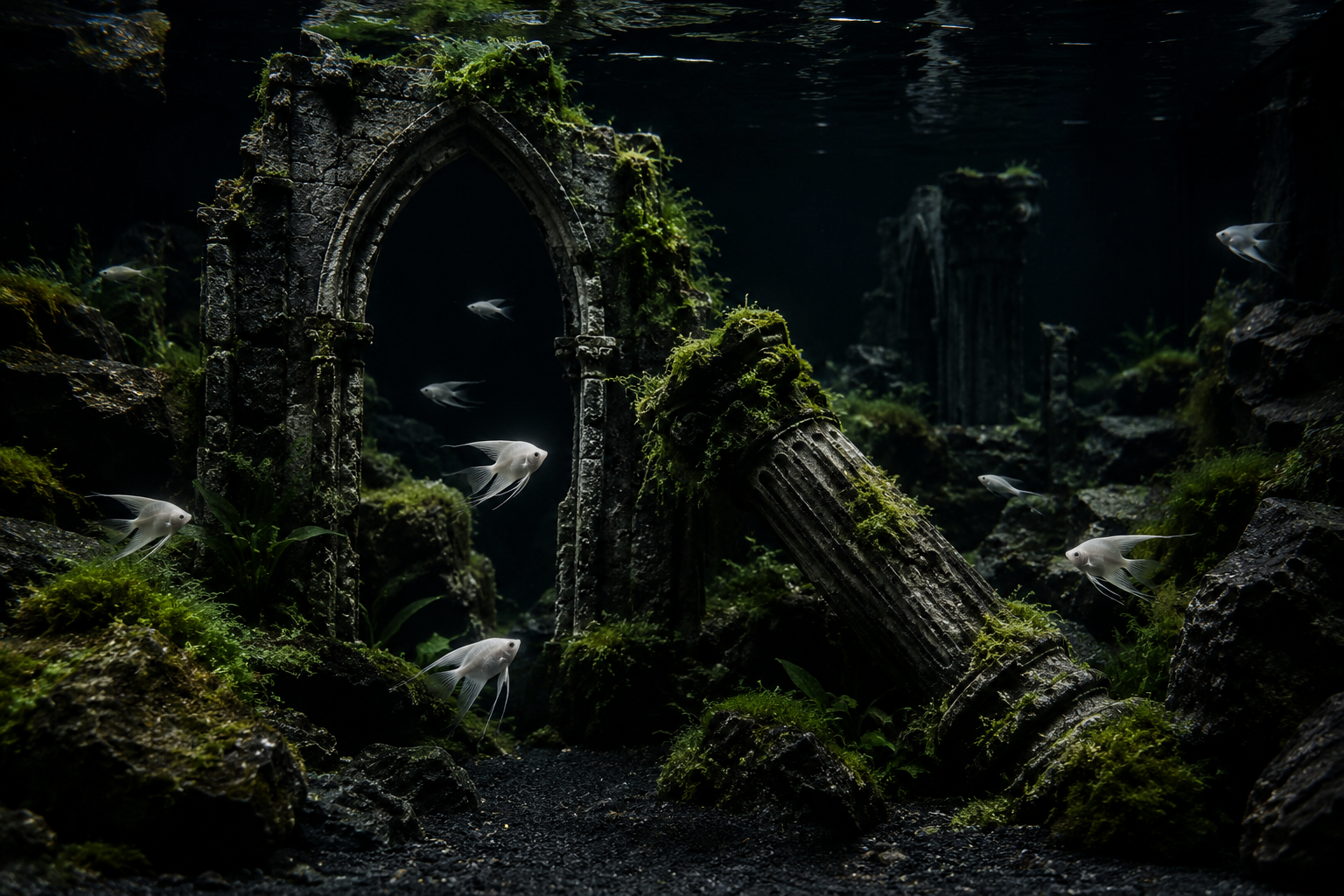
The foundation of any gothic aquarium starts with black substrate, which does more visual work here than in almost any other style. Deep black sand or gravel absorbs light rather than reflecting it, making everything placed on top — pale stone, driftwood, fish scales — stand out with far more contrast and drama than it ever could against a light-colored base.
Build on that base with weathered, ruin-style ornaments: crumbling stone archways, broken columns, or a half-collapsed cathedral wall piece. Look specifically for pieces with a rough, aged, textured finish rather than smooth or glossy resin, since that texture is what sells the illusion of centuries-old stone rather than a fresh decoration straight off a store shelf. Position these ruins slightly tilted or partially toppled, as though time and water have genuinely worn them down, rather than arranging them in perfectly upright, symmetrical rows.
Let real or artificial dark green moss creep across the edges of the ruins gradually, the same way moss claims abandoned stone structures in the real world. This detail, more than any single ornament, is what separates a genuinely convincing gothic ruin scene from a tank that simply has dark-colored decorations in it — the sense that nature has been slowly reclaiming the structure for a very long time.
Finish the scene with pale, ghost-white or cream-colored fish, such as certain platy or molly varieties, which stand out dramatically against the black substrate and dark stone in a way that darker-colored fish simply can't achieve in this same setup. The contrast between pale fish and a black, ruined backdrop is often the single most striking visual element of the entire gothic theme.
2. Blood-Red Lighting with Twisted Driftwood
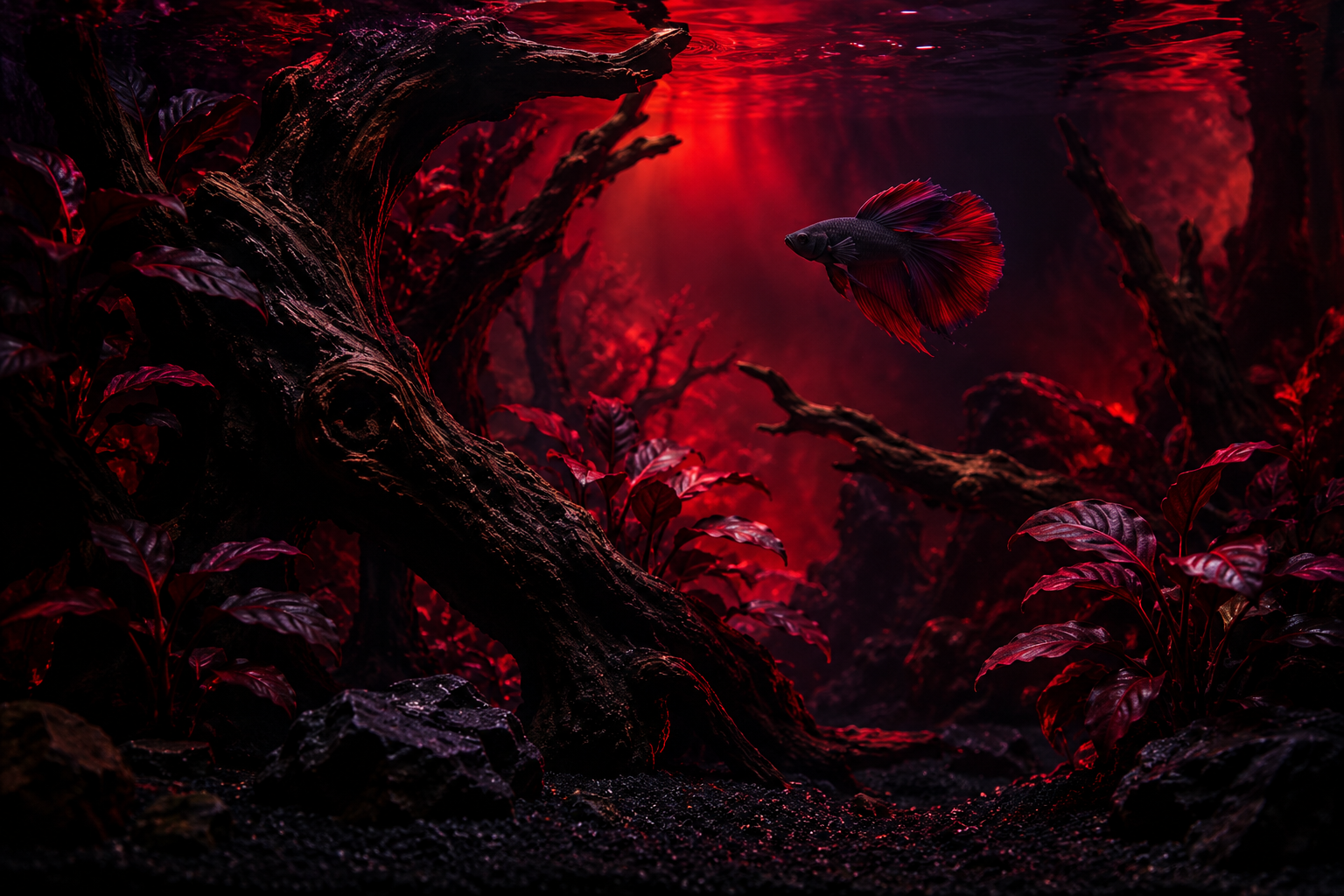
While black substrate and stone ruins build the gothic aesthetic's bones, lighting is what gives it a genuine sense of drama and mood. A deep red or dark purple-tinted aquarium light transforms an ordinary tank into something that looks lifted from a horror film set, casting long shadows and giving the water itself an eerie, saturated glow that white or blue lighting simply can't replicate.
Pair this lighting with the twisted, gnarled driftwood, specifically pieces with dramatic forked branches or a spidery, tangled silhouette rather than a single straight log. Under red or purple lighting, these twisted shapes cast sharp, elongated shadows across the substrate, adding movement and drama to the scene even when nothing inside the tank is actually moving.
Because strong colored lighting can sometimes wash out the visibility of fish or plants, most gothic tank owners use it as an accent rather than the sole light source — a dim red spotlight angled across the driftwood, combined with a lower-intensity white or warm light for general visibility and plant health. This layered lighting approach keeps the tank dramatic without sacrificing your ability to actually see your fish clearly day to day.
For plants, choose dark-leafed varieties like red tiger lotus or deep burgundy-toned anubias, which echo the red lighting rather than fighting against it with bright green that can look jarring under a red-tinted glow. The overall effect, done well, is a tank that feels less like a fish habitat and more like a small, glowing scene from a gothic novel — dramatic, moody, and entirely unlike the bright, cheerful aquariums most people picture by default.
Tips for Pulling Off the Gothic Look Successfully
● Don't skip general lighting entirely. Colored accent lighting looks best paired with some neutral light for actual visibility and plant health, not as the tank's only light source.
● Choose fish that contrast with the palette. Pale, light-colored, or translucent fish stand out dramatically against black substrate and dark stone in a way darker fish won't.
● Let moss and algae growth happen naturally. A little natural growth on stone ruins enhances the aged, weathered look — don't scrub every surface spotless.
● Balance drama with fish welfare. Very dim, heavily red-tinted tanks should still include enough overall light for healthy fish behavior and any live plants you're keeping.
Final Thoughts
A gothic aquarium proves that aquascaping doesn't have to mean bright colors and cheerful themes to look genuinely stunning. Black substrate and weathered ruins build the atmosphere, while deep red or purple lighting and twisted driftwood push the drama even further, together creating a tank that feels like a small glowing scene rather than a standard fish habitat. If you've been searching for a decor direction that finally matches a moodier personal style, this is exactly the kind of tank that stands out in a sea of pastel setups.
Frequently asked questions
Is colored aquarium lighting safe for fish?
Yes, colored LED lighting used as an accent is generally safe, though it's best combined with some neutral lighting rather than used as the tank's sole light source, especially if you're keeping live plants that need a fuller light spectrum.
Will black substrate make it harder to see waste and debris?
Slightly, since dark substrate hides some debris more than lighter colors, so it's worth sticking to a consistent gravel-vacuuming schedule rather than relying on visual cues alone.
What fish suit a gothic aquarium theme besides pale-colored species?
Black mollies, dark bettas, and certain darker tetra species can also work well, creating a more monochromatic, uniformly dark tank rather than the high-contrast look pale fish provide — both approaches fit the gothic aesthetic depending on your preference.
