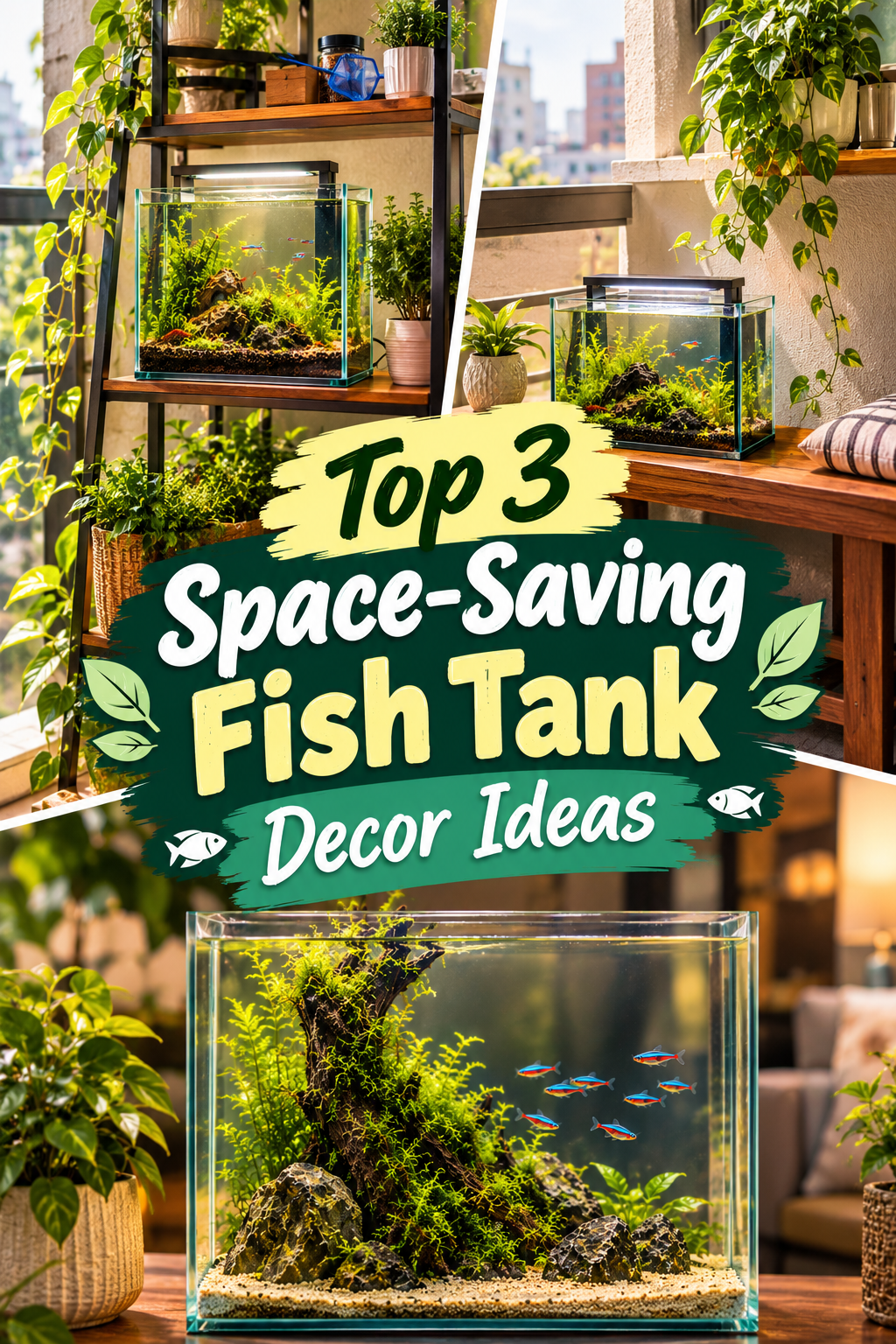
Every hobbyist eventually runs into the same puzzle with a small tank: you want the layout to feel complete, but every rock, plant, or ornament you add eats into the already-limited swimming space your fish actually need. I spent a long time treating this as a losing trade-off — more decor meant less room, and less decor meant a plainer tank — until I started thinking about space-saving as a design skill rather than a limitation to work around.
These three ideas aren't about cramming more into a small footprint. They're about getting a genuinely finished, thoughtful-looking tank while actually using less physical space than a typical layout, not more. Each idea below includes a detailed image prompt so you can visualize the effect before rearranging anything.
Why Space-Saving Decor Is a Skill, Not Just a Compromise
It's tempting to think of space-saving decor as simply doing less, but the tanks that pull it off well are usually more intentional than tanks with plenty of room to spare. Every piece has to earn its place, which often results in a cleaner, more considered layout than a larger tank where it's easy to keep adding decor without much thought. Limited space, approached the right way, can actually push a design in a better direction.
1. Build Vertically Instead of Horizontally
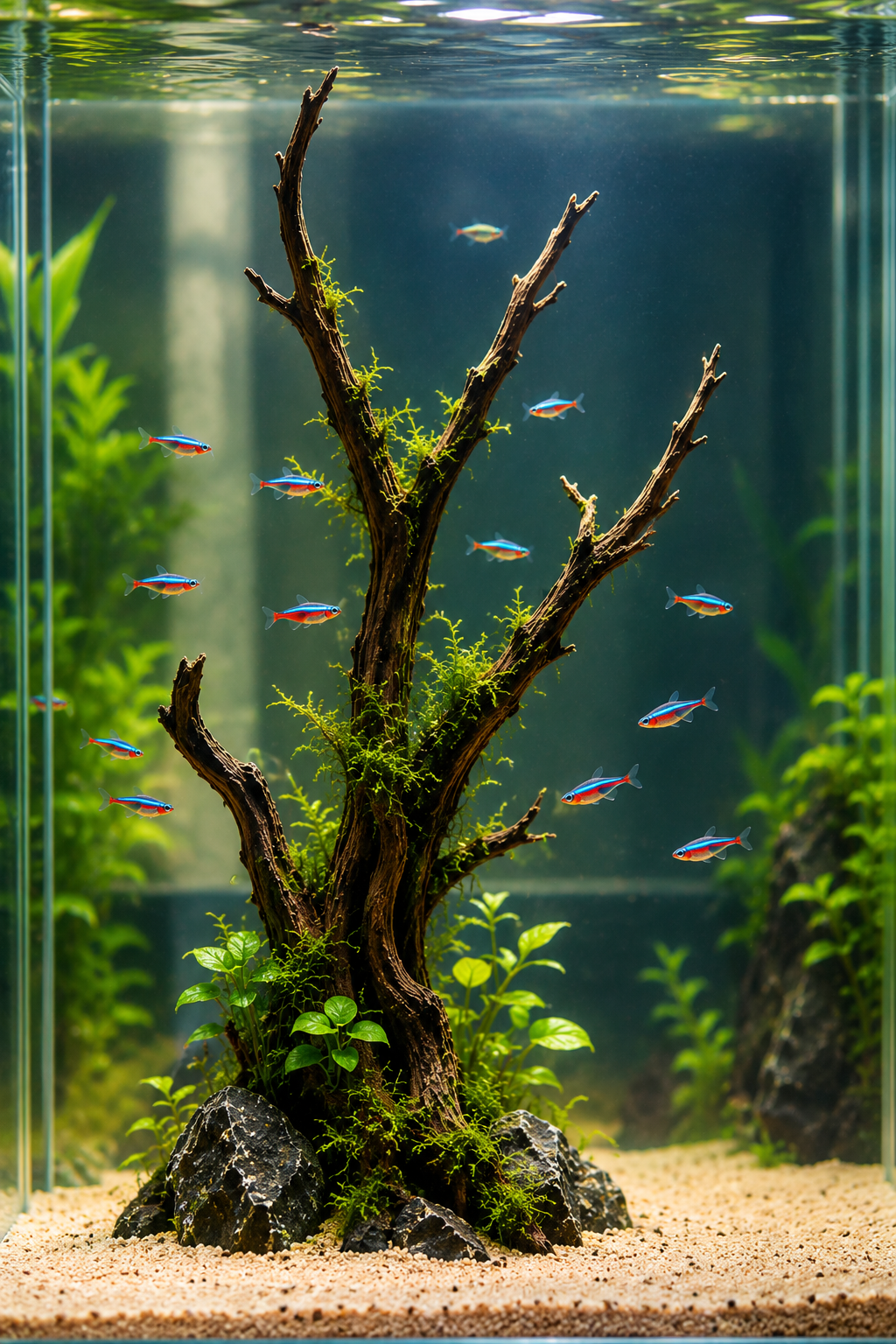
When floor space inside the tank is limited, the instinct is often to spread decor out thin across the substrate — a rock here, a plant there — which usually just makes a small tank feel busier without adding any real visual interest. The better approach is to build up instead of out, choosing tall, narrow hardscape that draws the eye upward and leaves the actual floor space nearly untouched.
A single tall branch of driftwood or a stacked column of two or three flat stones takes up only a small footprint on the substrate while still delivering the height and presence of a much larger arrangement. This works especially well in tall, narrow tank shapes, but it's just as effective in a standard small tank where every inch of floor space genuinely matters.
The visual bonus here is that vertical hardscape naturally creates more usable water volume for fish to swim through, both around the base and above it, compared to wide, sprawling arrangements that eat into open swimming space at every level of the tank rather than just one.
2. Choose Multi-Purpose Decor Over Single-Function Pieces
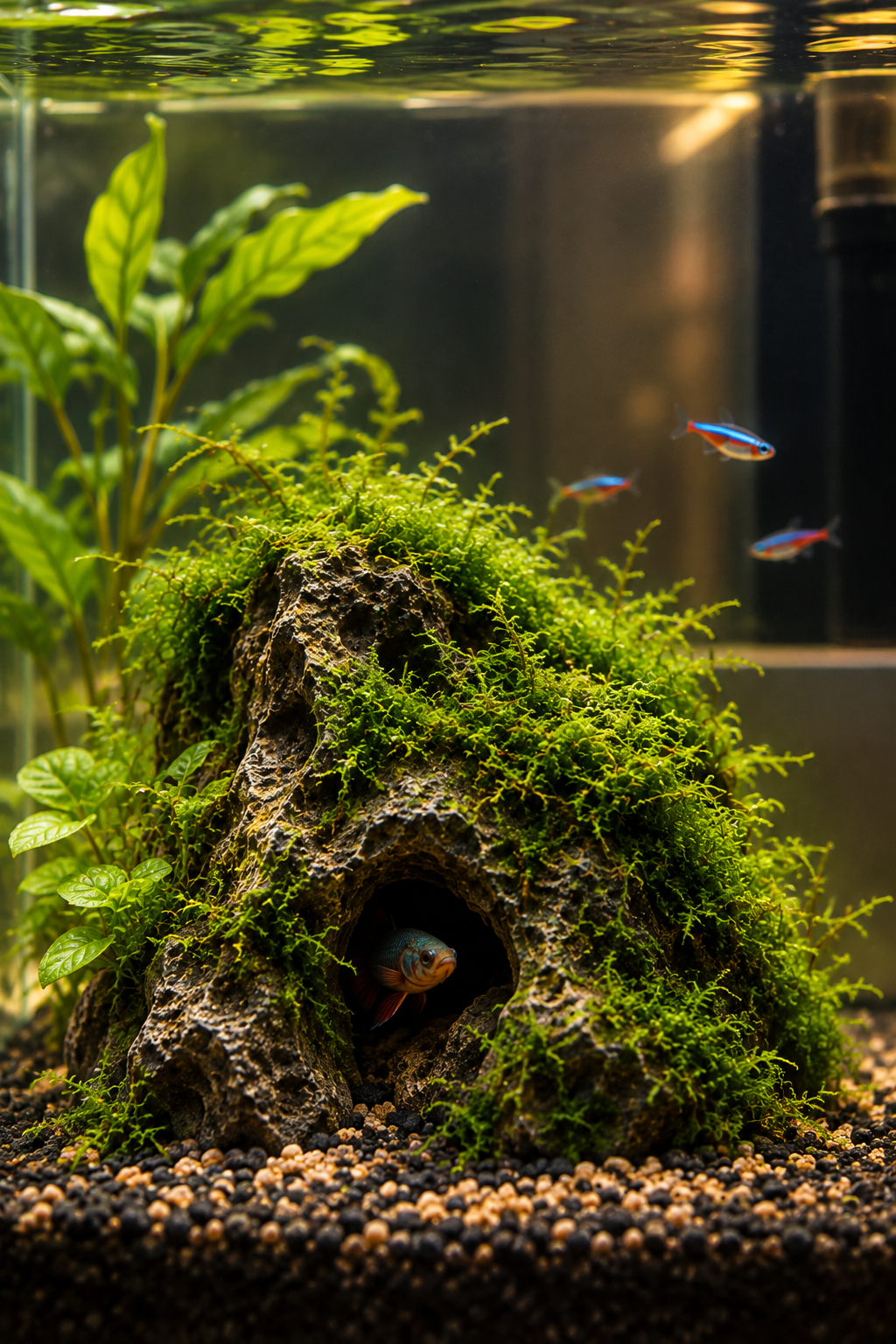
In a space-limited tank, every decoration should ideally do more than one job. Instead of buying a separate cave ornament, a separate piece to anchor plants, and a separate hiding spot for shy fish, look for hardscape or ornaments that combine several of those functions into one piece — a hollow rock formation that both anchors moss and provides a cave, for example.
This idea also applies to functional equipment. Some driftwood pieces and ornaments are specifically designed with a recessed back to conceal a filter intake or heater, meaning you avoid needing extra decor purely to hide equipment. That single swap can free up meaningful space that would otherwise go toward disguising gear rather than adding visual value.
When shopping, ask whether a piece can serve double duty before adding it to your cart: does this rock have a natural shelf for moss, does this ornament include a hiding cave, does this piece of wood have a shape that could also anchor a plant. Multi-purpose thinking often means buying fewer total items while achieving a more complete-looking layout.
3. Let the Background Do the Visual Work
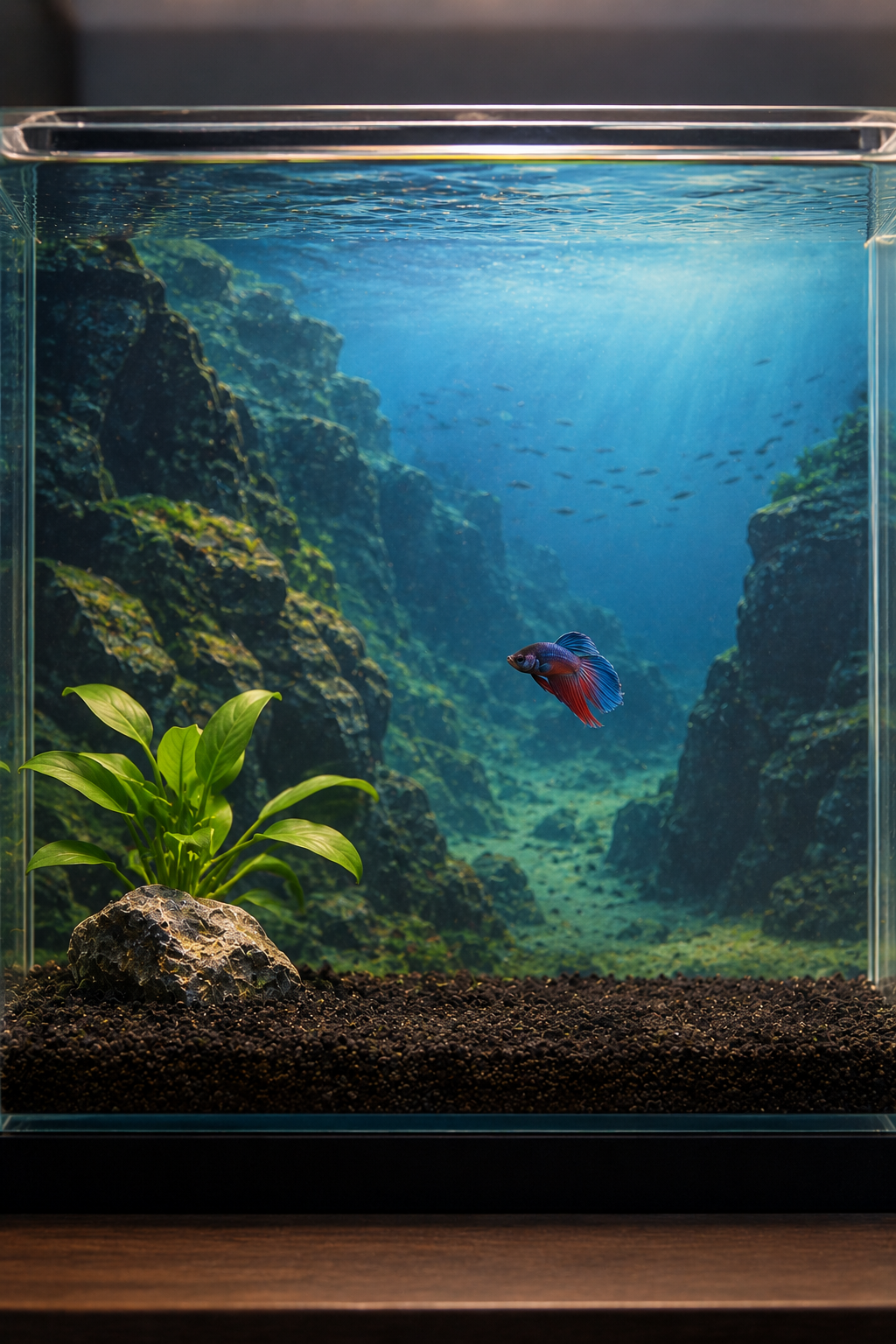
Every physical object placed inside a tank takes up real water volume, which matters most when that volume is already limited. One of the most effective space-saving techniques is shifting some of the visual interest from physical decor onto the background itself — a printed scene, a textured panel, or even a painted back panel — so the water inside the tank stays as open as possible.
A detailed background can suggest depth, rockwork, or plant life without a single one of those elements actually taking up space inside the tank. Paired with just one or two small physical accents in the foreground, a strong background can carry much of the visual load that would otherwise require filling the tank with additional ornaments.
This approach is particularly useful for very small or oddly shaped tanks where physical decor options are limited by the footprint available. Let the background suggest the scene, and use your limited physical space for just the one or two elements — a small plant, a single stone — that benefit most from actually being three-dimensional.
Extra Tips for Maximizing Small Tank Space
- Measure before you buy. Bring your tank's exact interior dimensions when shopping so you avoid purchasing hardscape that looks small in-store but proves too large once it's home.
- Prioritize height over width. A taller, narrower piece almost always preserves more open swimming space than a wide, low one of similar visual size.
- Audit your current decor for single-purpose items. Before buying anything new, check whether an existing piece could be repositioned or swapped to serve more than one function.
- Don't skip the background. It's the one element that adds visual depth without costing you any actual water volume, so it's worth prioritizing early in the planning process.
Final Thoughts
A small or oddly shaped tank doesn't have to mean choosing between a plain layout and a cramped one. Building vertically, choosing decor that pulls double duty, and letting the background carry some of the visual weight all achieve a full, finished look while keeping the actual swimming space as open as possible. Try applying even one of these ideas to your next small-tank setup, and you may find it looks more complete with less inside it than you expected.
Frequently asked questions
How much of a small tank's floor space should stay open?
A good general guideline is keeping at least half of the floor space clear of decor, giving fish room to swim and making routine maintenance easier to manage.
Do backgrounds work as well as physical decor for adding depth?
A well-chosen background can add a strong sense of depth and scene, though most hobbyists find combining a background with one or two small physical accents produces the most convincing, three-dimensional result.
Is vertical hardscape harder to keep stable than horizontal pieces?
Tall pieces do need a secure, wide base or an anchor to prevent tipping, so it's worth using aquarium-safe adhesive or wedging the piece firmly into the substrate before adding fish.
