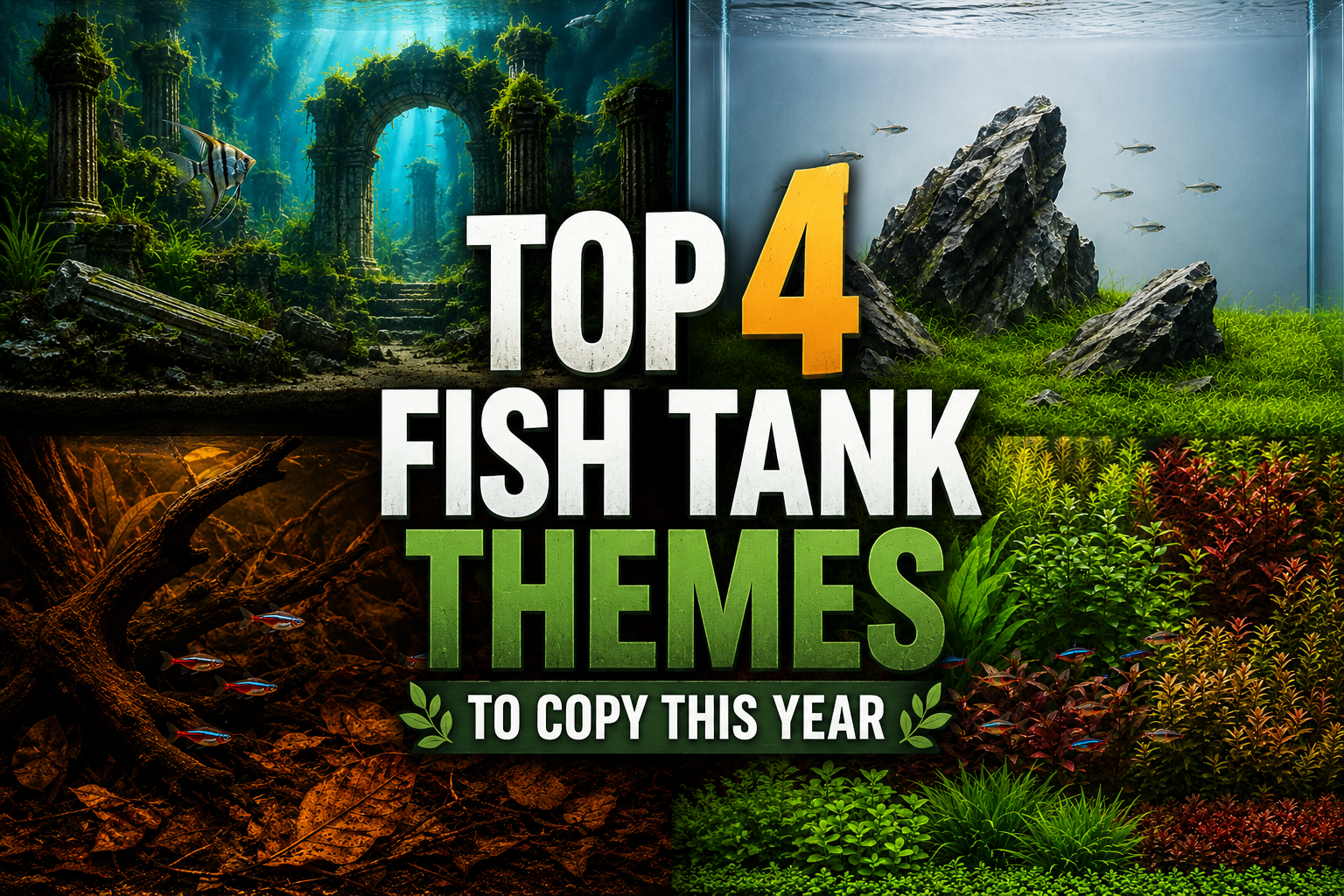
Every year, aquascaping communities online seem to circle back to a handful of themes that outshine everything else — and this year is no different. After spending months browsing aquascaping forums, comparing tank builds, and testing a couple of these looks in my own tanks, four themes kept standing out as the ones worth copying, whether you're setting up your very first tank or refreshing an existing one.
What I like about this particular group of themes is that they each represent a completely different approach — one leans on plants, one leans on water color itself, one leans on rock placement, and one leans on storytelling. That range means there's likely a theme here that matches your personality even if aquascaping is brand new to you. Each theme below includes a detailed image prompt so you can visualize the finished look before starting your build.
How to Choose the Right Theme for You
Before committing to a theme, think about what you enjoy most: if you like gardening and plant care, a planted theme will hold your interest longer than a rock-focused one. If you're drawn to realism and love learning about fish habitats, a biotope theme will feel far more rewarding than a fantasy build. Picking a theme that matches your actual interests, not just what looks good in a single photo, is what keeps a tank exciting to maintain months down the line.
1. The Dutch-Style Planted Garden
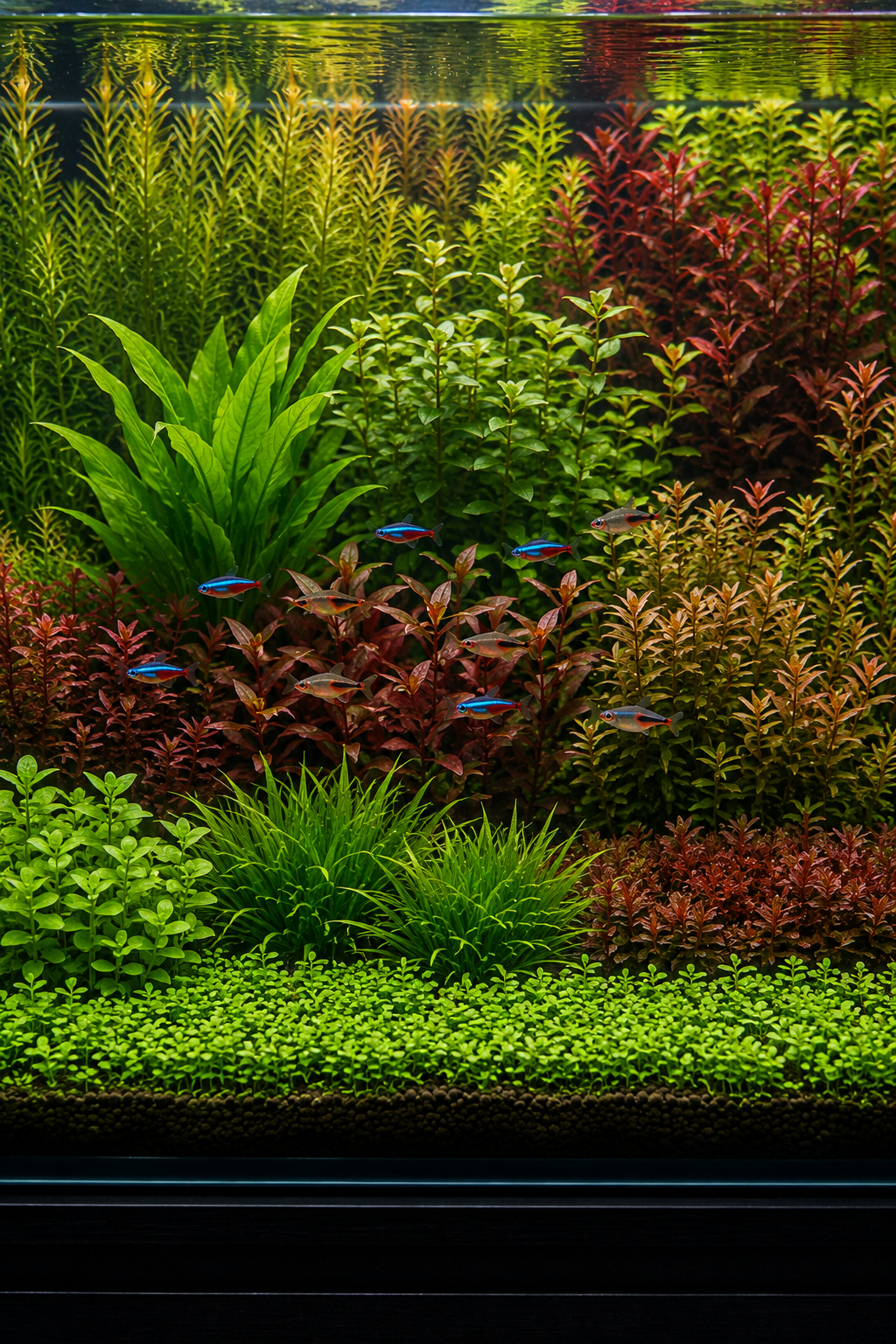
If you've ever seen an aquarium that looks like a lush, terraced flower garden growing underwater, you've seen Dutch-style aquascaping. Originating from Dutch aquarium clubs decades ago, this theme has surged back into popularity because it prioritizes plants over hardscape entirely — there's little to no visible rock or driftwood, just rows and clusters of different plant species arranged by height, color, and leaf texture.
The theme works by grouping plants in odd-numbered clusters, tallest at the back and shortest near the front glass, similar to a terraced garden bed. Contrast is created not through rocks or ornaments but through leaf shape and shade of green — a fine, feathery plant next to a broad-leafed one, or a reddish plant breaking up a wall of green, creates the same visual rhythm a flower garden achieves with blooms.
This theme suits beginners who enjoy gardening more than traditional aquascaping, since success depends more on plant care — trimming, fertilizing, and lighting — than on precise rock placement. It does require a bit more patience, as the "garden" look takes several weeks of growth to fully mature, but the payoff is a tank that looks nothing like a standard pet-store setup.
2. The Blackwater Biotope
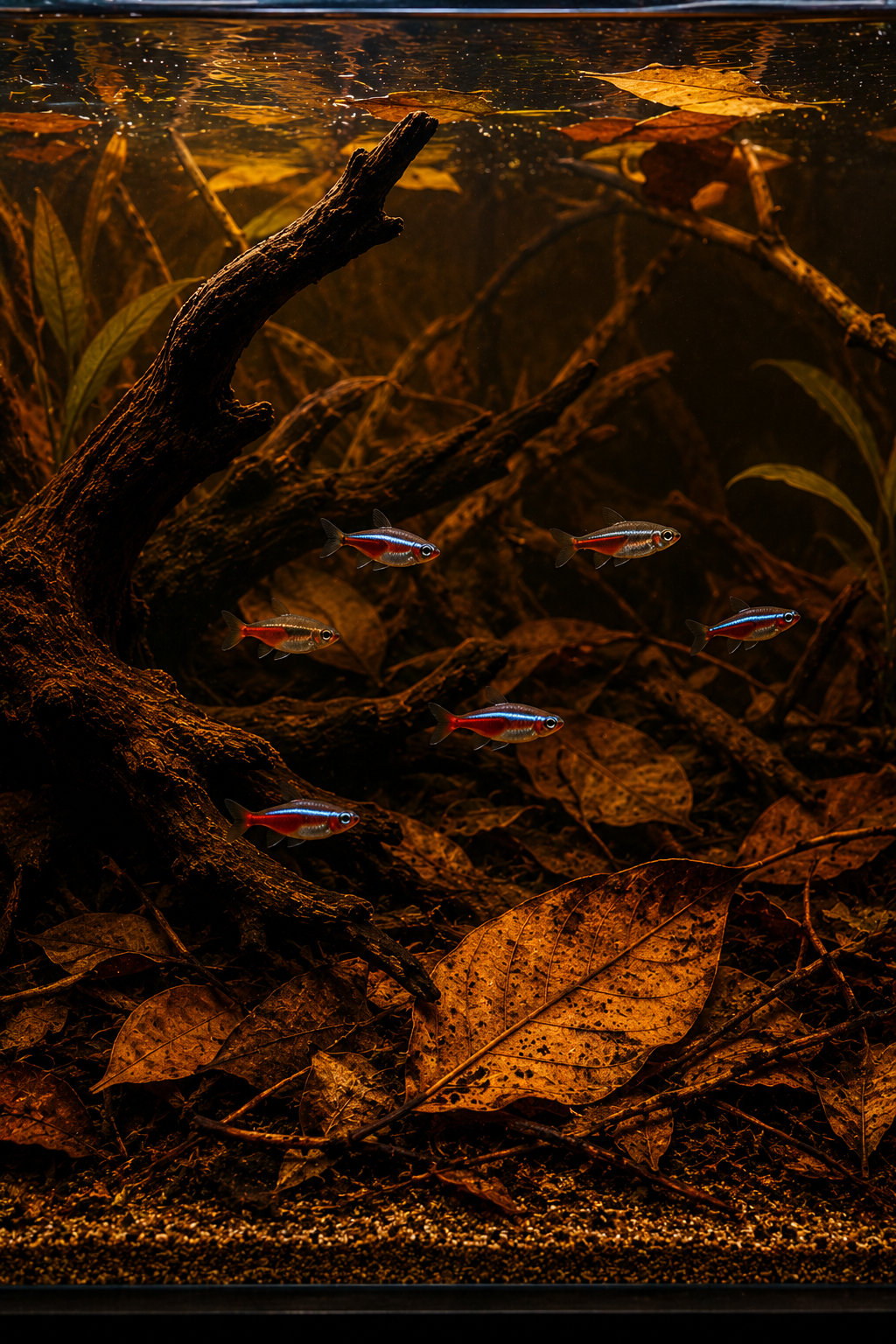
Blackwater tanks recreate the tea-colored rivers and streams found in parts of South America and Southeast Asia, where decomposing leaves and tannin-rich wood naturally tint the water a warm amber-brown. What might sound like "dirty" water to a beginner is actually one of the most talked-about aquascaping trends right now, prized for its moody, atmospheric look and its close match to how many popular tropical fish actually live in the wild.
To build this theme, layer botanicals like dried leaf litter, alder cones, and unsealed driftwood into the tank, which naturally release tannins over time and tint the water without any dye or additive. Keep the hardscape sparse and dark-toned so the golden-brown water itself becomes the star of the display, rather than competing with it.
This theme resonates with hobbyists who want their tank to feel authentic rather than decorative, since it mirrors an actual natural habitat instead of an artistic interpretation of one. It's also a great match for species like wild bettas or certain tetras, which show deeper, richer coloration against the warm-toned water than they do in a standard bright, clear tank.
3. The Iwagumi Zen Rock Garden
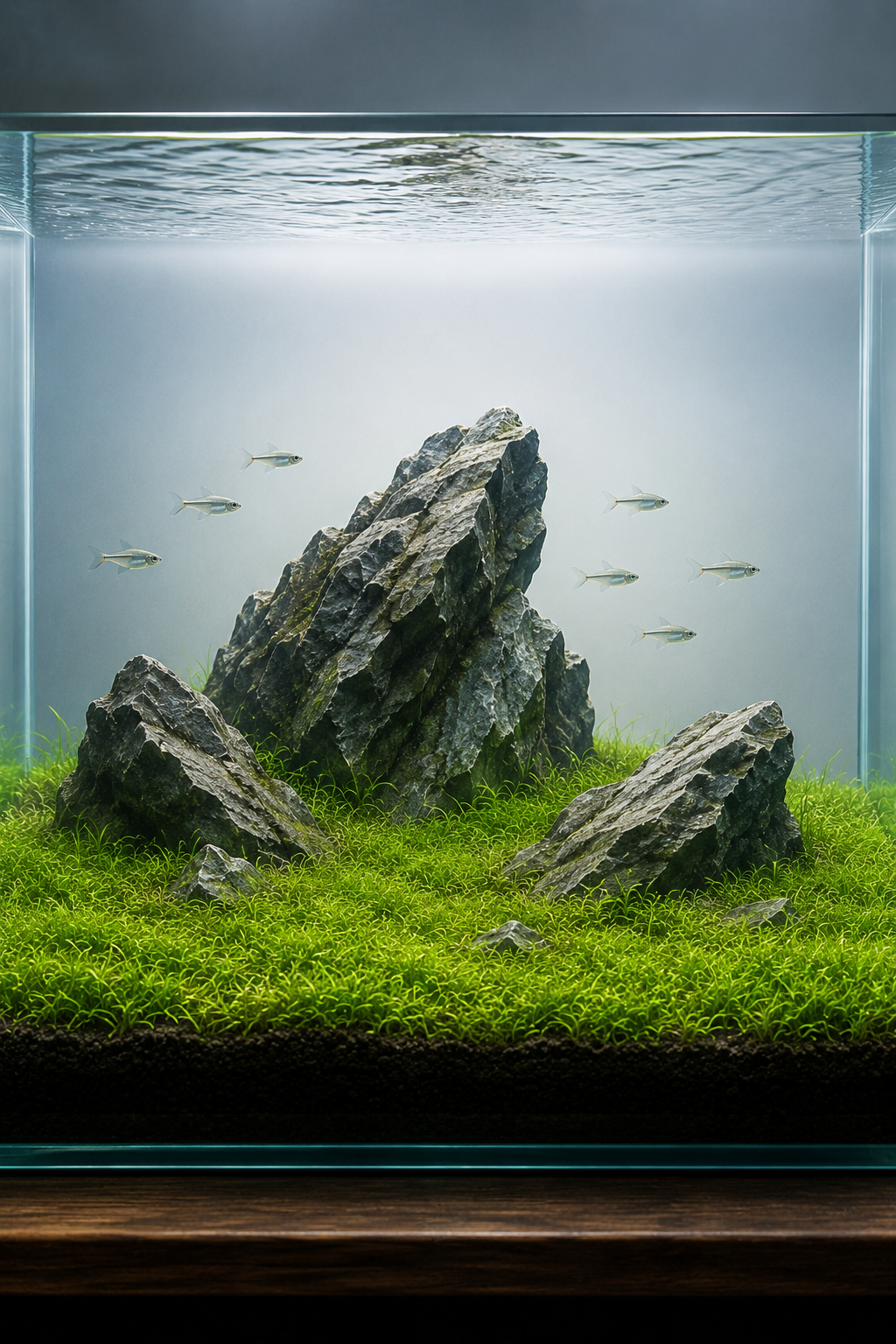
Iwagumi is a Japanese aquascaping style built entirely around rock placement, and its continued popularity comes from how calming and uncluttered the finished result looks compared to busier themes. The style traditionally uses an odd number of stones — often three or five — of the same rock type, arranged with one dominant "main stone" and smaller stones supporting it at specific angles.
What makes this theme feel fresh this year is its pairing with very low, carpeting plants like dwarf hairgrass or monte carlo, which cover the substrate in a bright green lawn without hiding the rock formation itself. The combination of sharp, dramatic stone and soft, uniform greenery creates a landscape-like scene that looks intentional from every angle of the tank.
Iwagumi is deceptively simple to describe but does require careful stone selection — uneven, natural-looking rocks work far better than smooth, rounded ones. Because the layout relies so heavily on so few elements, this theme rewards patience and precision more than any other on this list, but it remains one of the most striking, minimal options for anyone who wants their tank to feel like a piece of landscape art.
4. The Fantasy Underwater Ruins
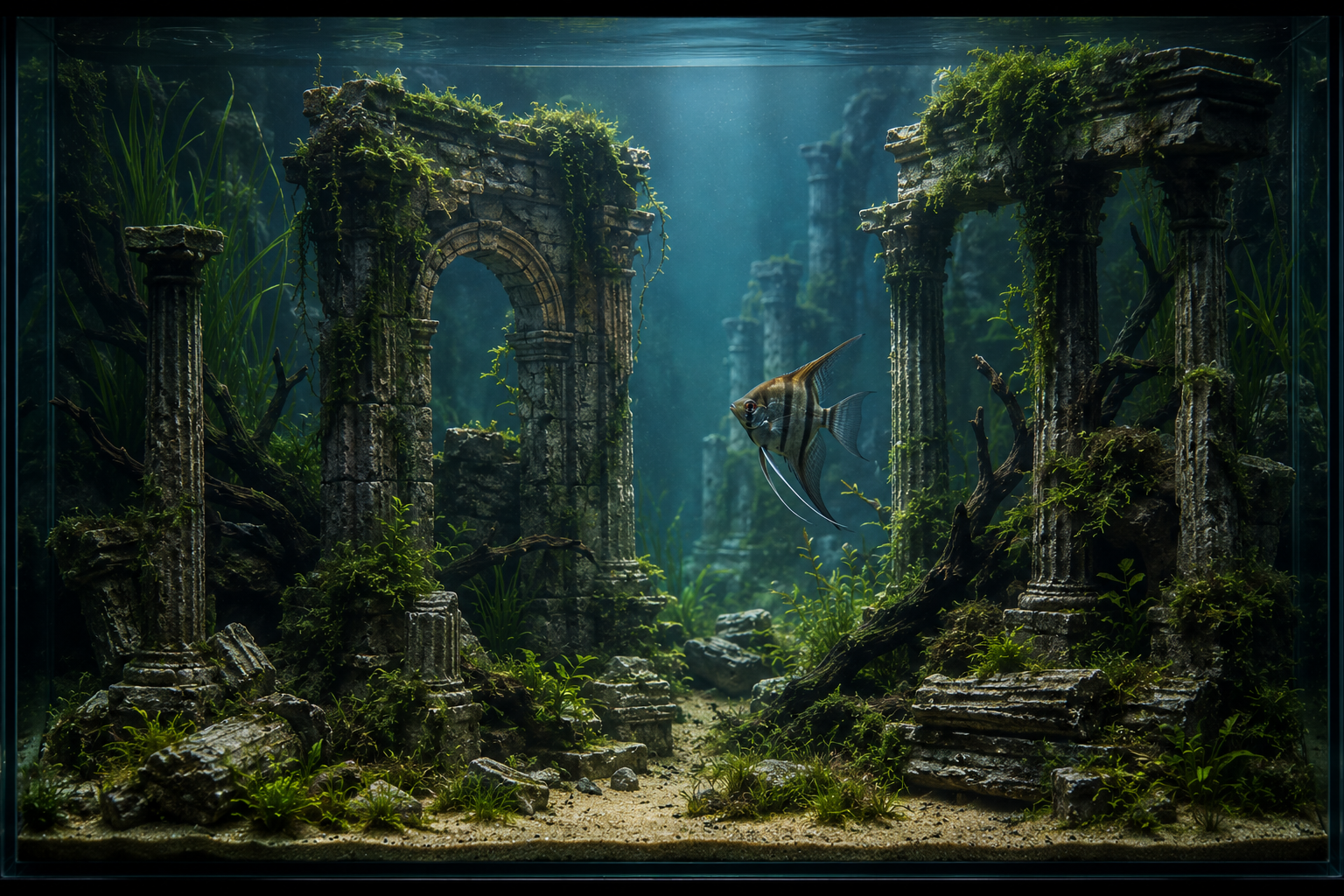
Not every trending theme is about pure naturalism — the fantasy ruins theme leans fully into storytelling, transforming a tank into what looks like a forgotten underwater city or temple. Broken columns, mossy stone archways, and half-buried statues create a scene that feels plucked from a fantasy film rather than a typical fish tank.
This theme works best when the "ruins" look genuinely aged rather than brand new — choosing ornaments with weathered textures, muted grey or sandy stone tones, and allowing moss or java fern to grow naturally over the edges of columns and archways over time. That gradual moss growth is what sells the illusion of a structure reclaimed by nature rather than a plastic prop dropped into water.
Fantasy ruins pair beautifully with soft blue or teal-tinted lighting, which enhances the sense of an ancient, sunken world, and with slow-moving, elegant fish like angelfish or bettas that seem to drift through the scene rather than dart through it. Of every theme on this list, this one gives beginners the most room for personal storytelling, since the specific structures — temple, castle, or shipwreck — can be swapped to match your own vision.
Tips for Bringing Any of These Themes to Life
● Research before buying. Each theme relies on specific materials — carpeting plants for Iwagumi, botanicals for blackwater — so know what you need before shopping.
● Give plant-heavy themes time. Dutch-style and Iwagumi tanks look sparse at first and need several weeks of growth before they reach their full visual impact.
● Match fish to the mood. Slow-moving, graceful fish suit fantasy and blackwater themes, while active schooling fish suit the structured energy of Dutch and Iwagumi layouts.
● Don't mix themes in one tank. Blending fantasy ruins with an Iwagumi rock garden, for example, tends to confuse the eye — pick one direction and commit to it fully.
Final Thoughts
Whether you're drawn to the structured elegance of an Iwagumi rock garden, the storytelling of sunken fantasy ruins, the authenticity of a blackwater biotope, or the lush abundance of a Dutch-style garden, each of these four themes gives your tank a clear identity rather than a random collection of decor. Pick the one that matches your personality, gather the right materials, and give it the patience it needs to mature — that's really all it takes to copy a look that took other hobbyists years to perfect.
Frequently asked questions
Which of these themes is easiest for a total beginner?
The fantasy ruins theme is generally the most forgiving, since it relies on ornament placement rather than precise plant care or specialized water chemistry, making it easier to get right on the first attempt.
Do blackwater tanks need special filtration?
Not necessarily special filtration, but botanicals do break down over time and should be monitored and replaced periodically to maintain water quality alongside your regular filter maintenance.
Can I combine elements from two themes?
It's possible, but themes tend to look most polished when kept distinct. If you want to blend styles, borrow small details — like adding a few botanicals to a planted tank — rather than mixing two full aesthetics.
