
Shelves and aquariums have more in common than most people realize — both are about organizing and displaying things you care about in a considered way. Once I started thinking about shelving as a design principle rather than just furniture, I found four genuinely different ways it could shape an aquarium setup, from recessing a tank directly into a bookshelf to building hidden shelving inside the water itself.
These four ideas take the concept of "shelf-style" in different directions, whether that means the tank sits on a shelf, inside one, or uses shelf-like structure internally. Each idea includes a detailed image prompt so you can visualize the finished look before starting your own project.
Why Shelving Is a Natural Fit for Aquarium Design
Shelves are fundamentally about organizing objects at different levels for both function and display, which happens to be exactly what makes a great aquascape layout work too — varied heights, considered spacing, and a sense of intentional arrangement rather than everything crowded onto one flat plane. Borrowing shelving principles, whether externally or built into the tank itself, tends to produce a more structured, visually interesting result than treating the aquarium as an isolated object.
1. A Built-In Bookshelf Aquarium Insert
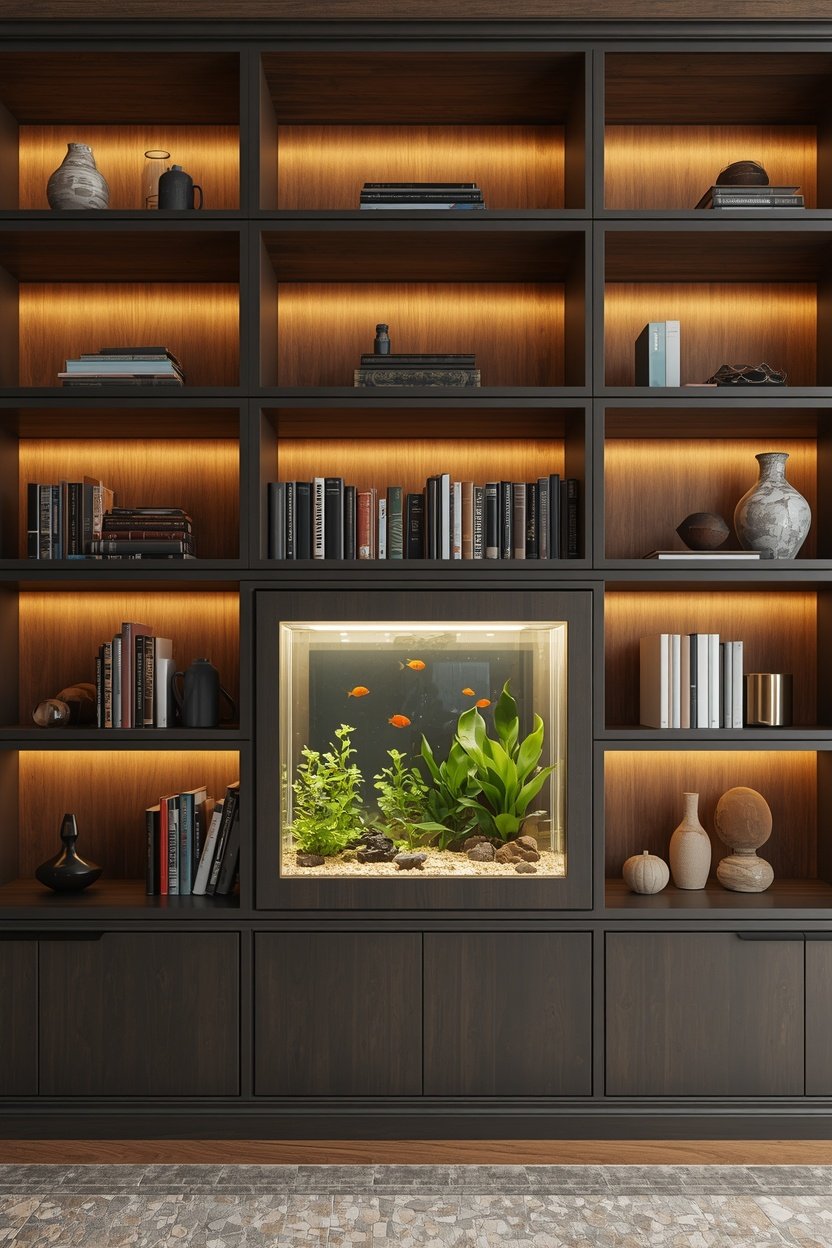
One of the most dramatic ways to bring a shelf-style aquarium into a room is recessing the tank directly into an existing bookshelf or room-divider unit, so the water and fish sit flush among the books and shelving rather than beside them. This transforms the aquarium from a standalone object into an architectural feature of the shelving itself, often becoming the first thing visitors notice about the entire room.
This idea works best with a modular bookshelf unit, where one cube or section is left open and reinforced to support a tank's weight, with the surrounding shelves left free for books, plants, and personal objects. Choosing a tank width that matches the shelf module precisely, rather than a slightly mismatched size, is what makes the insert look genuinely built-in rather than simply wedged into an available gap.
Because the tank is surrounded by other shelving on multiple sides, this idea typically calls for internal aquarium lighting rather than relying on the room's ambient light, ensuring the tank stays bright and visible even nestled among the surrounding shelves and books.
2. Internal Tiered Acrylic Shelves for Layered Decor
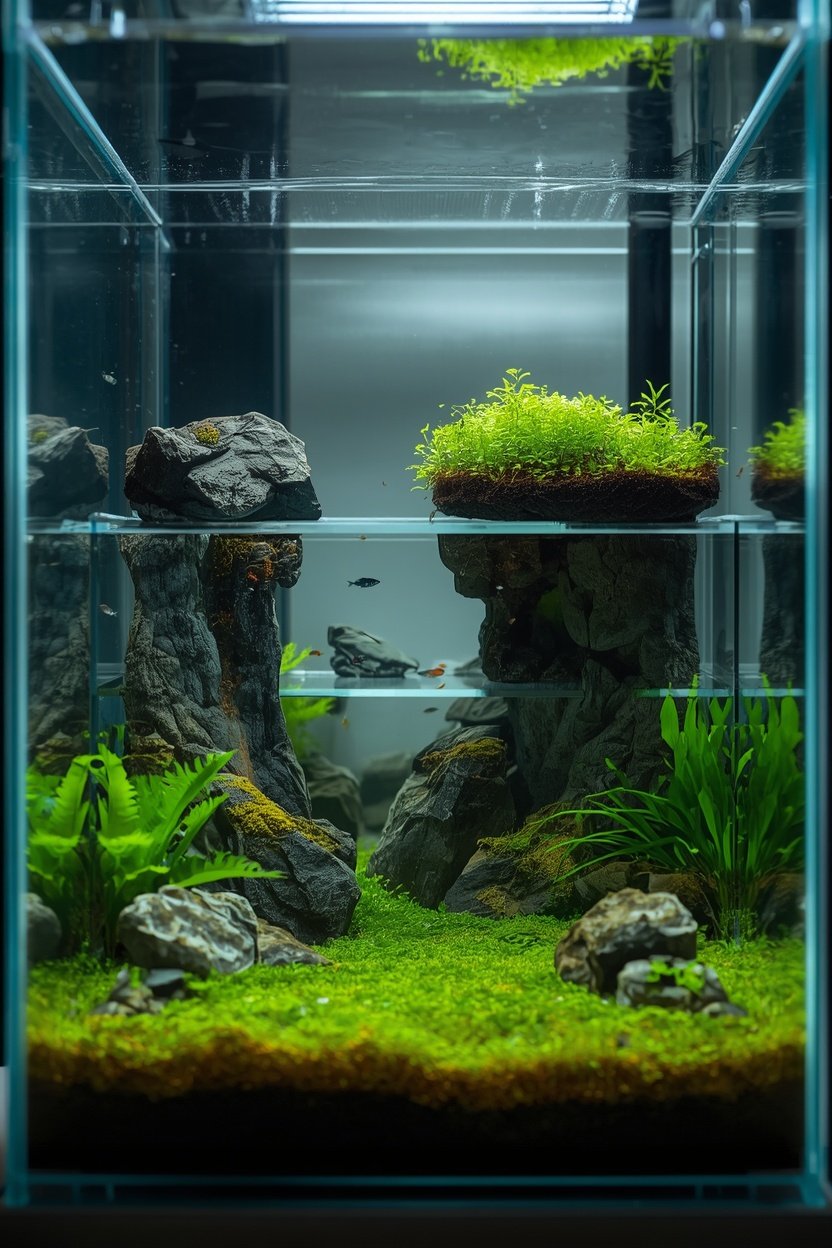
Rather than a shelf outside the tank, this idea builds shelving inside it — clear acrylic risers or platforms positioned at different heights within the aquarium itself, creating distinct levels for decor, plants, and even feeding areas. This technique, sometimes used in more elaborate aquascaping builds, gives a tank genuine architectural structure rather than everything sitting at one flat substrate level.
Position risers so they're mostly hidden behind substrate, rocks, or plants, since the goal is a naturally tiered landscape rather than visible plastic shelving. A lower riser near the front might hold a carpet plant raised slightly above the base substrate, while a taller riser toward the back supports a small rock garden or a piece of driftwood at an elevated vantage point.
This layered internal structure gives fish genuine vertical territory to explore, and creates a much more dynamic, multi-level landscape than a flat tank floor, particularly effective in taller aquariums where there's enough vertical space to make the tiered effect clearly visible from the front glass.
3. A Floating Shelf Gallery of Small Tanks
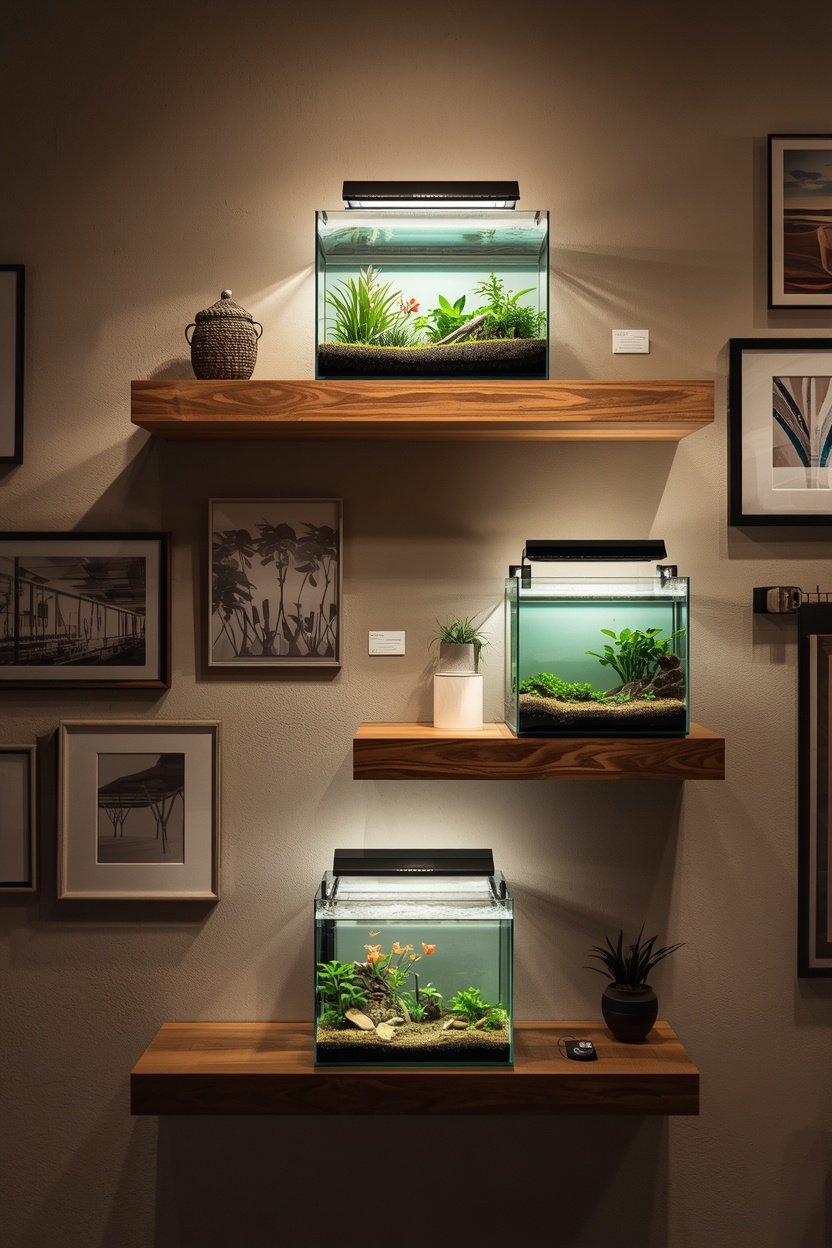
Instead of one large tank, this idea arranges several small nano tanks across a series of floating shelves at varying heights, creating a gallery-style wall display rather than a single focal point. Each tank can hold a different small species or plant arrangement, turning the wall into a curated collection rather than one uniform aquarium.
Stagger the shelf heights slightly, similar to an art gallery wall, rather than lining every tank up at the exact same level, which adds visual rhythm and keeps the display from feeling like a repeated, uniform grid. Leaving varied spacing between each tank, along with a few small decorative objects or a framed print interspersed among them, reinforces the gallery feel over a purely functional shelving arrangement.
This idea requires more individual maintenance than a single tank, since each nano setup needs its own attention, but the payoff is a wall display with genuine variety — different colors, different plants, different personalities — that a single aquarium, however large, simply can't offer on its own.
4. A Repurposed Corner Shelf Unit as an Aquarium Stand
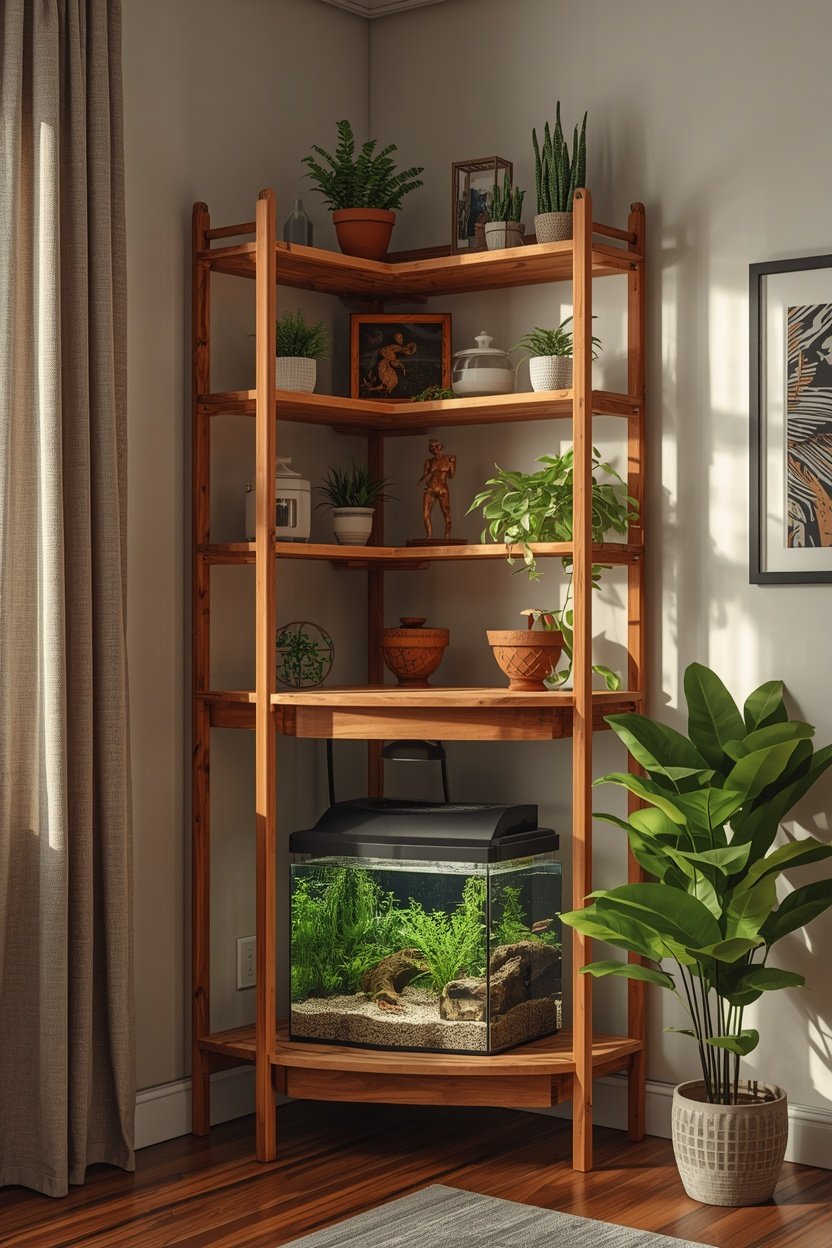
A tall, narrow corner shelf unit, the kind typically used for books or plants, can be repurposed as a dedicated aquarium stand, using its lowest, most structurally sound shelf for the tank itself while the upper shelves display complementary items like small potted plants, aquarium supplies, or personal objects. This approach works especially well in rooms where floor space is tight but an unused corner sits available.
Choose a unit with a lower shelf rated to support significant weight, since that's where the filled tank will sit, and confirm the shelf depth comfortably accommodates your tank's full footprint with a small margin on all sides. The shelves above then become a natural, built-in display for everything the aquarium needs — food, a net, water conditioner — kept close at hand but tucked neatly out of the way.
Because corner units are freestanding rather than mounted, this idea offers the flexibility of an entirely self-contained aquarium station that can be repositioned if your room layout changes, without leaving behind any wall damage or requiring dedicated built-in construction.
Tips for Shelf-Based Aquarium Projects
● Always confirm weight ratings first. Whether it's a bookshelf insert or a repurposed corner unit, the shelf supporting a filled tank needs a confirmed weight capacity, not just a visual guess.
● Plan access for maintenance. Built-in and internal-shelf designs can make routine cleaning trickier, so think through how you'll reach the tank before finalizing the setup.
● Keep multiple small tanks on separate maintenance schedules. A gallery of nano tanks benefits from a simple rotating cleaning schedule so no single tank gets neglected.
● Match materials across the whole display. Whether wood, metal, or acrylic, consistent materials and finishes make shelf-based aquarium setups look considered rather than assembled from mismatched parts.
Final Thoughts
Thinking of an aquarium in terms of shelving opens up design possibilities that a standalone tank and stand simply can't offer — built-in bookshelf integration, internal tiered terrain, a curated gallery wall, or a practical repurposed corner unit. Each of these four ideas treats the aquarium as part of a larger, organized display rather than an isolated piece of furniture, resulting in a setup that feels genuinely integrated into your room's design.
Frequently asked questions
Can any bookshelf support a built-in aquarium insert?
No — the section holding the tank needs reinforced support rated for the tank's full filled weight, so it's worth consulting the shelf manufacturer's specifications or a professional before attempting a built-in insert.
Are internal acrylic risers difficult to install?
Basic riser platforms are relatively straightforward for a confident beginner to place during initial tank setup, though more elaborate multi-tier designs may benefit from research or guidance from experienced aquascapers first.
How many nano tanks work well in a shelf gallery display?
Three to five small tanks generally strikes a good balance between visual variety and manageable maintenance, though this depends on available wall space and how much individual attention you can realistically commit to each tank.
