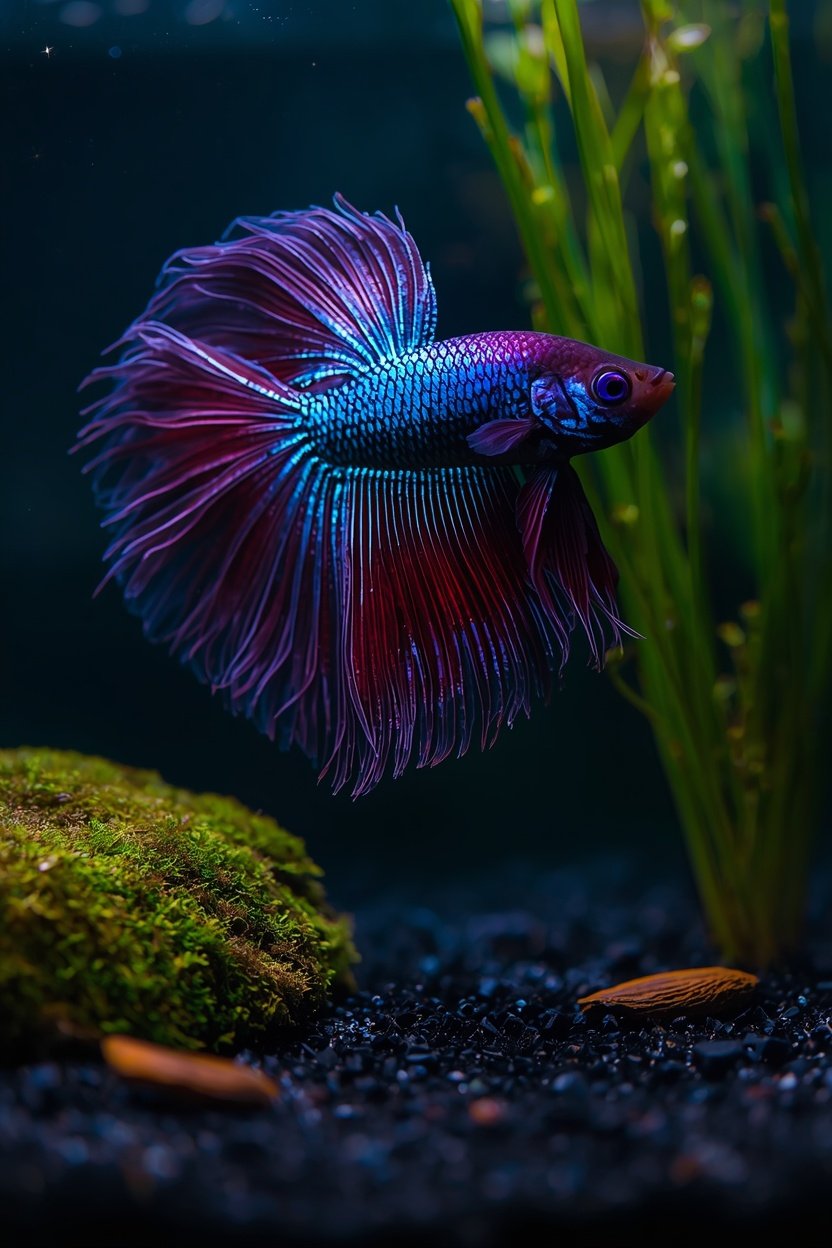
Finding your betta motionless at the bottom of the tank is heartbreaking, especially when you were sure you were doing everything right. If this has happened to you, take a breath. It is far more common than most pet stores admit, and it is rarely because you did not care enough. Bettas are sold in tiny cups, labeled as "easy" pets, and sent home with almost no instructions.
The truth is that a betta can be a long-lived, personality-packed companion, but only when its basic needs are met. With steady care, a betta can live three to five years. Below are the five most common reasons these fish die, explained in plain language, with simple steps you can start using today.
|
Quick answer: Most betta deaths trace back to five things: unclean water, cold or unstable temperature, a tank that is too small or poorly set up, overfeeding, and long-term stress or untreated illness. |
1. Dirty Water and Ammonia Build-Up
Water quality is the number one killer, and the danger is almost invisible. Fish waste, leftover food and rotting plant matter release ammonia, a chemical that burns a betta's gills and skin. Because bettas can gulp air from the surface, they may look fine for days while the water slowly poisons them. That is why a fish that "seemed healthy yesterday" can decline so suddenly.
Warning signs
Gasping at the surface, gills that look red or purple, clamped fins, hiding more than usual, cloudy water, or a sour smell from the tank.
How to prevent it
• Cycle the tank first. A cycled tank grows helpful bacteria that turn ammonia into safer compounds. This usually takes four to six weeks, so set up the tank before bringing your fish home.
• Test, do not guess. A liquid test kit is more reliable than paper strips. Check ammonia and nitrite at least weekly.
• Do small, regular water changes. Replace about 20 to 30 percent of the water each week, and always treat tap water with a dechlorinator.
• Remove leftovers. Scoop out uneaten food within a few minutes.
|
Water factor |
Healthy target for bettas |
|
Temperature |
76 to 81 °F (24 to 27 °C) |
|
Ammonia |
0 ppm |
|
Nitrite |
0 ppm |
|
Nitrate |
Below 20 ppm |
|
pH |
About 6.5 to 7.5, kept stable |
|
Tank volume |
At least 5 gallons (about 19 litres) |
|
Beginner tip: Never replace all of the water at once. A full change wipes out the good bacteria and shocks your fish with sudden chemistry changes. 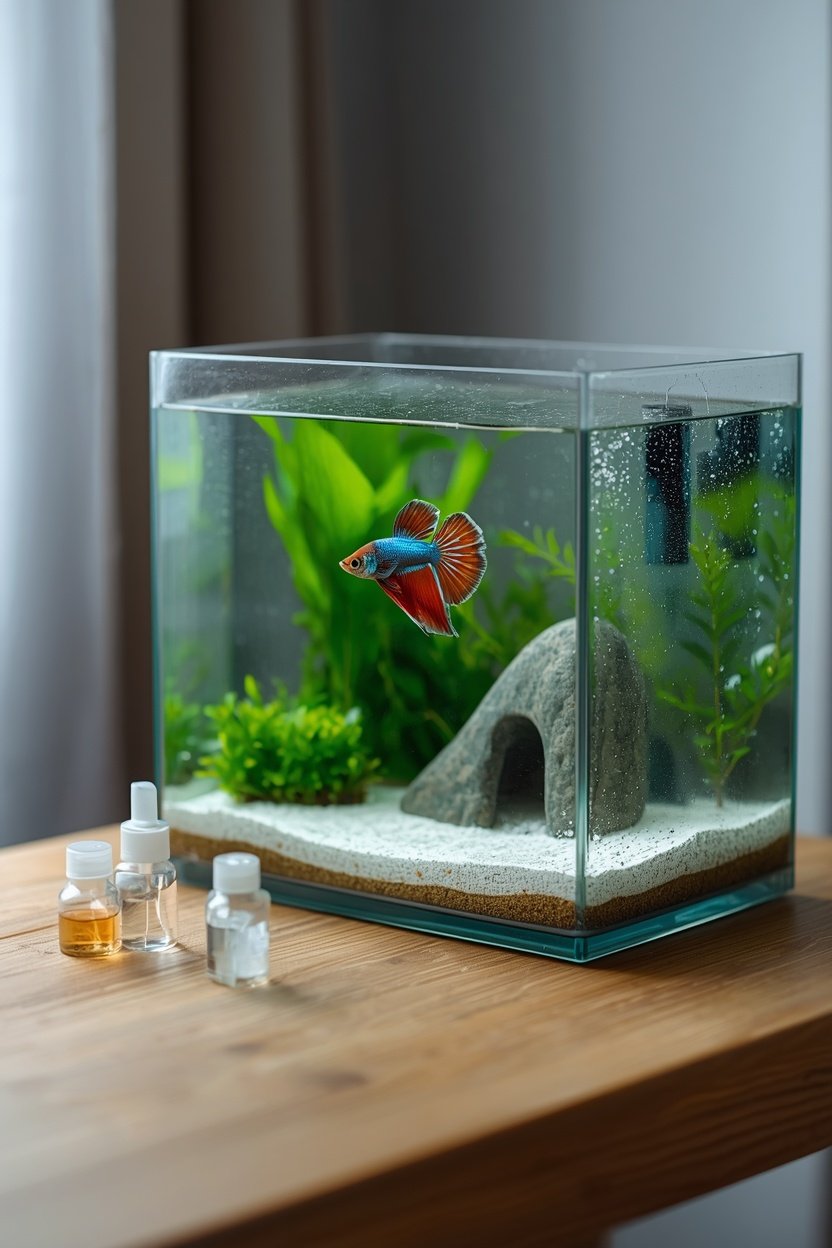 |
2. Cold or Unstable Water Temperature
Bettas come from warm, shallow waters in Southeast Asia, so they are tropical fish. When the water cools, their metabolism slows, their immune system weakens and they stop eating. A betta that sits listlessly on a leaf or refuses food is often simply too cold. Sudden swings of several degrees in a day are just as harmful as steady chill, and so are overheated tanks. Water above roughly 86 °F (30 °C) can quickly become dangerous, which is a real risk near sunny windows in summer.
Many beginners are told that "room temperature" is fine. In most homes it is not. Even a comfortable living room can drop below 72 °F at night, which is well under what a betta needs.
How to prevent it
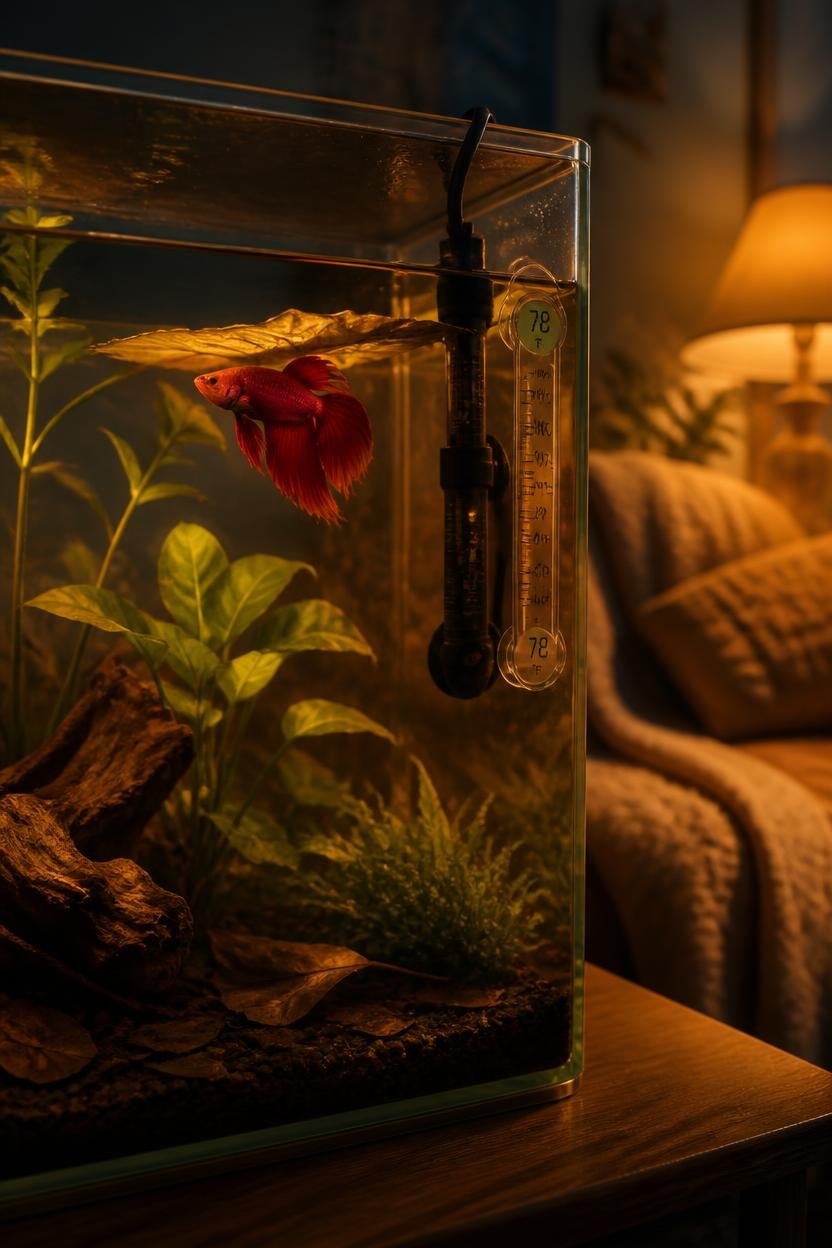
• Use an adjustable heater. Pick a small, reliable aquarium heater sized for your tank and set it to around 78 °F (26 °C).
• Add a thermometer. A cheap digital or stick-on thermometer lets you confirm the heater is working.
• Choose a steady spot. Keep the tank away from windows, air conditioners, heaters and doors.
• Acclimate new fish slowly. Float the sealed bag for about 15 minutes, then add small amounts of tank water over another 15 to 20 minutes before releasing your betta.
3. A Tank That Is Too Small or Poorly Set Up
You have probably seen bettas sold in cups, vases and tiny bowls, and the myth that they "live in puddles" is the reason. In truth, wild bettas live in large, shallow wetlands and rice fields with plenty of room. In a very small container, waste and temperature changes hit hard and fast, and there is no space to explore. That is why tiny bowls shorten so many betta lives.
Setup matters as much as size. Strong filter currents can exhaust a long-finned betta, sharp decorations can tear delicate fins, and an open lid invites a jumping fish to leave the tank for good.
How to prevent it
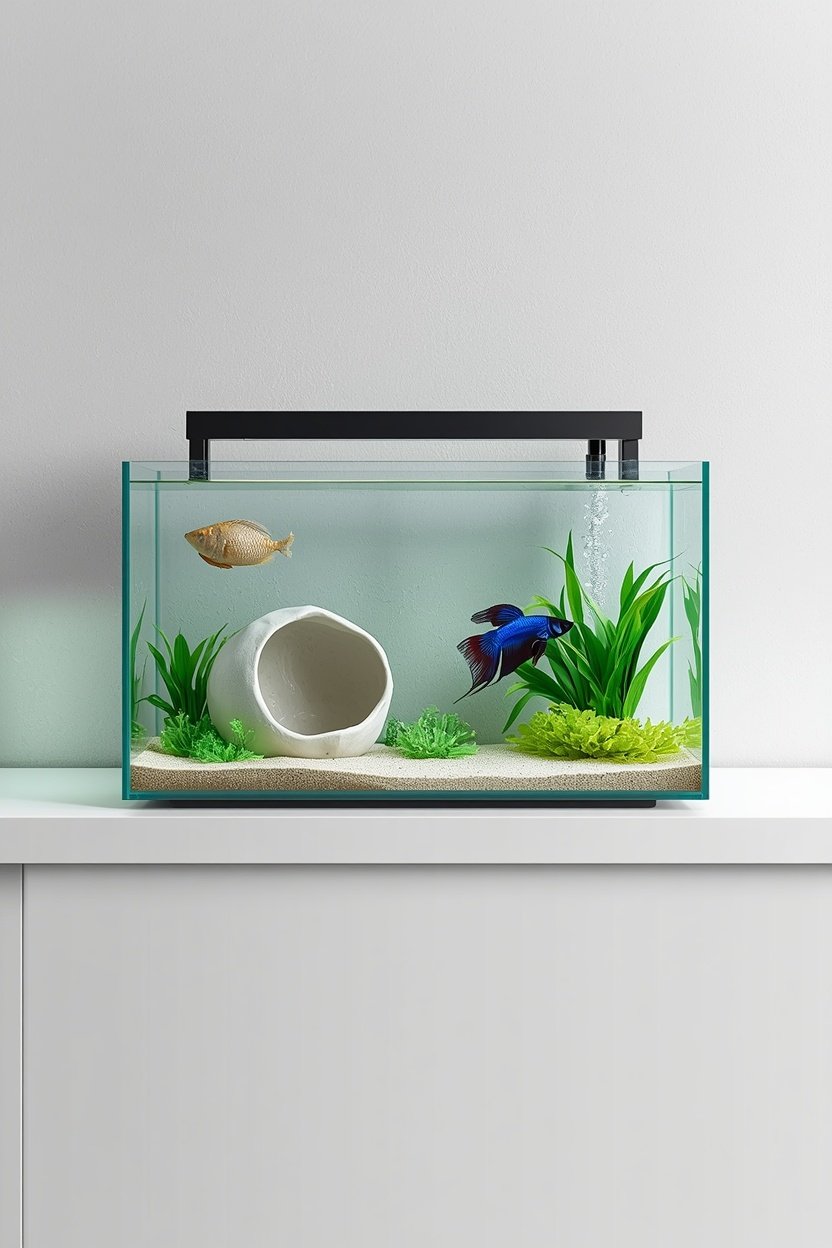
• Start with 5 gallons or more. Larger tanks are more forgiving because pollution and heat change more slowly.
• Choose gentle filtration. A sponge filter or an adjustable filter with a baffled outflow keeps water clean without a strong current.
• Pick soft decor. Silk or live plants and smooth caves are safest. If a decoration snags a pair of nylon tights, it can snag a fin.
• Cover the tank. Use a lid with small gaps for air flow, and give your betta a floating leaf or hammock near the surface to rest.
4. Overfeeding and a Poor Diet
It is easy to love your fish with food, but a betta's stomach is only about the size of its eye. Too much food causes bloating and constipation, which can lead to swim bladder trouble, where the fish struggles to stay level. Leftovers also sink and rot, sending ammonia levels up and linking this problem straight back to reason number one.
Quality matters too. Bettas are carnivores that need protein, so generic flakes made for mixed community fish often leave them under-nourished.
How to prevent it
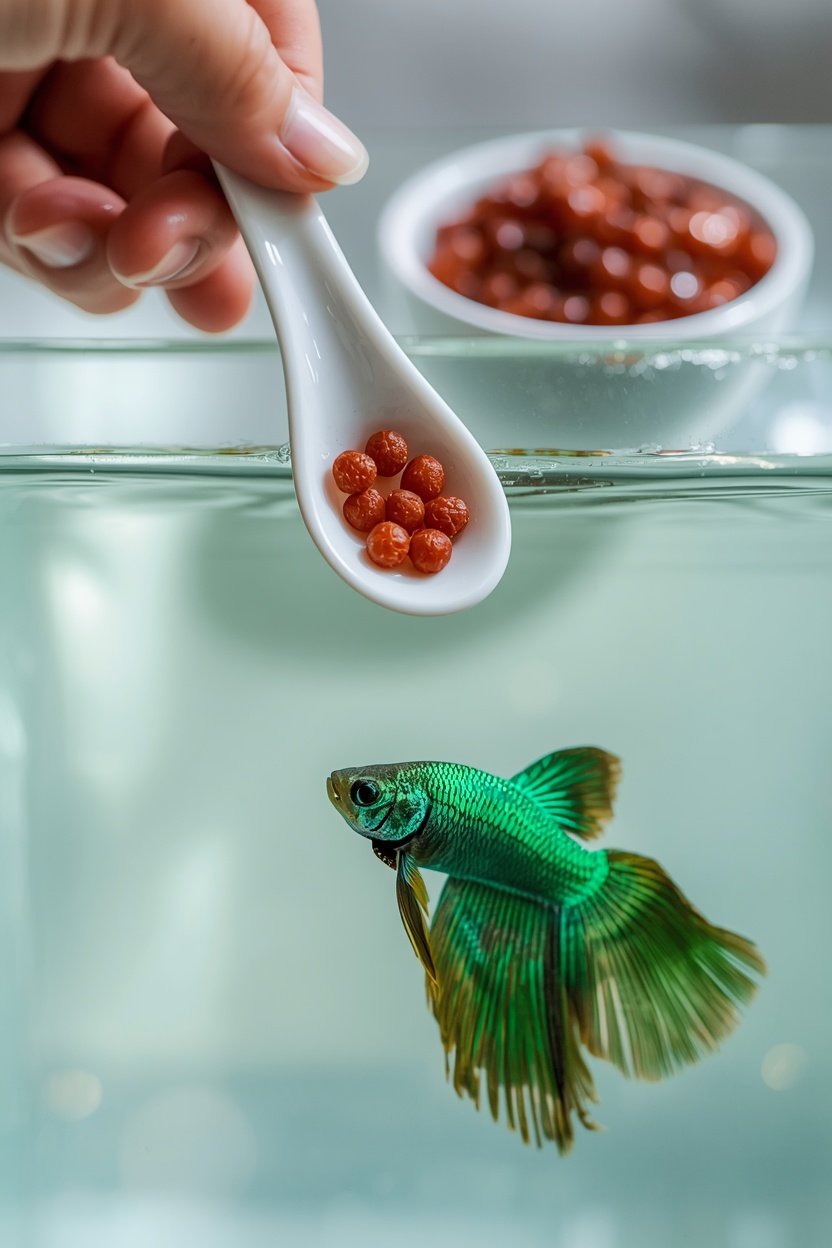
• Feed small portions. Offer two to three pellets once or twice a day, only what your fish finishes in about two minutes.
• Choose a protein-rich pellet. Look for fish, shrimp or insects at the top of the ingredient list.
• Add variety. Frozen or freeze-dried bloodworms or brine shrimp make a good treat a few times a week, soaked briefly before feeding.
• Consider a rest day. Many experienced keepers skip one feeding a week to give the digestive system a break.
5. Disease and Long-Term Stress
Illness usually does not appear out of nowhere. Stress and weak water conditions open the door for infections such as fin rot, ich and fungal growth. Fin rot shows up as ragged, shrinking fins with dark or reddish edges. Ich looks like tiny white salt grains on the body. Fungus often forms fuzzy, cotton-like patches. Caught early, these conditions are often treatable, but they can turn fatal when ignored.
Stress itself comes from everyday things: a mirror or reflection, bright lights left on all day, loud vibrations, fin-nipping tank mates, or placing two male bettas near each other. Male bettas should live alone, and any companions in a larger tank need careful research first.
How to prevent it
• Fix the water first. Clean, warm, stable water is the best medicine and treats the cause behind many illnesses.
• Keep a calm routine. Provide eight to ten hours of light a day and a quiet location.
• Quarantine newcomers. Keep new plants or fish separate for a couple of weeks before adding them.
• Act early. If symptoms appear, follow the label of a reputable fish medication and ask an aquatic veterinarian or an experienced fish store for advice.